
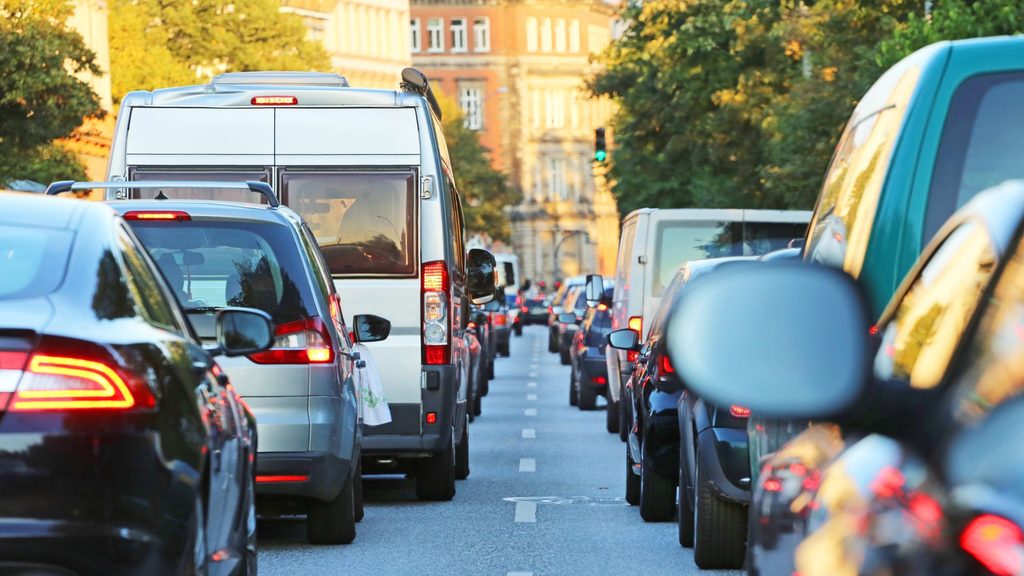
There are significant discrepancies in motorisation rates across neighbourhoods in the Brussels-Capital Region, according to a study by the Brussels Institute for Statistics and Analysis (IBSA) and the Brussels Health and Social Observatory.
Published in their 2024 focus on the 19 Brussels municipalities, the study highlights how car ownership varies dramatically between districts, with implications for urban planning and environmental concerns, La Libre reports.
The findings underscore a well-established trend: the further one moves from the city centre, the higher the prevalence of car ownership. In the heart of Brussels, within the Pentagon bordered by congested inner ring roads, car ownership remains relatively low, with fewer than 34% of households possessing a vehicle, according to 2019 figures.
However, as one moves outward, particularly into the inner suburbs of Woluwe-Saint-Pierre, Uccle, Auderghem and Watermael-Boitsfort, car ownership rates surge.
Suburb surge
Woluwe-Saint-Pierre emerges as a hotspot for car ownership, boasting the highest number of vehicles per household in 2019 – well above the regional average. 21% of households here have at least two vehicles – twice the regional average – and the neighbourhood also has the highest proportion of company cars (16%, compared to 8% at regional level).
Similarly, other southern municipalities such as Watermael-Boitsfort, Uccle and Auderghem exhibit motorisation rates significantly surpassing the regional average. Contributing factors include higher employment rates and income levels, as well as the absence of robust public transport alternatives.
Nevertheless, the study reveals intriguing nuances within these municipalities. Proximity to major public transport hubs, such as metro stations, correlates with lower car ownership rates, suggesting a potential shift in behaviour among residents. However, the influence of household composition and income proves equally significant in determining car ownership patterns.
For instance, while areas near metro stations in Woluwe-Saint-Pierre and Auderghem exhibit fewer vehicles per household, the presence of social housing in certain districts counteracts this trend. In Watermael-Boitsfort, neighbourhoods with higher concentrations of social housing demonstrate lower car ownership rates compared to affluent areas along transportation lines.
Related News
- Why did Brussels become the capital of the EU? Because Belgium starts with B.
- From education to safety: What are Brussels' best neighbourhoods to live in?
- Why are so many people getting trapped in shutters of Brussels Metro stations?
Interestingly, Uccle presents a unique case study, where car ownership increases steadily towards the southern districts. The disparity in car ownership along roads such as Chaussée d'Alsemberg highlights the interplay between income levels and transportation accessibility.
Despite concerns over pollution associated with car usage, the southern region benefits from the presence of the Sonian Forest, mitigating environmental impacts to some extent. Watermael-Boitsfort, despite its high motorisation rates, stands out as the least exposed municipality to nitrogen dioxide (NO2) pollution, attributed in part to its green spaces and fewer major thoroughfares.
Overall, the study underscores the complex interplay of socioeconomic factors, transportation infrastructure, and environmental considerations shaping car dependency in the south of the Brussels region. As urban planners and policymakers seek to address issues of sustainability and liveability, understanding these dynamics becomes increasingly crucial.
