

This weekend marks the 519th edition of the Laetare of Stavelot, featuring the traditional parade of hundreds of Blancs-Moussis, the distinctive feature of the festivities.
Carnival season is in full swing in Belgium, and this weekend the Laetare Stavelot is in the spotlight. This event takes place every year on the third Sunday before Easter.
Between 15,000 and 20,000 people are expected to attend this event this weekend. On Saturday night, the 'Ball at the Abbey' and the Night Procession kick off the event. This year, the parade includes a folk group featuring people with disabilities, as the event this year centres around inclusion.
But the highlight of the carnival is not until Sunday. The procession on the afternoon of the event's second day, which starts at 13:30, is the climax of the festivities. This is when the Grand Parade of Laetare Stavelot takes place, with 2,500 participants.

One of the many colourful floats that blows out confetti. Credit: Belga/ One of the many colourful floats that blows out confetti. Credit: Belga/ John Thys
For more than two hours the groups and guests of Stavelot entertain, bring joy, and make the crowd of spectators laugh and smile, while the famous floats send confetti into people's homes.
But the central characters and the largest crowd-puller of the Stavelot Laetare are the Blancs-Moussis, who also take part in this procession. This brotherhood clad in white tells the story of monks who in 1499 were forbidden by the prince-abbot Guillaume de Manderscheidt from participating in the carnival.
The rebellious Stavelotains mocked the ban by participating in festivities dressed as white monks and wearing masks with long red noses. The brotherhood of Blanc-Mousis don't speak but growl as they make their way through the streets, bombarding the crowds with blow-up pig bladder, that look like balloons, and lots of confetti.
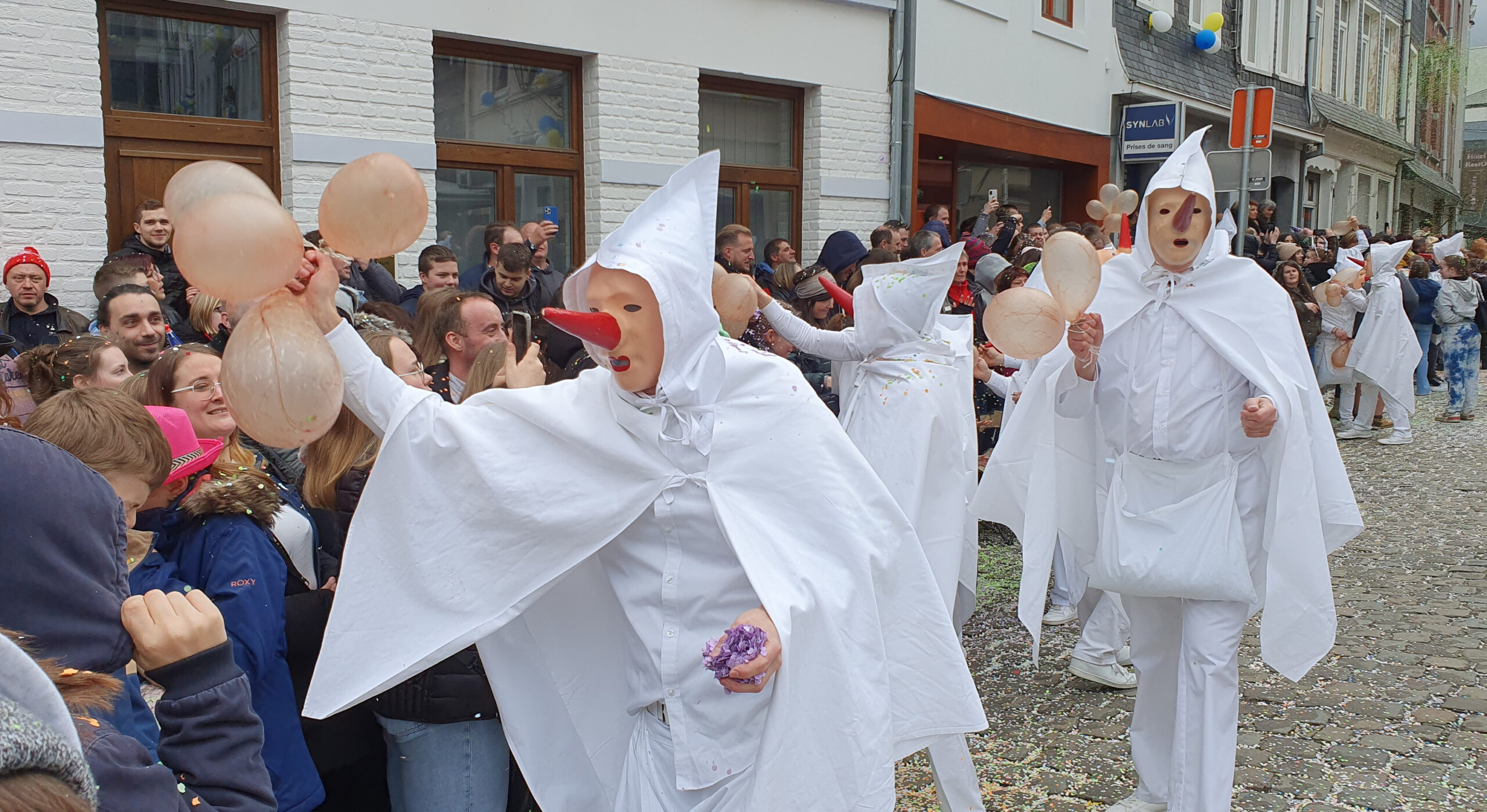
The Blancs-Moussis pictured during the folkloric carnival parade in Stavelot. Credit: Belga/ Laurent Cavenati
Some of the Blancs-Moussis put up ironic and incisive texts on façades, shop windows and billboards, referring to events experienced by Stavelotans over the past year.
Finally, on the Place Saint-Remacle, the apotheosis of the procession takes place: the Rondeau des Blancs-Moussis. They dance and after the last note of the Rondeau, the Laetare march leads the Blancs-Moussis and the spectators in a wild dance that crosses and intertwines.
In the evening, a grand fireworks display, one of the largest in Wallonia, is staged as a prelude to the Grande Nuit Blanche des Blancs-Moussis at Stavelot Abbey. The carnival concludes on Monday 11th March, with the exit of folkloric and musical societies at 15:00, followed by the awards ceremony in the evening.
