
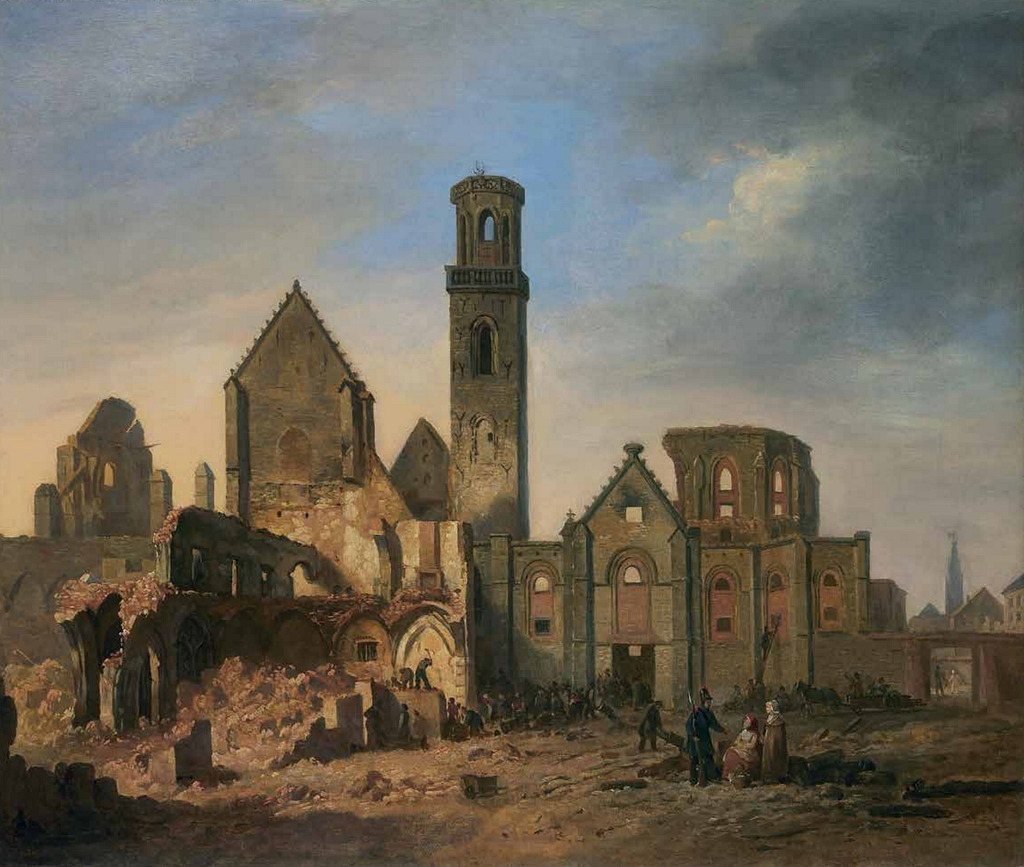
The city administration of Antwerp has unveiled a commemorative plaque in honour of the long-lost St Michiel’s Abbey, located on the Scheldt riverbanks.
Founded 900 years ago, the remnants of St. Michiel’s Abbey resurfaced during recent archaeological investigations related to the redevelopment of the Scheldt quays.
The abbey was established in 1124 by Norbert of Gennep, later known as Saint Norbert, the cleric who pioneered the Norbertine order. Over centuries, it blossomed into a thriving and influential religious institution.
The abbey fell into decay during the French rule (1794-1815). During the French revolutionary wars, the monastery was disbanded, repeatedly looted, and irreparably damaged. Following the Belgian Revolution of 1830-1831, the abbey was demolished.
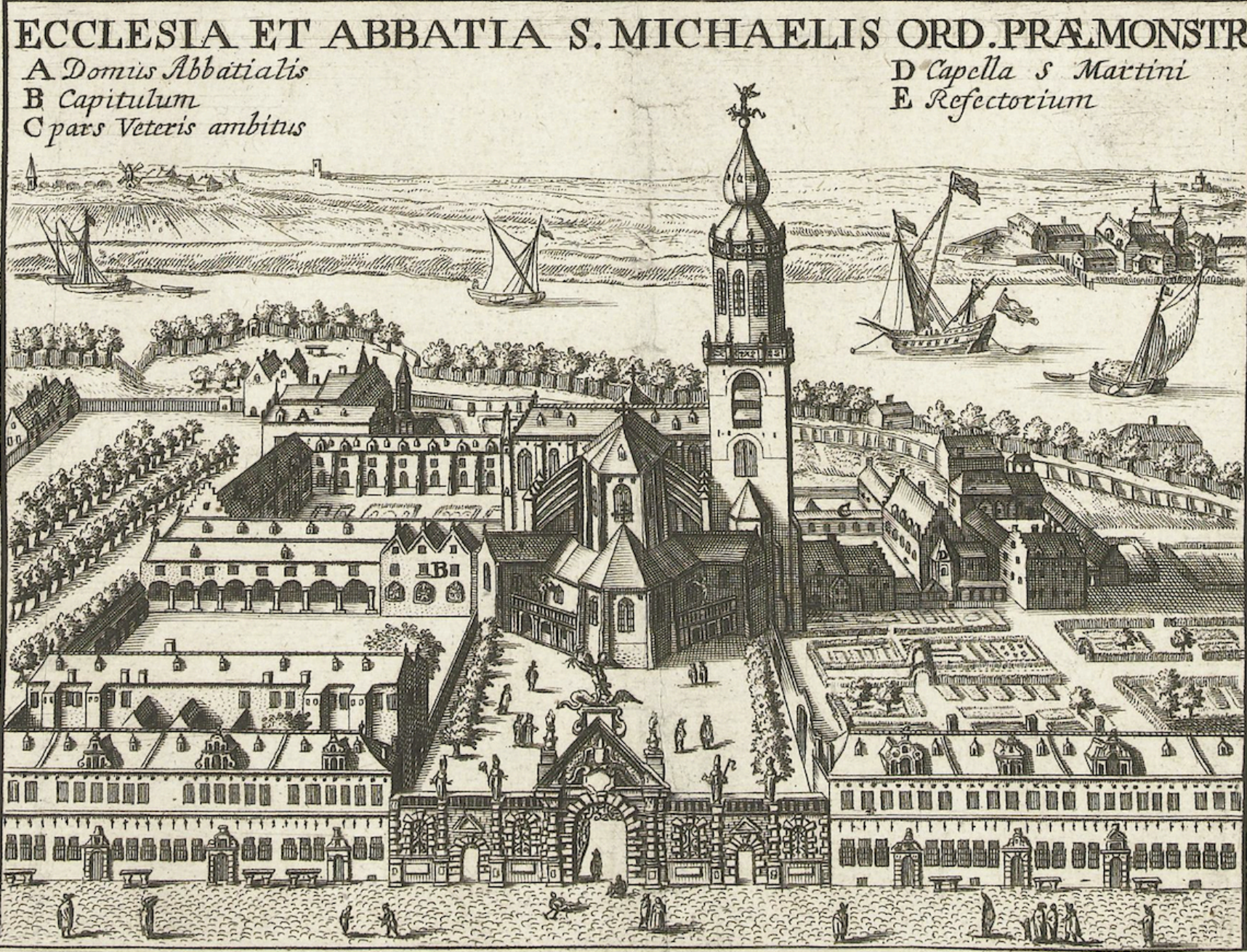
The Abbey seen in an old engraving
Archaeology unearthed temporary foundations, cellars, and tombs from the working on the Scheldt quays, which are being converted from open-air parking to green public spaces with improved flood defences.
As a result, the city decided to feature a commemorative plaque within the former monastery grounds, designed into a footpath. Nearby, an information board provides additional details about the disappeared abbey.
From 7 May, a small exhibition on St. Michiel’s Abbey will be open at the FelixArchief, the city archives of Antwerp. It features archival items about the foundation of the abbey, the church, and notable guests who once stayed there. The recent archaeological investigation is also featured.
