
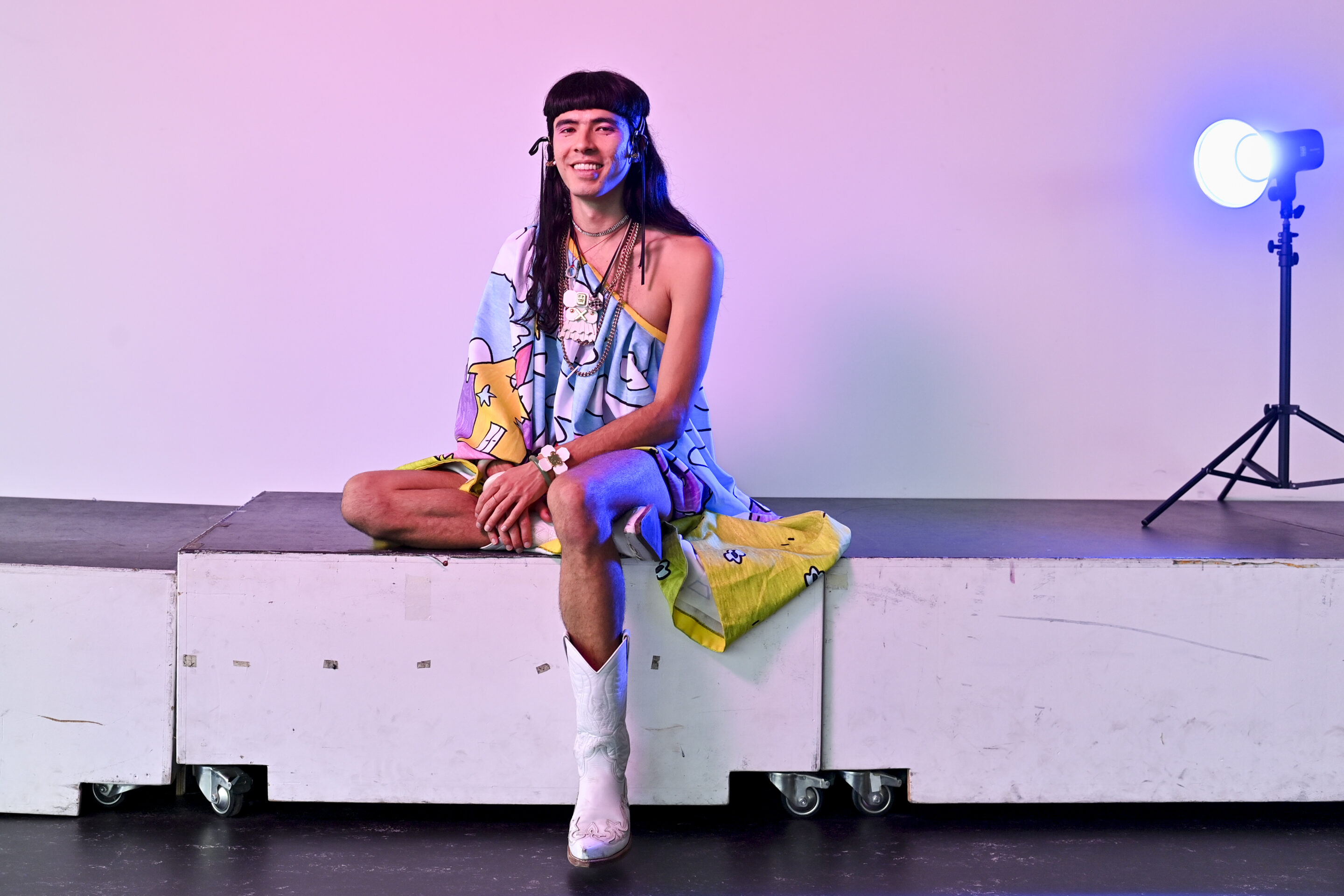
A couple of years ago, there was a Flemish TV programme called Viva la Feta that featured the witty fashionista Jani Kazaltzis. Every episode saw him and co-host Otto-Jan Ham welcoming a famous Belgian to a villa on the Greek island of Sifnos. The hook was that the hosts didn’t know who was coming until the person stepped off the boat.
When Brandon Wen arrived in the tiny harbour, the two hosts were flummoxed. Not only did they have no idea who he was, he was speaking English. And when it came to fashion, he put Kazaltzis to shame.
It was an hour of TV that made Wen famous outside of his sector. His pink dresses and little white tennis skirts paired with hairy legs and a five o’clock shadow might have gone down badly. But it turned out that viewers were quite taken with this friendly young man from LA who had not only made Antwerp his home but had been given its most coveted job.
“Post-Viva la Feta, I’m really popular among people’s grandmas,” says Wen, laughing. “‘Oh, my grandma saw you on the show, she loved you.’ Wild! If I get approached by someone who wants to tell me how excited they are by what I’m doing, it’s usually an older person.”
Wen was appointed the creative director of the fashion department at the Royal Academy of Fine Arts in 2022 at the tender age of 29. He was not only the youngest person to ever get the job, he was the first non-Belgian. “I know!” he exclaims when I state these facts, realising full well he beat the odds. But the academy had its reasons.
A 2018 graduate of the fashion programme, Wen brings a fresh vision to a department with more than 60 years under its belt. There have only been three previous directors, each one introducing the power and principles of a new generation.
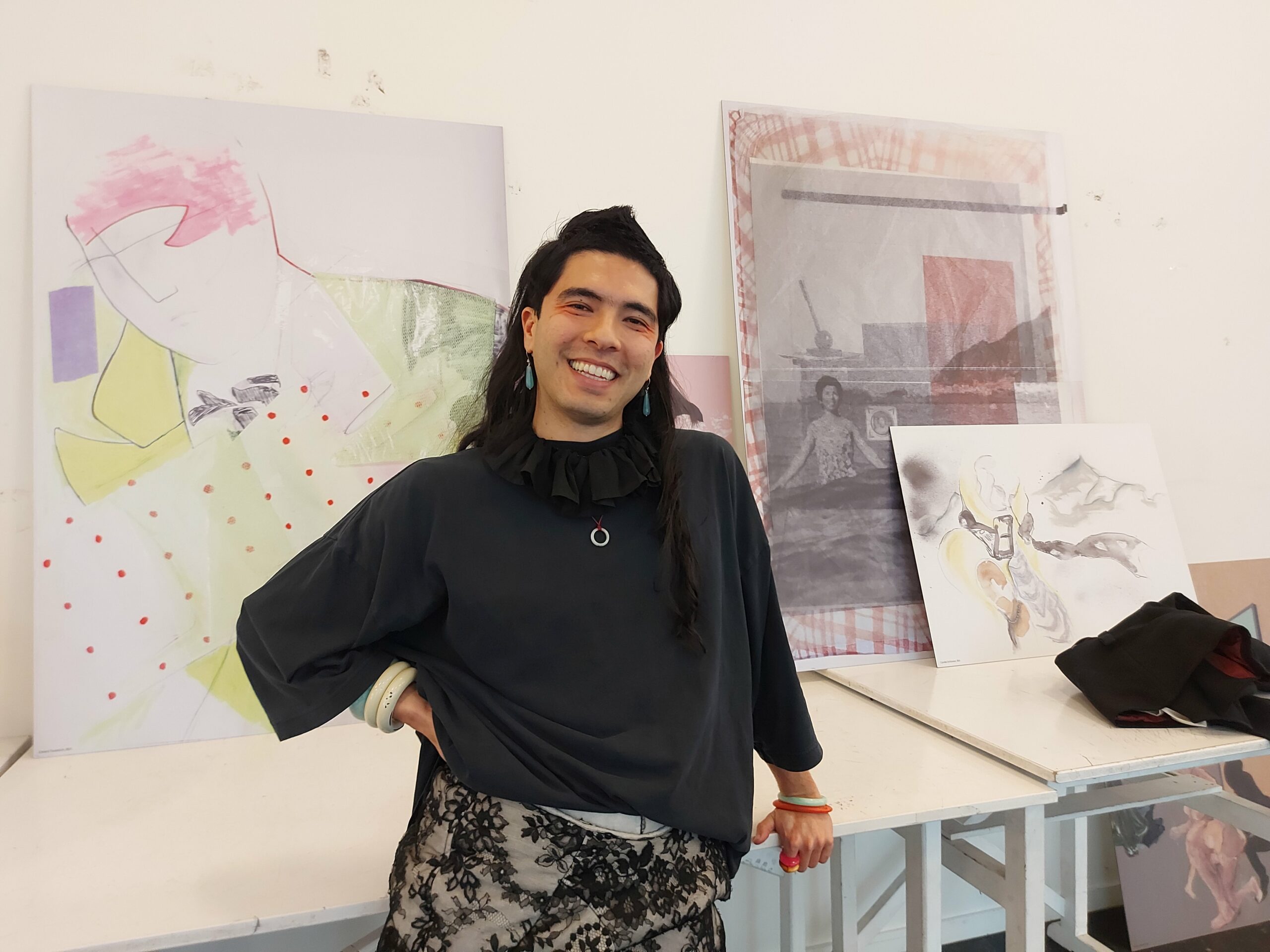
Brandon Wen, US fashion designer. Credit: The Brussels Times / Lisa Bradshaw
But Wen also had the level of professionalism the department needed. He’s academic – “chaotically litigious,” as he puts it – and was able to stand and deliver the documents, presentations and SWOT analyses the gruelling interview process demanded. And he also had the right “soft skills,” he says. “This degree is very intense and emotionally very hard, and they wanted someone with people skills to kind of lead the job from that perspective.”
Wen has that in spades. He talks easily and laughs often. A young, free-spirited designer in a cool city.
Why saddle himself with such heavy managerial responsibility? “I don’t like that creative people – especially weirdly creative people – avoid positions of responsibility because they think that’s someone else’s role,” he responds. “And that’s something Antwerp has never done. The people in charge, the ones calling the shots, have always been creative people. You never had someone who had never studied fashion or even art making a bunch of decisions without knowing the core of the thing that we do.”
New York, Paris, Antwerp
Wen studied fashion at Cornell University in Ithaca, New York, spending a study semester in Paris. It was there that he “realised that there was a more artistic way of doing fashion,” he says. “I click with it better.”
Wen’s mother is Spanish (his father is of Chinese descent), so he was no stranger to Europe and spent a summer interning in the former Royal Academy concept store in Antwerp. “When I first discovered the city and the store, I thought, this is special,” he says. “There was something about the work of the students here that spoke to me. It was graphic, and there was joy in everyone’s work. There was always this intense connection with drawings. I loved that if you draw something crazy here, it’s not just a start – you are actually going to make exactly that.”
He was soon accepted into the Royal Academy fashion department. “I didn’t apply anywhere else.”
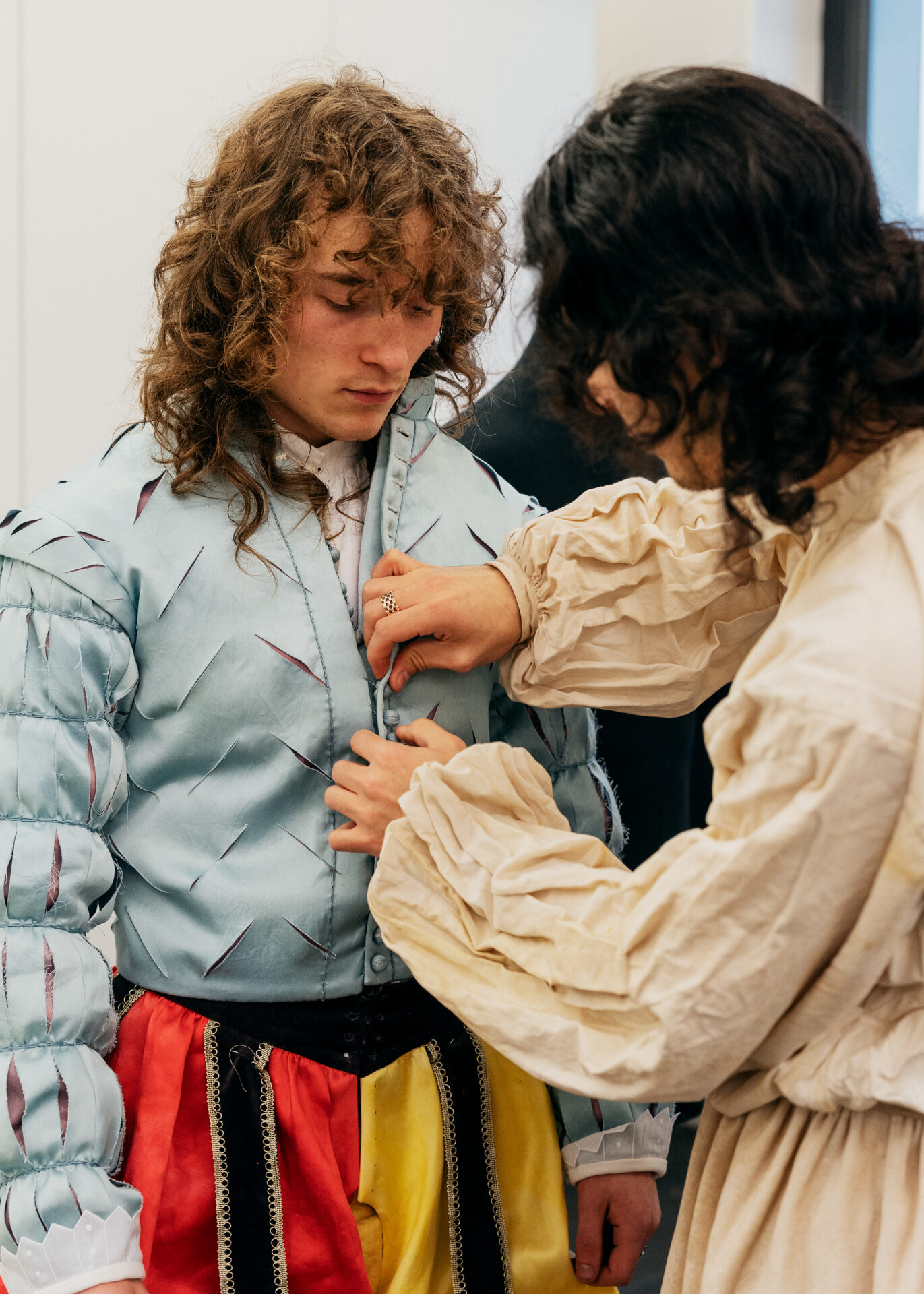
Historical costumes by Brandon Wen
After finishing his master's degree, he went to Paris, working for the goth fashion power couple Rick Owens and Michèle Lamy as well as doing embroidery design for Chanel. He came back to Antwerp right when famed Belgian designer Walter Van Beirendonck announced his retirement as the head of the fashion department.
Van Beirendonck’s screamingly bright and playful menswear prints and fingersful of bling were already considered “colourful” by Belgian standards. But Wen is next level. There are no pictures of him in menswear at all. On the day we meet, he is wearing an asymmetrical black-and-white print skirt. His blouse has a big ruffle at the neck, and his arms click and clack beneath chunky ceramic bracelets. He applies makeup every day.
While he’s happy to say he’s queer, he eschews the term “gender queer” – at least as it applies to him. Wen is less non-binary than he is a guy in a dress. “I like clothes, and I’m not going to limit myself because I’m a man. I work in fashion, I want to participate in fashion, in the things that I find so beautiful and so exciting and so wild. So why wouldn’t I?”
His look might raise eyebrows on the street, but inside the hallowed halls of the fashion department, he’s all the rage. Because he teaches design to first years, he is close to the department’s 130-ish students along with the staff. While 60-70 pass the strenuous procedure to be admitted to the first year, about half of those won’t make it to the second year. “Some don’t pass, and others realise it’s just not for them,” Wen explains. There’s another big drop in the second year – the first-year students have to end with a collection.
Fashion legacies
The student body is a healthy mix of Europeans and global internationals. For Europeans, the tuition is a cheap €1,000 a year. For anyone outside of the European Economic Area, it’s eight times that. That seems steep, but it’s one of the least expensive options for international hopefuls in Europe – remarkable considering its reputation.
Wen is the fourth in a line of directors who all left their mark on the department in one way or another.
The first, Mary Prijot, established the Parisian model – elegance, balance, beautiful silhouettes. Linda Loppa, who had attended the programme under Prijot, took over in 1985 (a fifth director, Josette Janssens, came between Prijot and Loppa, but tragically died in an accident shortly into her tenure).
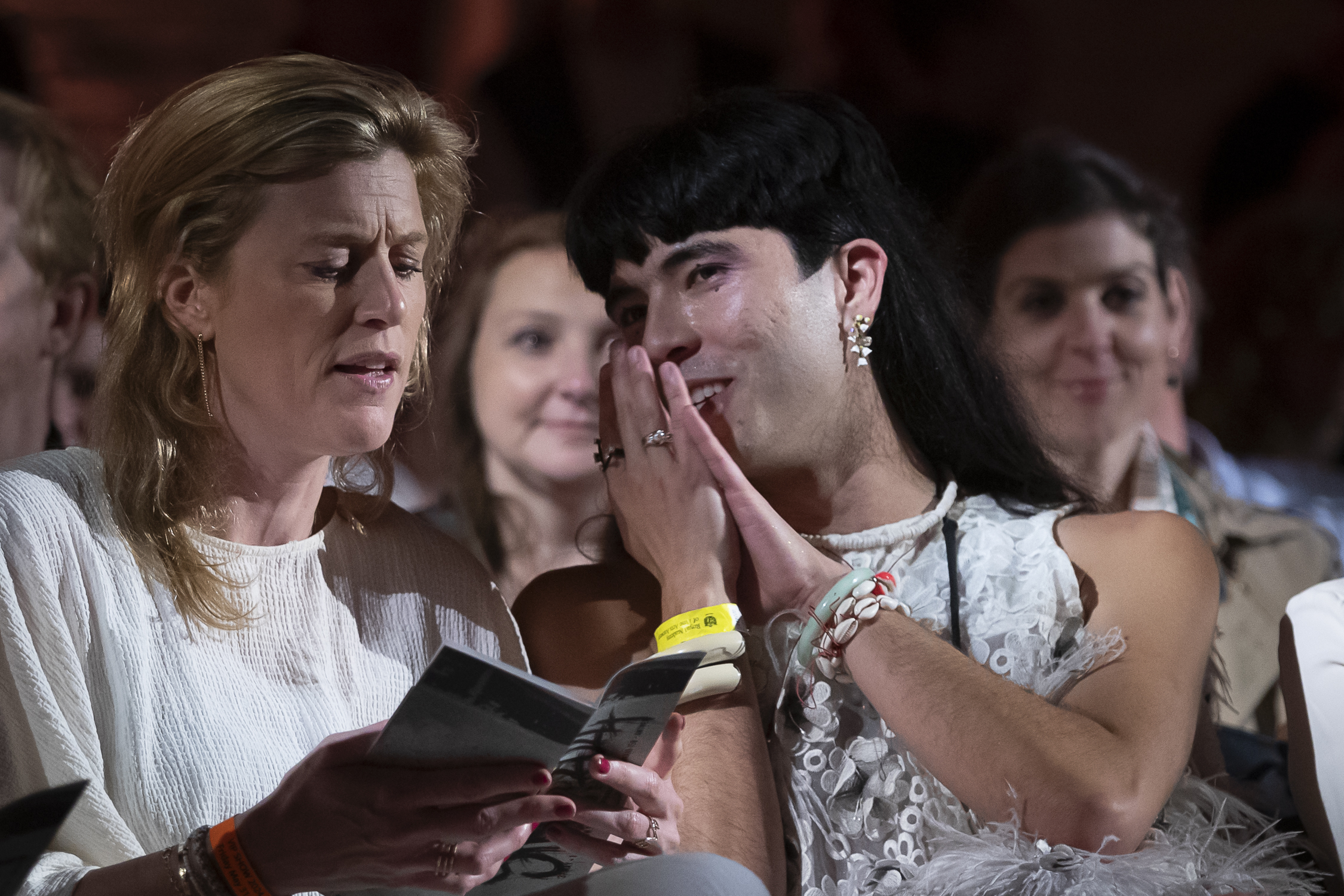
Belgium's former Interior Minister Annelies Verlinden and designer Brandon Wen attend the end of year fashion show of the fashion department of the Royal Academy of Fine Arts - AP Hogeschool, in Antwerp, Friday 31 May 2024. Credit: Belga
Considered a visionary, Loppa established the MoMu museum and moved the department onto the top floor. She was also the teacher of the legendary “Antwerp Six” – a group of talented friends who graduated from the programme in the early 1980s. They met with immediate local success and collectively took their wares to the British Designer Show in 1986. British retail buyers had a tough time pronouncing all their names (Bikkembergs, Demeulemeester, Van Saene, etc), so they dubbed them the Antwerp Six.
The rest, as they say, is history. Together with their Antwerp classmate Martin Margiela, they launched Belgian fashion onto the international scene and rocketed the fashion department into the stars.
One of the Six, Van Beirendonck, would follow Loppa as the next creative director, bringing his strong artistic and experimental approach to the curriculum. Under his leadership, the department would deliver the next wave of fashion superstars like Haider Ackermann (Canada Goose, Tom Ford), Veronica Leoni (Calvin Klein) and Kris Van Assche (Dior Homme, Berluti).
It’s a wee bit too early to talk about Wen’s legacy. But his own sense of style could go a long way in abolishing society’s overriding sense of “appropriateness” in apparel. Case in point: His defence of the far-out art projects that walk down the runway at Show – when all the students show off their end-of-year collections. While the pieces are entertaining, they are hardly wearable.
“I exist in my own little universe, so I’m thinking these are all wearable clothes – what are you talking about?!” Wen laughs. But Show is considered “a conceptual space,” he says. “You are proposing something beyond the clothing that we wear because you are figuring out where there is room for growth, for something new to happen. It’s more is more, and let’s see how much you can do, how far you can go.”
Antwerp's fashion studies among best
Glenn Martens is the creative director of both Diesel and Maison Margiela. Demna Gvasalia has the same job at Balenciaga and will this year take over Gucci. Haider Ackermann is the creative director of both Canada Goose and Tom Ford. And then there are Martin Margiela, Ann Demeulemeester and Dries Van Noten.
Well, they are alumni of the Antwerp Royal Academy fashion programme. Indeed, the list goes on and on. “Our students are the most wanted in all the houses in Paris,” says Royal Academy teacher Katarina Van Den Bossche.
“They work for Vuitton, they work for Loewe, for any luxury house you can name. Why? Because while many schools are interested in going directly into commercial points of view, when our students come out of this school, they know who they are and what they want to do. They may not know a lot about management, but they have looked inward.”
Any change in the cultural course of a city begins with a single moment. For Antwerp, that moment came in 1963 when the Royal Academy of Fine Arts in Antwerp opened its fashion department. Some 60 years later, it is considered one of the greatest fashion schools in the world, and Antwerp has been designated as a fashion capital. It has ushered in a creative, bohemian vibe that transcends any shifts – in politics, in technology, in popular culture.
It is the creative process, says Van Den Bossche, that keeps Antwerp’s fashion department at the top of its game. She has been teaching design at the master’s level for 30 years. “They need to have an artistic portfolio,” she explains of the 60 to 70 students – from some 500 applicants – who are admitted to the department every year. “I’m talking about painting, drawing, photography. Maybe there is fashion in it, but it’s not necessary. We just need to feel that they have this kind of school in their DNA.”
So while you don’t need to be able to sew – “we teach them that in the first year” – you do need to be able to draw. “If you have never had any training in drawing, you won’t make it. That’s how we start. We do research and draw things. When you draw things, you get insight. We don’t work with Photoshop, it’s drawing.”
Show time
In her classroom at the department – situated on the third floor of the MoMu fashion museum – she opens one of many ample books scattered across the tables. It is filled with stills from David Lynch films.
A piece of blue velvet is pasted to one page, paintings by various artists to others. Every student must create such a book, which acts as a mood board. “From the first year, the students learn to build a narrative,” says Van Den Bossche. “You need references. This is the building of a collection.”
All students at the academy – from all three years of the bachelor programme to the one-year master’s level – take part in Show, the famed runway spectacle at the end of every academic year. This year it takes place from June 6-7.

Royal Academy teacher Katarina Van Den Bossche.
“They have to continue this mood board the whole year. This one is for this particular student, another will work in a totally different way,” explains Van Den Bossche. “If you can do this – learn how to deal with information, with research and images, and translate it into ideas for garments, for collections – then you become a designer.”
This is in contrast to dedicated fashion schools that also teach communications, merchandising and other disciplines. In Antwerp, the process starts from a fine arts approach rather than a fashion approach.
Having attended the fashion department herself and later working as the head designer at Scapa, Van Den Bossche knows how this process translates. “The collection is an end result, sure, but the point is that students leave the school with a deep well of ideas. They know how to manipulate ideas. Going to work for a big commercial brand is then actually quite easy,” she says.
