
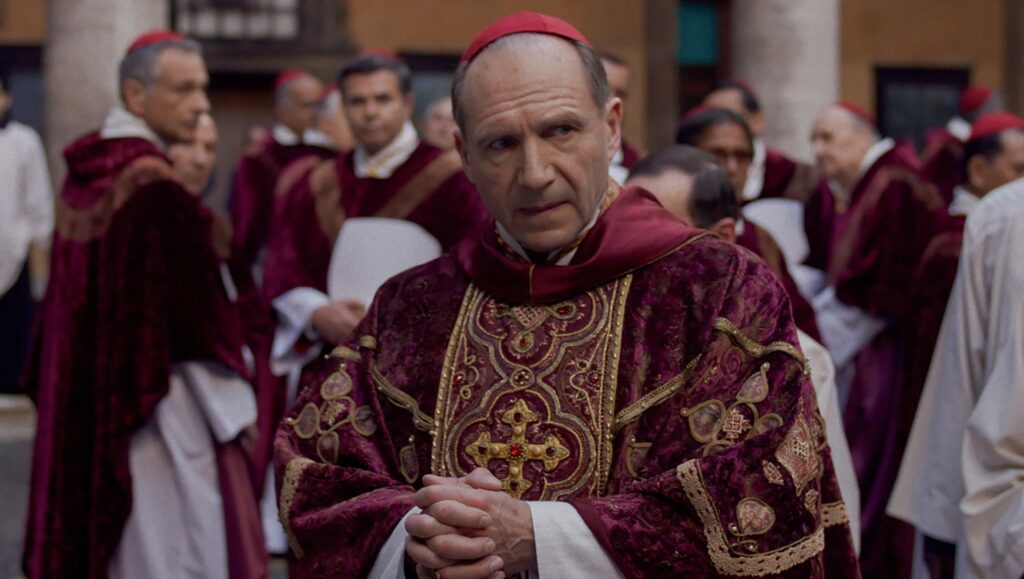
A new pope has now been elected. But how accurate was the popular Oscar-winning film 'Conclave' (2024) in the process to choose the head of the Catholic Church?
This article contains film spoilers.
The highly secretive process of electing a new pope received much attention following the film, starring English actor and film producer Ralph Fiennes. 'Conclave' depicts what happens behind the closed doors of the Sistine Chapel, but how accurate is it?
"The film is meticulously researched; many of the processes and procedures depicted are exactly like what is happening in the Vatican," Professor Kathleen Cummings, a historian of Catholicism at Notre Dame, told The Brussels Times.
While most of the film's substance was correct, she stressed that "obviously there was a bit of a Hollywood spin."
However, the film also got a couple of things "seriously wrong," said Cummings.
What's wrong?
One of the main plot points of the film is the surprising last-minute arrival of Archbishop Vincent Benitez of Kabul, a Mexican who was named cardinal in pectore (in secret, usually for their own safety) the previous year. But Cummings pointed out that this could not happen in real life.
"A cardinal in pectore is truly hidden," she said. "It is only after a cardinal has been publicly announced that he is granted the right to participate in a conclave. So someone like Benitez could not just show up and say 'Hi, I'm ready to vote' in reality."
Additionally, the film presented the cardinals as less sequestered than they are in reality. "There were a lot of people running around. Cardinal Lawrence's character has a friend whom he sends out to do research for him. That would not be possible during the conclave itself. They truly are sequestered."
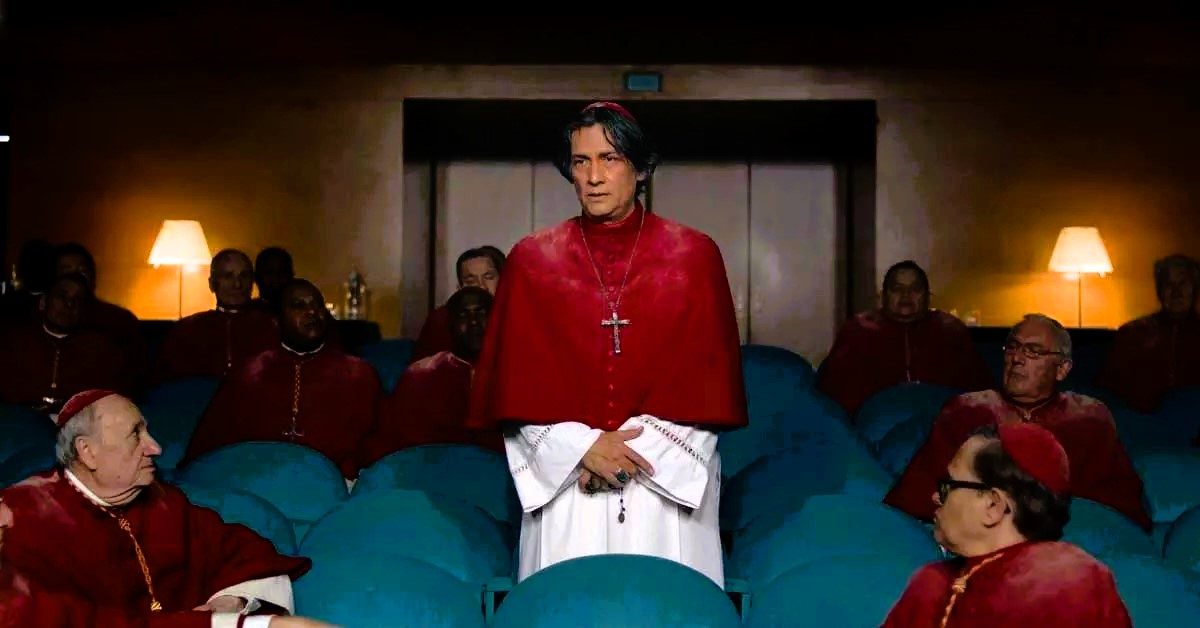
Carlos Diehz as Cardinal Benitez in 'Conclave' (2024). Credit: Focus Features
The people who go in and out – such as cooks, doctors and nurses, and priests who take confessions – have all taken an oath of secrecy.
"The film represented the conversations that have been happening in the general congregations, which preceded the conclave," Cummings explained. "These are the informal meetings that have been happening since Pope Francis' death, which ended when the cardinals moved into their rooms."
Still, she understands why the film was named after the conclave. "General congregations sounds a bit boring – a conclave is much more Hollywood. Nobody is going to make a movie called 'General Congregation'."
What's right?
On the other hand, the speech given by Cardinal Lawrence at the start of the film before the conclave officially begins "really rang true" to Cummings. "Such a speech by a cardinal is called an intervention. In it, they can say whatever they want really, but is often about what they feel is needed in the church."
"In fact, this happened during the conclave in 2013 where Francis was elected. One cardinal made a very short speech, but it really got the attention of many voters. In retrospect, it was very decisive in the previous election," she said.
Something similar could have happened this time, but it will only become known later. "We do not know yet, but we will probably find out eventually. But when someone gives a speech like that, people sit up and take notice."
Additionally, the arcane mechanics of how a pope is elected are depicted perfectly: in the Sistine Chapel, cardinals write their vote on blank paper ballots before depositing them into an urn. The names are read aloud and, once tallied, are threaded with a needle onto a string.
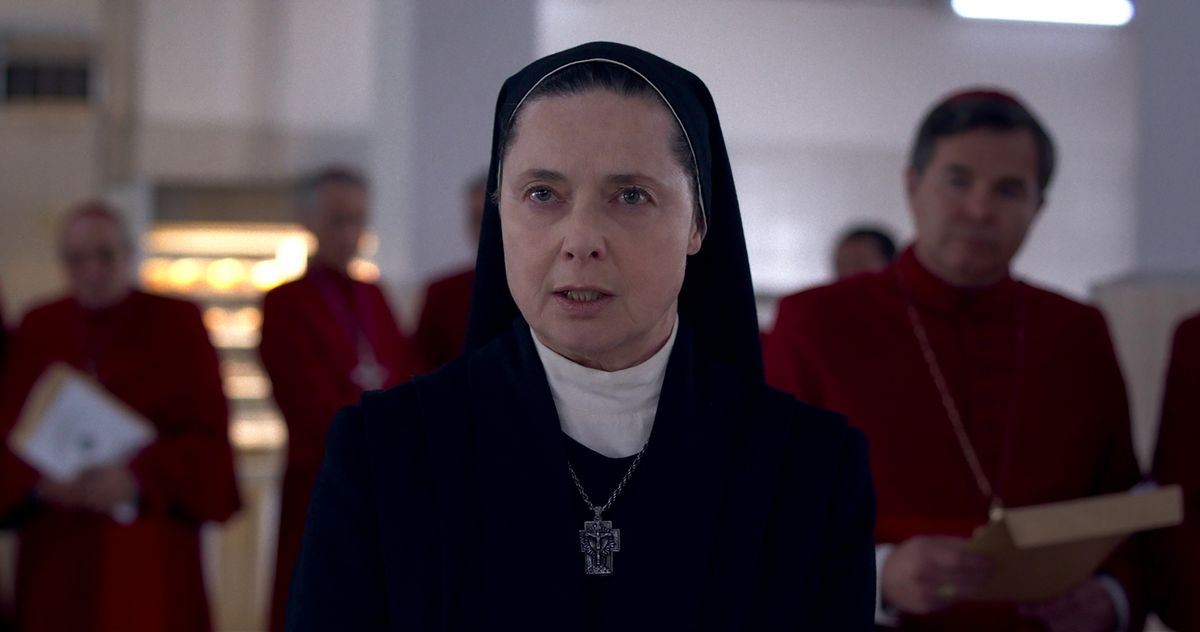
Isabella Rossellini in her role as Sister Agnes in 'Conclave' (2024). Credit: Focus Features
Unlike in the film, however, the blatant behind-the-scenes bribery and blackmail do not happen – at least not to that level, Cummings said. "The cardinals will tell you that there is nothing like that, because it is the Holy Spirit who is directing their work."
"However, we are talking about men who are human beings. And they all have firm convictions and a vision of what kind of person they want to be elected. They work to ensure that that vision is enacted," she said.
To that end, informal conversations were "definitely happening" over lunches, dinners and in different cardinals' apartments. "And cardinals try to persuade others to vote according to their mission."
Similarly to the film, it is not all about the men: many nuns are present – albeit not as prominent. "They do the cooking and cleaning, but they don't run up near the cardinals' bedrooms in the middle of the night. They are much more unobtrusive."
The character played by Isabella Rossellini showed that there are indeed women in very important positions in the Vatican. "The women tend to know what's really going in, but they don't play a similar role to Rossellini."
And they probably didn't have access to a photocopier either. "That was a little outlandish."
