
Personal connections are key in architecture, both in terms of stylistic influence and career opportunities.
Belgium’s most celebrated architect, Victor Horta, had been the pupil of Alphonse Balat, principal architect to King Leopold II and a master of the art of construction in decorative iron that would make Horta’s name in the 1890s.
Profoundly rethinking his art in the wake of the First World War amid a squeeze on labour and materials, the great Art Nouveau stylist instructed a new generation of architects on the merits of simplification.
As traditionalists and modernists fought over whether buildings should be decorated, a compromise was found in Art Deco, exchanging the costly profusion of details for their targeted application, bringing a touch of luxury.
Among the careers launched by Horta was that of Antoine Courtens, a brilliant student who built a long career on the short-lived Art Deco wave. Balancing restraint with extrovert touches, he made his name with two of Brussels’ finest buildings in the style that are among the star draws of Art Deco year 2025.
Courtens sprang literally from Belgian artistic aristocracy. His globally recognised landscape painter father, a personal friend of royalty, was made a baron in 1922. That year, Antoine signed his first building, a studio for his brother Hermann, also a painter, collaborating for its decoration with another brother Alfred, a sculptor.
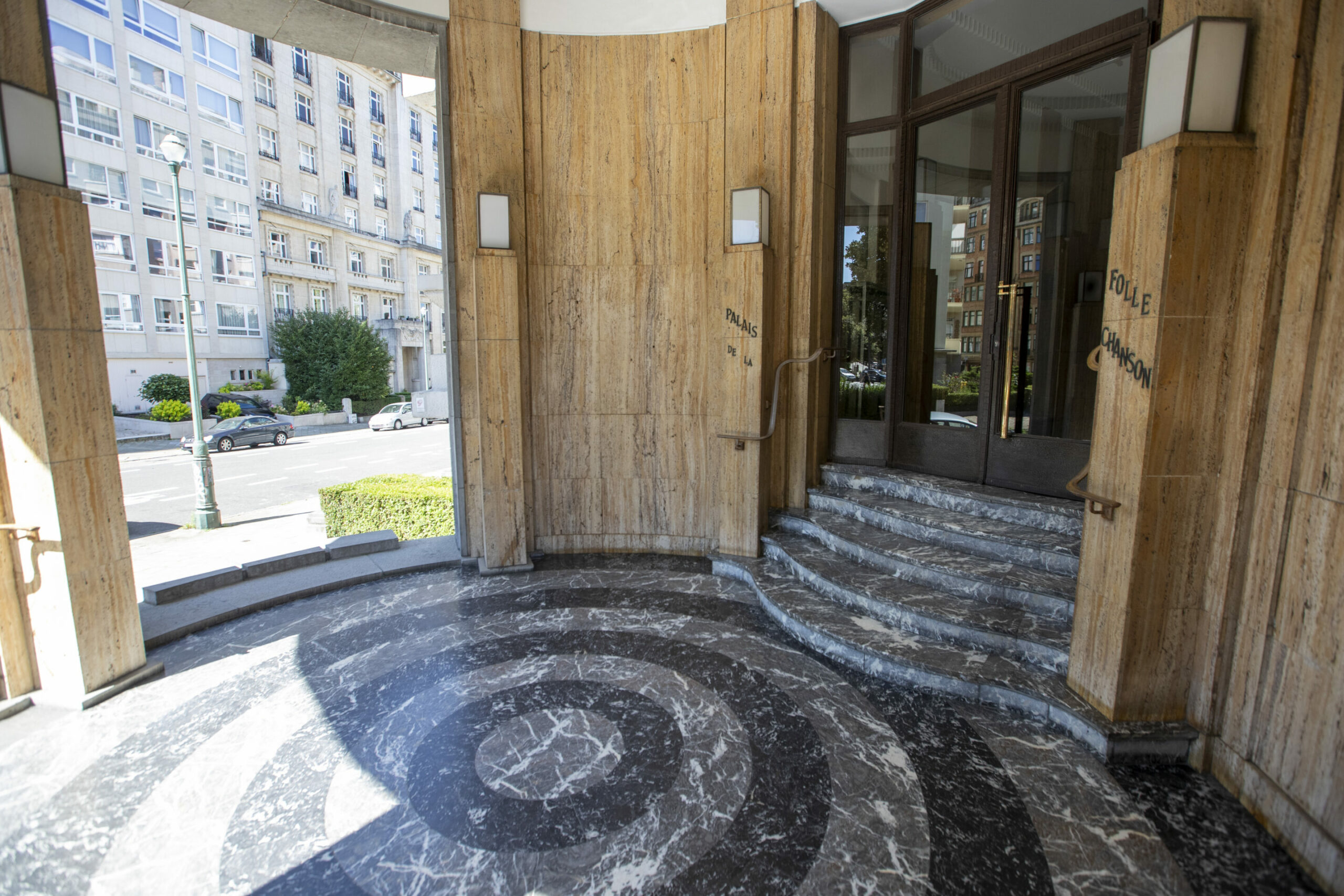
Illustration picture shows the Art Deco building Palais de la Folle Chanson, in Brussels on Sunday 20 August 2023. Credit: Belga / Nicolas Maeterlinck
From 1920-24, Courtens completed his training under Horta in Antwerp during a drought of private commissions and as Belgium’s urbanist elders pondered the reconstruction of the war-devasted country amid a shortage of materials. He and Alfred would tap one source of commissions for young artists, teaming up to design monuments for Belgium’s war dead and war heroes.
In 1924, he won the prestigious Prix Godecharle for young architects (Horta had won the same prize exactly 40 years earlier). The following year, 1925, these laurels and his professional and personal connections would help him lay the foundations of his decade-long run as one of Brussels’ key Art Deco architects.
The making of an Art Deco native
Courtens was born in 1899, the year Horta completed the much-regretted Maison du Peuple in Brussels, a riotous assemblage of glass, iron, brick and stone that aimed to bury tradition through the creation of a costly new Belgian style (it was torn down in 1965). The very different Horta that took Antoine on as a student in 1920 had definitively turned the page on the Art Nouveau style that made his name.
Like many Belgian architects, Horta quit Belgium during the war. Most went to England or the Netherlands, allowing them to examine garden cities and the output of the Amsterdam school up close. Horta went to the US, where he fell under the spell of skyscrapers.
He and his Swedish wife delivered lectures across the country on the splendours of Belgian art under threat from the enemy as propaganda to nudge America into entering the conflict.
Returning to Belgium in 1919, Horta delivered lectures on American architecture as propaganda to nudge Belgium into adopting a simplified approach to building as it tackled postwar reconstruction. He had been entranced by the sublimation of classical detail in US architecture into “cubic masses”, where “skyscraper-man” achieved grandeur through the scale permitted by economical, standardised materials such as reinforced concrete.
He sold his house on Rue Américaine, a showcase for the opposite of these things: painstaking bespoke luxury creations (it is now the Horta Museum). He altered his design for the upcoming Centre for Fine Arts (now Bozar) melting its details down from classical sculpture to geometric blocks. As he took his place as professor of architecture in Antwerp, Horta applied this new austere style to the interior of his new home, converted from a 19th-century townhouse on Ave Louise.
In October 1924, the newly-qualified Antoine Courtens travelled to Paris to assist in the creation of the Belgian pavilion for the Exposition Internationale des Arts Décoratifs et Industriels Modernes the following year. Abbreviated decades later to just Art Deco, the show's centenary inspired the Brussels Capital Region’s celebration of the style for 2025.
The project was led by Horta, effectively crowning him as Belgium’s official leading architect. As well as his former pupil, Horta employed his sculptor friend Pierre Braecke to place a classically inspired frieze around the front of the building. An odd note in a show where historical references were notionally prohibited.
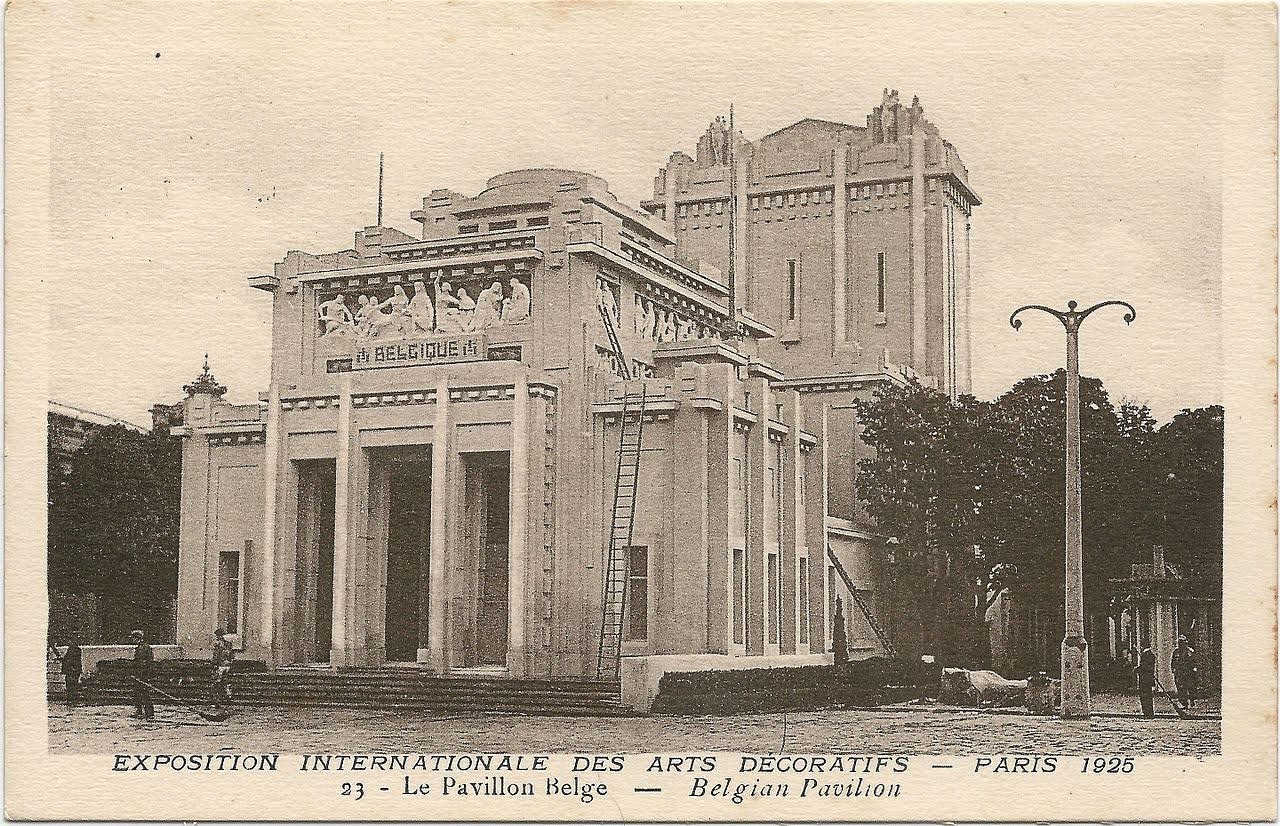
The Belgian Pavilion at Paris Expo 1925, designed by Courtens
The rear of the building however was inspired by the post-America Horta, in search of simplicity punctuated by detail. Pergolas, a bas relief of angular nudes set within unadorned concentric cement frames and a fountain, its basin incised with stylized wave patterns, all against a flat concrete facade, make up a compendium of the Art Deco vocabulary that would trickle across Brussels over the following decade.
The sawn-off phantom windowsill parapets on the roofline hinting at an aborted additional storey were motifs that Courtens would retain for later projects.
Courtens emerged from beneath the wing of Horta in 1925 and sought outlets for his talents, stretching beyond building design to furniture, jewellery, painting and, especially, ironwork and interior design.
In June of that year, he married and took internships at Mercier in Paris and the following year in Lyon, under pioneer modernist architect and planner Tony Garnier, perhaps a key influence alongside Horta (for his side-hustle as a watercolourist, Courtens used the name Tony Juin).
First steps
Back in Brussels, Courtens’ first notable project came in 1926, a collaboration with Léon Govaerts, a close neighbour of his father and prestigious Art Nouveau veteran of Horta’s generation seeking a modern relevance. The two men converted the ground floor of an ancient house on Rue du Marché Aux Poulets into the spectacular Tanganyika café.
Its broad plate windows were topped by an explosive riot of Art Deco stained glass, likely the work of Govaerts (sadly destroyed in 1964 but the rather tamer 1930 Taverne de l’Esperance by the same architect conveys some of its impact). Below the windows, and far more restrained, a band of geometrical shapes parade across an iron grille in what is likely to be Courtens’ first contribution to the reinvention of that art.
Around the corner at 10 Rue de Tabora the following year and flying solo this time, Courtens created a lavish geometric Art Deco shopfront and interior for a furrier. While this too has vanished, he also transformed the facade which survives, in discreet discord with its formerly-identical neighbours in the row of classically-minded baroque houses hugging the church of Saint-Nicolas.
Probably the first facade created by Courtens after his training by the new Horta it introduced pared-back classical detail, replacing the string course of its neighbours with a plain pilaster without capitals and inset as if within a picture frame. The brackets of the windowsill parapets are simplified to the point of becoming squared-off mallets, the “cubic masses” of which Horta had spoken.
Whether it was family connections or word-of-mouth admiration of his elegant modern work on businesses likely to be frequented by the wealthy and fashionable, in 1928, things took off for Courtens.
That year, he won the orders for the two buildings that made his career and which are among the principal stars of Brussels Art Deco year 2025: the Palais de la Folle Chanson apartment building and a mansion, the Hôtel Haerens.
The two buildings were innovative in both their form and decoration. Each has a concrete structure and each draws heavily from Horta, specifically the Fine Arts building and the much-overlooked and more radical rear view of the Paris pavilion.
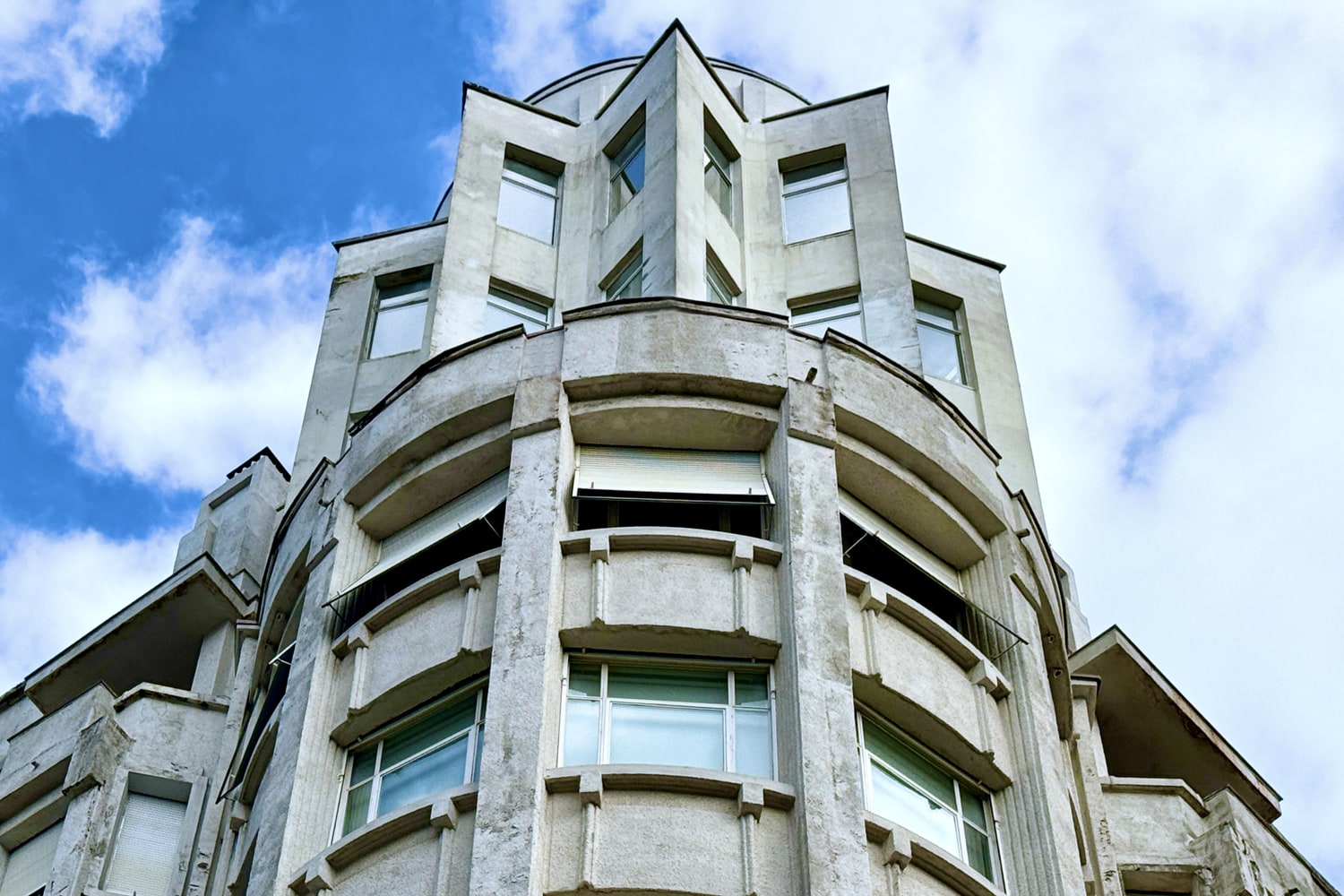
Art Deco building Folle Chanson in Brussels, designed by Antoine Courtens
That same year, Courtens became the artistic director of a decorative ironworks foundry, giving him a vested interest in loading his designs with metalwork. This he did with skill and perhaps more originality than with his architecture where it is often arguably the stand-out feature, inside and out.
A “decorator-born”, according to the art historian Anne-Marie Pirlot, he was also a salesman-born and proposed a complete inside furnishing package to clients (as had his master Horta, back in a day when this was known under the grander euphemism of Gesamtkunstwerk or total work of art).
Palais de la Folle Chanson
Like Horta’s Fine Arts building in central Brussels, the Palais de la Folle Chanson in Ixelles sits on a corner site where two wings at right angles converge on a rotunda. Unlike the constraints faced by Horta, notably a steep slope and a height limit preserving the view downtown from the King’s Palace, Courtens was gifted a large, flat greenfield plot far from royalty.
It allowed him to line up garage doors at the base of each facade to serve the modern transport needs of each resident. This freed up the rotunda to permit a circular entrance bay, laden with rich ironwork, marble, wood and mirrors, preserving the traditional sense of occasion expected by visitors to a bourgeois address (but with the cost of such baubles shared).
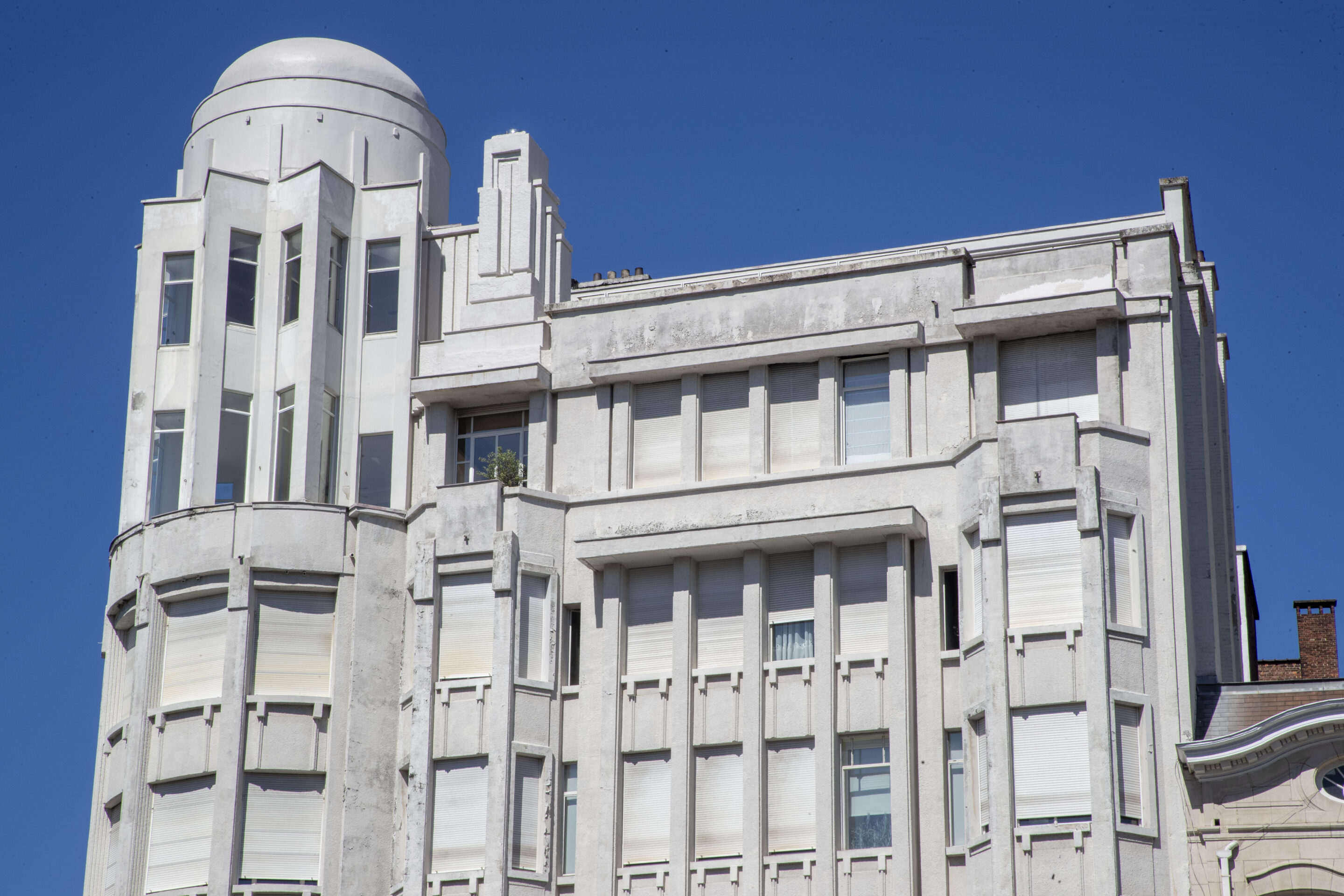
The corner cylinder occupying the entire height of the building allowed six circular sitting rooms to be stacked on top of each other. Rotundas had long been a feature of grander Brussels buildings, a solution to the challenge of turning a corner with architectural elegance. Here, with a touch of Art Deco swagger, it was crowned by a dome supported by a drum surrounded by double-height triangular oriels which pick out the star shape of the traffic junction below.
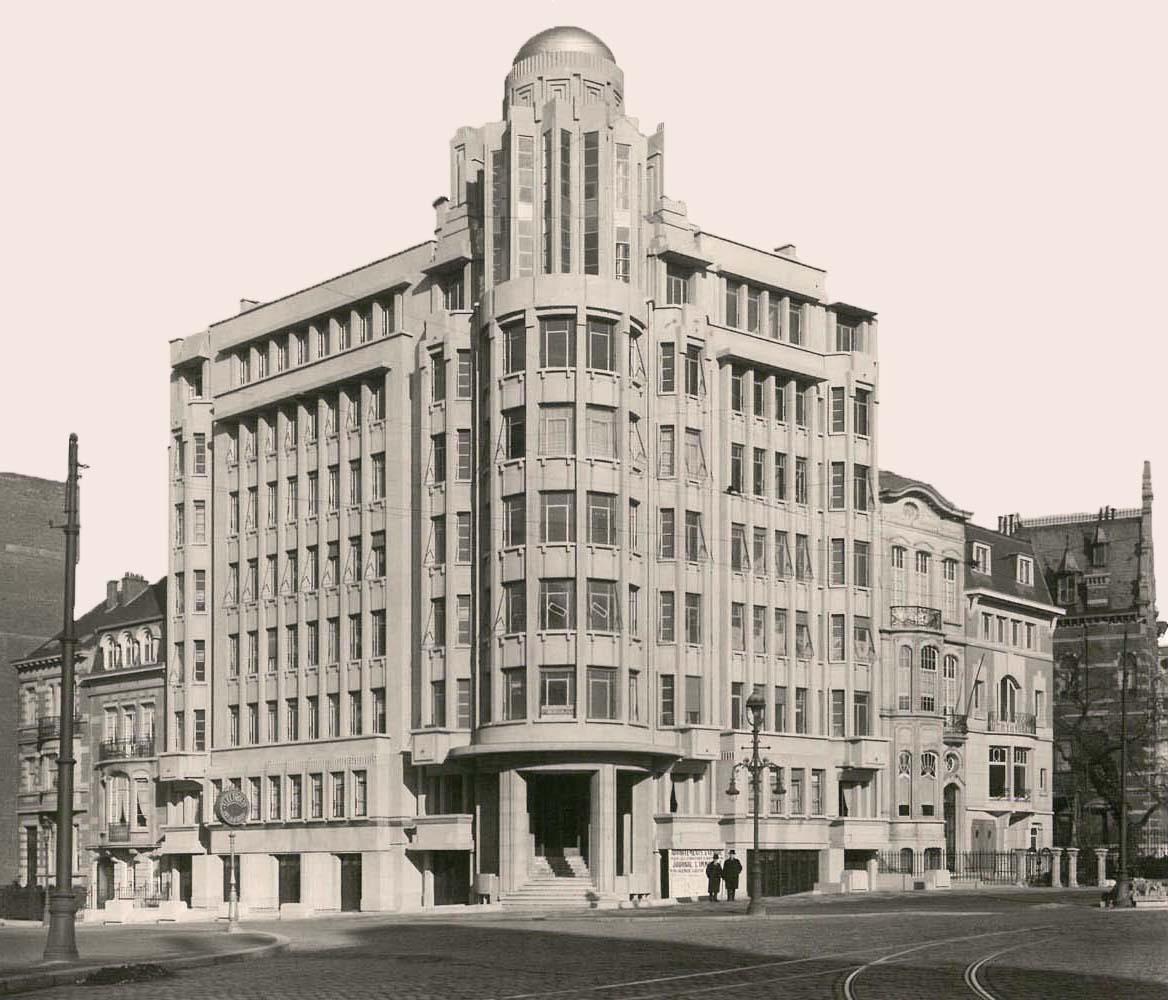
Art Deco building Palais de la Folle Chanson when it opened
The innovation of the building lay in the requirements of the client, who, in the course of the project became six clients as the absentee owner was able to pool costs thanks to the recent law permitting co-ownership of apartments. As well as creating 14 large apartments, Courtens placed a communal reading room and fumoir within the drum and, on top of each wing, large roof terraces.
Here, residents accustomed to grand single-family homes could experiment with concepts new to bourgeois life for the 1920s: shared space, panoramic views and sun-worship.
The extrovert, streamlined rotunda seizes the attention of passers-by, placing the Palais de la Folle Chanson in the pantheon of Brussels Art Deco. The two side wings meanwhile are plain structures, with unadorned concrete pillars rising uninterrupted through the discreet horizontals of the windowsills, like the fretboard of a vast wide guitar (and inspired by the Paris pavilion).
The contrast marks Courtens’ adept grasp of Art Deco’s place, midway in the journey of architecture from florid Art Nouveau to austere modernism. From a profusion of detail to a concentration of detail.
Hôtel Haerens
Courtens’ other major project in 1928 was the Hôtel Haerens in Ave Brugmann, Uccle. Once again, inspiration appeared to draw on his master’s post-WW1 output. As at the Bozar (and the Palais de la Folle Chanson) two concrete wings placed at a right angle converge on a rotunda. As at the apartment building designed the same year, the tower resembles the summit of a buried skyscraper.
The major innovation here is that what appears to be a mansion is in all likelihood the most lavish maisonette in Brussels. Like the Folle Chanson, it reflects its time, built for a wealthy, modern-minded couple. Not so wealthy that they did not want income from a tenant in the lower unit, and modern-minded enough to aspire to life in a flat.
The interior of the upper apartment is of a concentrated magnificence. Ironwork balustrades echoing the exterior railings feature incised circles crammed into geometric frames, evoking machine cogs. The sloping corner site allowed access to the upper apartment via a short stairway from a magnificent marble-lined entrance hall and ramps to parking spaces for both flats in the basement.
The decoration and technical design of the ensemble appear to appeal to the mind of an engineer and indeed the client was a transport engineer for the Empain group and employer of yet another Courtens brother, Willy.

Hotel Haerens in Brussels, designed by Antoine Courtens
After designing the Haerens house, Courtens would be increasingly drawn into the universe of the Empain group, overshadowing his output of more modest Art Deco houses in the wealthy eastern suburbs of Brussels.
He designed a depot for its light rail network based in Ostend and transformed three townhouses in Brussels for the HQ of its Electorail business, fronting them with the business-like fretboard facade first developed for the quieter side wings of the Palais de la Folle Chanson and reserving his exuberant ironwork for the interior.
In 1936, Courtens became a contract artist for Louis Empain, moving like his master Horta before him to North America. This time Canada, where he created a vast leisure complex at l’Esterel, building modernist residences and log cabins for this odd corner of 1930s Belgium abroad (its last traces were demolished in 2022).
He returned to a changed Belgium in 1938 where Art Deco was morphing into a sober modernism. The age of the joyful rotunda had passed and that of the mournful fretboard of functionalism was on its way.
Epitaph
“It goes without saying that Antoine Courtens is not an architect of garden cities and affordable houses. He works only for those wealthy enough to allow the use of durable and precious materials.”
The lines, from a 1929 profile of the architect by Maurice Rassenfosse, a dealer in expensive knick-knacks turned arts journalist, read like an epitaph of the then 30-year-old. But Courtens continued in the profession until 1968, the year before his death, creating houses, apartment blocks, offices and, in collaboration with the Polak family of architects, the vast CERIA research complex in Anderlecht (he even built garden cities for Louis Empain around Europe).
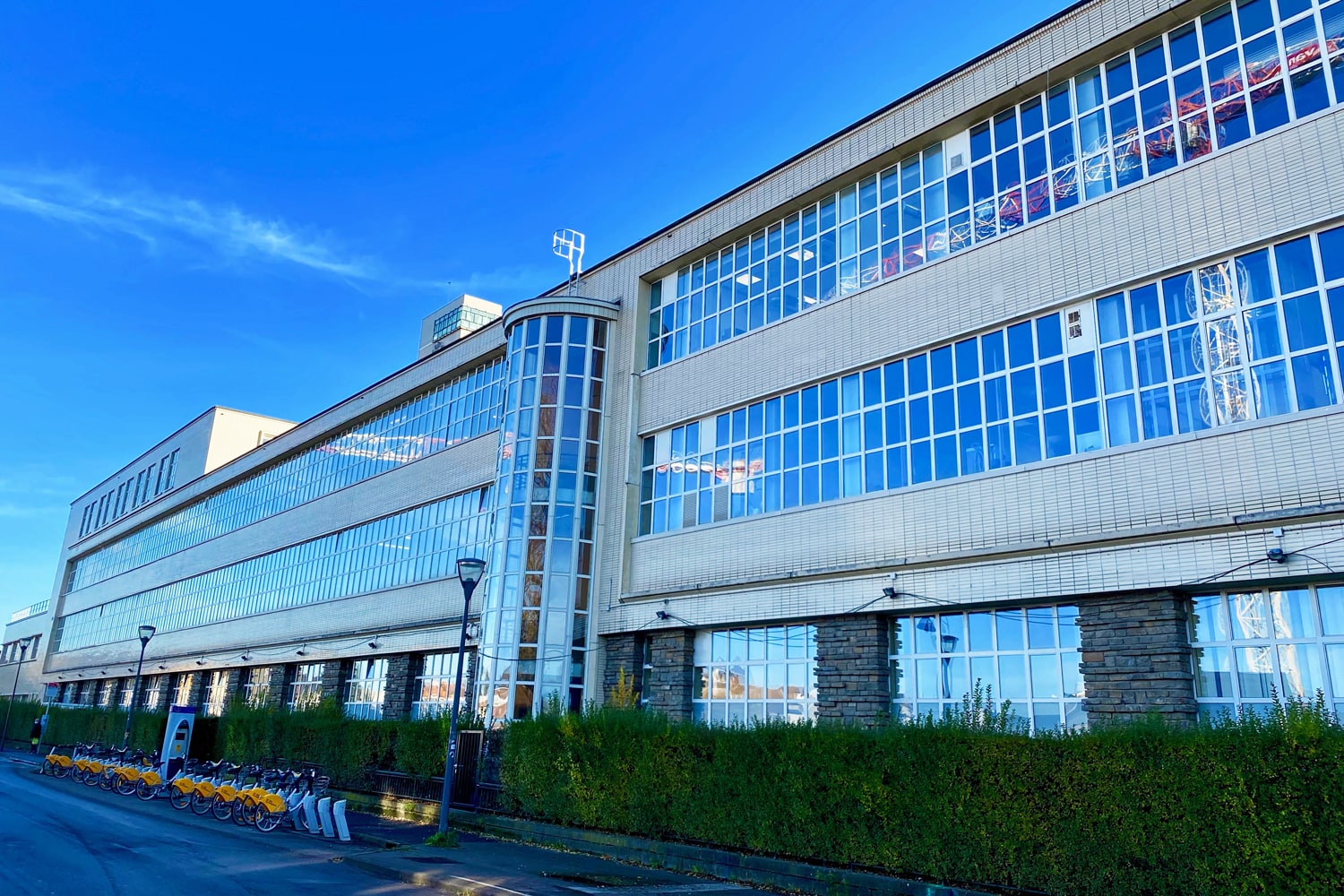
Antoine Courtens-designed CERIA research complex in Anderlecht
Victor Horta had been converted to the potential of simplification and standardisation by his stay in the US during World War I. After the hungry occupation years of World War II, fact-finding missions to America by Belgium’s administrators convinced them of the need for food security through intense industrialisation of production and marketing of taste.
A competition was set up to design a 10-hectare complex on a former patrician estate at the edge of Anderlecht where future leaders of the food and hospitality industries would learn the principles of the vertical integration of consumption.
Antoine Courtens won the commission (alongside Michel Polak and his sons Jean and André) to build schools to teach the application of traditional skills such as butchery, baking and confectionary to mass-market output alongside research facilities and labs honing the industrial standardisation of these techniques.
Bringing the mastery of site he had learned from Horta and developed on a grander scale in Canada, Courtens combined the institutional wings with sports and leisure facilities for the students around an existing lake.
In the 1920s, he had ridden the ragged coattails of the dwindling rentier class, making his name by serving their desires for luxury and functionality through the exquisite detailing and everyday useability of the Palais de La Folle Chanson and the Hôtel Haerens.
CERIA’s mission meanwhile was to manufacture desire for products on a mass scale and the architect’s role was to deliver the functionality. His individuality as a designer was eclipsed by the engineering demands.
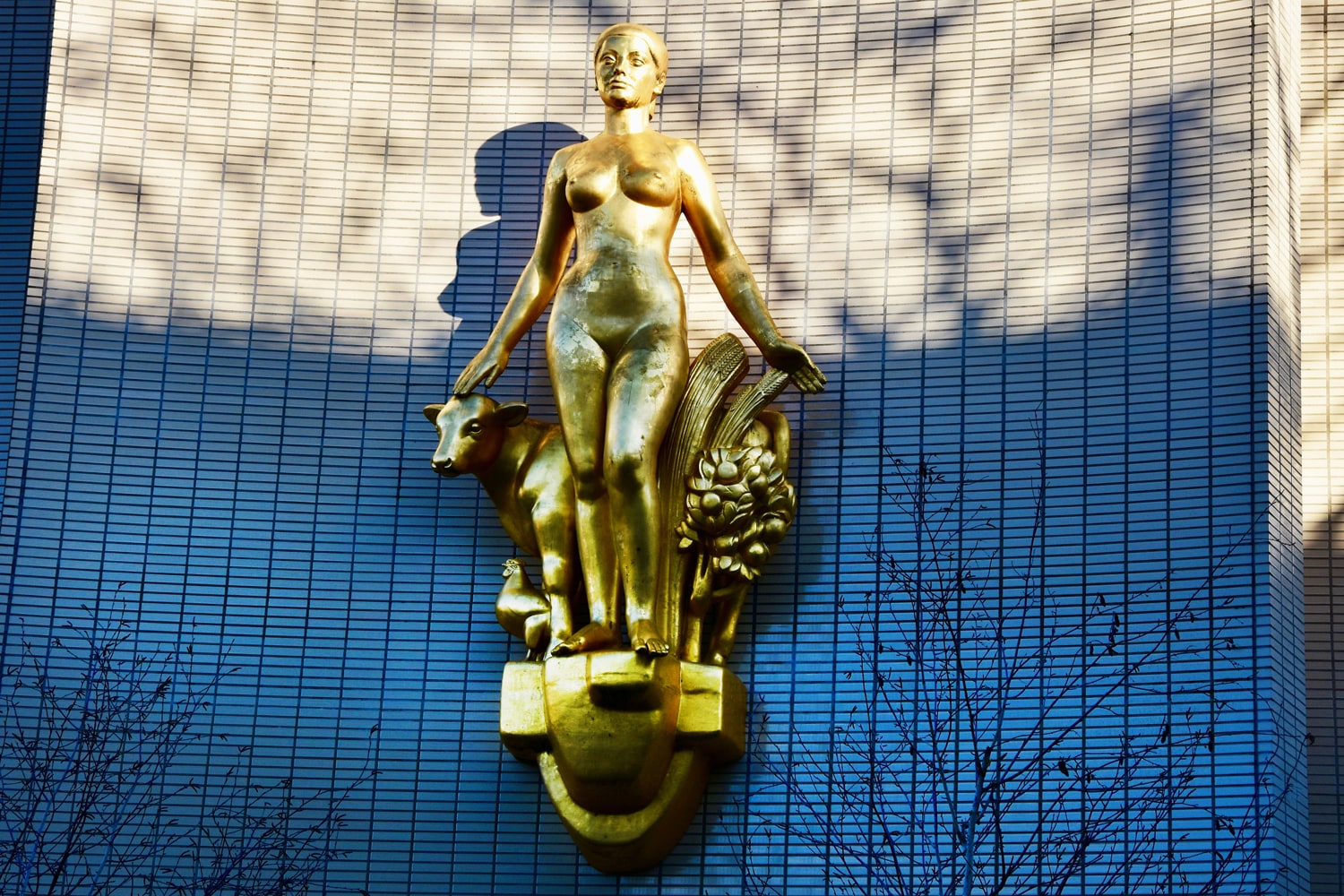
Antoine Courtens' CERIA research complex in Anderlecht
Light and space to circulate were delivered in the form of concrete blocks with long bands of windows. With its curves and its tower adding some character, CERIA is arguably a harmonious ensemble, but like most of Courtens’ later works, it melts into the increasingly functionalist, capable but rather frowsty postwar output of the profession.
To the tastes of the 2020s, it pales against his stand-out creations during the brief flowering of Art Deco. Tastes change however. By 1948, when Courtens secured the CERIA commission, the page had been turned on Art Deco. Le Soir referred to the veteran of that forgotten style as the son of the famous painter Franz. A captive of his connections to the last.
Functionalism in Brussels will have to wait upon further recycling of tastes for now. It is the durable and precious Palais de la Folle Chanson upon which Courtens’ reputation rests and which adorns the cover of a 2002 book about him by Maurice Culot and Anne-Marie Pirlot entitled Antoine Courtens. Créateur Art Déco. Along with the Hôtel Haerens, it is a protected monument and as the face of Brussels Art Deco both buildings have been restored with the aid of public money.
A townhouse on the east edge of Brussels of the same period which shares their design DNA is not protected but has been restored over decades by its private owner. As Brussels celebrates a century of Art Deco, the rising star of 1925 is seeing his star rise again.
