
The City of Ghent has decided not to restitute the painting ‘Portrait of Bishop Antonius Triest’ (around 1630) by the Flemish painter Gaspar de Crayer. The painting, which was acquired in 1948 by the city under dubious circumstances, has recently figured in Belgian media as an example of looted art.
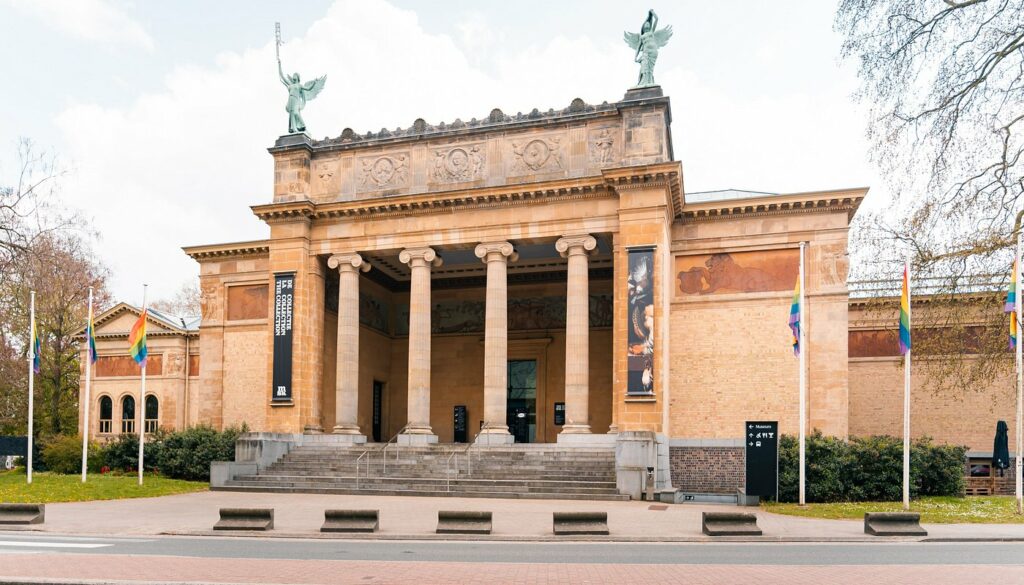
The Museum of Fine Arts in Ghent, the oldest museum in Belgium, writes on its website that the art work was once part of the collection of the Jewish art dealer Samuel Hartveld in Antwerp. In August 1940 he fled with his wife to New York to escape persecution by the Nazi occupiers. His son Adelin stayed in Belgium. He was arrested in January 1941 as a resistance fighter and, after a year of imprisonment, was executed in January 1942.
Hartveld left behind a collection of 66 paintings, which were confiscated by the occupying forces and subsequently handed over to an art dealer and restorer named René Van de Broek.
An independent research commission appointed by the City of Ghent revealed that Hartveld made agreements with Van de Broek and continued to maintain a business relation with him after the war. Following the recommendation in the research report, the city decided on 20 November neither to return the painting to the heirs of Hartveld, nor to compensate them for it.
That said, the commission admits that the portrait “remains connected to an unacceptable act of spoliation (the theft of goods during wartime).” Van de Broek claimed that he had paid for the painting or the whole collection to Hartveld, or to the Nazi appointed administrator who had seized Hartveld’s gallery, but the research could not verify any payment.
The research commission of three experts followed previous research carried out by Geert Sels, a culture journalist at De Standard. In 2022 he published the book ‘Art for the Reich: In Search of Nazi-Looted Art from Belgium’.
When he started his investigative study in 2014, he had to start from scratch. His book has been described as an appeal to the Belgian government to tackle the sensitive issue of Nazi-looted thoroughly. Belgium established for a brief period a research commission but it was not followed up by a restitution commission as in other countries that had been occupied by Nazi-Germany.
Based on thorough investigations of available documents at archives, Sels described in 2022 findings which read as a detective story. Samuel Hartveld left behind an art library and gallery located at Otto Venius Street 3 in Antwerp with a stock of paintings. The art library was completely looted and transported away by the Nazis.
In 1942, the Nazis appointed an “Aryan” administrator by name Heinrich Kunst (!) to take over the management of the gallery. Kunst decided to hand over the business to the young art restorer René Van de Broek. The latter, it turned out, was later suspected of being associated with an organisation which cooperated with the occupation.
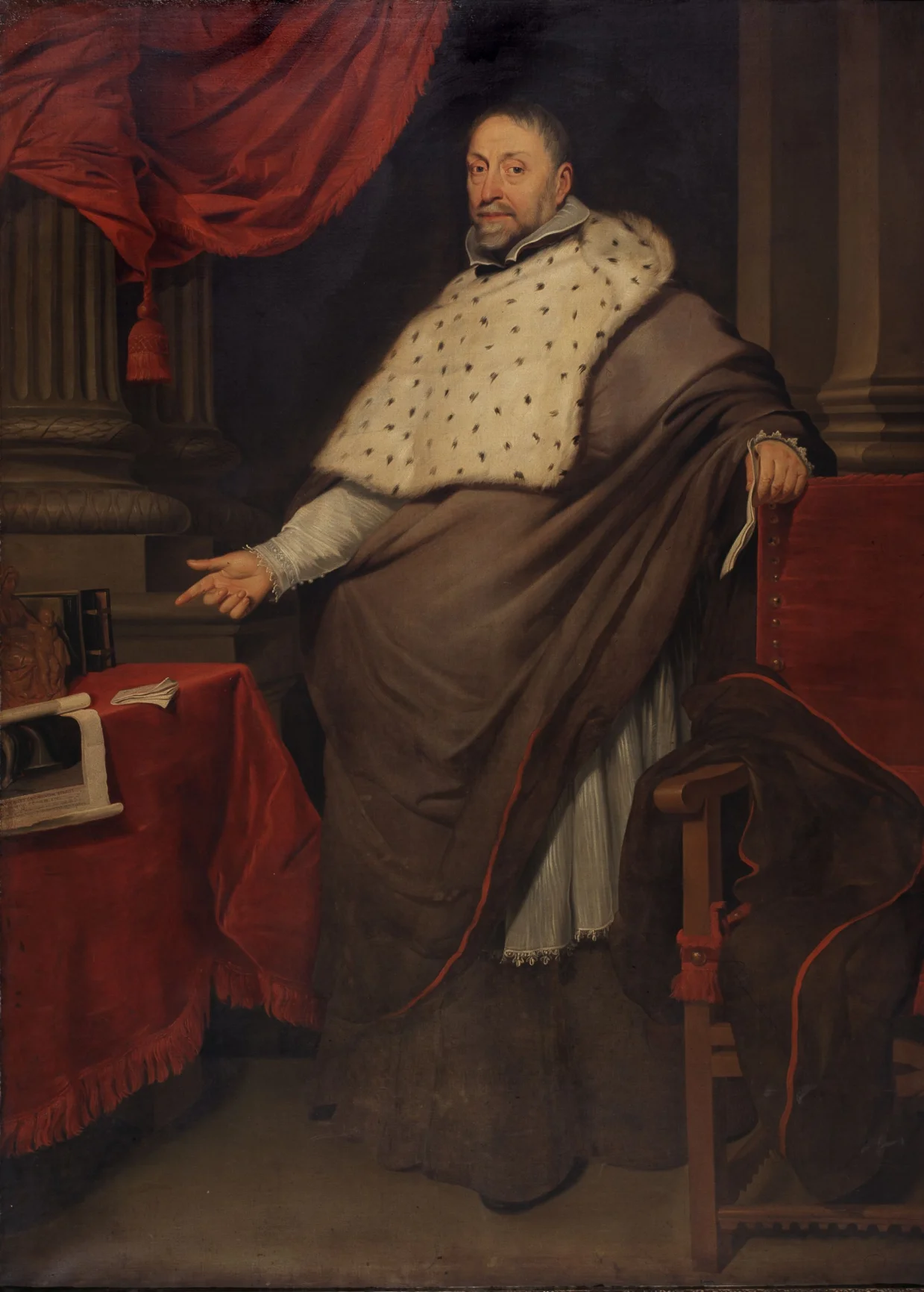
‘Portrait of Bishop Antonius Triest’ by Gaspar de Crayer, credit: MSK
Forged letter
Van de Broek was interrogated several times by the Belgian police for his “unpatriotic” role during the war but was never prosecuted. Among others, he claimed that he had managed Hartveld's property on his behalf during the war and had paid him 200,000 BEF for the paintings. Those who interrogated him at the time found it doubtful.
It gets even more complicated. Van de Broek claimed that he had met Samuel Hartveld in Antwerp after the liberation in 1945 and received a letter from him. In the letter, Hartveld thanked Van de Broek and offered him his business. Sels found the letter and had it scrutinized by a handwriting expert who worked analysing the authenticity of documents for courts.
The expert’s conclusion could not be misunderstood. “Signature to be examined on the document de dato 5.7.1945 is with high probability not the hand of Mr S. Hartveld.”
In Sel’s research, Van de Broek emerged as a person who cooperated with the occupation and cannot be trusted. The commission appointed two independent handwriting experts who both concluded that the letter most likely was a forgery. The letter was disregarded as evidence. Instead, the commission tried to verify the “factual elements” in the letter through other circumstantial evidence.
Bishop Antonious Triest was an extraordinary personality who served in Ghent for 35 years. He was an art patron who cared for the poor and dared to oppose the Pope in Rome. The museum writes that the bishop left a mark on Ghent and that his portrait, in oil on a canvas measuring 229 cm in height and 165 cm in width, cannot be missing from its art collection.
It may therefore come as a surprise that the disputed painting has not been exhibited during most of the years since it was acquired by the City of Ghent and is still stored in depot. The museum did not reply immediately to a request for comment. The commission recommended that a form of "moral reparation” should be implemented by acknowledging the “unacceptable act of spoliation” when exhibiting the painting.
Washington Principles
During the course of the investigation, the Flemish government took the initiative to establish a study committee tasked with preparing a future Flemish restitution framework, in view of the possible establishment of a Flemish restitution committee.
The commission writes that is has been guided by the Washington Conference Principles on Nazi-Confiscated Art, an international soft law instrument signed by 44 states, including Belgium, at a conference in Washington in 1998. According to the principles, in cases of doubt, judgment must favour the despoiled party.
The ad hoc commission in Ghent highlights the need for a national, credible framework that aligns with Belgium’s endorsement of Best Practices, the World Jewish Restitution Organization (WJRO) commented in a press release.
The organisation told The Brussels Times that WJRO does not take positions on the specifics of individual restitution cases and that its focus is on the broader systemic issues. “As an ad hoc, city-level procedure, it did not incorporate broader stakeholder participation, including representation from the Jewish community, nor was it designed to reflect shared national and international criteria.”
“A credible restitution system must be independent, transparent, and guided by clear standards,” said Gideon Taylor, President of the World Jewish Restitution Organization (WJRO). “Belgium has endorsed the Washington Principles and the Best Practices, now it must build the mechanisms necessary to implement them.”
WJRO welcomes recent developments in Flanders, including the government’s announcement of its intention to establish a Restitution Commission beginning in 2026. Proposals under discussion include enhanced provenance research, improved academic capacity, the creation of a dynamic database to track Nazi-looted art, and cross-border cooperation with neighboring countries.
Update: The City of Ghent has confirmed that the Museum of Fine Arts in Ghent will display the painting as part of the permanent collection presentation as a form of moral reparation. The museum finds it important to explain the history of spoliation during the second world war.
