For nearly three decades, I’ve been haunting Brussels’ concert halls, smoky bars and the occasional damp basement, watching the city’s musical landscape shift, morph, and reinvent itself.
Since early 2024, I’ve also been writing a monthly gig guide, which has forced me to pay closer attention to the new generation of Belgian bands bubbling under the mainstream radar.
These are the acts that most people – caught up in work, family, and Brussels’ constant whirl – rarely have time to discover. But they are the lifeblood of a creative ecosystem.
When I say “new,” I mean artists who’ve emerged or reshaped themselves in the past three years. The four groups I’ve chosen here all share one defining trait: a distinctive sound.
Belgium’s music scene has always punched above its weight – producing everything from Jacques Brel’s theatrical chanson to Stromae’s genre-defying pop and the pounding industrial beats of Front 242.
Belgium, of course, is a small country, and its music market is small compared with those of France, Germany or the UK. Add to that the language divide – two cultures, two industries, often two separate worlds—and you begin to see why breaking through is such an achievement.
Few Belgian artists now sing in French. For better or worse, English has become the default for ambitious musicians: it opens doors in Germany, the Netherlands and beyond.
Flanders has become a more supportive environment for young artists. Several of the musicians I spoke to for this piece live there now, even if they grew up elsewhere. Ghent, in particular, has quietly established itself as Belgium’s musical capital – a place where rehearsal spaces, record shops and student cafés form a self-sustaining ecosystem. Even Eosine’s Elena Lacroix, who is originally from Liège, has moved to Ghent.
Ão – melancholy in motion
Ao
Of all the acts I’ve encountered recently, my most cherished discovery remains Ão, a band that first caught my ear at the Brussels Jazz Festival in 2023. I wrote about them soon after, and my fascination hasn’t dimmed. If anything, they’ve only deepened their appeal – a band whose sound feels both ancient and futuristic, intimate and oceanic.
Ão’s sound is an intoxicating blend of Portuguese and English folk sung by Brenda Corijn – who has Mozambican and Belgian parents – layered with Jolan Decaestecker’s electronic textures, Siebe Chau’s acoustic and electric guitars, and Bert Peyffers’ deft percussion. The word that best captures their music is saudade, that Portuguese expression for a yearning for home and the familiar, the bittersweet ache of fado.
Their debut album Ao Mar (“To the Sea”) captured the sense of longing and motion that defines them – songs that drifted like waves, dissolving boundaries between genres. Their forthcoming second record, Malandra (Portuguese for “naughty girl” or “trickster”), promises something bolder and more self-reflective. “It’s if I’m watching the world watching me and how the world portrays me or what role I play,” Corijn says.
Musically, Malandra is richer, louder, more tactile. Producer Siebe Chau, who also plays charango – a small Andean string instrument – helps stretch the band’s sonic palette, fusing organic and electronic sounds. The first single, Talvez (“Perhaps”), pulses with defiant confidence, layering her smoky vocals over a heartbeat rhythm and glimmering synths.
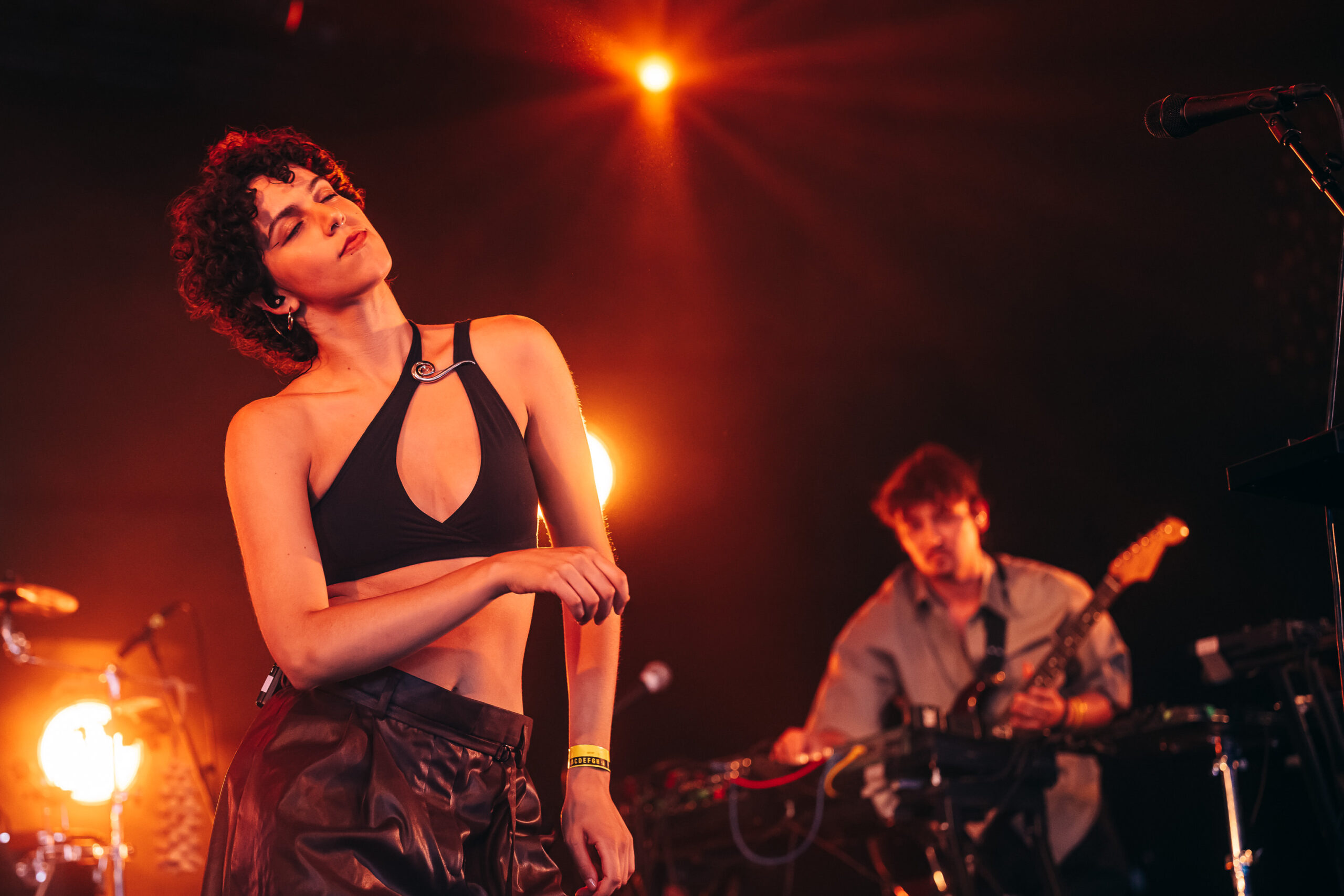
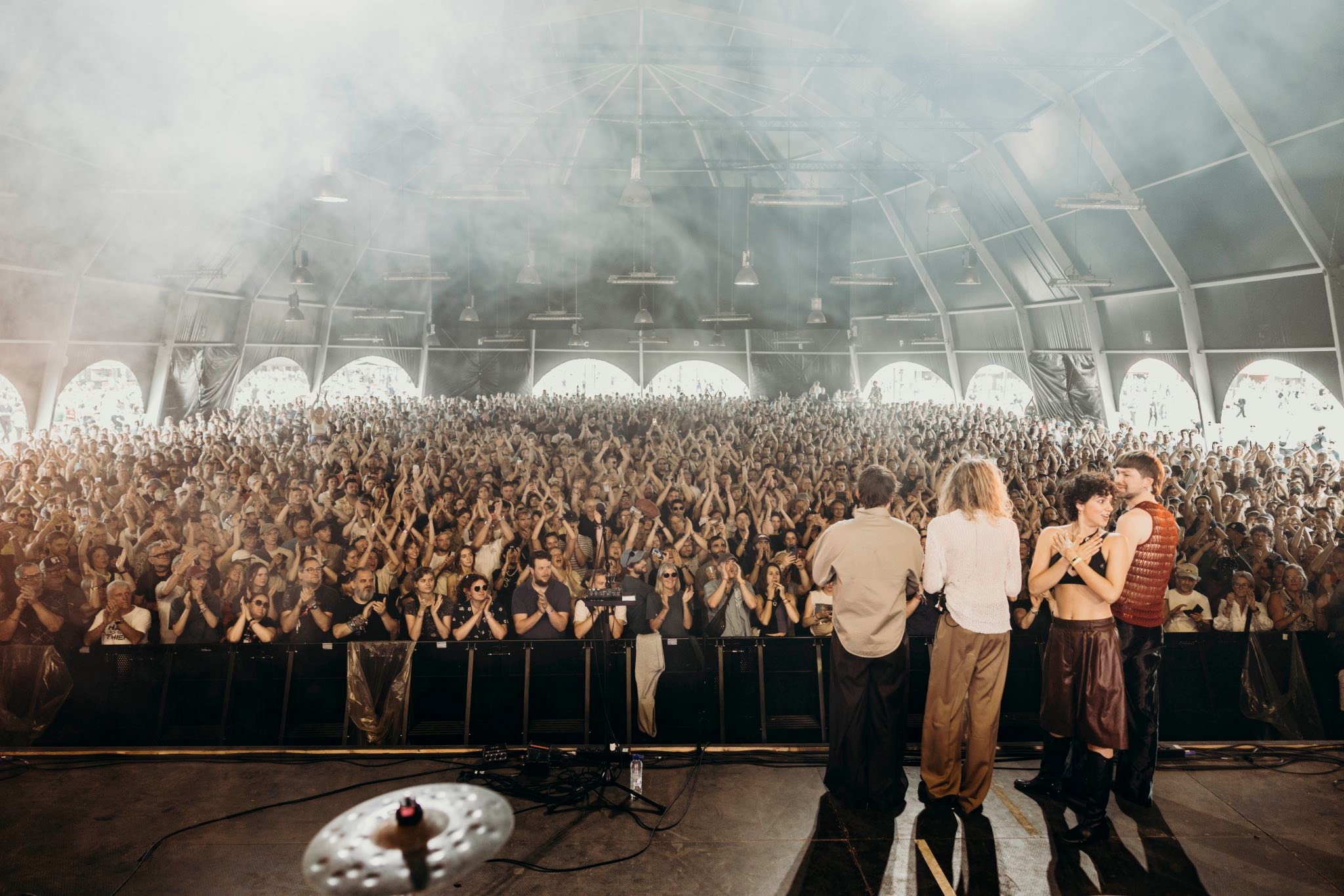
Ão’s stage presence has evolved too. At Pukkelpop 2024, Corijn’s performance felt almost ritualistic. Midway through the set, she was lifted – literally – by capoeira dancer Kazanga Jonathan Linga, flipping over his shoulder in one sweeping motion. “It was an absolute risk,” she said afterwards. “But it worked.”
Their rise has been steady and well-earned: festival appearances from Hamburg’s Reeperbahn to Paris’s MaMA and Lisbon’s Musicbox, plus a string of sold-out Belgian shows. Next March, they return to Ancienne Belgique in Brussels to launch Malandra – a night that could well mark their graduation from Belgian treasure to European sensation.
Lézard – new wave with Belgian surrealism
Lézard
If Ão are the soulful dreamers of this new wave, Ghent’s Lézard are the kinetic counterpart – a band that makes irony danceable and existentialism sound like a party.
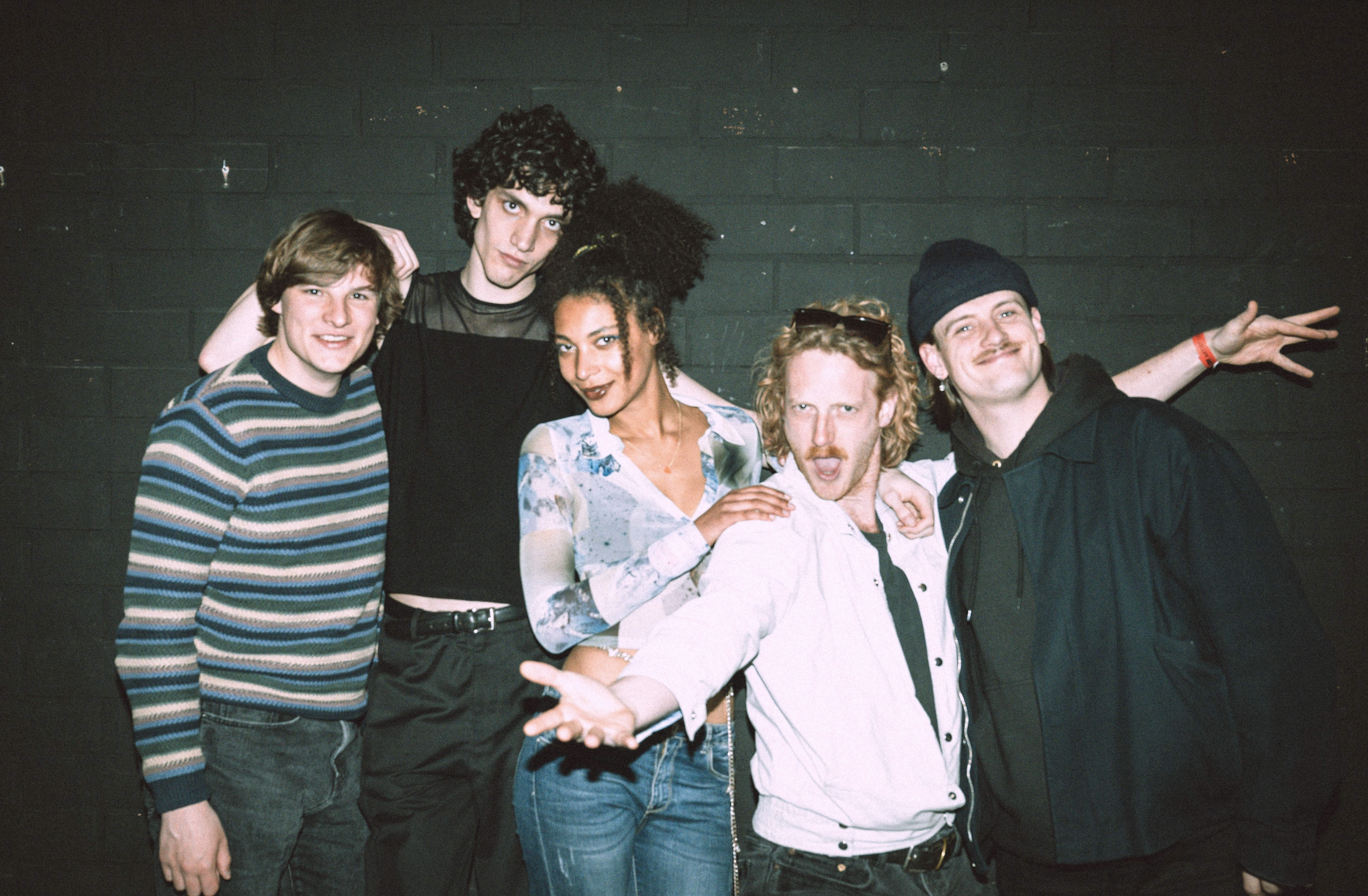
They’re a five-piece whose DNA blends Talking Heads’ angular art-rock, Chic’s disco groove, and LCD Soundsystem’s deadpan wit. Onstage, they ooze charisma and chaos in equal measure. Frontman Neil Claes, tall, bespectacled, and self-deprecating, looks like a philosophy student who wandered onto a stage and never left.
But Lézard aren’t a tribute act. Their charm lies in their blend of irony and warmth, turning awkwardness into energy. They describe themselves as “a Boogie Wonderland for oddballs, misfits and lost souls”, a reference to Earth, Wind and Fire’s dancefloor classic.
Their name – French for “lizard” – is a playful nod to Belgian surrealism and the band’s bilingual roots. That sense of tongue-in-cheek absurdity carries into their lyrics. One of their early songs, Manifastique, was born during a late-night jam session in rural France, fuelled by local wine and too much cheese. It’s a made-up word – a mix of ‘manifest’ and ‘fantastic’, Claes explains. At one point, the chorus goes, “These grapes have a different sound,” – which kind of sums up Lézard.
Behind the humour, though, is sharp musicianship. Lézard’s rhythm section locks into grooves so tight they could soundtrack a midnight chase through a Brussels underpass. Their live shows are sweaty, ecstatic affairs – half performance art, half therapy session.
After a run of small festivals, Lézard are starting to attract international attention. They’ve played at London’s Windmill in Brixton – a venue that launched bands like black midi and Shame – and at Hamburg’s Reeperbahn Festival. Their debut album, due early next year, promises to channel all their onstage delirium into a record that’s as strange and irresistible as Belgium itself. A showcase gig at Brussels’ Botanique is already pencilled in for spring.
Use Knife – industrial fury meets Arabic fire
Use Knife
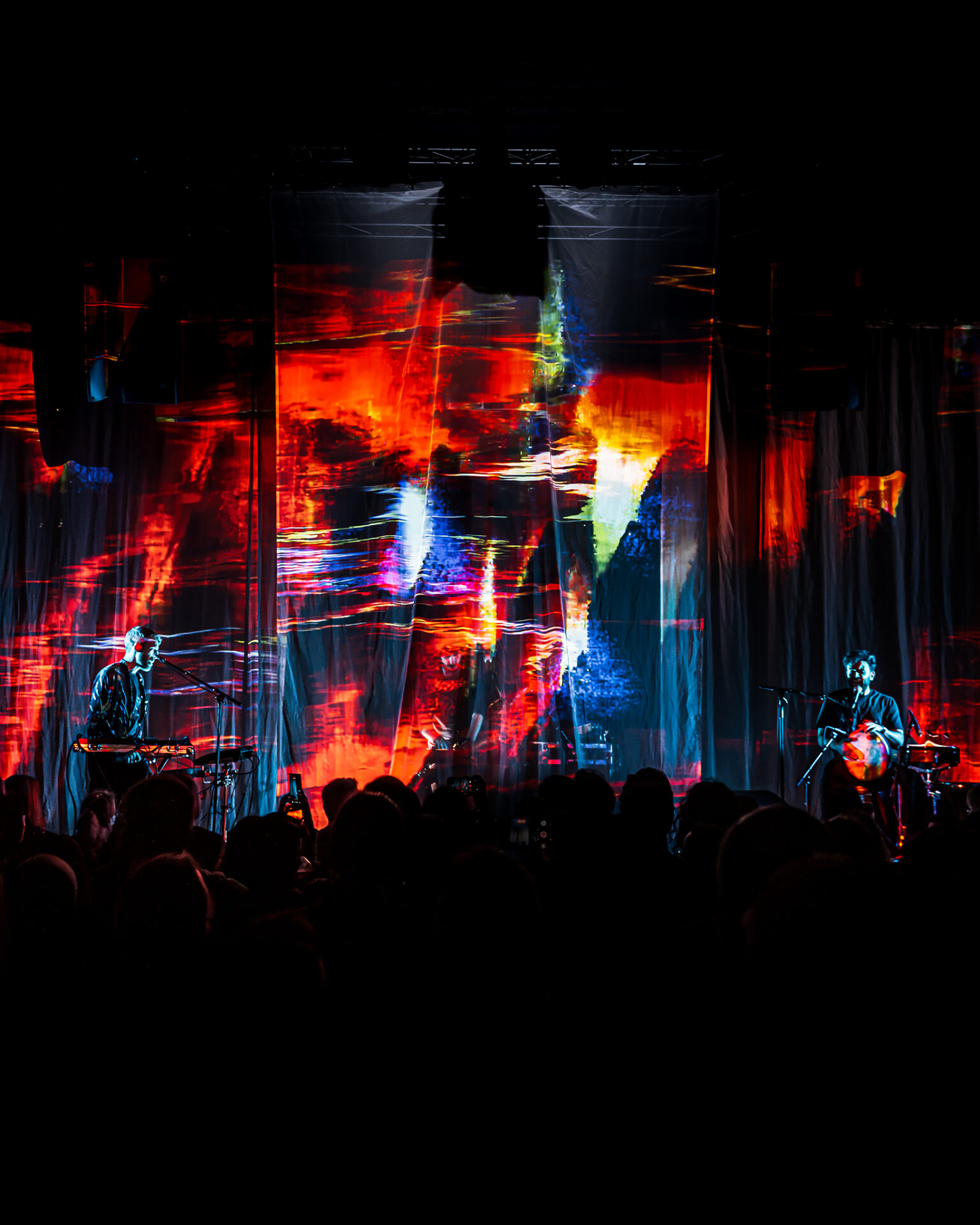
Then there’s Use Knife, perhaps the most uncompromising act in the current Belgian wave. The band, also based in Ghent, are Flemish musicians Kwinten Mordijck and Stef Heeren, plus Saif Al-Qaissy, an Iraqi percussionist who came to Belgium as a refugee.
Heeren, who founded the exquisitely named Kiss the Anus of a Black Cat, and Mordijk combine to create intense electronic sounds and beats that draw on the legacy of bands like cult Belgian Electronic Body Music pioneers Front 242. The band fuses this wall of sound with the Arabic percussion of Saif, played on traditional instruments like the darbuka, and sampled vocals in English and Arabic.
Heeren explains that the three jam together in the studio before editing the best parts for inclusion in the final version of the track. The combination of electronic sounds with Arabic-language vocals and drums recalls experimental bands like Cabaret Voltaire or Brian Eno and David Byrne’s My Life in the Bush of Ghosts. Use Knife’s second album, Etat Coupable, is a pun on coup d'état and encapsulates their political stance.
Eosine – dream pop with a doctor’s precision

Eosine
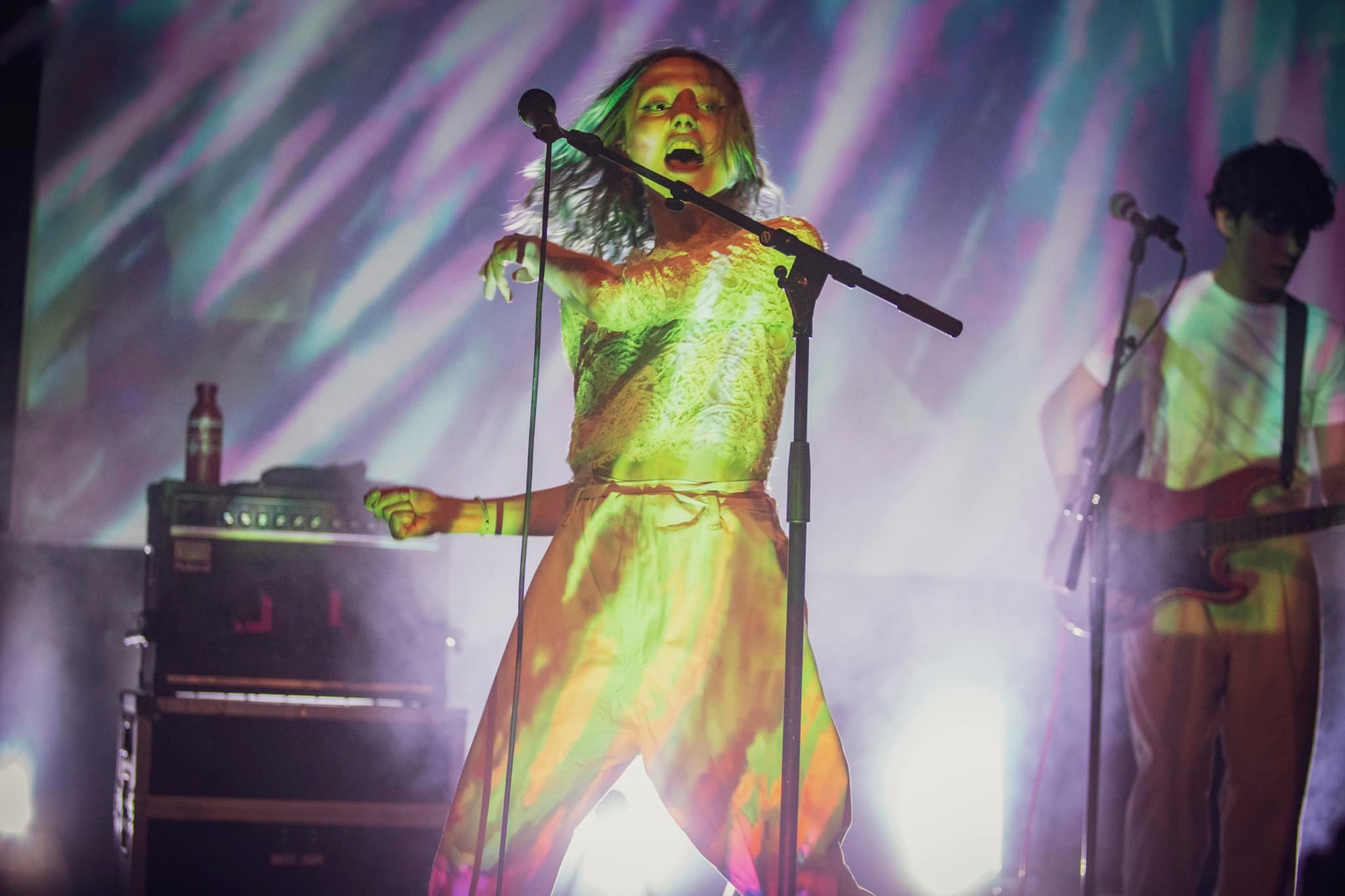
For the last band in this far-from-exhaustive list, we finally go to Wallonia. Well, sort of. Eosine, led by Liège-born singer-guitarist Elena Lacroix, create music that feels like a fever dream – ethereal, disoriented, yet anchored by an emotional clarity that borders on scientific.
Lacroix started writing songs at 16 and studied medicine for five years before committing fully to music. The band’s name comes from eosine, a pink disinfectant used to clean wounds and stain tissue slides for laboratory analysis. The dual meaning is deliberate: it reflects Lacroix’s link to both science and art. During their live shows, Eosine sometimes project microscopic slides of stained tissue behind them — a vivid visual echo of their meticulous yet emotional music.
Their early releases blended the shimmering guitars of Ride and Slowdive with the ethereal vocals of dream-pop pioneers Cocteau Twins. Over time, Lacroix’s singing has become more forceful and expressive, as she has explored different ways to use her voice. Now she screams and uses the full power of her voice for emotional effect, paired with high-energy delivery.
While I suggest throwing oneself around on stage is not the usual way that singers in shoegaze bands behave, Lacroix tells me to listen more carefully to songs like Digitaline or UV. She points out that her songs deal with disassociation or fragmentation, “like the feeling after you've been confronted with something you can't cope with. You just feel like you're not yourself anymore.”
Eosine
Eosine’s rise owes much to Belgium’s system of rock competitions and grants. Winning the Court Circuit contest in 2022 gave the band not only €5,500 in prize money but also invaluable mentorship from industry professionals, leading to a deal with the Kortrijk-based Mayway Records label.
After releasing their Liminal EP in 2024, along with five earlier singles, Lacroix and her bandmates have just finished recording their first full-length album, due in 2025. A Brussels show for the album launch is already planned.
Beyond the spotlight
Beyond these four, the Belgian underground continues to hum with energy. There’s Plexi Stad, a wiry post-punk band channelling Wire and Gang of Four; Druug, the krautrock revivalists from Liège; the melancholy yet melodic Haunted Youth; and Peuk, a fuzzed-up garage duo from Limburg who prove that noise can be joy.
The infrastructure is there too. Venues like Ancienne Belgique, Botanique, and Ghent’s Vooruit offer not just stages but residencies, workshops and platforms for experimentation. Flemish public broadcaster VRT’s De Nieuwe Lichtingcompetition remains a vital launchpad, while Francophone initiatives like Court-Circuit and Le Botanique’s Les Nuitsfestival ensure that the Walloon side of the border keeps humming.
Still, the best discovery method remains the simplest: go out. Skip the big touring names for once and dive into a smaller venue. Let yourself be surprised.
Buy a ticket, take a chance. Belgium’s bands are carving out something bold, funny, and unmistakably their own. They deserve your ears. I promise, you won’t leave disappointed.
