
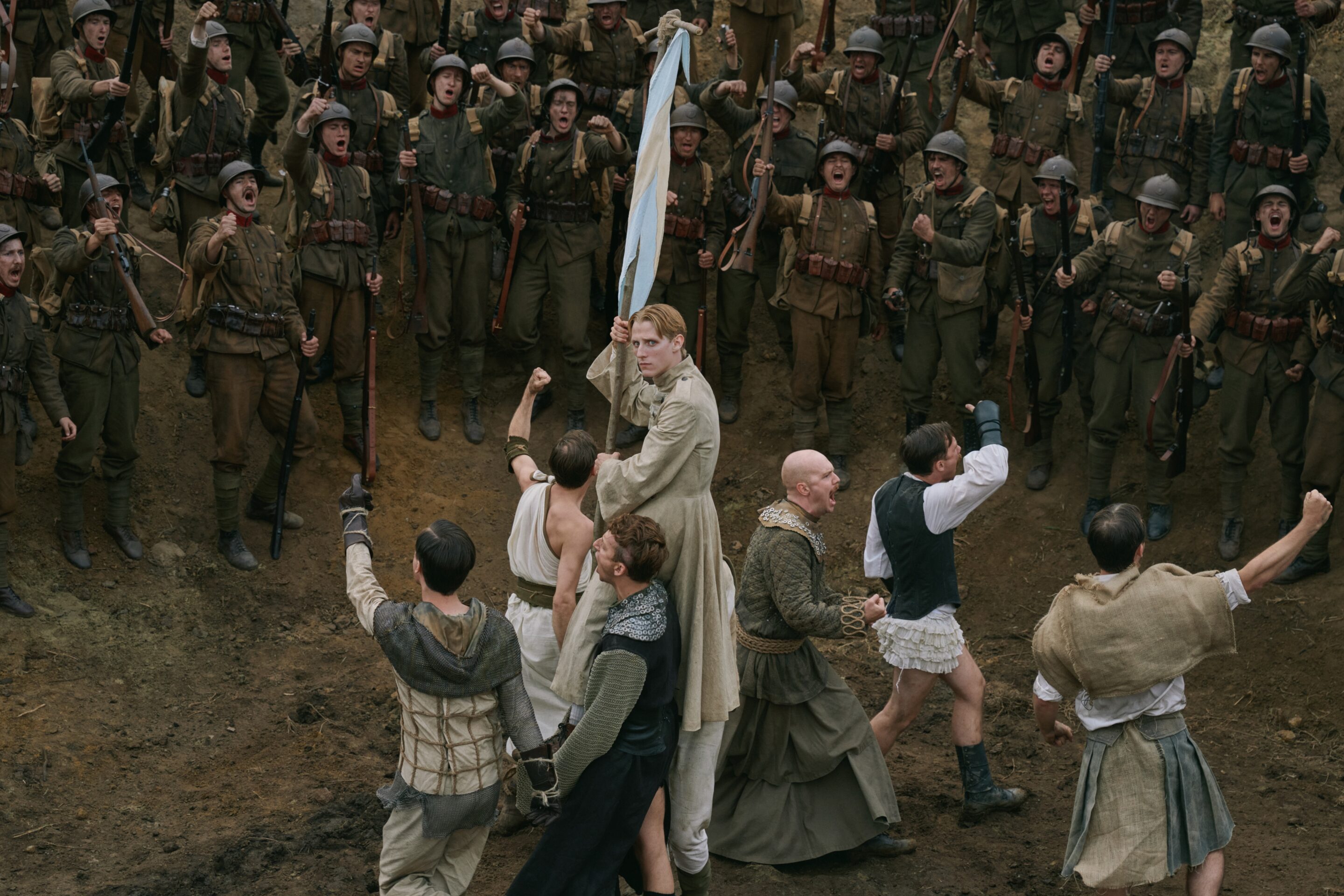
Lukas Dhont uncovered an aspect of the First World War forgotten – or ignored – by historians: drag shows on the Western Front. The Belgian film director talks to Lisa Bradshaw about his new Cannes-award-winning movie Coward, the politics of memory, and being queer – then and now.
Pierre conforms to expectations of a new soldier on the front line. He keeps his head down, works hard even as his arms collapse under the weight of bombs and bodies, and stays quiet in the face of questionable transgressions. When he does open his mouth, it is to utter words he knows will be received well – whether he means them or not.
The protagonist of the new Belgian film Coward, Pierre (Emmanuel Macchia), begins to find his true voice amid the horrors of the First World War and a burgeoning – if taboo – relationship with fellow soldier Francis (Valentin Campagne). Following its success at the Cannes Film Festival last spring, Coward opens Film Fest Gent on October 7 before its cinema release two weeks later.
Following Girl and the Oscar-nominated Close, director Lukas Dhont returns to the theme of young people struggling to break a deafening silence. It’s a subject he knows well. “I went to a very Catholic secondary school,” he tells me from across the table at a busy coffee house in Ghent.
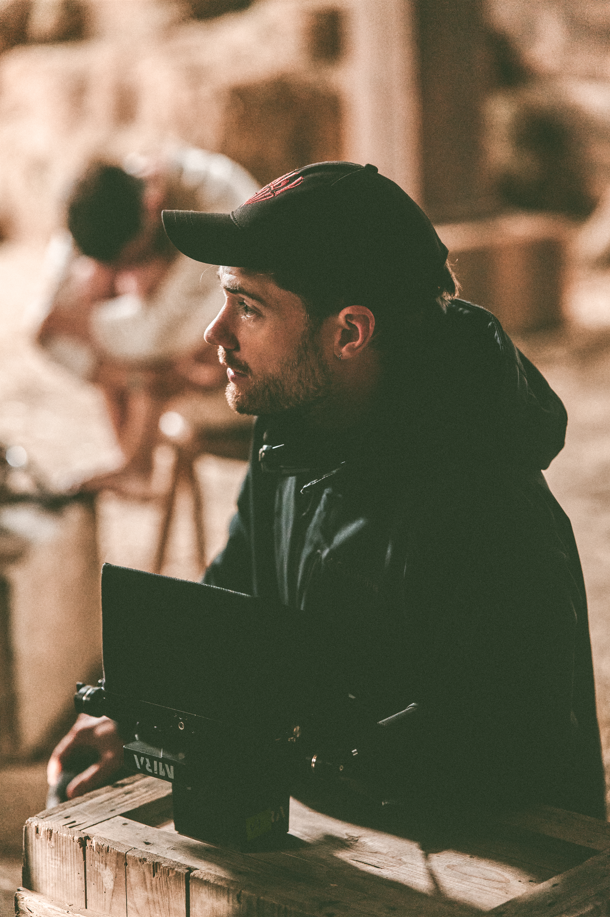
Lukas Dhont. Credit: Zeb Daemen
“We wore uniforms, it was very... coded. The fact that I was gay did not enter any discussion. But when I went to film school, all these teachers were like ‘you should express yourself, what do you want to say?’”
He was 21 and knew exactly what he wanted to say. “Starting to create work made me realised that if I wanted to be authentic, I needed to stand in my truth.” He came out, but didn’t stop there. Now 35, he has devoted his career to films illustrating the dramatic consequences of young people burying their emotions and swallowing their words.
The concept of Coward, however, began with something very material. Dhont was wandering around a bookshop in Paris a few years ago when he came across a book about cross-dressing. On the cover was a photograph of a First World War soldier in a dress, performing for the troops.
“Of course I opened this book,” Dhont laughs, before launching into the story of drag on the Western Front – something he, like most people today, didn’t know existed.
Dressing for the front
“These photographs show men performing theatre – sometimes very improvised with a few ammunition boxes as a stage, but sometimes much more advanced. Women in general did not get close to the front line, so women’s roles had to be played by men.”
Cross-dressing is a theatrical tradition, of course, from Elizabethan England to pantomime. But this was happening amid one of the most gruesome wars in history.
During research across France, the UK and Belgium, Dhont and co-screenwriter Angelo Tijssens discovered an entire culture of drag during the First World War. Soldiers became remarkably creative, building stages and making costumes out of parachutes, ropes and bullets. There was even a travelling show to entertain troops across the front line.
And it wasn’t confined to the stage. “One soldier described how another soldier in their camp would put on a sandbag skirt with a sandbag bonnet and play ‘mother’. When they went to bed, this mother figure would come around and kiss them all good night.”
It’s playful and fun – but also profoundly sad, Dhont finds. “They created the illusion of a presence that they missed. It was sort of a way to bring something there that was taken from them.”
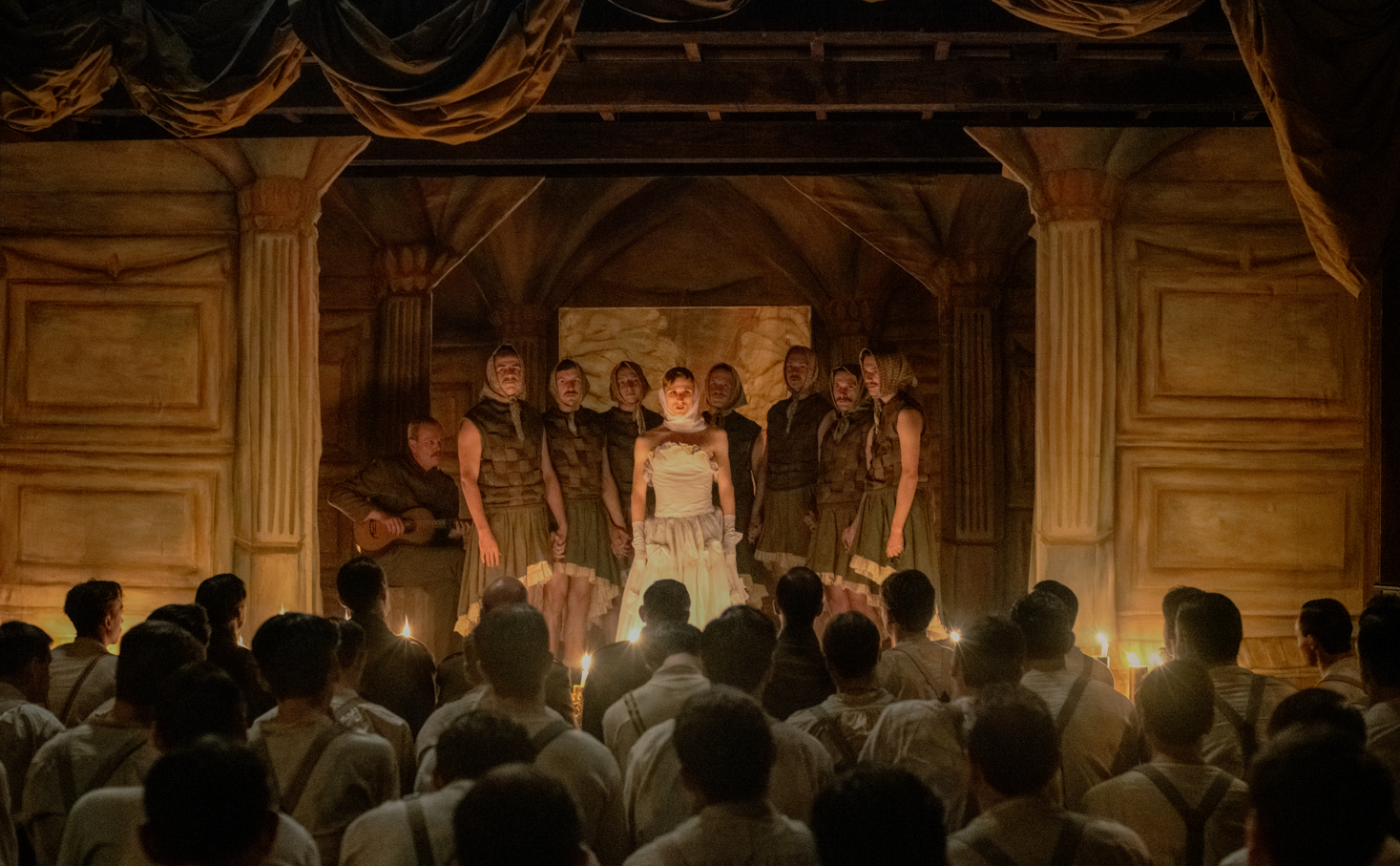
Still from Coward. Credit: Kris Dewitte
On stage, some soldiers became stars. “The men who were really good at it, who were drag avant le lettre, were idolised. They were icons. Soldiers took photos with them to send back home. I find this to be revolutionary.”
And the wheels began to turn in his head. “For a lot of men, we know this has nothing to do with their sexuality. It’s just joy, just slapstick. But I had to ask myself: what if for someone at that time, it wasn’t only fun but something much more profound?”
While this helped flesh out the story, Dhont knew from the moment he glimpsed the book’s cover that this was his next movie. “I was so confronted by our politics of memory when I saw that photo,” he says.
“I grew up in Belgium. The First World War is part of our education. I drive past the cemeteries when I go visit my boyfriend. And yet I had never seen these pictures. Why are we hiding them?”
In Coward, Pierre – a farmhand before the war – is roped into painting scenery by Francis, who puts his own training as a tailor to good use. As Francis transforms into a drag performer, Pierre watches with more than a little curiosity. The ethereal moment when lips finally meet whisks those hidden photos right into the light of day.
The armour within
Dhont’s other films feel closer to home. Girl, about a trans teenager training in Antwerp’s ballet school, is based on a friend of his. Close, which explores the opposing reactions of two boys when their relationship is questioned, reflects his personal experiences growing up.
But Coward draws just as much on his own life, he insists. “Masculinity, for instance – how men are expected, forced really, to express themselves, or repress themselves.”
The director grew up in Zingem, now part of Kruisem, about 18 kilometres south of Ghent. He was an effeminate kid and was bullied. “Every time I moved, every time I opened my mouth, I was made fun of, ridiculed, seen as weird.” His brother, two years younger, is also gay. “He was bullied even more than me. And so I didn’t only see it through myself; I also saw it through him.”
Dhont is refreshingly straightforward when talking about his feelings. Exceptionally friendly and at the height of his career, he comes across as confident and at ease with himself. In a simple black T-shirt, headphones around his neck, he has nailed casually smart in both look and personality.
And yet he describes a life spent trying to change who he was in order to belong. “A lot of people will recognise this, even if they’re not queer, because it’s a universal experience. And today it is something I’m still unpacking, this desire to please everyone. I’m trying to unravel the armour I created to protect myself from that shame.”
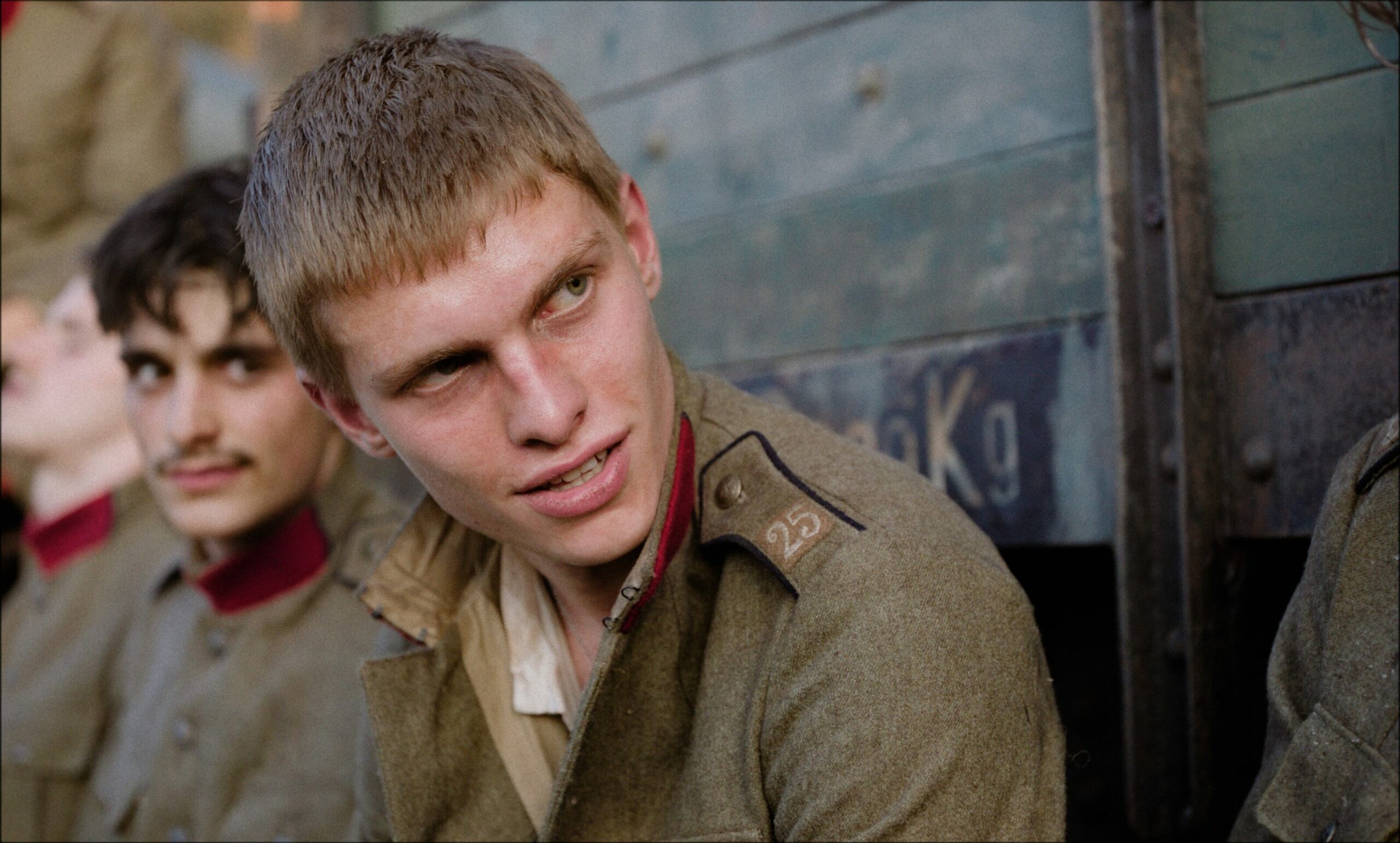
Still from Coward. Credit: The Reunion
Like Francis and Pierre in Coward, he turned to the arts to find beauty in the world. He read a lot of books and listened to music, but it was cinema that really took hold of him, and of his brother. He gleefully recounts his “obsession” with horror movies.
“Every Wednesday, we would go to the video store, and I would rent those movies. My mother couldn’t even watch them – Texas Chainsaw Massacre, Friday the 13th, all of that. I devoured them. It was only much later that I did some reading about how a preoccupation with horror is often linked to this idea of being an outcast, someone being pushed out of society who wants to take revenge on that society.”
Dhont’s mother was a film fan herself and supported her sons’ interest in cinema (if not in slasher flicks) by renting a VHS camera. She also taught fashion at an art school, and let the pair root around in her work materials for costumes. All so Dhont could make his own horror movie, for which he already had a script.
“I was about 13. I could barely even write,” he laughs. “I think she wrote some of the scenes, I was just dictating it to her.” Dhont shot the movie; his mother and brother were the actors. Then, in a move recalling Steven Spielberg’s semi-autobiographical The Fabelmans, Dhont began filming his mother around the house. He asked her questions and filmed the answers.
Dhont would later attend film school in Ghent, where he still lives. “I shot both fiction and documentary there, and I would say that I learned more about filmmaking through documentary. I learned about listening and looking and about curiosity towards the people who I’m putting in front of the camera.”
Casting about
They are skills that have paid off. His lead actor in 2018’s Girl, Victor Polster, was a dancer with no acting experience. Among Girl’s Cannes prizes was the Un Certain Regard best actor award for Polster.
And then there is Coward, which saw Dhont doing casting calls in agricultural schools in Wallonia. “In the movie, Pierre grew up on a farm, worked in the fields,” he explains. “And I thought – just like with Victor, who was a dancer – that working with the earth says something about how they hold their bodies.” His eye fell on Emmanuel Macchia in a cafeteria. “When I saw Emmanuel, I saw someone who was holding back.”
Dhont approached him about auditioning. “He spoke very little and very quietly. But he agreed to do the audition.” Last May, the Cannes Film Festival announced a double award for Best Actor: Macchia and his Coward co-star Valentin Campagne. They still have trouble believing it.
“I’m pretty sure they weren’t even aware that this was a possibility,” Dhont says with a smile. “If you watch Emmanuel’s face during the clip of the announcement, you can see he’s not really getting it.”
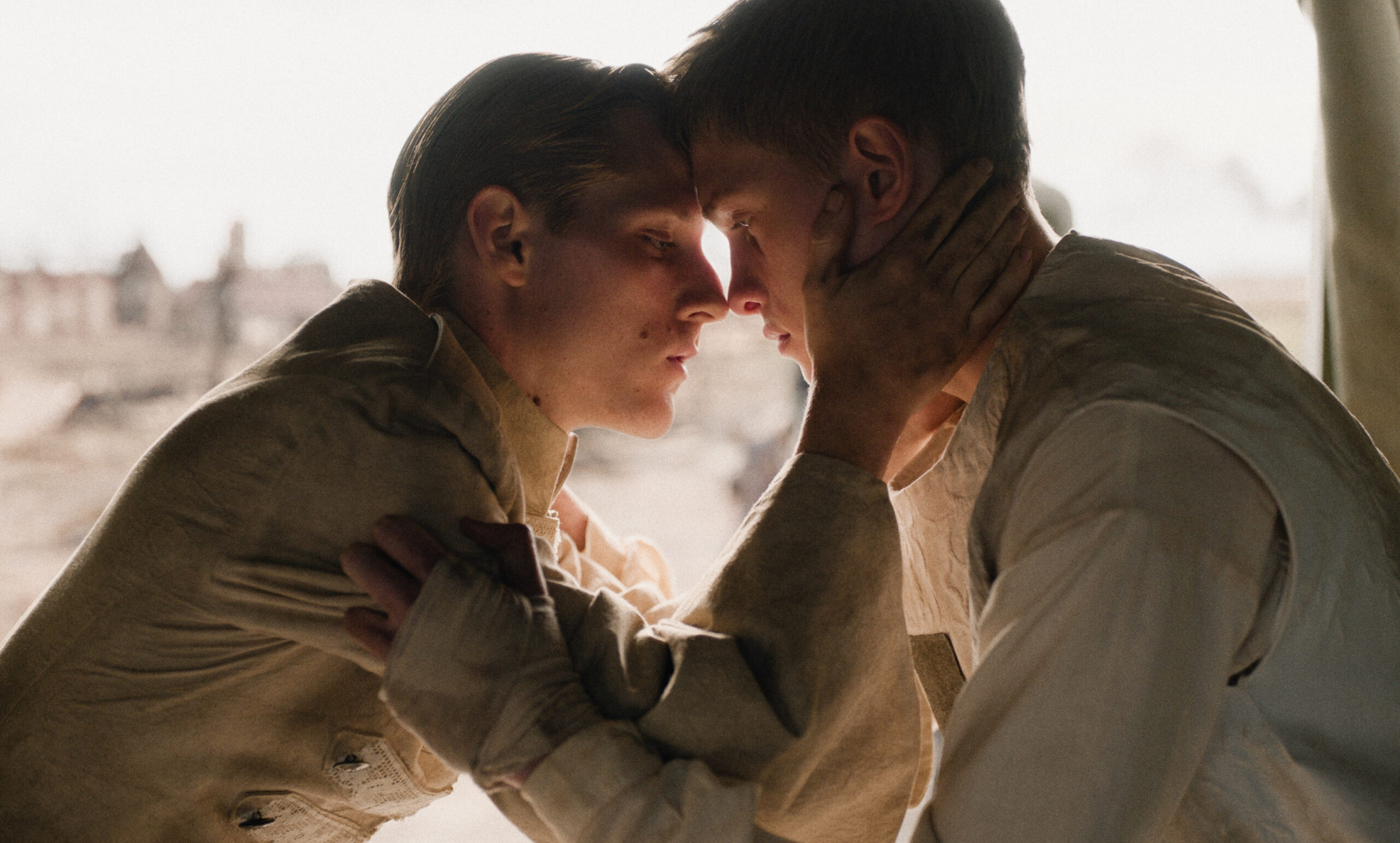
Still from Coward. Credit: The Reunion
But the audience got it, giving Coward a 13-minute standing ovation after the screening. Dhont points to his casting methods as a way of finding the real deal. He matches the person – actor or not – to the character.
“Angelo and I write films that are so much about interior worlds that cannot be expressed through words. So what I’m looking for in these young people is the ability to translate that. There is something in the look of someone, in their gaze, that resonates with all of these characters.”
He is beyond delighted that Macchia and Campagne shared the acting prize. “I’ve had the joy of working with great people, but I’ve never had two people more fond of each other than those two.”
Dhont returns to his mother and brother, his “first actors”. It was his mother, again, who got him on to his first film set. She had a friend in costume design who hired Dhont to assist on movies and series when he was just a teenager.
His parents split up when he was little, but he gets along with his father just fine, he says. His father is an entrepreneur, which could have informed Dhont’s own leadership skills. “Making a film is a whole machinery, a big group of people who are putting their hearts and souls into making something and need to be led to a certain degree. So I have that intrinsically through him.”
Breaking the silence
Hearing more about his parents raises the question: why could he not come out to them when he was suffering so much emotionally? I expected a long silence, but that’s not Dhont. I can never ask him anything he has not already thoroughly considered.
“Silence is incredibly painful,” he begins. “If I was surrounded by these kinds of people, why couldn’t I talk about it to them? And if they are open-minded, why could they not talk about it to me?”
He hits on a topic that makes the rounds in the queer community: if parents respond that “they always knew”, why didn’t they say something? “There is something deeply rooted in our society that stays very centred on certain norms, on ideas of what it means to be a man, to be a woman, of how to live our sexualities,” he says.
When he came out to them, they experienced a tremendous amount of guilt. “To understand that your child has felt hurt and kept something hidden and maybe had this whole process of internalising violence, it’s very difficult to hear. The guilt of not speaking, of not questioning, of not having been there.”
And if Dhont felt he could not tell his loving and supportive parents, what must it be like for other young people who do not have the luxury of that kind of home life? “That’s why it’s so important to make a film like Coward,” he says. “It’s a film that is also romantic with a capital R. Two people, in a time when this love could not speak its name, love courageously. They choose love. That is an act of resistance. Of courage.”
'Painfully relevant' – Coward at Gent Film Fest
Lukas Dhont’s Coward will open the 53rd edition of Film Fest Gent, Belgium’s largest film festival.
His previous two films received the same honour, setting a record for the number of films by one director chosen to open the festival. Dhont and the cast will attend the invitation-only red-carpet opening at Kinepolis Gent on 7 October.
The simultaneous public opening at the VierNulVier cultural centre sold out quickly, but the film will also screen as part of the regular festival programme before opening in cinemas on 21 October.
“Coward is a war film, a genre rarely seen in Belgian cinema, through which Lukas further deepens his own visual language,” says the festival’s programme director, Wim De Witte. “It tells of the search for solace in the beauty of art amidst the horrors of war. A story that, unfortunately, feels painfully relevant once again today.”
