
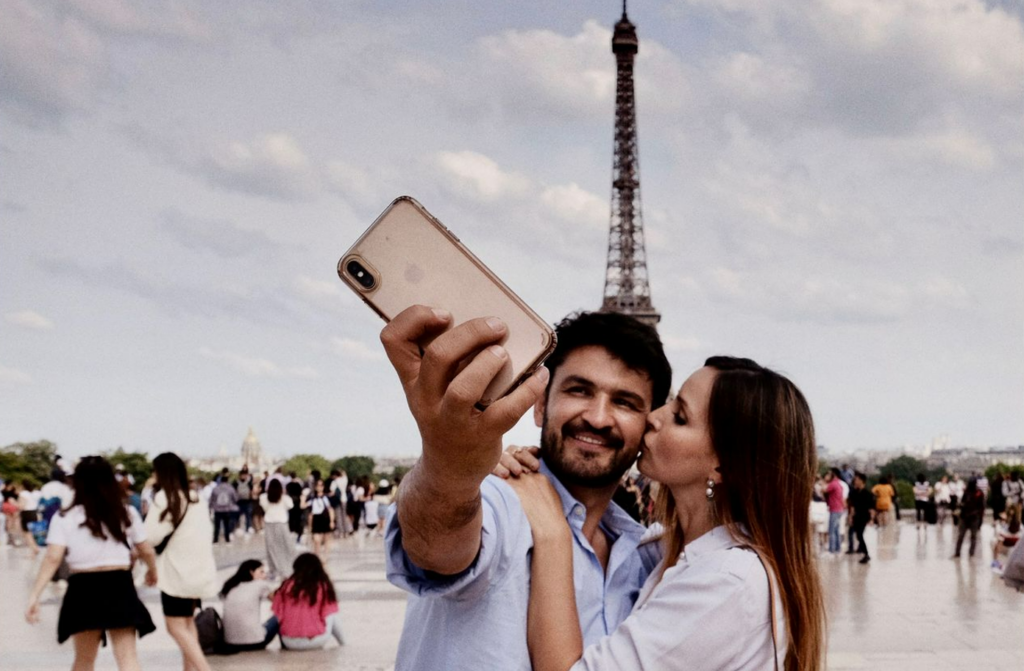
A surprise holiday, a large bouquet of roses, or a partner who seems to always know exactly what to say: online, relationships can look perfect. But what actually happens when reality sets in, and love fails to live up to what we have seen on Instagram and TikTok?
On social media, couples share their adventures and romantic grand gestures or memes about horrible dating experiences, which can shape how we perceive love and what we expect from a partner.
“Social media literacy is crucial for young people,” Lara Hallam, a researcher at the University of Antwerp and digital dating expert, told The Brussels Tiles.
She explained that the content they see now has "a big impact on them" and that teenagers and young adults who have grown up with digital technologies might have different expectations of relationships from older generations.
Distinguishing dates from content
A 2026 study involving over 600 participants found that positive self-presentations can trigger comparisons that affect people’s well-being. Among single participants, such content was associated with higher expectations of potential partners, while people in relationships reported lower relationship satisfaction when exposed to idealised portrayals.
Researchers point to the influence of carefully curated online content. Hallam explained that people who spend a lot of time on social media might find it hard to distinguish between what’s real and what’s curated.
While previous generations might primarily have encountered potential partners through social circles and face-to-face interactions, younger generations have grown up with additional ways to connect, including social media and online dating apps.
On top of that, social media easily exposes users to a constant stream of romantic experiences such as marriage proposals in Paris, creative date nights, and romantic getaways.

Credit: Pexels
“If we cannot make a distinction for ourselves that most of the time content is for clicks and money, how are even younger people supposed to use this as an example,” Hallam said.
She suggested that people who remember life before social media became widespread might find it easier to distinguish between curated content and everyday reality.
“We see all these beautiful love stories or the exact opposite,” said Hallam, suggesting that such portrayals can influence both what people expect from potential partners and how they evaluate their existing relationship.
Femke Konings, an online relationships researcher at KU Leuven’s Media Psychology Lab, said that social media can contribute to what is known as “positivity bias,” where social media users are exposed to positive portrayal of other people’s relationships and lives.
Konings noted that influencers increasingly “have the capacity to impact certain norms and expectations.”
Chasing Big
Even without using dating apps, social media allows people to connect with others across the world. According to Konings, this might make people looking for a partner more selective: seeing so many potential partners might create the impression that somebody more compatible is still out there.
While she stressed that having high standards isn’t necessarily a bad thing, she added that expectations based on carefully curated online content might be difficult to meet for real-life people.
Additionally, constantly seeing videos and photos of seemingly happy couples could leave the feeling that the viewer is missing out on romance and potentially contribute to feelings of loneliness and envy.
And it’s not just social media: TV, film and reality shows also contribute to how relationships are perceived. Unrealistic romantic expectations existed long before social media as fiction has always portrayed relationships through different storylines, grand gestures, and complex affairs.
“I cannot say that these are the healthiest examples," Hallam explained. “If you look at Carrie Bradshaw from Sex and the City, she almost stalked Big. If we also look at Grey’s Anatomy, George and Izzie’s relationship started with an affair.”
Credit: Pexels
From a TV perspective, stable relationships don’t make compelling television, she said.
Similarly, reality shows such as Love is Blind add another dimension, trying to depict matchmaking with a modern twist. Even though real people participate in reality shows, the situations and conditions they are under are far from normal everyday life.
Now, what makes social media different from television and reality shows? It seems that these unrealistic expectations come from ordinary people.
Additionally, viewers might realise that movies and TV are designed for entertainment but struggle to see how somebody’s romantic holiday or a Michelin restaurant dinner is a normal relationship standard, especially when only the best of a relationship is shared online.
