
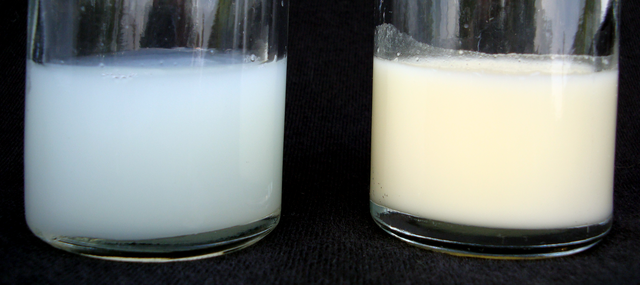
Traces of pesticides have been found in both breast milk and formula milk in the Charleroi area, according to a recent study.
Researchers from HUmani, the Experimental Medicine Laboratory, and the Haute Ecole Provinciale du Hainaut’s Lab discovered the pesticide traces in 39 breast milk samples collected from women residing in the area for at least 10 years.
At least one type of pesticide was present in 15 samples. The substances identified included pyridate, a herbicide found in all the contaminated samples, as well as fenpropidine, a fungicide.
The study indicates a higher frequency of pesticide traces in mothers favouring fresh produce.
Persistent organic pollutants (POPs), including pesticides, accumulate in the body’s adipose tissue. During breastfeeding, these tissues come into play, transferring the POPs to the infant.
Out of the 12 tested artificial milk samples, half revealed traces of pesticides distinct from those in breast milk, such as thiabendazole, a fungicide. Contrary to breast milk, however, they never contained more than one type.
The research highlights the risk of neonatal exposure to pesticides and the need for further study to mitigate long-term effects.
Despite existing regulation, industrially produced milk still contains these substances that are detrimental to health.
Their origin remains undetermined, warranting more thorough analysis in production chains, the researchers concluded.
