

The number of children and young people who have been forcibly admitted to a psychiatric hospital in Flanders has more than doubled in four years. While there were 101 minors in 2019, there were 229 forced admissions in 2023.
The new figures for 2022 and 2023, published by the Flemish network of healthcare organisations Zorgnet-Icuro, show that the number of forced admissions in total (adults, children and young people) has stabilised, but there is a big difference between adults and young people.
"A total of 4,983 people were forcibly admitted in 2022, and 4,915 in 2023. That is still very high," Margot Cloet of Zorgnet-Icuro told VRT. "This means that in Flanders almost 14 people are forcibly admitted every day."
There was a continuous upward trend between 2010 and 2021, but since 2022, there has been a slight decrease for adults: -1% to -2% forced admissions.
'Future of our society'
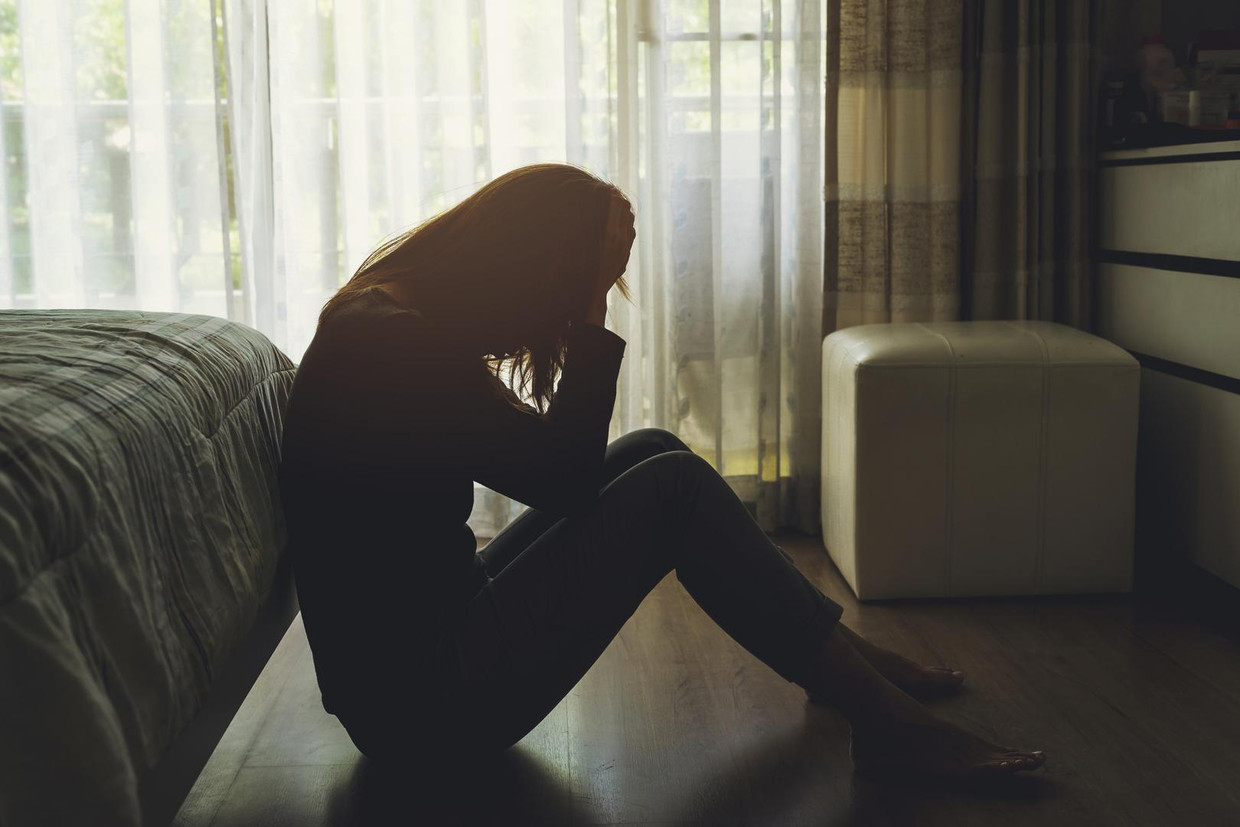
However, the number of forced admissions of children and young people has continued to rise in recent years. The rise from 101 minors in 2019 to 229 just four years later is particularly worrying. "These young people are the future of our society. Every child who is locked up because there is no place in regular care causes a great deal of pain."
There are several possible explanations for this increase. "Society does not deal well with young people who exhibit certain behaviour such as alcohol abuse, aggression, eating disorders, impulse control disorders, which sometimes result in more aggression," Cloet said.
"In contrast, we also see that the places available for children and young people in mental health care, youth care and child psychiatry are limited, and that people are at a loss and are forced to admit them."
Credit: Unsplash
With that in mind, compulsory admission is also a way to circumvent long waiting lists. "Especially when it comes to children with extreme problems. You have to invest in prevention, but certainly also in very serious assistance for children and adolescents with major problems," Cloet underlined.
These young people often end up in a place which is not adapted to their needs, and suited to adults rather than minors. "Work is needed to provide an adapted offer for children who have to deal with these problems."
Consequently, Zorgnet-Icuro would like to make an appeal to the government negotiators: "Don't leave children and young people with very serious behavioural and emotional problems out in the cold. Make sure there is an offer for them too."
What is a forced admission and what is the procedure?
Through forced or involuntary admission, a person is admitted to a psychiatric hospital against their will. This is a protective measure that can only be taken by a Public Prosecutor's Office or a justice of the peace.
Before such an admission is allowed, the person must meet three conditions: they must have a mental disorder, be a danger to themself or society, and there must be no alternative voluntary treatment.
Experts have said that while the measure has its use, it is very drastic and is not always the best or the only solution. The legislation dates from 1990. A few months ago, a reform of the law on the protection of mentally ill people was approved, but will only come into effect on 1 January 2025. From then on, the authorities will have 48 hours to be able to assess whether a forced admission is necessary, instead of 24 hours.
Related News
- Brussels crime shot up in the last year but 'police statistics don't reflect reality', warns expert
- Adolescent binge drinking: How Belgium will tackle alcohol abuse among young people
- Number of absences and suspensions among pupils in Belgium on the rise
It is often the police who initiate the procedure after a report of aggressive or disturbing behaviour. The Prosecutor can then decide on an admission of up to ten days, during which the justice of the peace visits the patient in the psychiatric hospital and decides whether the compulsory admission should be extended or not.
As a rule, forced admission lasts 40 days, but the treating doctor can choose to discharge the patient beforehand.
