
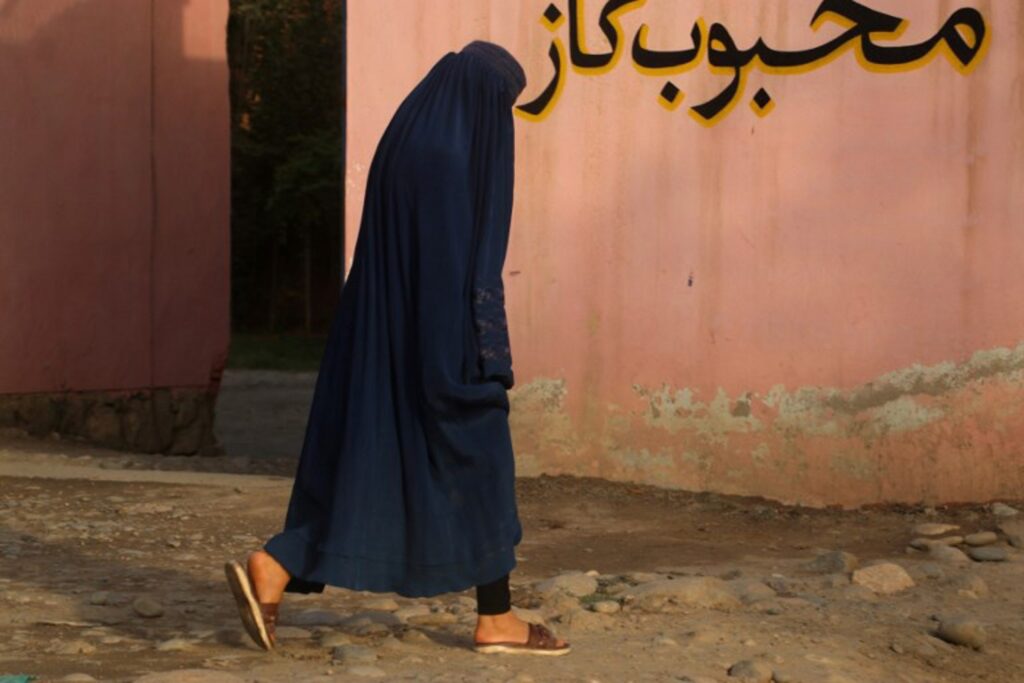
The vast majority of Afghan women seeking international protection in Belgium are granted asylum status, according to figures provided by outgoing Secretary of State for Asylum, Nicole de Moor (CD&V) on Wednesday.
On 4 October, the European Court of Justice ruled that simply considering nationality and gender is enough to determine that an Afghan woman would face persecution if returned to her country. The Court cited the discriminatory measures enacted by the Taliban regime against women as acts of persecution.
During a debate, De Moor highlighted that decisions by the General Commissariat for Refugees and Stateless Persons (CGVS) are already aligned with the European ruling.
"It has long been apparent that women in Afghanistan are in a very precarious situation. The discriminatory measures imposed by the Taliban on Afghan women are enough to be considered acts of persecution," said De Moor.
Up to the end of September, 2,486 Afghans sought international protection in Belgium, of whom 390 were women and girls. The CGVS granted refugee status to 372 of these women and girls, representing a recognition rate of 95.6%.
The relatively low number of female Afghans seeking protection is not surprising according to De Moor, as Afghan women struggle to leave the country or travel independently.
This year, 16% of Afghan asylum requests in Belgium were filed by women, a slight increase compared to previous years. The majority of asylum requests in Belgium come from single Afghan men. Their recognition rate is 38%.
The decisions made this year do not necessarily concern applications from this year, but the CGVS continues to conduct individual investigations to prevent nationality fraud and determine if there are exclusion grounds or if the applicant already enjoys international protection in another EU country.
De Moor noted that comparisons with figures from other member states should not be made lightly due to differences in special statuses, risk profiles attracted, and the number of Afghan cases processed.
People receiving a negative asylum decision and lacking residency rights must return to their country of origin, reiterated De Moor.
Voluntary return is not impossible, as it has already happened with the help of Fedasil or independently. Forced return is more difficult due to the need for cooperation with the Taliban, yet it is not impossible, as Germany recently repatriated 28 Afghans. "My asylum services are also considering ways to increase returns to Afghanistan," added De Moor.
