
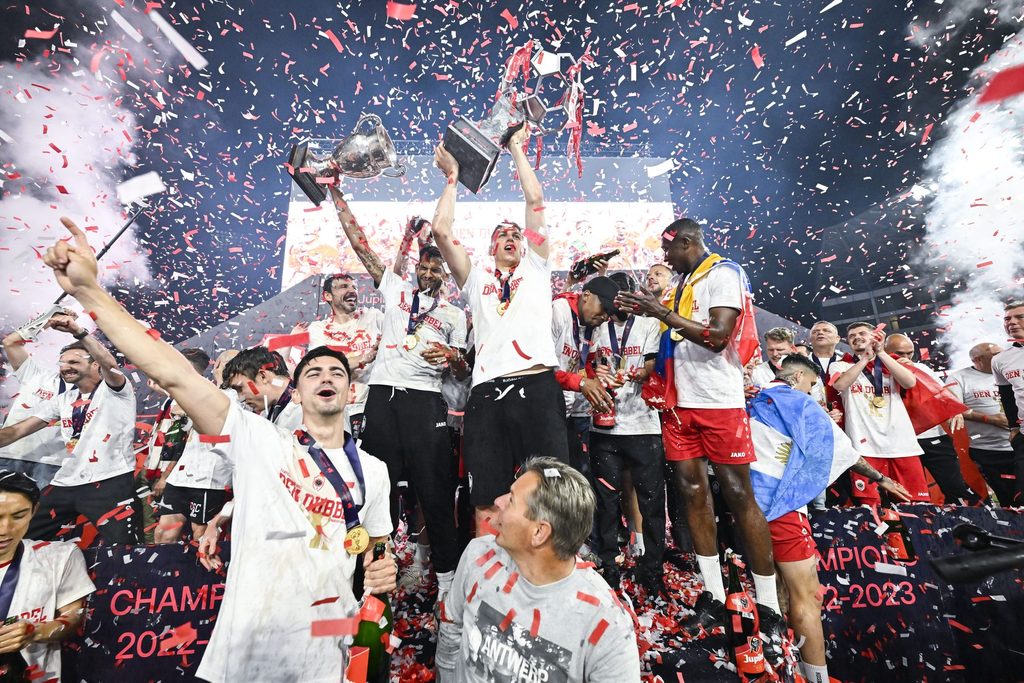
In most countries, football league winners get to lift the trophy when the season concludes in May. However, in Belgium, topping the table is only half the job – enter the crazy Champions' Play-offs.
Due to a peculiar set of rules, clubs who finish in the top 6 of the Jupiler Pro League progress to a play-off stage for a chance to win the title. It doesn't end there, there are also play-offs for a European competition place and to avoid relegation – but we will get to those later.
Crucially, all get their points halved (and rounded upwards), with all teams set to play each other another time. As a result of this system, the teams who finish first at the end of the regular seasons do not automatically win the league, and risk missing out on silverware altogether.
Union Saint-Gilloise (USG), for example, finished in first place twice in the previous three years, only to see their lead slip in the play-offs. The system's halving of points can be frustrating, confusing and quite unnecessary to some fans - and to those within the game, as well.
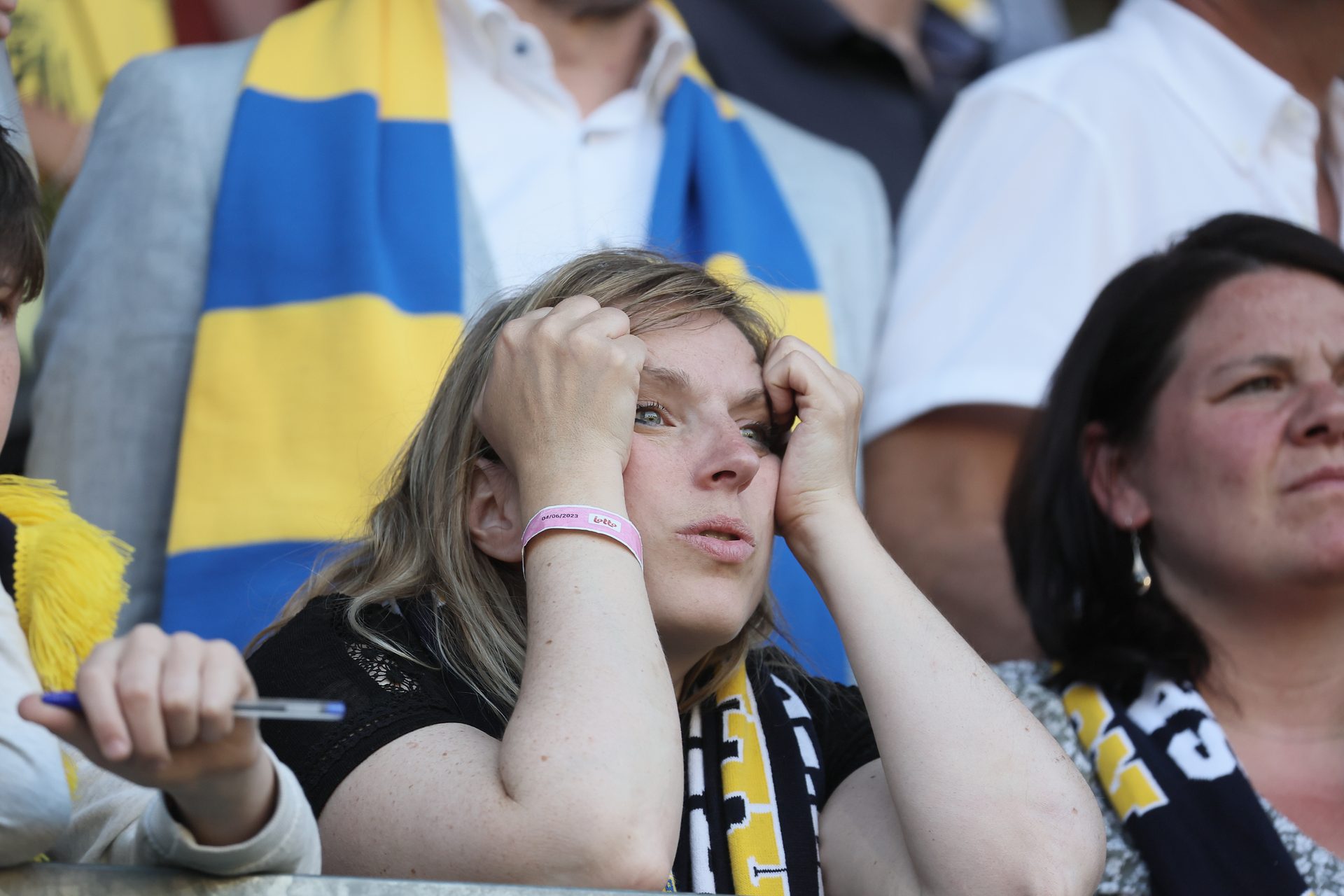
Union's supporters look dejected after losing the league in the match between Royale Union Saint-Gilloise and Club Brugge, Sunday 04 June 2023 in Brugge during the 2022-2023 'Jupiler Pro League' first division of the Belgian championship. Credit: Belga / Bruno Fahy
Does it really work?
Defenders of the current system, meanwhile, argue that it has tangible benefits for all involved. By pitting the top sides against each other in the endgame, clubs can expect to book higher revenues from ticket sales thanks to the increased stakes at hand.
This is also due to pricing structures which often include higher fees for higher category games, like derbies and competitive rivalries. A title is arguably more deserved if winners have to emerge victorious against their main competitors en route to bringing home silverware.
On the other hand, deciding a championship based on a ten-game finale defeats the point of the league itself: teams play the first 30 games safe in the knowledge that any deficit will be remarkably easier to bridge once the points eventually get halved in March.
In the relegation play-offs, teams fighting for survival will also have a greater chance to salvage their season by playing against similarly struggling sides. The league believes that by making its field more competitive, less-equipped team stand a better chance to survive by playing each other. However, it once again puts the focus firmly on the last few appearances.
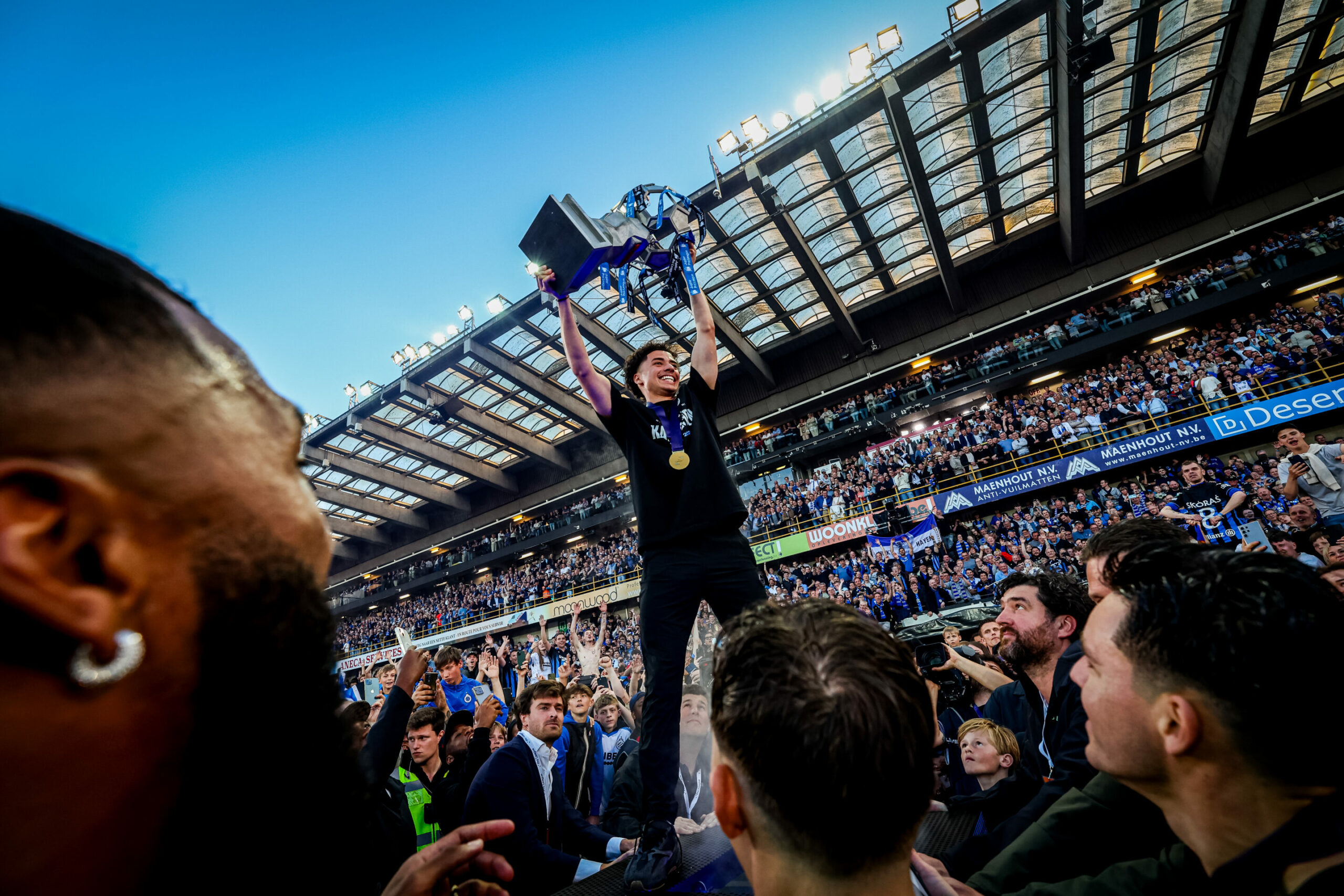
Club Brugge's Chemsdine Talbi celebrates winning the Belgian football league in 2024. Credit: Belga / Kurt Desplenter
As for clubs competing for the last remaining European spot, the mid-table play-off rounds are the most congested, but offer the least drama. Only one out of six teams will eventually qualify for what is a one-leg tie to earn a Europa Conference League spot. This removes the incentive for many sides to perform well, as once their chance for a European ticket slides away, they can just drift off until the end of the season – even if this could also be argued for regular leagues too.
Stunting the best
Due to the points being halved, the race all comes down to that end-of-the-year push where everyone has to hit the ground running and sustain their highest form.
That said, it overlooks the strain put on teams by an increasing number of matches per year. Some teams also have European campaigns long into the spring (e.g. USG in 2022/23), which means they often end up playing two or three games a week.
It puts them at a significant disadvantage to some of their competitors who can spend the entire week preparing for matches. By the end of March, muscle injuries become increasingly prevalent due to fatigue, too, depriving the league from producing a better-quality product.
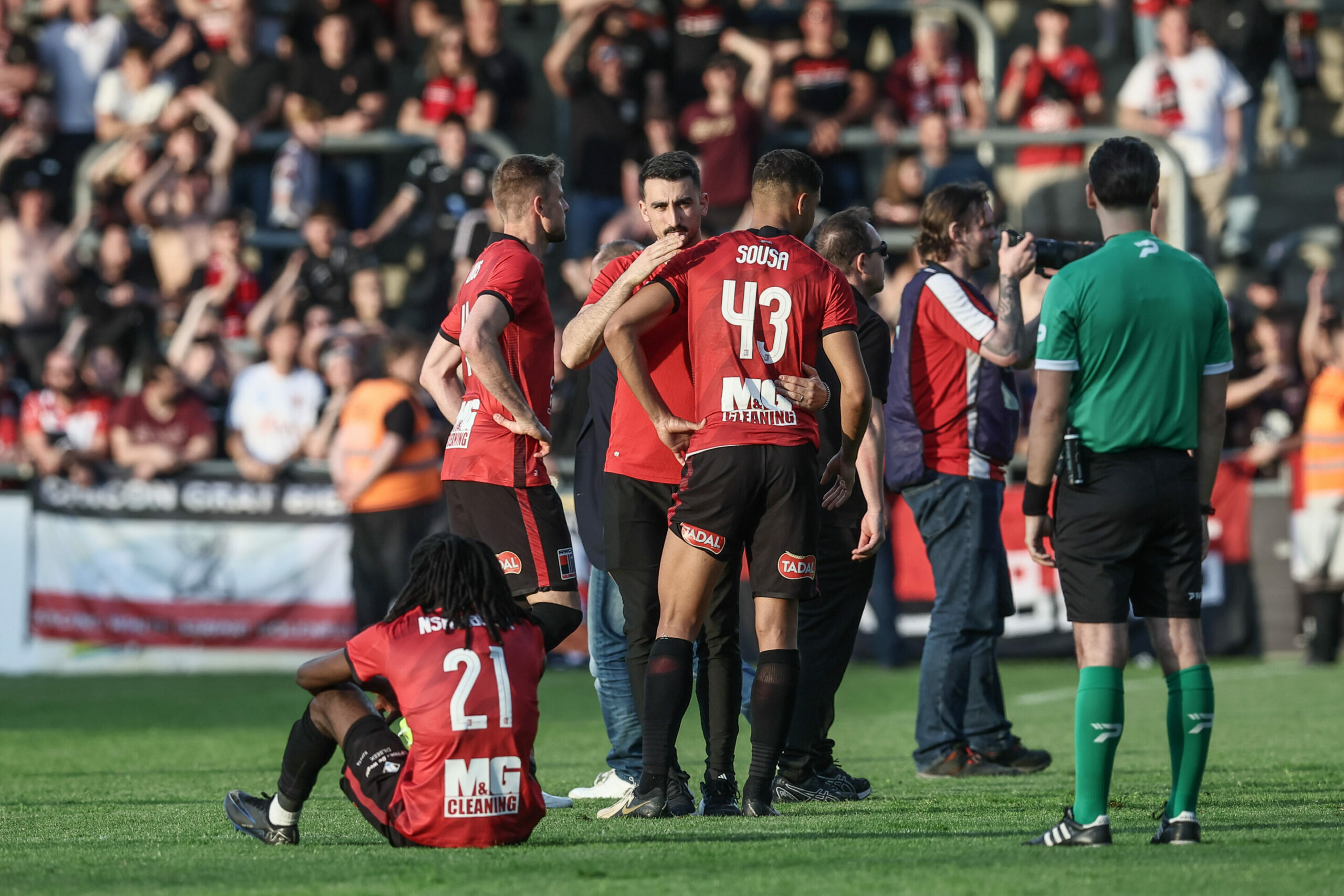
RWD Molenbeek's players look dejected after being relegated, Saturday 11 May 2024 in Eupen, on day 6 (out of 6) of the 2023-2024 'Jupiler Pro League - Relegation Play-offs. Credit: Belga / Bruno Fahy
More matches are inevitably bringing in more revenue from broadcasting rights and ticket sales, but it often comes at the detriment of the quality of play. Teams who had done well in the early stages – the league itself – can often run out of steam in the play-offs.
How is it panning out this year?
For this 2024/25 season, Genk headed into the championship play-offs having "won" the regular season by finishing in first place with a nine point lead over second-placed Club Brugge. However, since then the Limburg side have only managed two wins out of six. Genk have now plummeted from 1st to 3rd on match day 7 (out of 10).
USG, often the victims of the quirky regulations, this year find themselves at the other end of the spectrum, and have taken the play-offs by storm. Their five wins and one draw is by far the strongest record amongst the top six teams so far, It could win them a historic first league title since 1934/35. Club Brugge currently occupy second place, and are still among the favourites to win heading into the last weeks. They have won the league four times in the last five years.
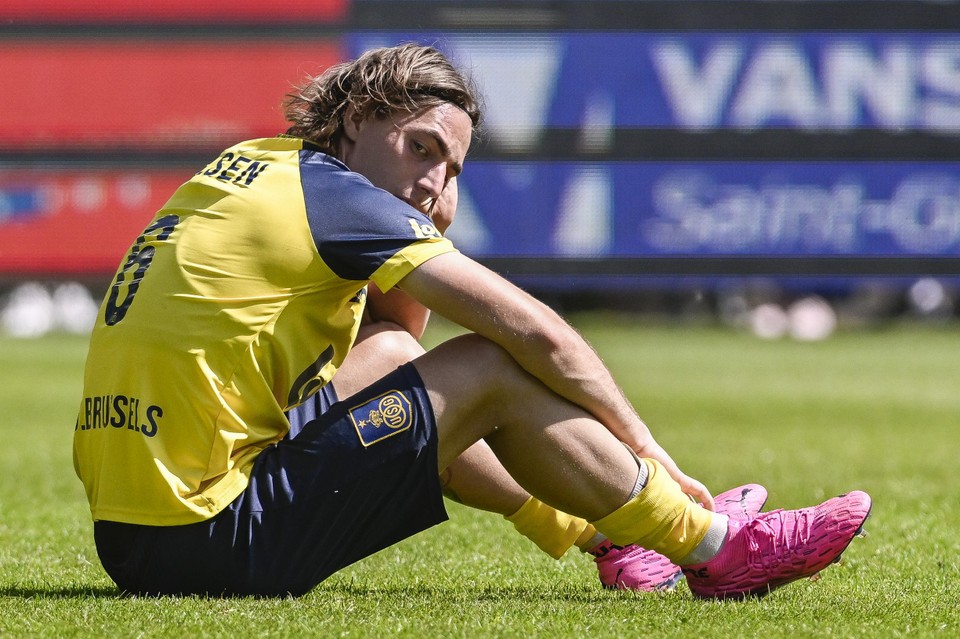
Union's former player Casper Nielsen after losing the league in 2021/22 on the last day. Credit: Belga
In the relegation group, the order remains largely unchanged, with Kortrijk and Beerschot set to face relegation. Sint-Truiden will have to face a lower-league side in the relegation play-off fixture, while Cercle Brugge can still salvage a disappointing year by survival at last.
The legitimacy of such a unique set of rules is often disputed up and down the country, but the added drama and suspense it brings cannot be denied. A case in point is Antwerp's 2023 title win thanks to an stoppage time screamer by captain Toby Alderweireld in the last game of the play-offs, snatching the title away from USG.
A changing system
For fans watching this madness unfold, this will all feel nostalgic in a few years' time. The league has announced a shift in format to an 18-team league from 2026-27 onwards, getting rid of the whole play-offs element altogether.
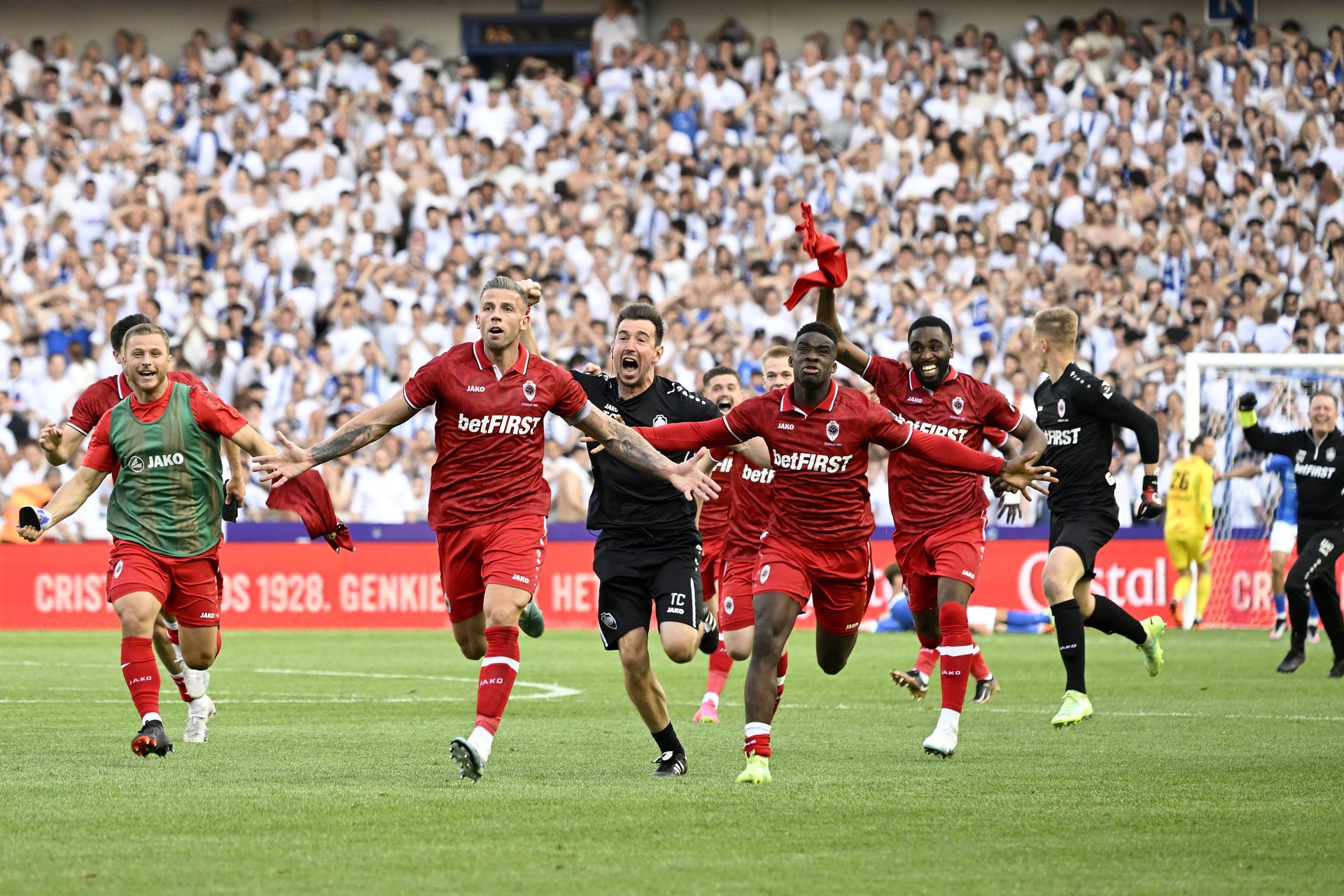
Antwerp's Toby Alderweireld celebrates after scoring a dramatic goal to win Antwerp the league in 2023. Credit: Belga / Tom Goyvaerts
Teams will face each other twice in a 34-game regular season, with the champions being crowned in a much more straightforward process.
Dropping the number of games from 40 to 34 will remove some of the drama but bring a lot more balance, logic and fairness to the table. It also reduces the physical burden on players, something that was considered crucial by the national federation.
