
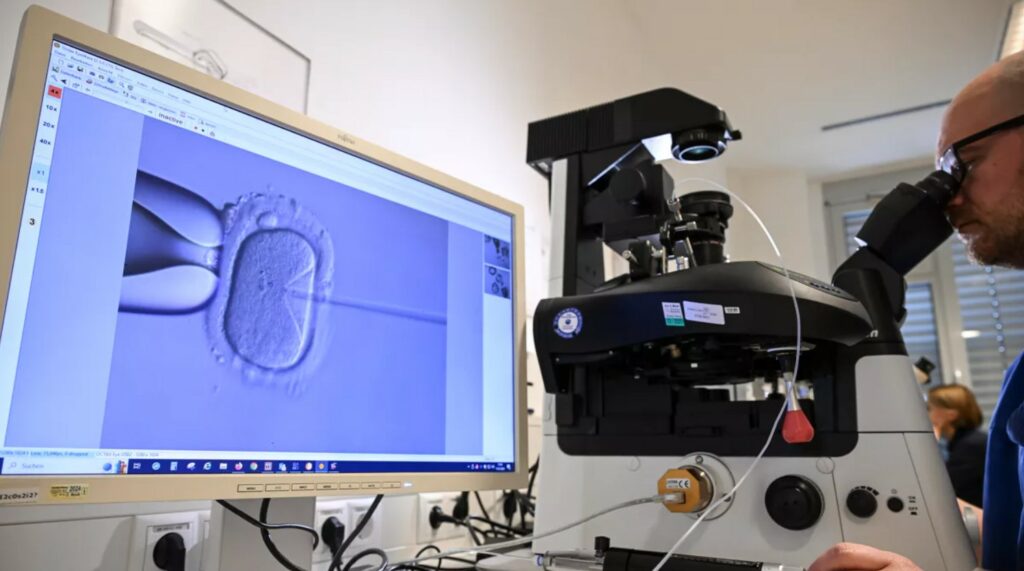
In vitro fertilisation (IVF) treatments should be reimbursed for women up to the age of 47, under certain conditions, according to a proposal put on the table by the Flemish Christian Democrats (CD&V) party.
The number of births in Belgium is falling year on year, while women are also becoming mothers later in life. Research shows that those who want children are waiting longer and longer to have them, and those who wait a long time tend to have fewer children or none at all.
"This is why medical fertility care should be more accessible," CD&V Federal group leader Nawal Farih told De Standaard. "Politics must adapt to reality. We want to create space to give families the chance to fulfil their desire for children even later in life, at the time when they are effectively ready for it."
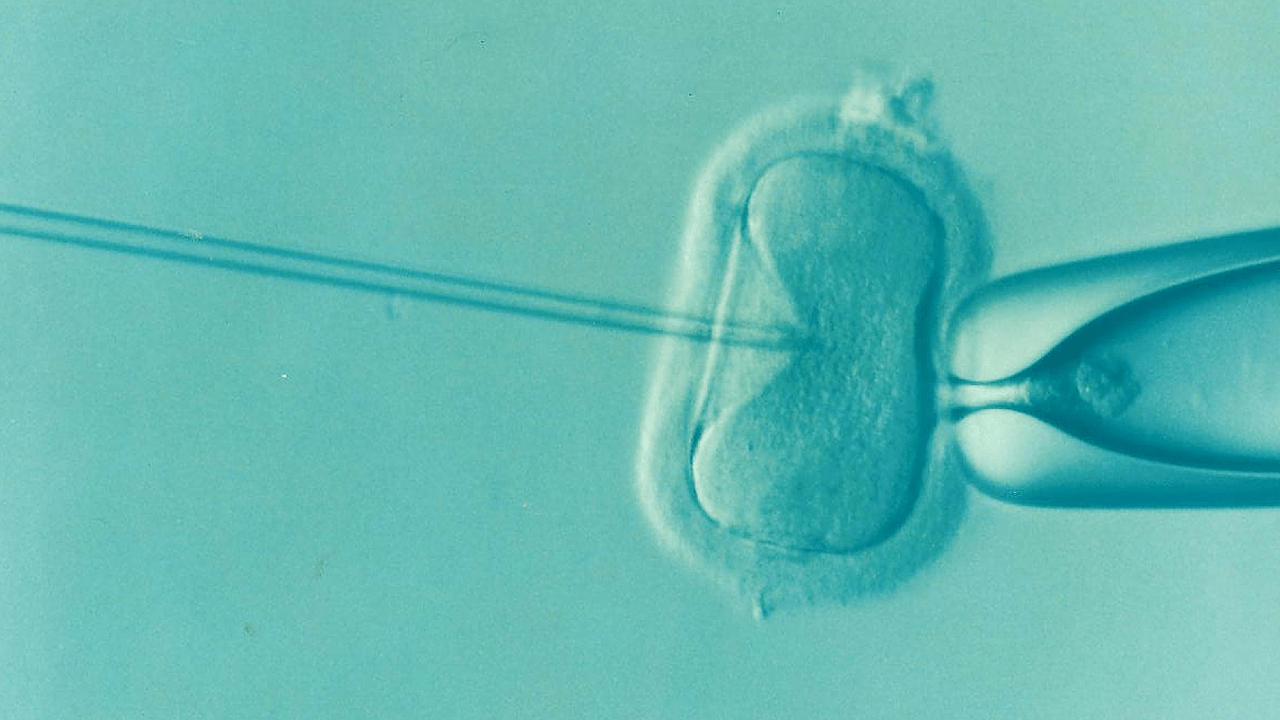
Therefore, she is tabling a bill containing three concrete measures, one of them being the reimbursement of IVF treatment up to 47 years old, if previously frozen eggs are used.
Expanding reimbursement
Currently, IVF is allowed up to that age, but only six rounds of treatment are reimbursed up to age 42. By expanding reimbursement, Farih wants to make this procedure more accessible.
"If women have to pay for it themselves now, they have to count on an average amount that hovers around €3,000 in our fertility centre. The amount depends on the number of eggs we implant," said fertility expert Sharon Lie Fong (KU Leuven).
Therefore, Farih stressed that women should be given more space and time if they choose to freeze quality eggs. "The age of the body not only determines the chances of pregnancy success, but the age of the eggs is also an important factor. The earlier they are frozen, the better."
However, Professor Lie Fong emphasised the need to keep expectations realistic. "It can increase the chances of pregnancy if a 47-year-old woman uses eggs she had frozen several years earlier. But we should also consider the additional risks associated with pregnancy later in life. An IVF pregnancy is also always going to be a bit riskier than a spontaneous pregnancy."
Credit: Pixabay
In addition to IVF, Farih also wants the examination that measures a woman's available egg reserves to be reimbursed for those between 30 and 37 years old. That way, they can find out whether they should hurry to realise their desire to have children. The same goes for research on sperm fertility in men.
"Giving women the chance to use a blood test to give them insight into their egg supply allows them to make a more informed choice," she said. If necessary, they can then opt for social freezing (having eggs frozen for non-medical reasons, often for the sake of a later desire to have children).
Farih is referring to the AMH (Anti-Mullerian Hormone) test, which indicates how many potential eggs a woman has left. "Currently, that test is indeed not yet reimbursed," said Lie Fong. "Unfortunately, the test says nothing about the chance of pregnancy, but only shows how many eggs we can expect if we start freezing some."
Conscious family planning
Lastly, women between 35 and 37 should be able to have their eggs frozen more cheaply for later use, according to Farih. This can now cost thousands of euros, and reimbursement is only possible for women who previously underwent cancer treatment and women with endometriosis.
"According to US scientific studies, age 35 to 37 is a good age range if we want to go for high cost efficiency," said Farih. "Women often make very conscious family planning choices at this point in their lives. And they can thus have their eggs frozen before they reach 38, when fertility drops sharply."
