
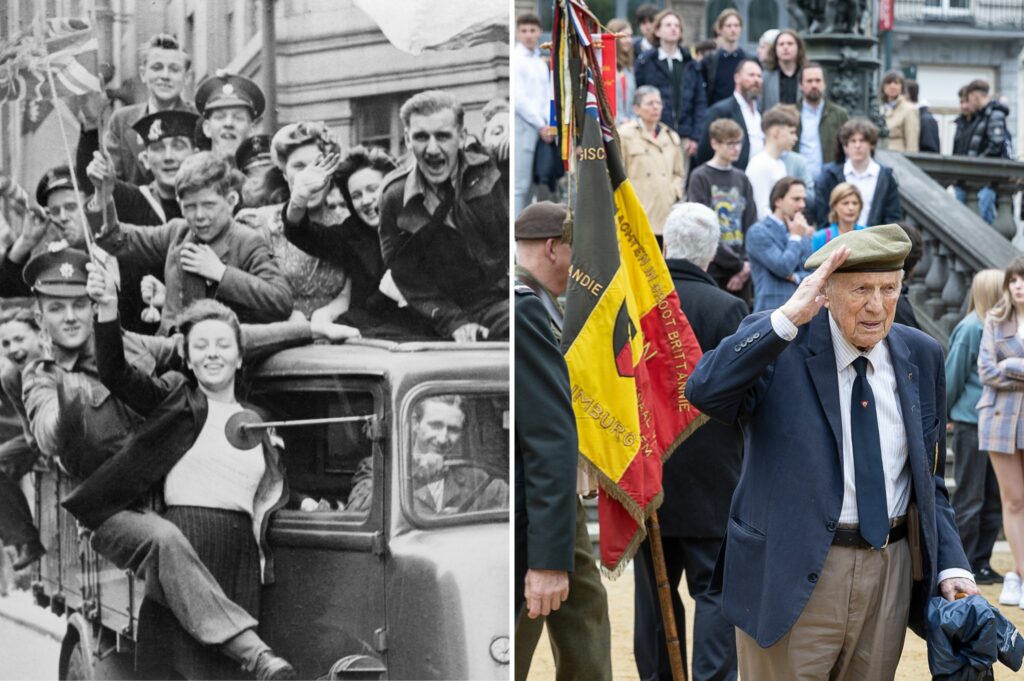
Eighty years ago, Victory in Europe (VE Day) was declared by the Allied forces on 8 May 1945 after six years of war with Nazi Germany and its allies.
The date marked the official end of the Second World War, the day after the unconditional surrender of Nazi Germany. Belgium was liberated in 1944, and while VE Day brought street parties and celebrations across the country, these were not as joyous as the liberation in the autumn before.
Today, the day has taken a symbolic importance to remember the suffering caused by the Second World War and the Nazi occupation of Belgium between 1940 and 1944. It comes at a time when a resurgence of right-wing nationalism has taken hold in Flanders and many other parts of Europe.
A Belgian non-profit coalition is fighting for the 8 May to become a national bank holiday. The idea is to remember the victims of Nazi-fascism and those who gave their lives fighting it, but also to stay alert in the face ongoing threats to universal human rights and democracy.
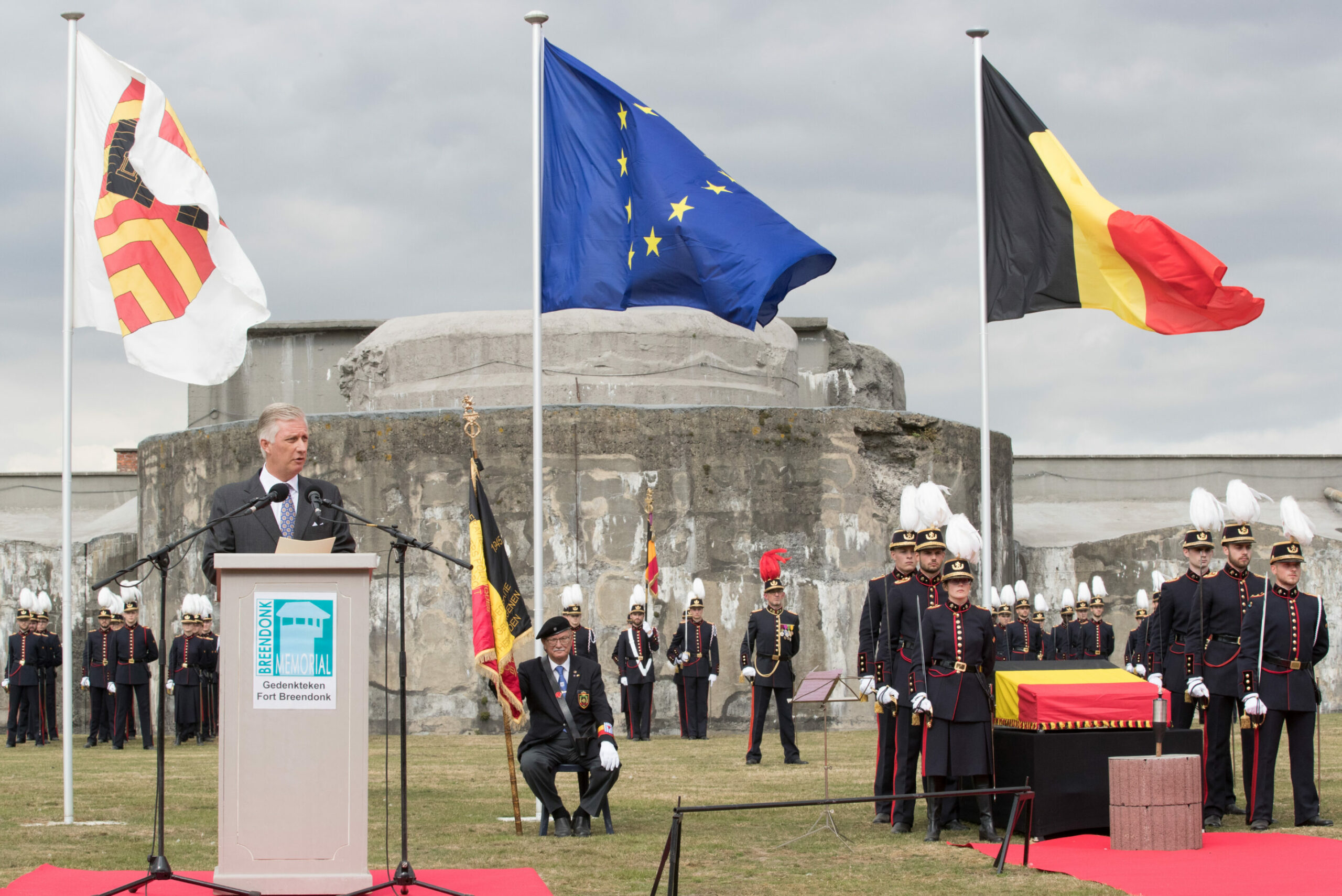
King Philippe of Belgium delivers a speech at the commemorations for the 75th anniversary of the liberation of the Fort of Breendonk, Wednesday 18 September 2019. Credit: Belga
Ahead of the commemoration, the City of Brussels declared itself as an official ‘anti-fascist city’ – a cross-party move aiming to recognise the municipality’s role in fighting against the proliferation of far-right ideas amid a rise of post-fascist parties into power across Europe.
What's on?
This year, the 8 May falls on a Thursday, with the many celebrations being held on Sunday 4 May. Despite having held them in past, there is no mention of a specific event at the Royal Palace in Belgium to mark the 80th anniversary of VE Day.
One of the main events in Belgium is happening at Fort Breendonk, a former SS-controlled Nazi prison camp, on Sunday.
In the morning, music, speeches and flowers will be laid in commemoration of those imprisoned there, which included predominantly Jews and left-wing members of the Belgian Resistance.
European trade union chief Esther Lynch, the head of Amnesty Flanders Wies De Graeve and actor and director Bouli Lanners, among others, will address the crowd outside the fort. Music will be played by jazz pianist and Holocaust survivor Simon Gronowski, while bagpipes and drums will accompany the moment when flowers will be laid outside the fort.
In the afternoon, a variety of activities are taking place around the site. One of the events held in English will be a meeting with pianist Gronowski at 13:00, who as a child remarkably escaped from a deportation train after an attack by the resistance. There are a number of book launches (mainly in Dutch) and guided tours of the fort.
A ’resistance cafe’, organised by Heroes of the Resistance, will be in both French and Dutch, and will share and discuss stories from 15:30.
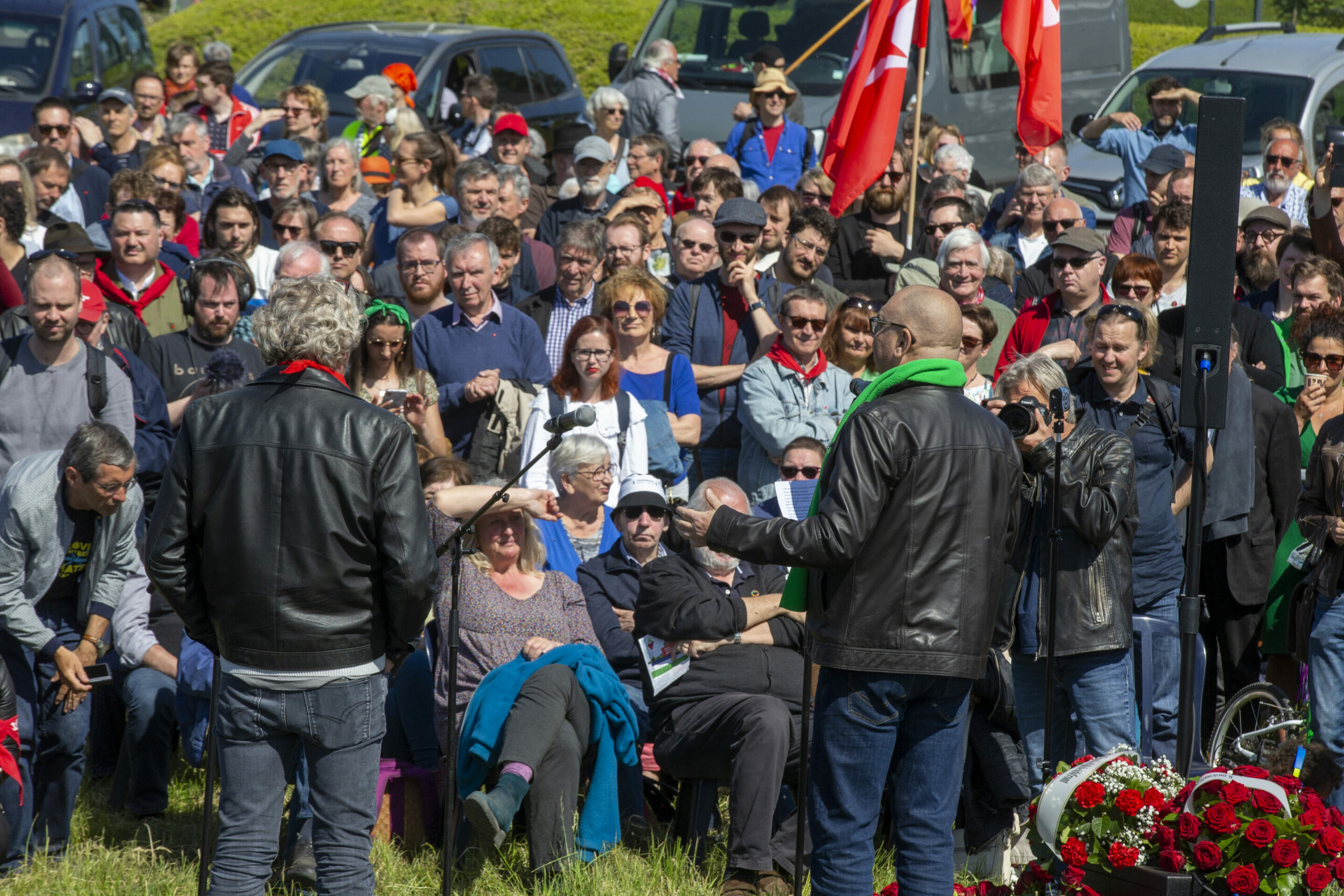
Commemoration of the victory over fascism, organised by the 8 May coalition, at the Fort of Breendonk, Sunday 08 May 2022. Credit: Belga
The same organisation is holding a 48-hour marathon on 6-8 May, also at Fort Breedonk, where it will read out the names of the several thousand members of the Resistance who died between 1940 and 1945, with a huge contribution from Cegesoma, the war study centre for society. The event will be live streamed.
On the Allied side, the Brussels branch of the Royal British Legion is organising its commemoration in the Ardennes towns of Hotton and La Roche, province of Luxembourg.
In Hotton, the local authorities have organised a ‘British Day’. The day starts with a bilingual Church service, where Princess Léa of Belgium will be present (widow of Prince Alexandre, an uncle of King Philippe). She will also attend the RBL commemoration which takes place after the church service at the Commonwealth War Graves cemetery in Hotton at 11.15.
Hotton was the scene of the Battle of the Bulge, third-deadliest campaign in American history. British forces were station here during the battle. The War Cemetery contains 666 burials, 21 of them unidentified.
Logo for the British Day organised by Hotton municipality in the province of Luxembourg for VE Day.
Alisdair Harrison, whose father served in the Seaforth Highlanders, will lay a wreath at the second RBL-led ceremony of the day which takes place on Sunday around 15.00 at the 51st Highland Division memorial in La Roche – a few metres from the WW2 tank which stands above the town.
While the US Embassy took part in extensive celebrations for the 80th anniversary of the Battle of the Bulge back in December, they are not organising any official VE Day commemorations in Belgium this week.
Thursday
On VE Day itself, the official ceremony takes place at the Tomb of the Unknown Soldier at the Congress Column in Brussels on Thursday. Representatives of the Allied forces will also be present.
During this annual ceremony, the King's representative will lay a wreath of flowers in the name of the monarchs, after which a minute's silence was observed.
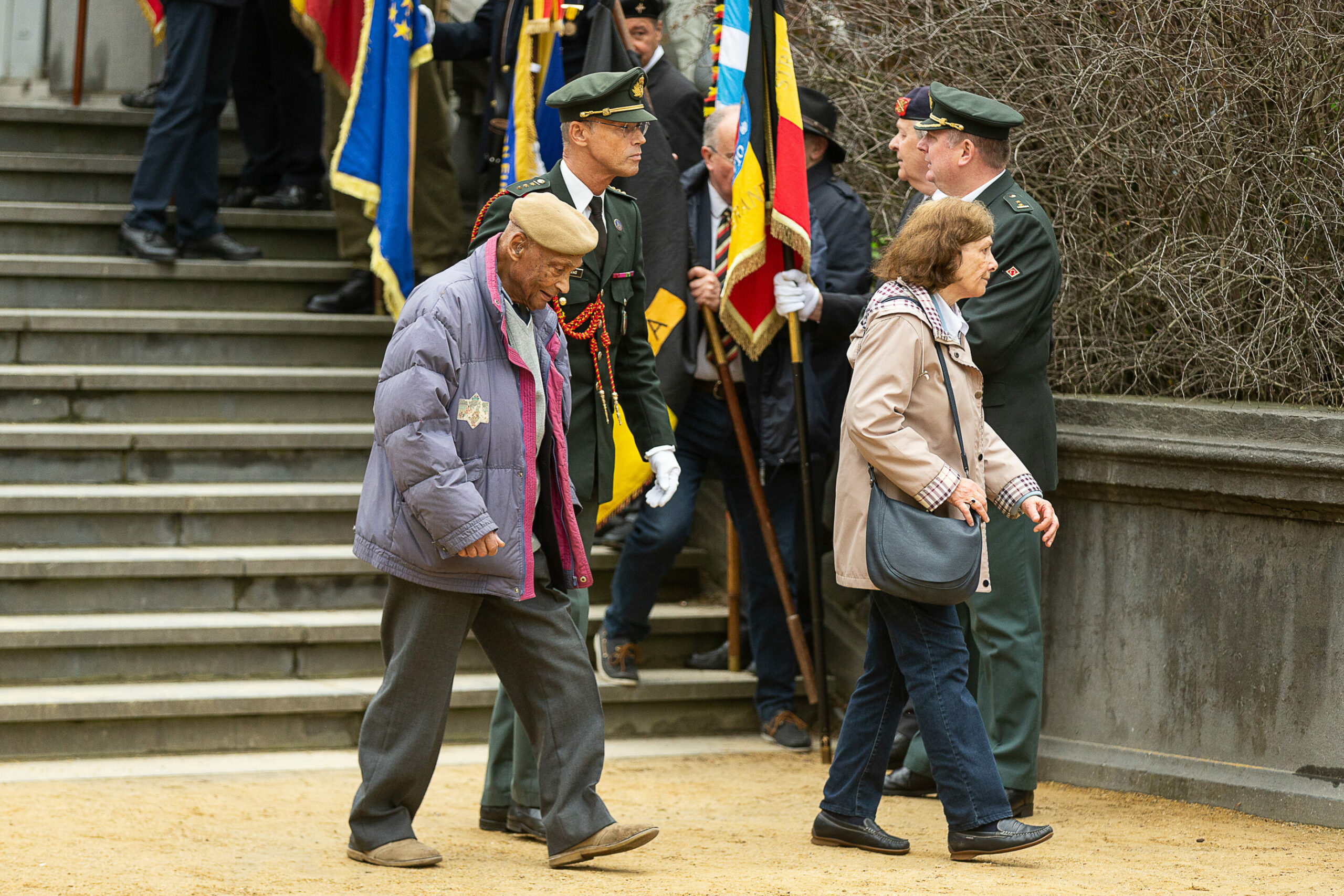
A veteran pictured at the commemoration ceremony of the 78th anniversary of the end of the Second World War in Europe, at the Tomb of the Unknown Soldier, in Brussels, Monday 08 May 2023. Credit: Belga / James Arthur Gekiere
Also on Thursday, the Belgian non-profit 'Coalition for 8 May' will also be holding a rally entitled ‘Together Against the Far-Right, Remembering 80 Years of Liberation’ outside Brussels-Central Station on Thursday. On the programme are speeches, a guingette, slam poetry, DJ sets and other types of fanfare.
In Belgium, 8 May was an official holiday until its removal in 1974 as a cost-saving measure during the oil crisis, though the question of its reinstatement is raised annually.
The Brussels-Capital Region celebrates Iris Day on the same day as its regional holiday, to mark its creation, but is not an official public holiday.
According to the region, however, the holiday also celebrates the victory of democracy and humanism over "dark forces" of fascism.
