
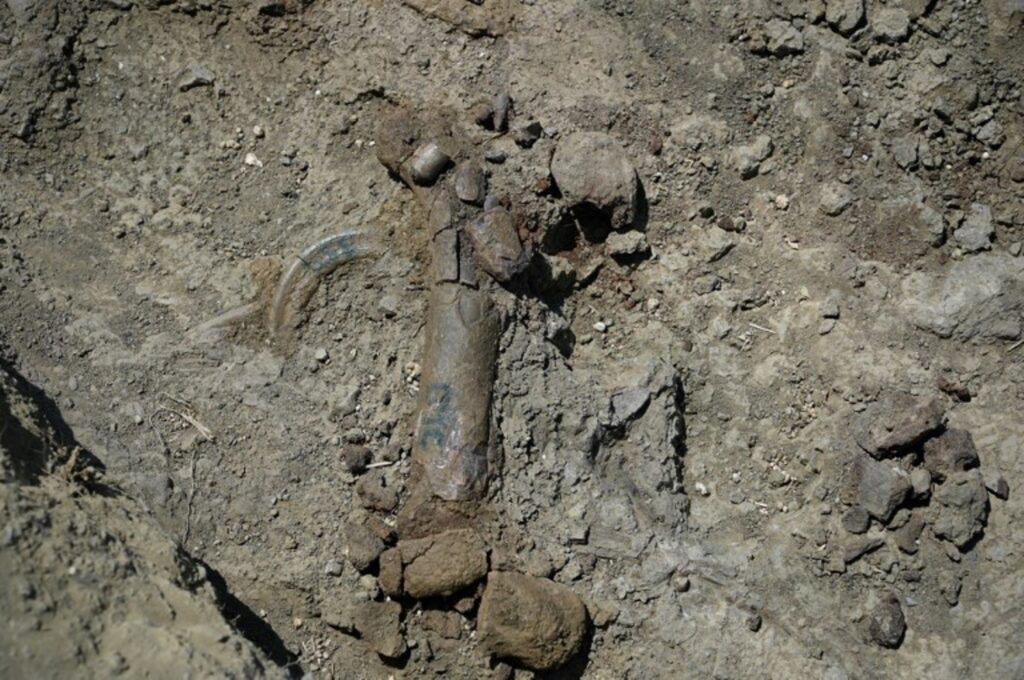
A recent study by the Swiss University of Lausanne (UNIL) reveals that the size and chemical composition of ancient animals significantly influence their chances of becoming fossils.
A team of scientists at UNIL conducted experiments on various animals, including shrimp, snails, starfish, and flatworms, to understand fossilisation better.
Using micro-sensors, the researchers observed the decomposition process, focusing on the chemical environment surrounding the remains, especially the balance between oxygen-rich and oxygen-poor conditions.
Findings indicate that larger animals and those with a higher protein content are more likely to create oxygen-poor conditions quickly, which are crucial for fossilisation by slowing down decomposition and promoting mineralisation.
“This means that two animals buried next to each other could have very different fates as fossils due to differences in size or body chemistry,” explained Nora Corthésy, the study’s lead author and doctoral candidate, quoted in a UNIL press release on Thursday.
One animal could vanish entirely, while another might be preserved in stone. The study suggests that larger arthropods are more likely to be fossilised than smaller flatworms or other aquatic worms.
“This could explain why fossil communities from the Cambrian and Ordovician periods (around 500 million years ago) are dominated by arthropods,” posits Nora Corthésy.
The study not only sheds light on the uneven nature of the fossil record but also offers valuable insights into the chemical processes shaping ancient life. By highlighting what determines soft tissue fossilisation, it enhances our understanding of exceptional fossil formation and why we only encounter fragments of the past.
“Laboratory studies help us determine whether a fossil is missing because the animal wasn’t present or because it wasn’t well preserved. If an animal decomposes rapidly, its absence likely results from poor preservation, but if it decomposes slowly, it’s more likely that the absence is ecological,” Nora Corthésy elaborated.
Additionally, “certain sediments can aid the preservation of organic matter, providing clues about where to find the most favourable fossil deposits. Other factors, such as salinity and temperature, may also play a role,” concluded the researcher.
