
The oldest tree in Meise Botanic Garden might well be an Eastern Cape giant cycad.
A type of breadtree, it is thought to be 300 years old, brought to Europe in the days when the cylindrical, palm-like trunks were used as ballast in ships plying trade routes between southern Africa and northern Europe. The magnificent specimen in the Meise garden is growing in a dilapidated greenhouse. The greenhouse, not yet 75 years old, is now scheduled for demolition. The tree will remain, perhaps good for another century.
What goes for the Eastern Cape breadtree goes for the botanical garden as a whole: the plants are thriving; the infrastructure around them is being rebuilt for the scientific challenges of the future.
It has happened before. In the mid-20th century, the botanic garden was uprooted from Saint-Josse-ten-Noode, where it had been laid out in 1826-29 by what was then – before the creation of an independent Belgian state – the Royal Horticultural Society of the Low Countries.
The garden stood just outside what was previously the outer wall of the city and is now the inner ring road of Brussels. Indeed, many inhabitants of Brussels still think of that as the botanic garden of Brussels: the Metro stop still proclaims Botanique-Kruidtuin; there is still an orangery, albeit now used as a music venue and exhibition space by the francophone cultural community; and there is still a town park that offers some green respite from the inner ring’s traffic, trams and trauma.
However, although the quality and exoticism of some of the trees in that park testify to its history, the botanic collections – a combination of living plants, dried plants (arguably more important, scientifically), and a massive library of books about plants – were all moved out of the city long ago, to put down roots at Meise [see box]. The Eastern Cape breadtree, which is thought to have joined the botanic collection sometime between 1826 and 1842, was among the plants that made the journey 10km north.
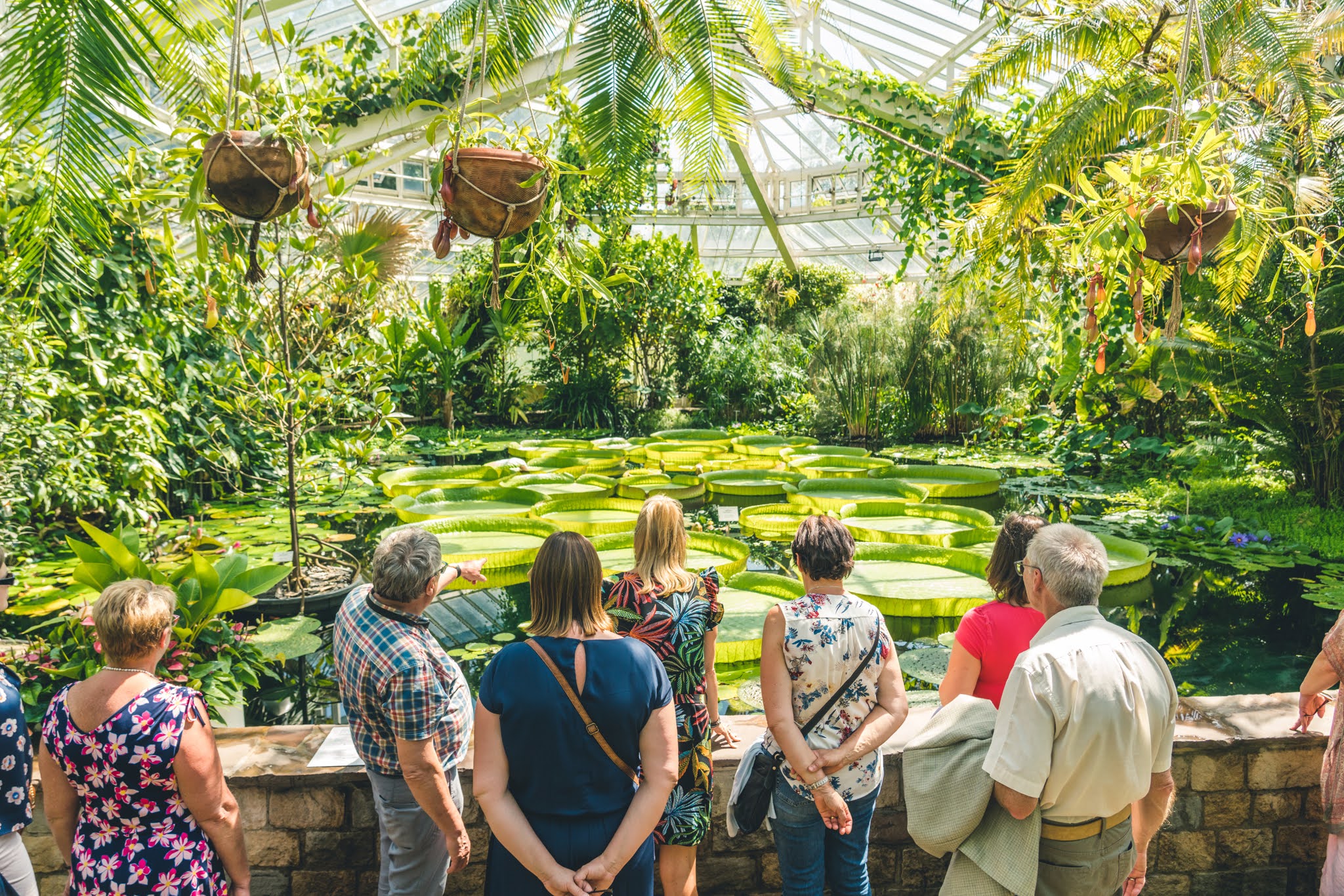
The plant palace at the Meise Botanic Garden
The early phase of construction at Meise in the early 1950s saw 20 unpretentious greenhouses – including the one that currently holds the Eastern Cape breadtree – built side-by-side. Around that core was built a perimeter of grander, taller glasshouses, which together constitute the Plant Palace, officially inaugurated in April 1965 and partially opened to the public two months later – the 60th anniversary falls on June 15.
In its modern form – there has since been a series of renovations and improvements – the roofs of the palace range in height from eight to 16 metres. To tour the Plant Palace is to venture through millions of years of evolutionary history and traverse different climatic zones of temperature and humidity, each filled with the appropriate plant life (or lack of it). Palm trees, banana plants, cacti, orchids, and giant water lilies vie for attention, though none can compete with the giant arums.
Titan rock
The titan arum (Amorphophallus titanum) can take as much as ten years to grow from seed to flower-producing maturity and then the flower lasts only a few days. It consists of a central upright spike sheathed in what looks like an inverted lampshade – think of a giant, burgundy-coloured peace lily. This brief flowering is accompanied by a powerful smell of rotting flesh, which, in its natural habitat – the rain forests of Sumatra – improves the plant’s reproductive chances by attracting the carrion insects it needs for pollination.
In the glasshouse of Meise, there is a similar effect: the fans of the giant arum come flocking, alerted by news coverage and social media, to gawp and hold their noses. The interval until the next flowering can be several years, but the experts at Meise have cultivated enough plants to keep the giant arum’s fan club intermittently satisfied. Last August, Meise scored the distinction of the world’s tallest inflorescence ever recorded on a giant arum – three metres and 22.5 centimetres from the tuber to the top of the spike.
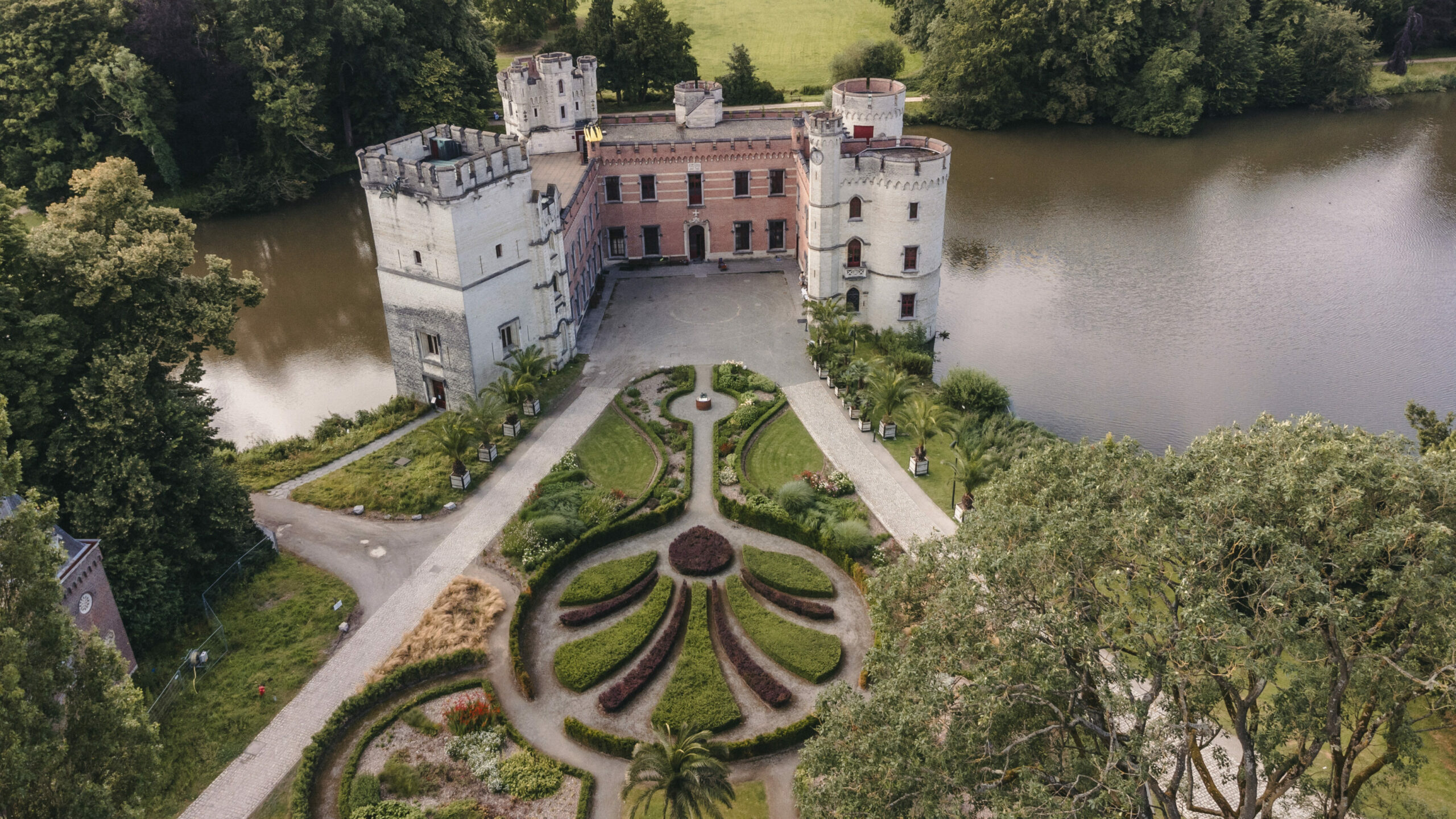
Aerial shot of Meise Botanic Garden
While the Plant Palace is a well-established favourite with the public, there are some more recent additions that similarly aim both to educate and entertain.
The rose garden, which covers almost as big an area as the Plant Palace, is a traditional crowd-pleaser – who doesn’t like roses? – but still imbued with didactic intent and informed by modern research (it was unveiled in 2019). The circular layout is supposed to evoke a rosebud. At its centre are the oldest group of roses, the desert roses. Spiralling out from the centre are two strands of wild roses. One spiral contains Asian and European varieties. The other contains Asian and American varieties. The positioning is informed by DNA research and is supposed to show how the various roses – more than 100 species – are related to each other. Around the outside are cultivated roses, mainly but not exclusively Belgian varieties, showing something of the history of rose cultivation.
Even newer is the Island Garden, which was opened in 2022 to be a showcase for aquatic and marsh plants. It involved a re-thinking and re-engineering of a remnant of 19th century landscaping – the large pond (and its small island) that adjoins Bouchout Castle – the centrepiece of one of the two estates that were put together to create the territory of the botanic garden.
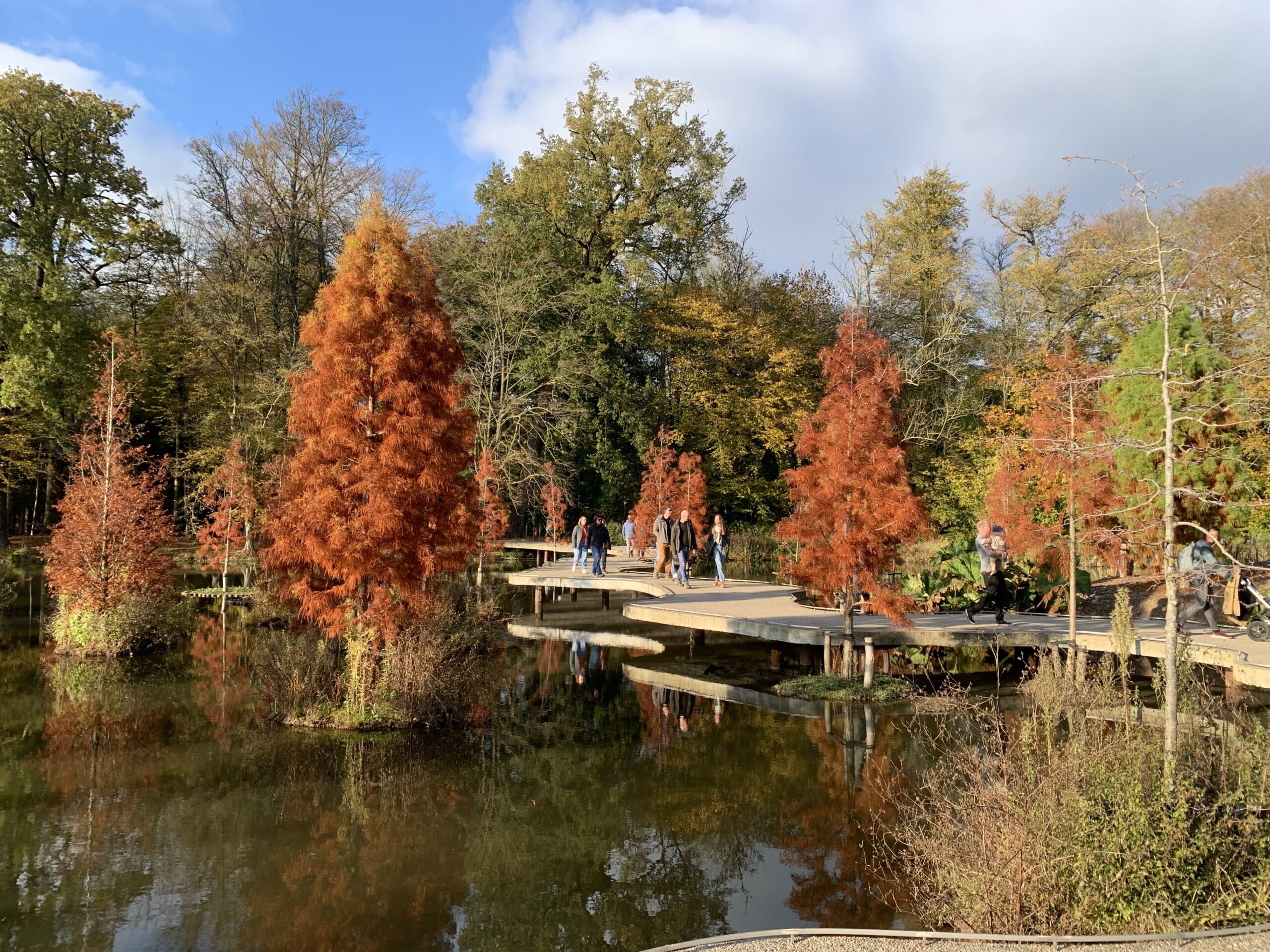
Island garden, Meise Botanic Garden
The island has been replaced by a series of islands of varying heights and slopes, connected by a concrete walkway. The planting of shrubs and trees on and around the islands has been designed to show off the flora of different parts of the world. The visitor moves from an island showing trees of Argentina and Chile to one showing plants of Japan and another of western Europe. It is like a lakeside version of the geographical arboretum at Tervuren – or it will be in 20 to 30 years when the trees are more mature. As a declaration of confidence in the garden’s future, it’s a striking statement.
Plant bank
Perhaps the most eye-catching of recent constructions at Meise is the Green Ark, an architecturally adventurous agglomeration of outsize conservatories – though they are, for the most part, out of bounds to the public. It is here that the botanists are growing plants whose survival in the wild is uncertain. Just as Noah’s Ark was supposed to carry two of each kind of animal, so Meise aims to cultivate two or three specimens of each of certain plant species, for the purposes of both preservation and research. The Ark contains more than 10,000 species, with a particular attention to – among others – euphorbias, rubiaciae (coffee plants), bananas, orchids, bromeliads, plus the malodorous giant arum and its sweeter-perfumed relatives.
Next door to the Ark, a plainer building – though no less hi-tech – is the site of a different exercise in preservation: the seed bank, where botanists dry and freeze seeds of certain plants whose survival is deemed threatened. Meise recently announced that it had passed a milestone objective – set in the context of the UN Conference on Biological Diversity and the subsequent Global Strategy for Plant Conservation (2002) – to harvest and freeze at least 75% of all Belgium’s threatened indigenous plant species. The seeds are kept at -20C and in theory could be good for 200 years. That is something that the botanists must monitor: the work of a seed bank includes taking samples out of the bank at regular intervals to check that they still germinate.
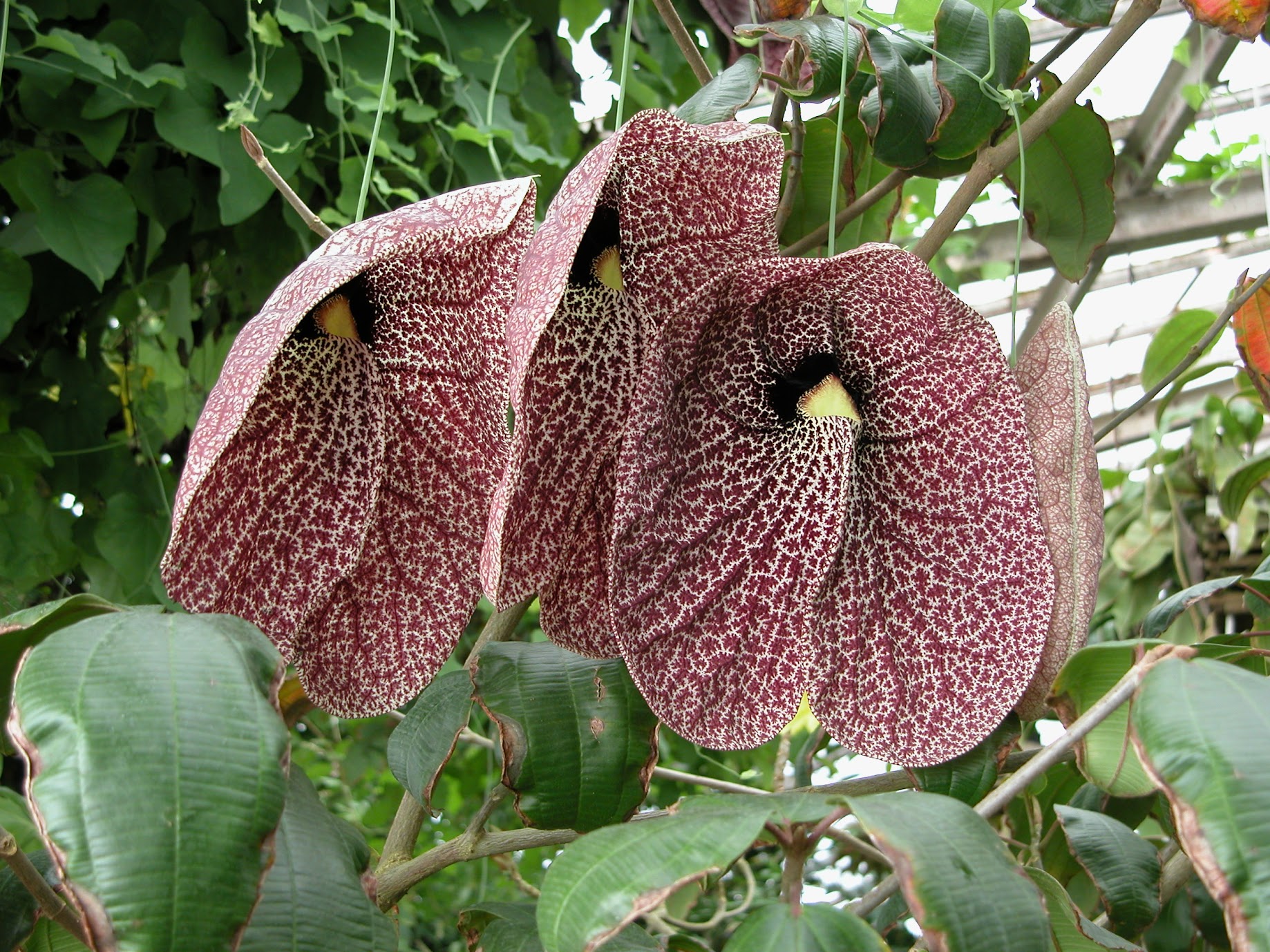
Aristoloche
In addition to the species indigenous to Belgium, the seed bank has other preoccupations: beans, bananas and those plants that can tolerate the copper-rich soil found in the southeast region of the Democratic Republic of Congo, in what was Katanga Province.
Belgium’s colonial history has given it particular areas of botanical expertise. “We have 200 years of work on rubiaceae,” says Koen Es, the garden’s Director of Public Services, referring to the family that includes coffee plants. One of Belgian botany’s claims to fame is that it was a Belgian, Lucien Linden, who presented at the World’s Fair of 1900 the species that became known as coffee robusta, found in Congo, extolling its resistance to the rust disease that was wiping out plantations of arabica coffee elsewhere in the world.
Linden’s father, Jean Linden, is commemorated by a statue in Léopold Park in Brussels, which once contained a zoo and is still home to the Museum of Natural Sciences. In the mid-19th century, Linden was scientific director of the Royal Society of Zoology and Horticulture. He was a botanist: after encountering orchids on an expedition to Brazil in the 1830s, when still in his early 20s, he later built up a business empire growing orchids in Brussels, Ghent and Paris.
The Belgian appetite for horticulture that Linden encouraged – for displays of begonias, azaleas, geraniums, fuchsias, orchids and so on – thrives to this day. But Meise’s primary purpose is not to create beautiful floral displays – though they will happen, at the various points in the year when the magnolias, camellias, rhododendrons, hydrangeas or roses are in bloom. A defining characteristic of Meise is that it is primarily a scientific institution and only secondarily a public entertainment. That is what sets it apart from, say, the Japanese Garden at Hasselt or the Keukenhof flower gardens in the Netherlands, or even the glasshouses of the Royal Palace at Laeken.
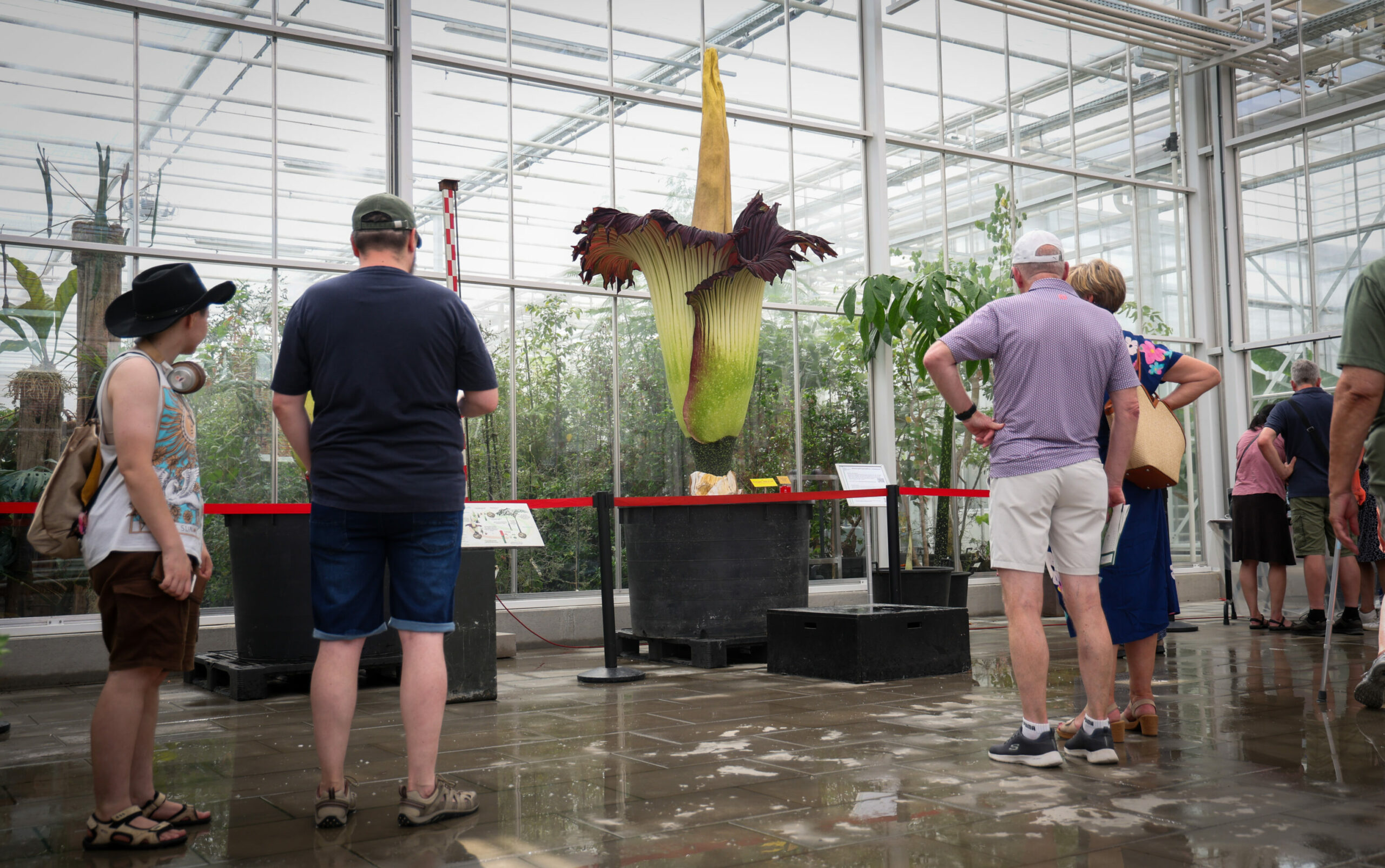
A giant arum plant pictured at a visit to the greenhouses at the Plantentuin Meise (Meise Botanical Garden - Jardin Botaniquede Meise) in Meise, Tuesday 13 August 2024. Credit: Belga
So, is the Meise Botanic Garden worth going beyond the Brussels regional territory to find, maybe even engaging with the De Lijn bus network? I would say so – and not just for those who have never been before. In particular, I would urge a return for those who last visited Meise in the first decade of this century. Back then, it was looking shabby. The political decision had been taken to move responsibility for agriculture from the federal to the regional governments, but the transition was drawn out for more than ten years. In the interim, the Botanical Garden, which had been the responsibility of the federal Ministry for Agriculture, was starved of money and left in a decision-making limbo. Nowadays, the management of the garden comes under the Flemish regional government, with a protocol that provides that roughly 30 of the 180 staff are francophones. Whatever your view of the federal-regional politics, the garden looks much better than it did – and the Eastern Cape breadtree is going to get a new home.
How a botanical paradise grew from royal misfortune
The visitor who tours the entirety of the Meise Botanical Garden takes a crash course in gardening history. That’s because when the botanical collections were transferred from Brussels after the Second World War, they were set in grounds that had already been shaped by centuries of garden practice.
For the most part, that means the landscape gardening that took hold in late 18th century Britain and subsequently spread across Europe – a sculptural combination of nature and edifice. The winding paths and slopes escape the rigour and formality of 17th and 18th century classicism.
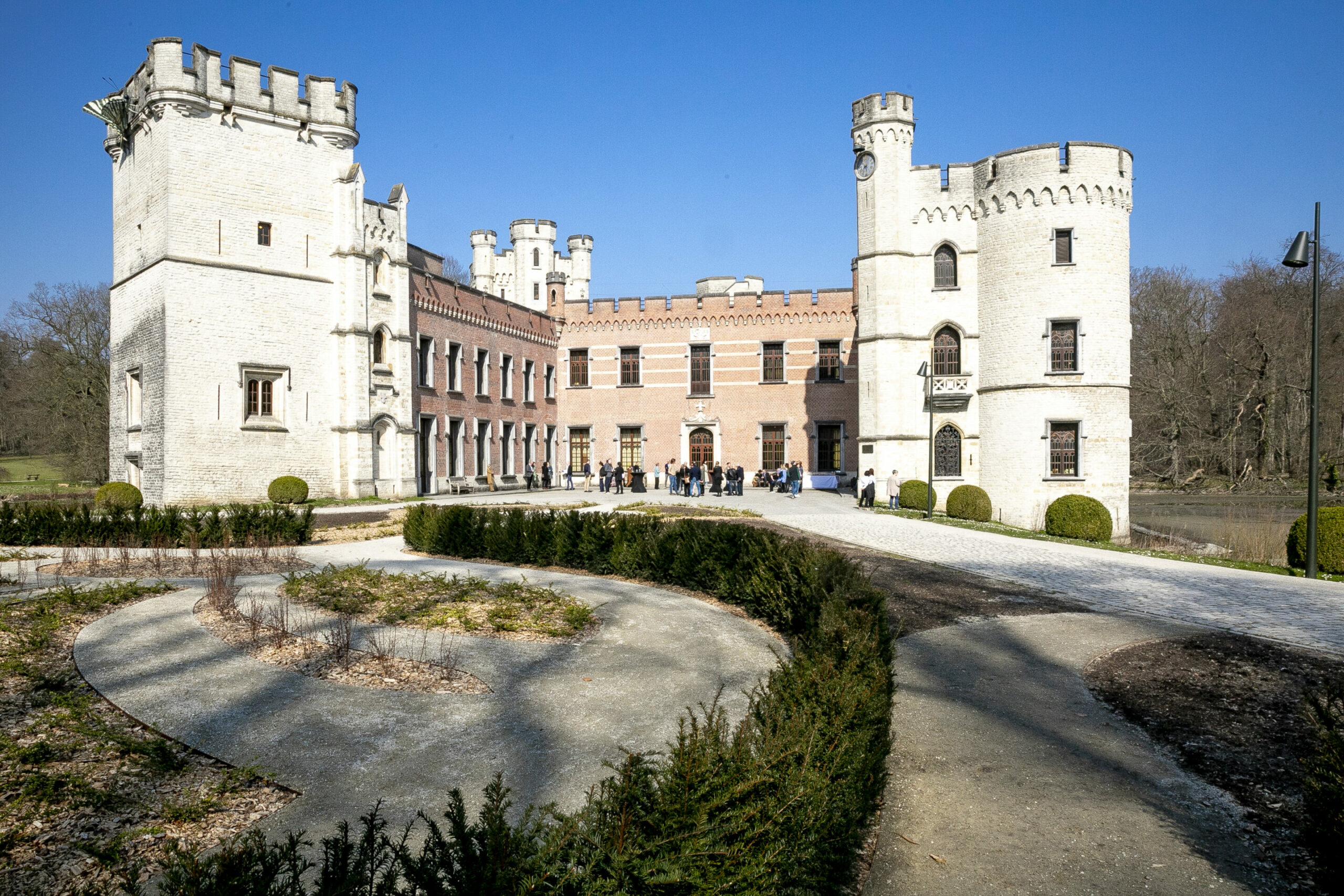
Illustration picture shows Meise Plantenituin in marge of the presentation of the new 'Dichter des Vaderlands/ Poete National' (national poet), Wednesday 23 March 2022, at the Botanic Garden in Meise. Credit: Belga / Hatim Kaghat
The 19th century landscape architects designed their planting to create vistas to the distant scene –across a lake to the medieval castle of Bouchout, to a stand of impressive trees, or, on a smaller scale, to statues of damsels and mythical characters. Wandering the avenues, one encounters exotic trees that predate the arrival of the botanic garden.
There is a medieval garden, walled and geometric, which traditionally would have been planted with medicinal plants. Although the castle of Meise has not survived, the Meise orangery, which would once have sheltered sensitive plants in winter, has been restored and nowadays houses a restaurant.
Charlotte’s retreat
It was King Leopold II who put together the two estates of Bouchout and Meise – both of medieval origin. He bought Bouchout in 1879 and added Meise two years later, as a home for his sister, Charlotte, after her previous residence at Tervuren was destroyed by fire.
By then Charlotte was in a fragile psychiatric state and had been living in confinement for more than ten years. She and her husband, Archduke Maximilien of Austria, were tragic casualties of the inconstant imperialist ambitions of Napoleon III. The French emperor sent troops to unseat the liberals who had won the Mexican Reform War of 1858-61 and backed a plan by Mexican royalists to install Maximilien at the head of what, in 1864, became the Second Mexican Empire. But when the republicans revolted, Napoleon pulled his military support. Three years later, Maximilien was deposed by republican rebels and executed by a firing squad. The Empress Charlotte, who had returned to Europe to solicit help from Napoleon III and the Pope, lived for another 60 years, dying at Bouchout Castle in 1927.
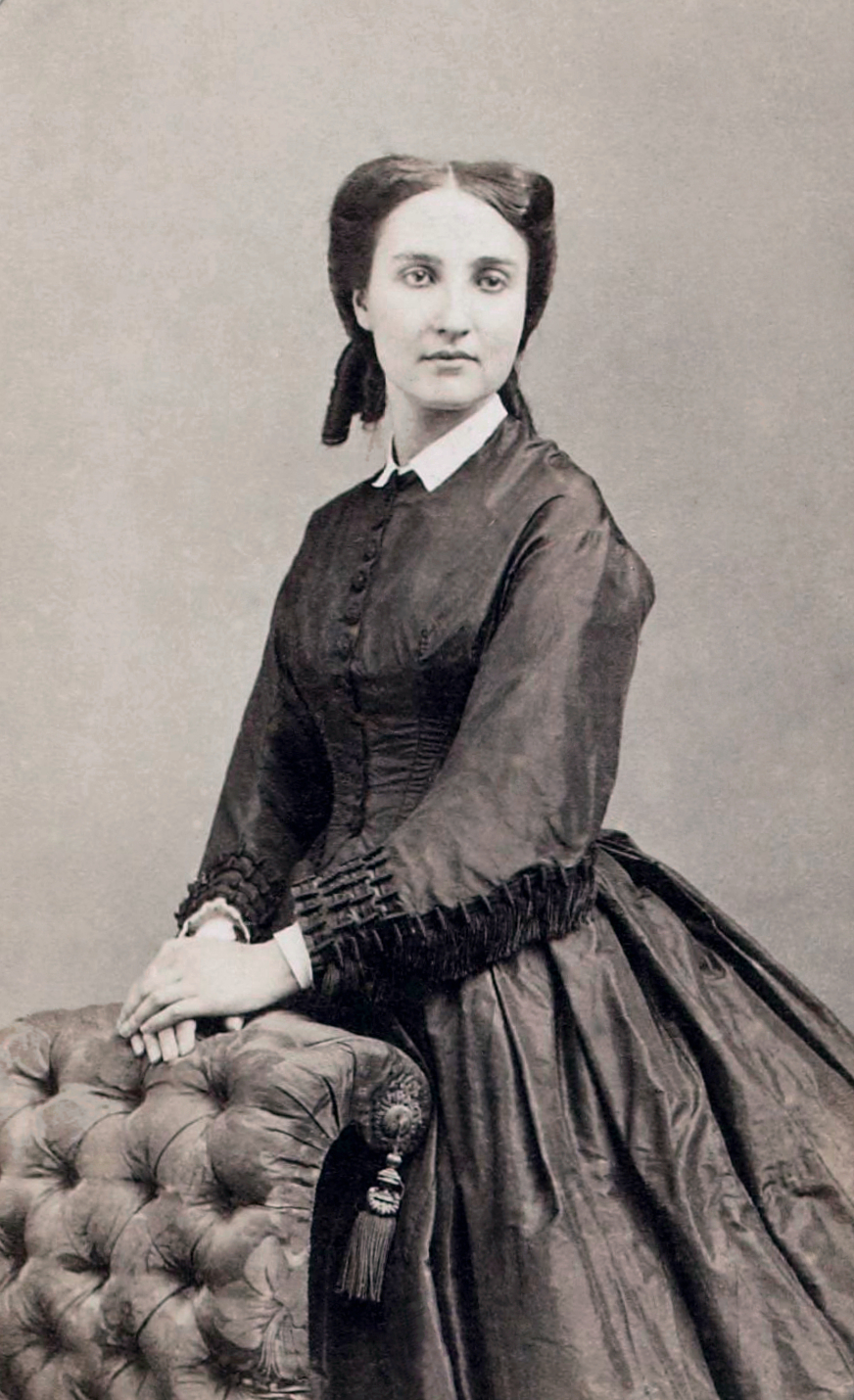
Princess Charlotte of Belgium
So much for the tragic pre-history of the Bouchout-Meise estate. What it meant was that in the early 20th century, when a new home had to be found for the botanic garden – because it was outgrowing its site at Saint Josse, which was also blighted by plans to connect the city’s north and south railway terminals – there was an appropriate site in royal ownership where Leopold II had already planted trees and built greenhouses. In 1939 the state bought 82 hectares of the Meise site from the royal household for the purpose of housing the botanical collections.
