
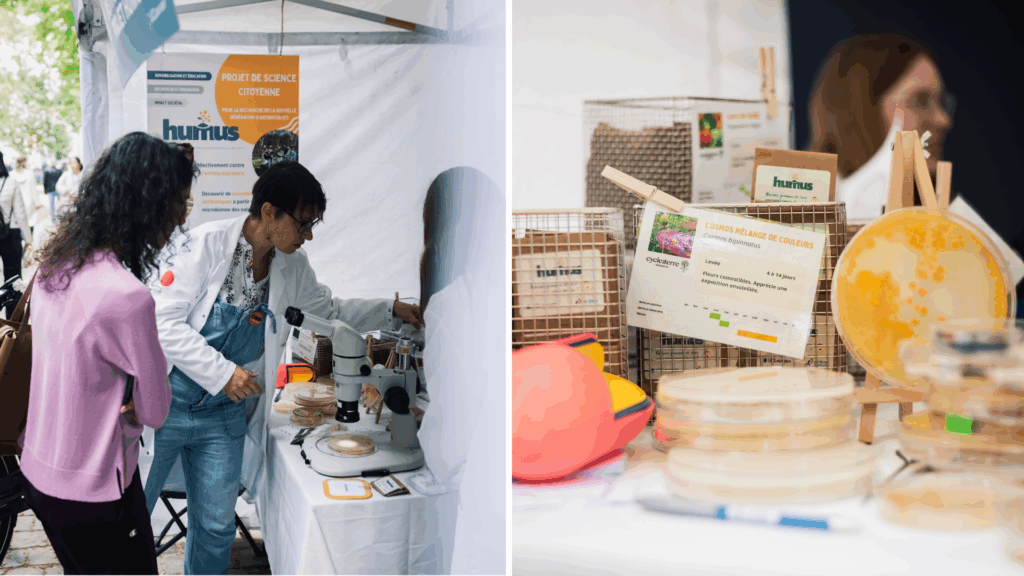
Brussels' regional Iris festival last weekend displayed the UCLouvain-based citizen science Humus Project, examining the importance of soil health in tackling growing antibiotic resistance.
According to the The World Health Organisation, bacteria becoming increasingly resistant to antibiotics could be the direct cause of ten million deaths in the next 25 years.
In Belgium, an estimated figure of over 13,000 infections were found with antibiotic-resistant bacteria, according to a study by The European Antimicrobial Resistance Surveillance Network.
The first antibiotic – penicillin – was discovered less than 100 years ago. More antibiotics were discovered throughout the 1950s until the 1980s, but discovery has been slower since and bacterial immunity to antibiotics continues.
These bacteria would threaten even the well-being of healthy individuals undergoing simple surgical procedures, posing a heightened risk to those immunocompromised.
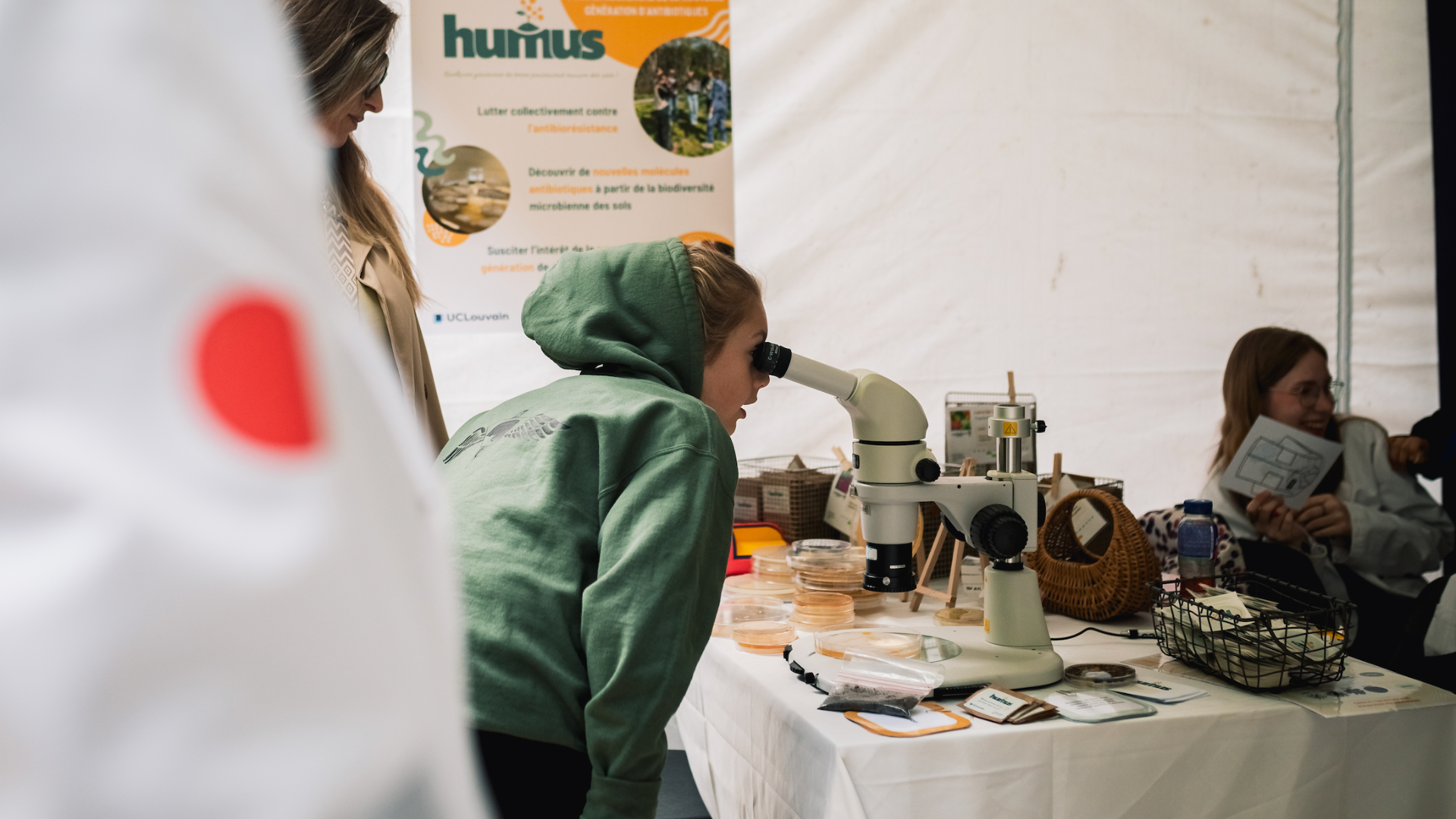
Visitors to the HUMUS Project stand at the Iris Festival. Credit: UCLouvain / Benjamin Zwarts
UCLouvain's researchers
The team consists of four UCLouvain professional researchers including Chloé Petre who co-ordinates the initiative, Pauline Leverrier, and Michael Deghelt, under Professor Jean-François Collet.
Collet has been researching the areas of health and microbes for over 15 years. Spearheading modern antibiotic development through the discovery of novel antioxidant mechanisms in bacteria, Collet won the Joseph Maisin Award in 2020 for his successful efforts.
The team are testing soil samples in search of developments for the "antibiotics of tomorrow," to actively fight antibiotic resistance.
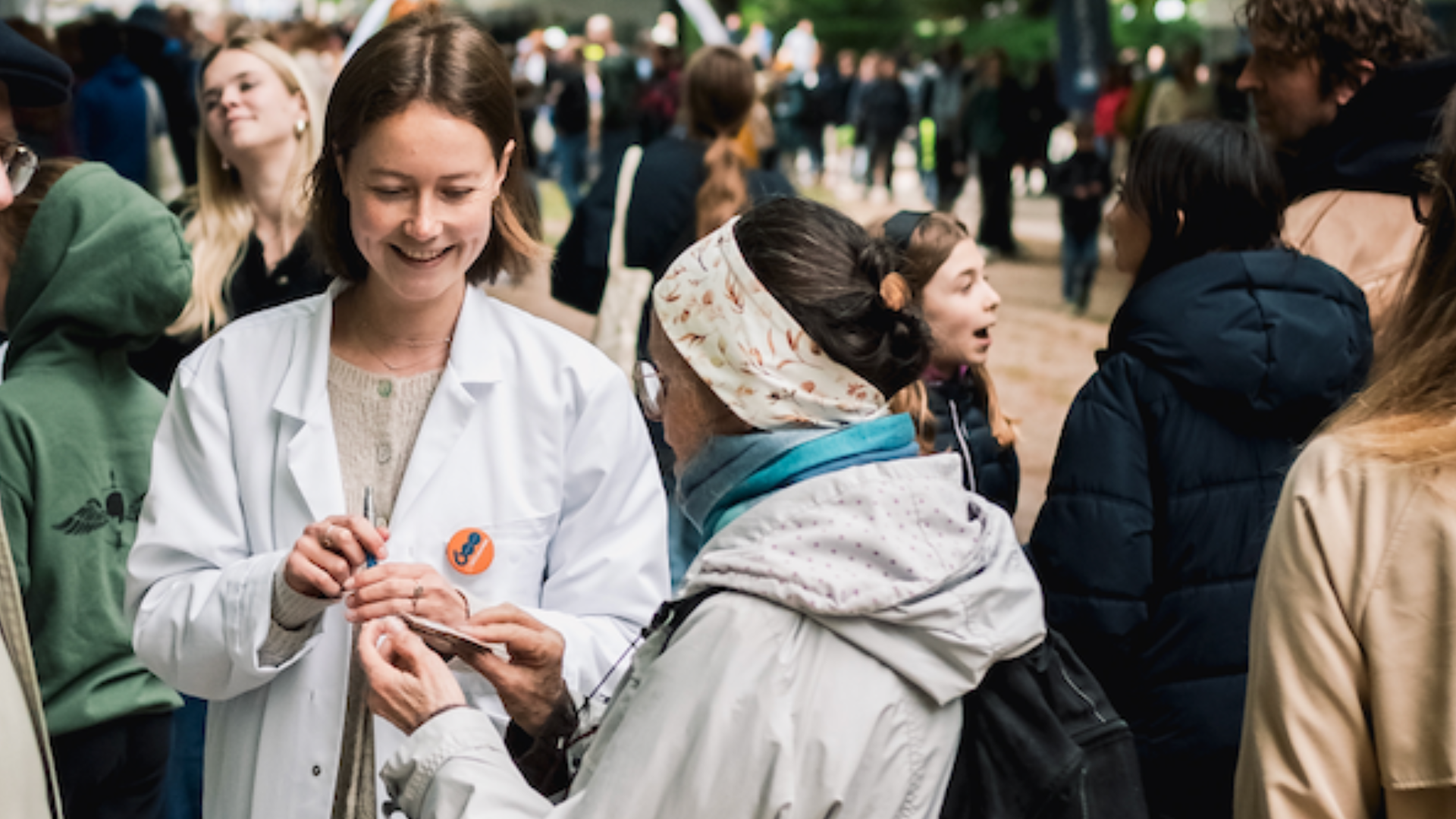
Chloé Petre presenting the research at Brussels' Iris Festival. Credit: UCLouvain / Benjamin Zwarts
The two major groups of bacteria have a complex "cell envelope," making them difficult to target and eliminate. Collet's lab has been working on deconstructing this cell envelope for several years in pursuit of new solutions to tackling ever-evolving antibiotic resistance.
Soils for Science
Related News
- Leuven biotech company tests new Alzheimer's drug
- Grass pollen season is back - Belgian health institute
- Mushrooms to Milan: Belgian researchers debut leather substitute at Fashion Week
Eager to share via phone call, Collet cited Brisbane's 2021 'Soils for Science' Project as the inspiration for this particular research. The University of Queensland research collects biodiverse soils from the region in search of finding soil microbes to adopt as new generation antibiotics.
In Belgium, data will be collected through public participation. Participants download an app that geolocates them and request a testing kit that is sent to their home. Users can provide a few grams of soil from their back garden, and the samples will be bacteria-tested in Petri dishes for new antibiotics.
The visual results will be uploaded to a database. Users are given a QR code through the app that allows them to find their own tested soil sample and appreciate its beautiful pattern.
This initiative acts as an interactive element to engage the public with the important research project.
Next steps
Collet says the project is "still in its early stages," but is scientifically promising. Currently seeking funding of €120,000 by the end of the summer to support the work, the research hopes to discover ongoing antibiotic solutions.
Keen to spread awareness of the "urgency of antibiotic resistance" amongst the Belgian public, the app acts as a push to include the masses and warn of the possibilities of a future major health crisis that must be prevented.
