
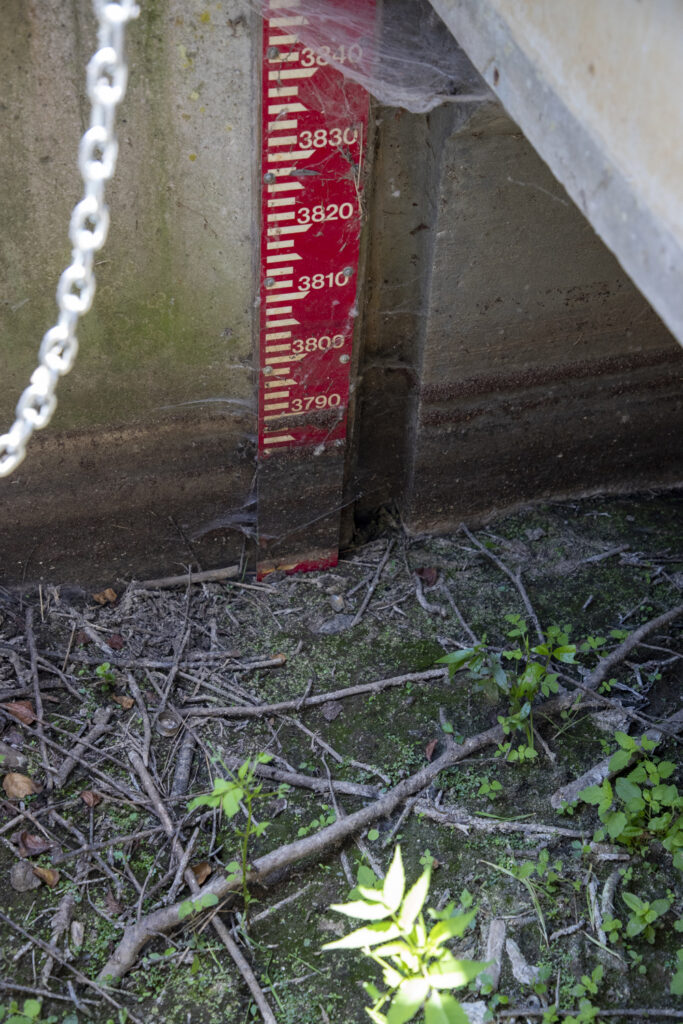
The groundwater levels and most watercourses in Flanders continue to decline due to a dry spring, according to figures released on Wednesday by the Flemish Environment Agency (Vlaamse Milieumaatschappij).
In southern Belgium, water levels in navigable rivers are mostly “normal” and groundwater levels are generally higher than average, as noted by the Drought Unit of the Public Service of Wallonia.
The Flemish Environment Agency reports “low to very low” groundwater levels at 51% of monitoring sites, with the lowest levels recorded in the west and north of Flanders.
Due to low rainfall, the 14-day average flow rates of non-navigable rivers in Flanders also continue to decrease. Currently, 49% of monitoring stations report low to very low flow rates, compared to 32% last month.
The Wallonian Drought Unit warns that a lack of rain over the next three weeks could further decrease flow rates in navigable rivers. Monitoring is particularly urgent for the Haute Meuse, Senne, Semois, and Viroin as their flow rates are already significantly low. Some non-navigable watercourses are unusually low for this time of year.
The Royal Meteorological Institute (IRM) recorded 20 mm of rainfall in Uccle in April, compared to a normal of 46.7 mm.
The Flemish agency reports similar findings from its rain gauge network. A rainfall deficit is also observed in Wallonia, notably in the western part of the region.
The Flemish Coordination Commission Integraal urges water managers and farmers to conserve water wherever possible. Suggested measures include building small dams to maintain water levels.
