
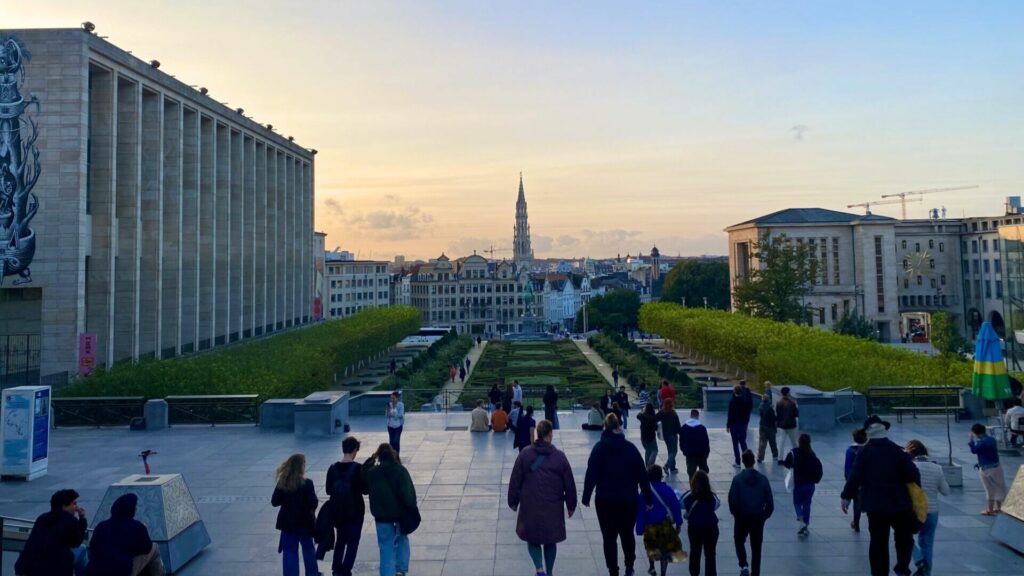
Four Belgian cities are among the 100 best in Europe for residents, commuters, tourists and investors, according to the annual ranking of the Canadian consultancy firm Resonance. Brussels scored the highest, and even rose two places compared to last year.
This year's 'Best European Cities' ranking puts Brussels in 16th place, based on 32 performance metrics from more than 400 cities combined with a public perception analysis from global research firm Ipsos.
"Brussels is a city where European politics meets cultural sophistication, blending historical grandeur with modern dynamism," the report read. "The iconic Grand Place, often cited as one of the most beautiful squares in the world, is a testament to the architectural prowess of a city that's also renowned as the birthplace of Art Nouveau."
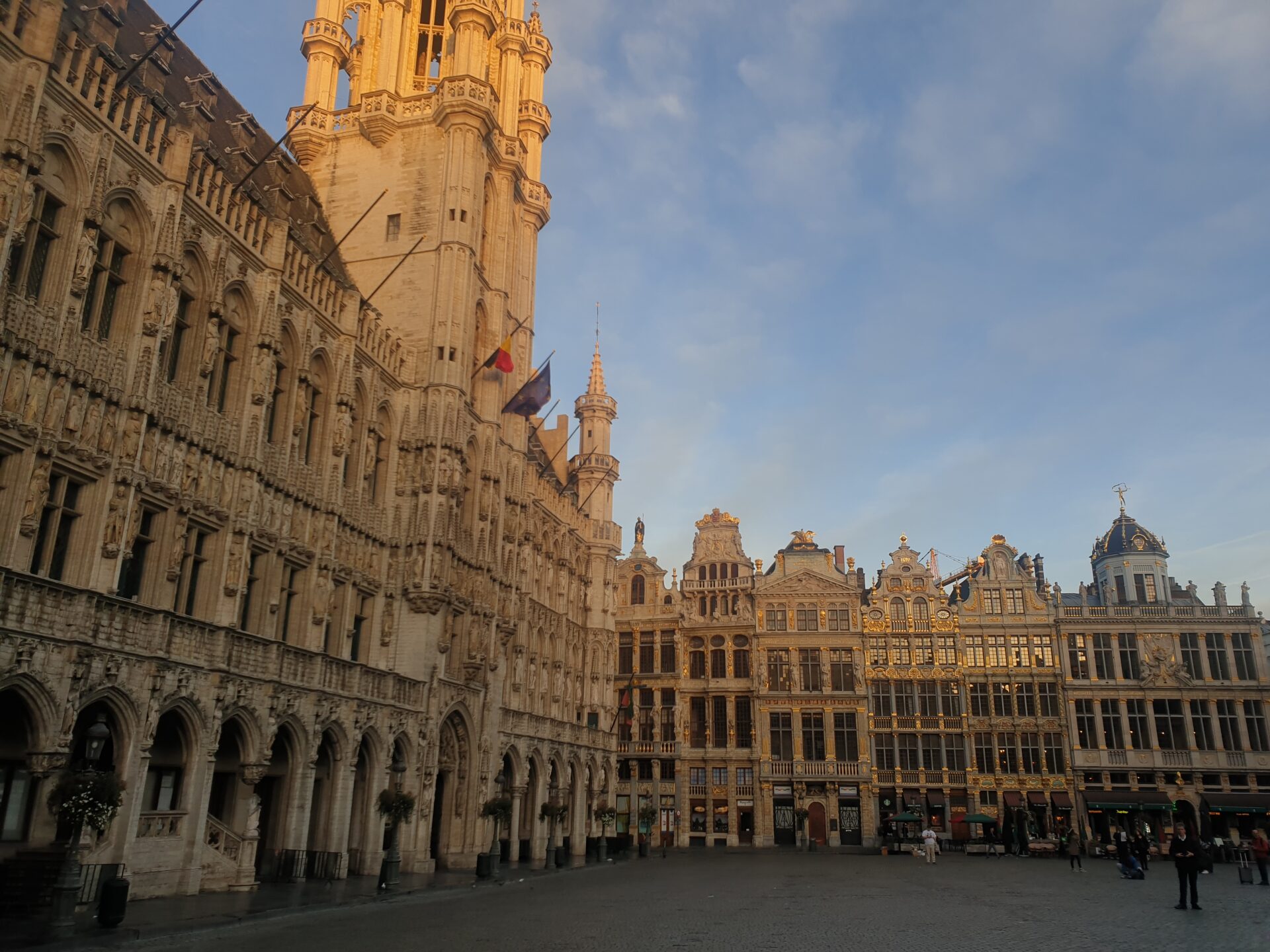
Grand Place bathing in the morning sunshine. Credit: The Brussels Times
Resonance added that beyond its historic façades, Brussels is also investing heavily in urban renewal projects that enhance its liveability and appeal. They praised the repurposed Gare Maritime at Tour & Taxis, and the colonnaded neoclassical Grand Hospice.
"As the EU's administrative centre, Brussels attracts a vibrant international population, and this diversity feeds into its cultural landscape, with neighbourhoods like the Congolese Matonge quarter showcasing flea markets, street art and a unique local flavour," the report added.
The Belgian capital also ranks fourth for airport connectivity, and it is enhancing its role as a European travel hub with new inter-city and night train routes via the Brussels-Midi railway station.
Tourism has surged as well, with a 73% increase year-on-year in 2024, making the city Europe's fastest-growing urban destination, according to Chase Travel.
Antwerp, Ghent and Liège
Antwerp and Ghent are still in the top 100 like last year, and have even gone up in the ranking. Antwerp rose from 73rd to 44th place, while Ghent rose 35 places from 90th to 55th position. A fourth Belgian city, Liège, made it into the ranking this year – in 86th place.
The report described Antwerp as "ancient affluence meeting modern crisis in Belgium's storied river city." It has conducted business since the Middle Ages – and has the centuries-old Diamond District (and the title of Europe's second-largest port) to prove it.
Antwerp ranks 23rd in the 'Shopping' subcategory, and has the sixth-lowest poverty rate in Europe. Additionally, the city has dozens of museums of all sizes – with the recently renovated Royal Museum of Fine Arts Antwerp (KMSKA) being the crown jewel.
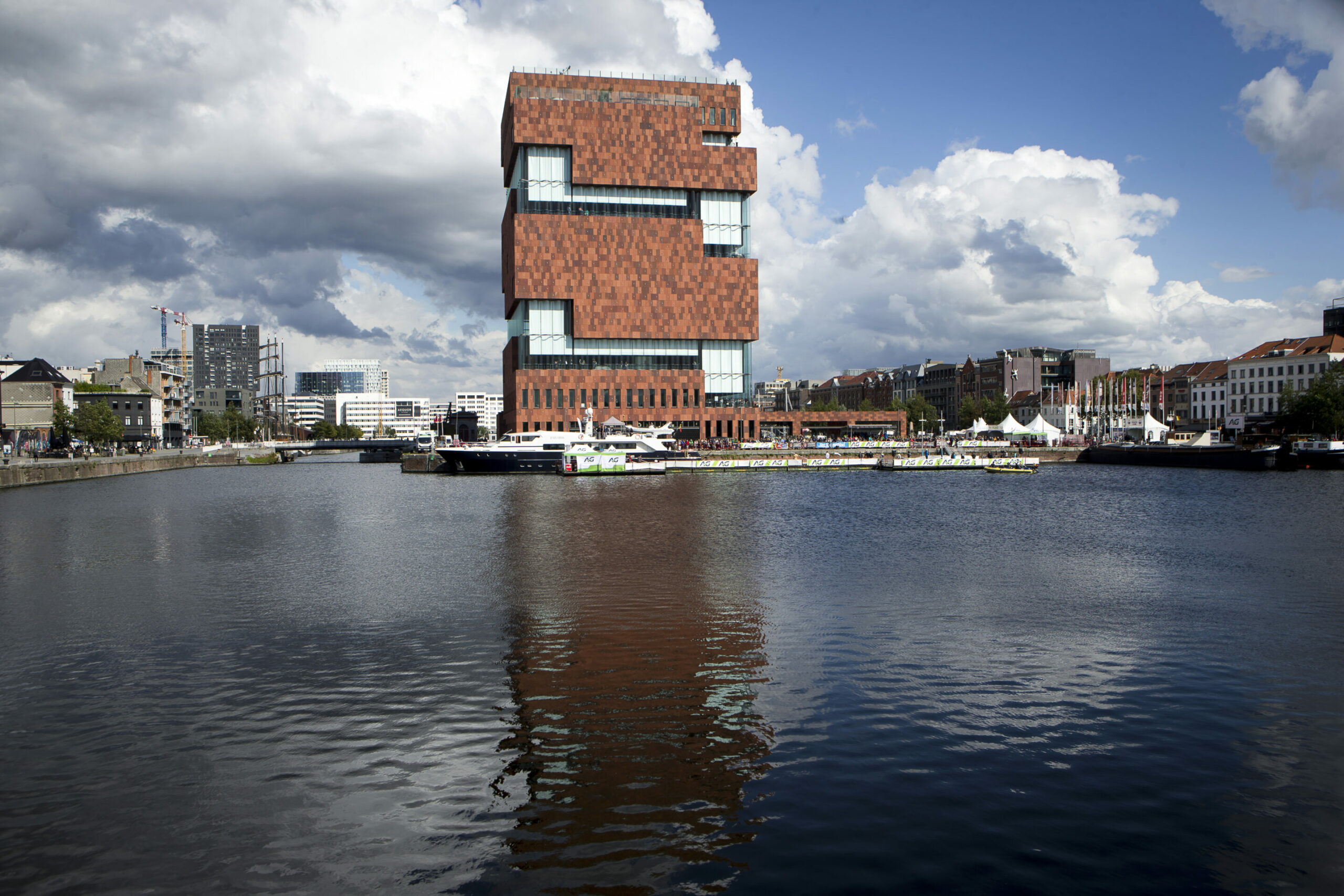
The Antwerp MAS. Credit: Belga
However, the report also recognised that "not all is rosy for this gilded city," as it is currently "in the grips of a violent war between drug cartels trying to control the entry point for Latin American cocaine into Europe."
In 2024 alone, Antwerp recorded 91 incidents of drug-related violence (a nearly 30% increase compared to 2023), including shootings, kidnappings, and torture linked to gang wars over control of smuggling routes. However, that did not seem to be a dealbreaker: the city rose 29 places in the ranking.
The next Belgian city in the top 100 is Ghent, which "can't wait to tell the world its centuries-old stories." The report praised the city's cultural offerings, including protected UNESCO sites, the Museum of Fine Arts and the Ghent Altarpiece (also known as the Mystic Lamb painting).
"In addition to its priceless history, Ghent is fearlessly living in the moment with citizens from 160 nationalities calling the city home, along with approximately 85,000 university students arriving each autumn to study at the city's two universities and four university colleges." Ghent University, meanwhile, contributes to a 42nd ranking in the 'Educational Attainment' subcategory.
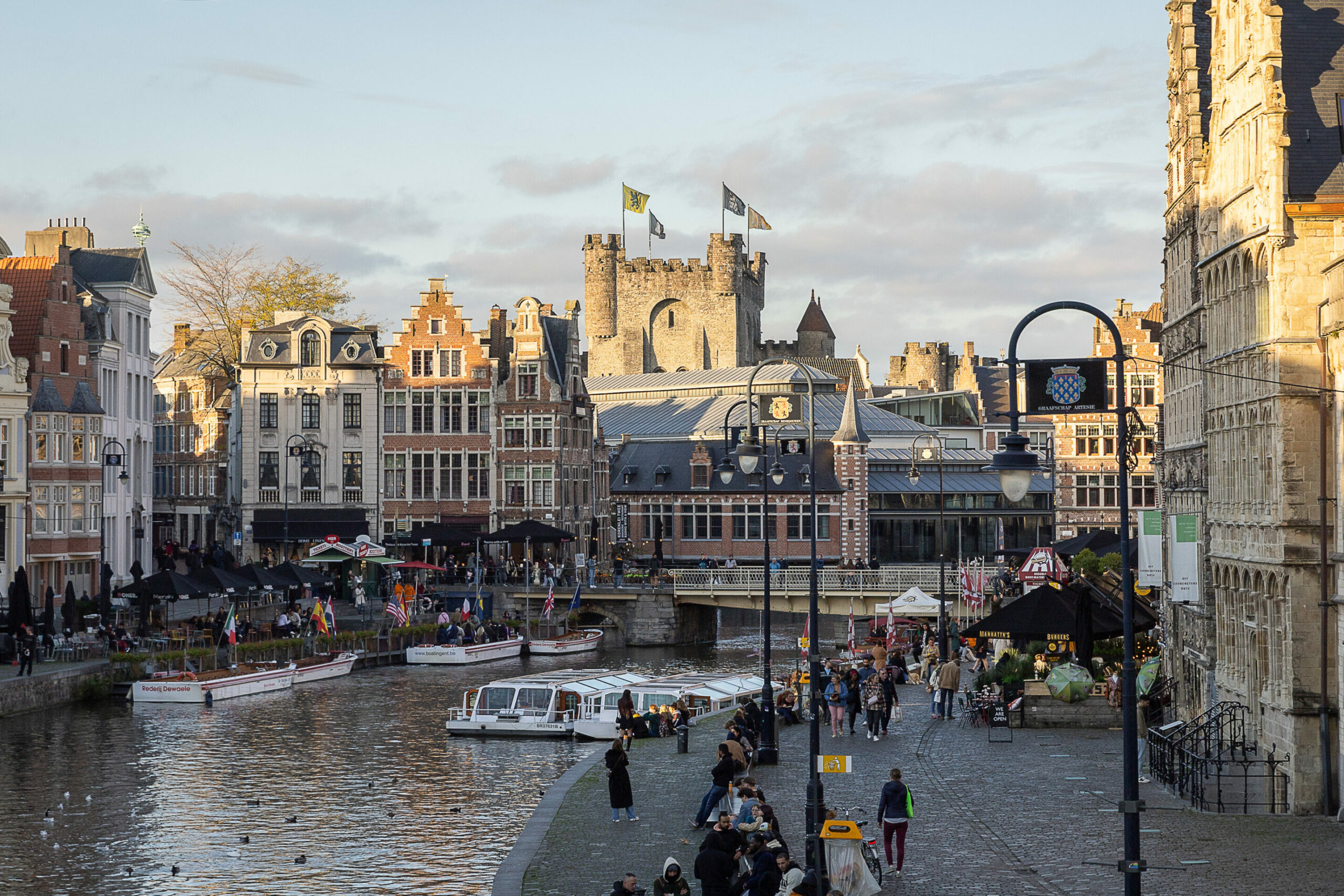
The city of Ghent. Credit: Belga/ James Arthur Gekiere
Liège – referred to as "Belgium's comeback city" – is the country's last city in the ranking, finishing in 86th place. "Long defined by its industrial past, Liège is rapidly reinventing itself as a city of sustainable innovation and cultural renewal."
The biggest news of 2025 was the long-awaited opening of the Liège tram, a 11.7-kilometre line with 23 stations linking the Sclessin district to the Coronmeuse eco-district. Years in the making, and at an estimated final cost of over €1 billion, the line should ease congestion and boost access to key districts, including Guillemins Station and the historic city centre.
Culturally, Liège also continues to shine, from its UNESCO-recognised commitment to lifelong learning to its bold street art and festival scene.
