
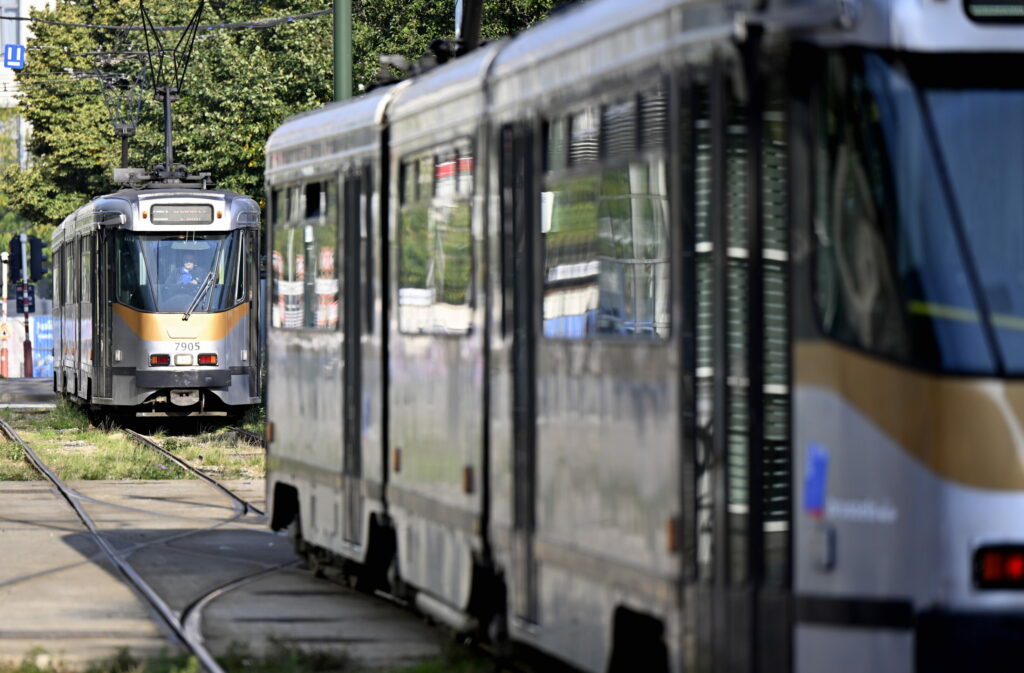
Flemish Minister of Mobility and Public Works, Annick De Ridder (N-VA), has announced the commencement of construction for a new mobility hub at the Diepenbeek campus.
Once completed in two years, the campus will be a key link in the high-quality public transport (HOV) line connecting Hasselt, Genk, and Maasmechelen.
The project includes new stop infrastructures, a dedicated tram lane of almost 3 kilometres, and 2.5 kilometres of new cycle superhighways.
Since its establishment in 1974, the Diepenbeek campus has seen minimal changes in mobility infrastructure.
The new construction will proceed in two major phases, each divided into smaller phases, ensuring campus accessibility but causing some traffic disruptions. Phase one, running until summer 2026, will see the creation of a new stop square between Via Media and Ginderoverstraat. The Agoralaan will also be transformed into a green boulevard with a dedicated tram lane and a broad cycle superhighway.
The second phase, from autumn 2026 to spring 2027, will link to Universiteitslaan and involve ecological work along the Demer River. The river will be redirected to a more natural course, restoring part of the original landscape and enhancing biodiversity.
The Diepenbeek campus will serve as a vital hub for the new 39-kilometre HOV line with 14 stops between Maasmechelen and Hasselt.
Trams will cover the route in under an hour, with departures every 15 minutes. De Lijn has ordered 17 electric trams, set to be delivered this year, to service this line.
Minister De Ridder emphasised that the new trambuses and stop infrastructure signal a substantial upgrade beyond a regular bus line. She added that the project will not only improve regional and campus access but also support the development of a central hub for the Limburg knowledge economy.
The Flemish Government is investing €17 million in the development of the mobility hub at Diepenbeek campus.
