
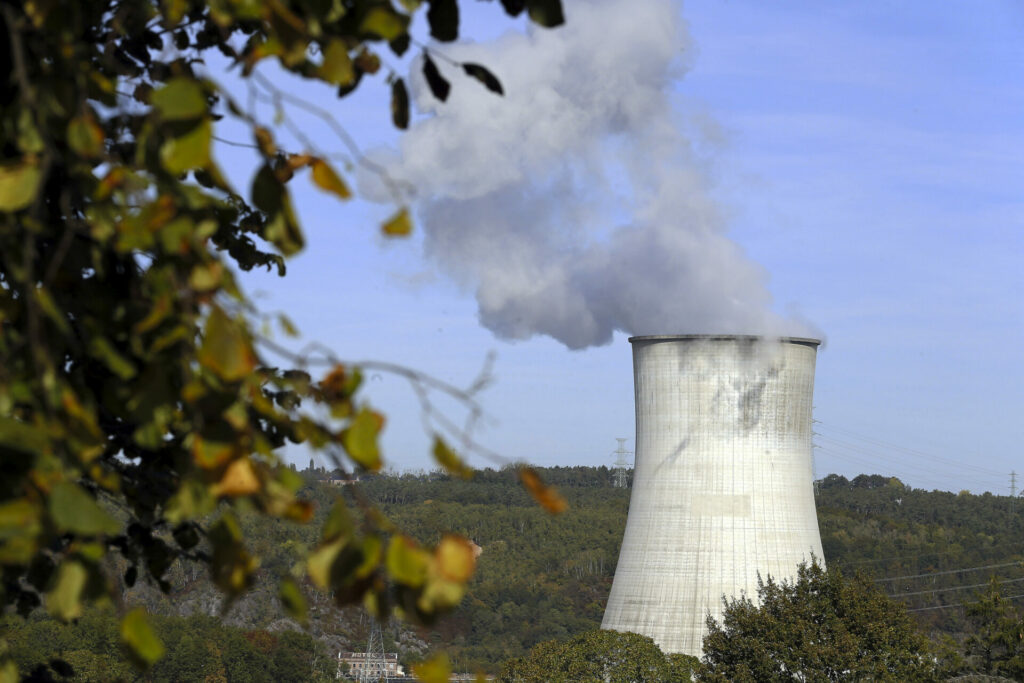
Belgium officially scrapped its nuclear exit law this week – a turning point in the country's energy history. With the return to nuclear power, Belgium is leaving behind two decades of blockages and hesitations.
The nuclear phase-out law – which dates from 2003 – imposed a closure date on Belgium's various nuclear reactors, while also prohibiting the construction of new power plants. This new bill undoes these two provisions.
"With this new law, Belgium is finally giving itself the means to guarantee an energy mix based on today's reality," said Energy Minister Mathieu Bihet (MR) in a press release, following the official overturning on Thursday.
"It is no longer a question of pitting energy sources against each other in a binary and sterile way, but of using them pragmatically and complementarily. This is a new energy era," Bihet said.
Strategic diversification
Over the past 20 years, the nuclear exit law was updated more than once to keep some nuclear plants open longer. For example, Russia's invasion of Ukraine and the subsequent pressure on energy prices resulted in the Doel 4 and Tihange 3 plants being allowed to stay open for ten extra years – beyond the planned closure date in 2025.
Specifically, this new law removes the provisions on the timing of the nuclear exit and the ban on building new production capacity. Now, Belgium is opting for strategic diversification of its energy sources – which Bihet called "indispensable in light of the international context and current geopolitical uncertainty."
Francophone liberals MR and Flemish nationalists N-VA have been wanting to do away with the nuclear exit law for years. However, abolishing the law was out of the question for the previous Federal Government (which included greens Groen and Ecolo, who were behind the push to phase out Belgium's nuclear reactors).
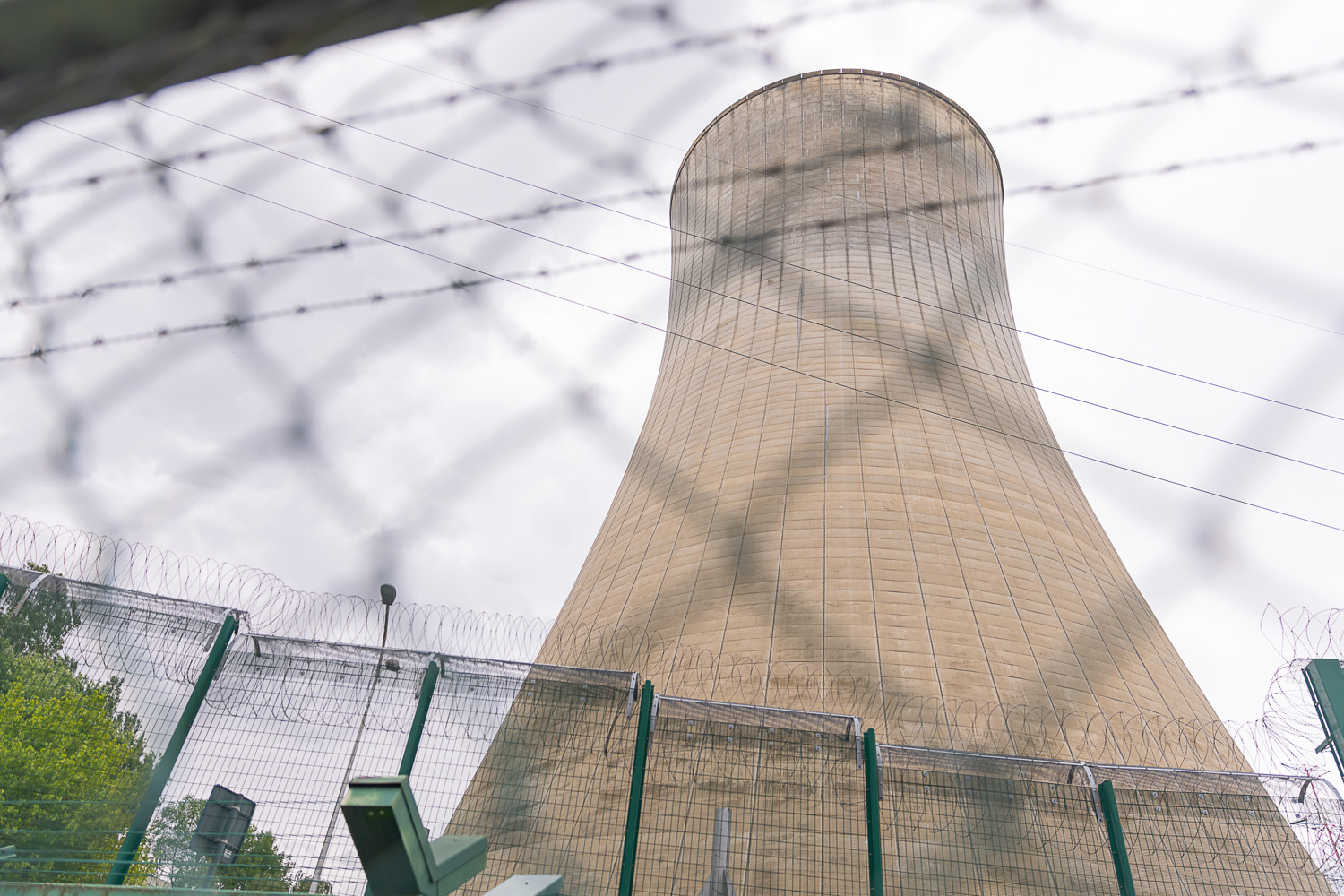
The Tihange nuclear cooling tower of the nuclear central of Engie, Thursday 13 July 2023. Credit: Belga
The new Federal Government, however, does not include the greens, and a compromise on the issue was quickly found. In its coalition agreement, the 'Arizona' Government is clearly committed to nuclear energy, albeit not exclusively.
The new bill was initially proposed by Bihet, who contributed to the creation of this legislation by submitting these texts as an MP. For him, the adoption of the law "reflects the will to remove past obstacles to ensure a future-proof energy policy for our country."
While the bill does not yet mean that the Federal Government can immediately start building new nuclear power plants or proceed with an additional lifetime extension of the existing reactors, Bihet previously called it "a first step" that "paves the way for a regulated framework that ensures the safety of both existing and future plants."
"By opening the door to new nuclear capacity, the government confirms its will to strengthen our energy independence, ensure competitive prices and accelerate the decarbonisation of our production," he said.
Not all eggs in one basket
In an exclusive interview with The Brussels Times earlier this month, Bihet said that the decision to shut down the reactors was ideological, but "the decision to reopen them is pragmatic."
Bihet does not consider nuclear as a silver bullet, but "as part of a larger balancing act." He was quick to insist that the energy transition cannot succeed without massive renewable investment. "Offshore wind, solar panels, hydrogen electrolysis – these all have their place. But without stable, low-carbon energy, they risk falling short."
He likens the energy grid to a financial portfolio: "You wouldn't put all your savings into one stock. Not all your eggs in one basket. Energy should be the same – diversified, resilient, balanced."

Mathieu Bihet, Federal Energy Minister of Belgium in an exclusive interview with The Brussels Times. Credit: The Brussels Times / Anas El Baye
Additionally, this change of direction also opens up great technological, industrial and economic prospects: Belgium will be able to use its expertise to relaunch an innovative sector that creates skilled jobs at the service of the energy transition.
"We fully follow the energy policy defined in the coalition agreement: a policy committed to a sustainable and sovereign energy future, contributing to socio-economic well-being," Bihet said. "It is not only an energy reform, but also a structural decision for the economic, environmental and strategic future of our country."
The reform will be implemented in consultation with industry players, industry experts and security authorities.
