
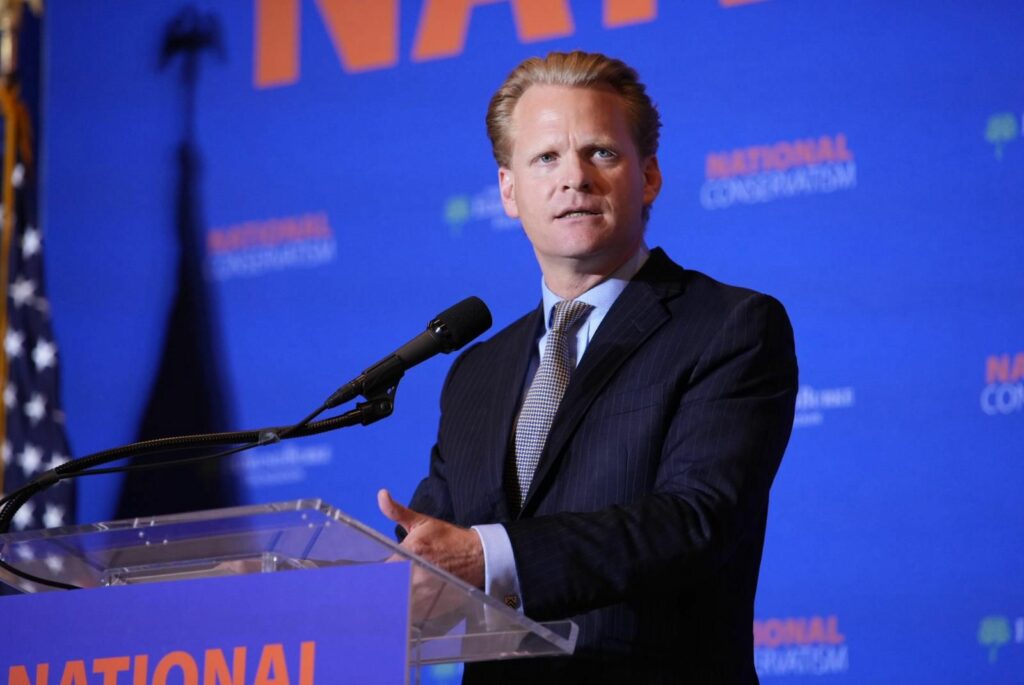
A string of hardline conservative political events in Brussels have been forced to close over the last few months after a targeted campaign by far-left activists. In total, five such incidents have de-platformed far-right events in the last 14 months, whereby local activists had successfully prevented right-wing speakers from talking in the Belgian capital, now officially labelled an official “anti-fascist” city.
In the most notable incident, just over two weeks ago, protestors egged Brussels' Stanhope Hotel in a bid to force the venue to abandon its plans to host two conservative speakers. The event was forced to hastily move to a new, secret venue, at which media were banned from attending. Other events have also faced significant challenges, but have managed to take place regardless.
These repeated cancellations have sparked a debate not just about free speech, but about where the boundaries lie between defending democratic values and platforming ideologies accused of undermining them.
At the centre of the Stanhope controversy was a man once described by Politico as “J.D. Vance’s philosopher king.” James Orr, associate professor of philosophy of religion at the University of Cambridge and chairman of the Edmund Burke Foundation in the UK, was scheduled to speak at the gathering. But as has become increasingly common for events associated with his growing National Conservative movement, venue after venue pulled out under activist pressure.
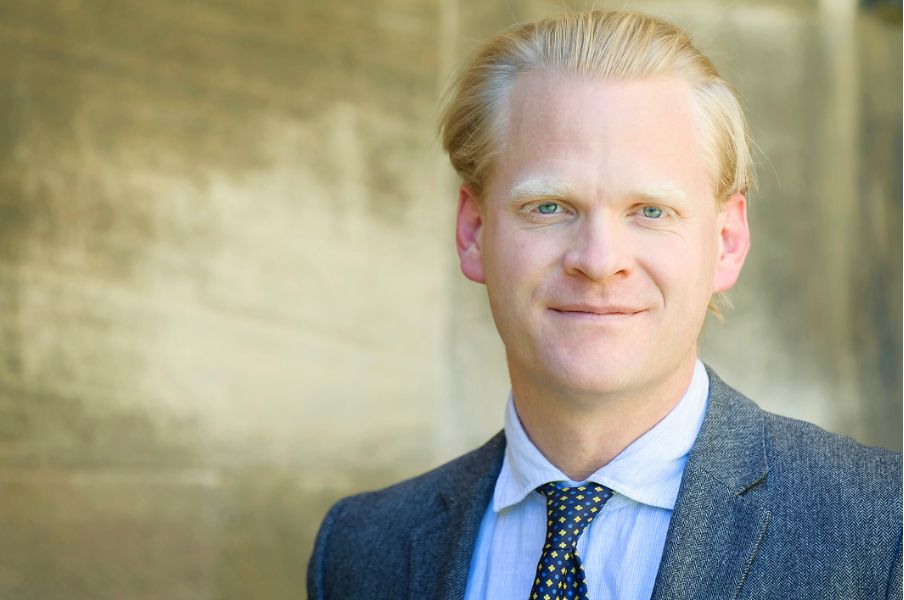
Credit: Courtesy
Orr’s Edmund Burke Foundation has a problematic relationship with the city of Brussels. In 2024, the foundation’s National Conservatism (NatCon) conference, attended by familiar faces from the European right-wing such as Nigel Farage, Viktor Orbán, Éric Zemmour, and Suella Braverman, was initially cancelled by the Claridge venue following pressure from local activists, prompting a scramble to find an alternative space.
Mayor Emir Kir, citing concerns for public order and safety, tried to shut that down too - but the event did ulitmately go ahead. The episode received widespread media coverage, as well as criticism from free speech advocates, after it was revealed that multiple venues had been approached and had either backed out or been pressured into cancelling. The pattern has become familiar: activists condemn the event speakers, the speakers challenge the boycott, and call for the protection of “intellectual diversity” in Europe.
NatCon's Brussels cancellation struck a chord with many outside far-right circles, with the then-Belgian Prime Minister Alexander De Croo denouncing the situation as "unacceptable" and "unconstitutional." Other political figures signed petitions to allow the event to proceed, with a court ultimately overturning the decision to censor it. Nevertheless, while it is true that Brussels has become an increasingly difficult location for the populist right, despite its record success in European polls, critics argue that this new right-wing movement has not been forthcoming about its ties to illiberal or authoritarian leaders in Europe.
Despite the pressure, the Edmund Burke Foundation has returned to the capital on multiple occasions. Other hard-right think tanks, such MCC Brussels, also maintain their presence in the Belgian capital.
The two think tanks hosted an event on 22 May, attended by Orr and Italian political scientist Guglielmo Picchi, Director of International Relations at the Machiavelli Centre for Political and Strategic Studies. The two strongly conservative think-tanks met with unsurprising opposition, with Antifa attempting to force the cancellation of the event. The right-wing organisations have a strong influence over the immigration policies of both Italy and Hungary.
The 'National Conservative'
So who is this soft-spoken academic whose close friendship with U.S. Vice-President J.D Vance, and is Brussels a lost cause for his gatherings of some of the most polemic right-wing voices?
“I’m no guru,” Orr began, laughing off the Politico moniker. “That headline was just media mischief. J.D. doesn’t need a philosopher king; he’s an independent thinker and a deeply grounded person. We agree on many things, but I’m just a humble fellow traveller.”
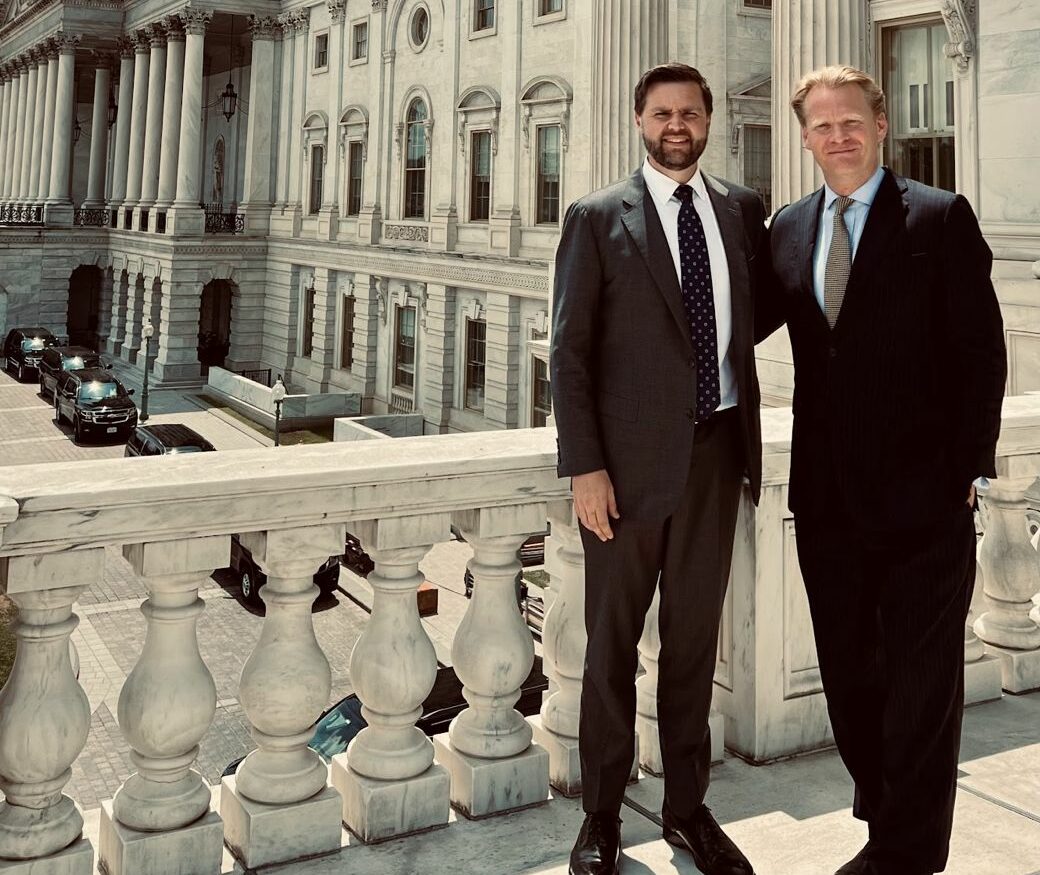
James Orr poses with current U.S. Vice-President J.D Vance in July 2024, days before he was picked as Donald Trump's running mate. Credit: Courtesy
Orr’s tone is thespian, and he is eager to break into long soliloquies about ancient Greece, classic British literature, and obscure philosophy. But behind this academic’s oration lies a contentious agenda: to restore what he calls “the spiritual, moral, and metaphysical foundations” of the West. But for all the headlines linking him to US conservatism, Orr’s roots lie not in Washington or Westminster, but in Belgium.
“Europe is in my blood,” he says. Born in the UK in 1978, he was raised in Brussels and Wallonia. “We moved to Uccle in ’79. I grew up here, went to school in Wavre, and my parents still live in Wallonia, for almost 50 years now.”
He speaks fondly of his upbringing, a life “in-between nations” that he believes helped him understand their importance. “I was aware of what it means to be part of a national community, even though mine felt somewhat abstract. It made me love nations, not despite their differences, but because of them.”
This experience shaped a worldview that now finds its most prominent vehicle in the National Conservative movement. “To be a conservative is to be a national conservative, or it is not to be a conservative at all,” he contends, quoting Disraeli and invoking Edmund Burke, the movement’s philosophical lodestar and namesake of the foundation Orr chairs in the UK.
Ideology and the nascent hard-right
“National Conservatism” is often viewed as a rebranding of hardline paleoconservatism associated with the bible wielding American conservatives of the last millennia. According to the Edmund Burke Foundation, the movement is built around religion, an opposition to multiculturalism, “national independence”, and the family. Its detractors, however, argue that this mix of traditionalism and nationalism masks more profound anxieties about demographic change and social liberalism. Critics have questioned whether its rejection of multiculturalism amounts to a rejection of pluralistic democracy itself.
Orr insists that his movement is rooted in long-standing philosophical traditions. “The name is a tautology,” he says. “Disraeli’s conservatism was national. Burke said that a nation without the means of change is without the means of its own conservation. You conserve what you love.”
But conserve what, exactly?
“We want to conserve priceless and eternal truths, values shaped by heritage, tradition, and yes, religion.” But Orr ultimately offers few specifics on how those goals translate into policy, or what space remains for those who do not share the same heritage or religion.
Some parties drawn to the National Conservative space have offered radical solutions. Germany's AfD has even proposed the mass deportation of migrants, a move that has solidified criticism of a dangerous anti-democratic precedent set by elements of the European right. Following Germany's recent federal elections, the AfD has grown to become Germany's second-largest party.
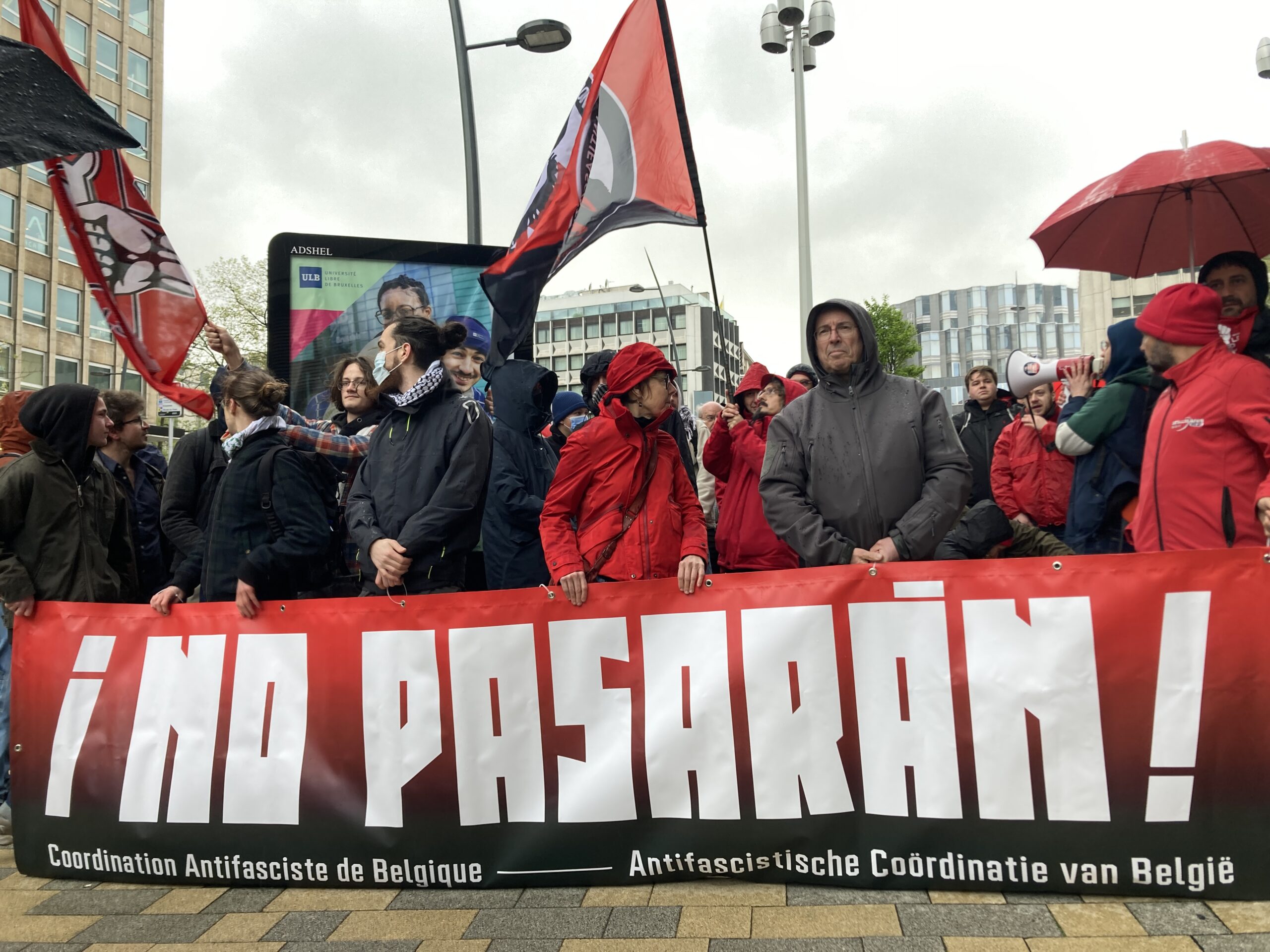
Events hosted by Orr and his Foundation have met repeated opposition from Antifa activists. In April, the council of the City of Brussels voted unanimously to call itself an "anti-fascist" city. Credit: Belga/ Lou Lampaert
The British academic, one of the faces of this political movement, asserts that modern liberalism has failed because it attempts to govern society without a shared understanding of deeper values, such as what it means to be human or what constitutes a good life.
“It assumes we can be governed without any shared understanding of what a human being is, what justice is, what dignity means. But metaphysics always comes back through the back door.”
Religion, identity, and controversy
Religion, then, plays a central role in the movement. While for much of the European political hard right remains secular, Orr is not afraid to stress the importance of religion behind his emerging doctrine. The National Conservative charter explicitly states its aim to place “God and the Bible at the forefront.”
Orr, a student of religion, sees this not as an American import but a civilizational necessity. “Every nation conserves its own roots, and almost all of them are religious. Even if you don’t believe it’s true, religion has proven to be the most powerful social technology ever devised.”
In Europe, where conservative movements often downplay religion to appeal to broader electorates, this approach is unlikely to find much appeal. Orr admits the American and European wings of the movement handle the question of religion differently. “Yes, in Europe, the conversation is more ginger. But even here, religion’s influence hasn’t disappeared. It just looks different. You can’t enjoy the fruits of a civilisation without honouring its roots.”
The movement’s critics also object to its perceived closeness to figures like Viktor Orbán or Giorgia Meloni. National Conservative conferences were the scene of heightened tensions, with activists threatening disturbances at venues hosting the speakers.
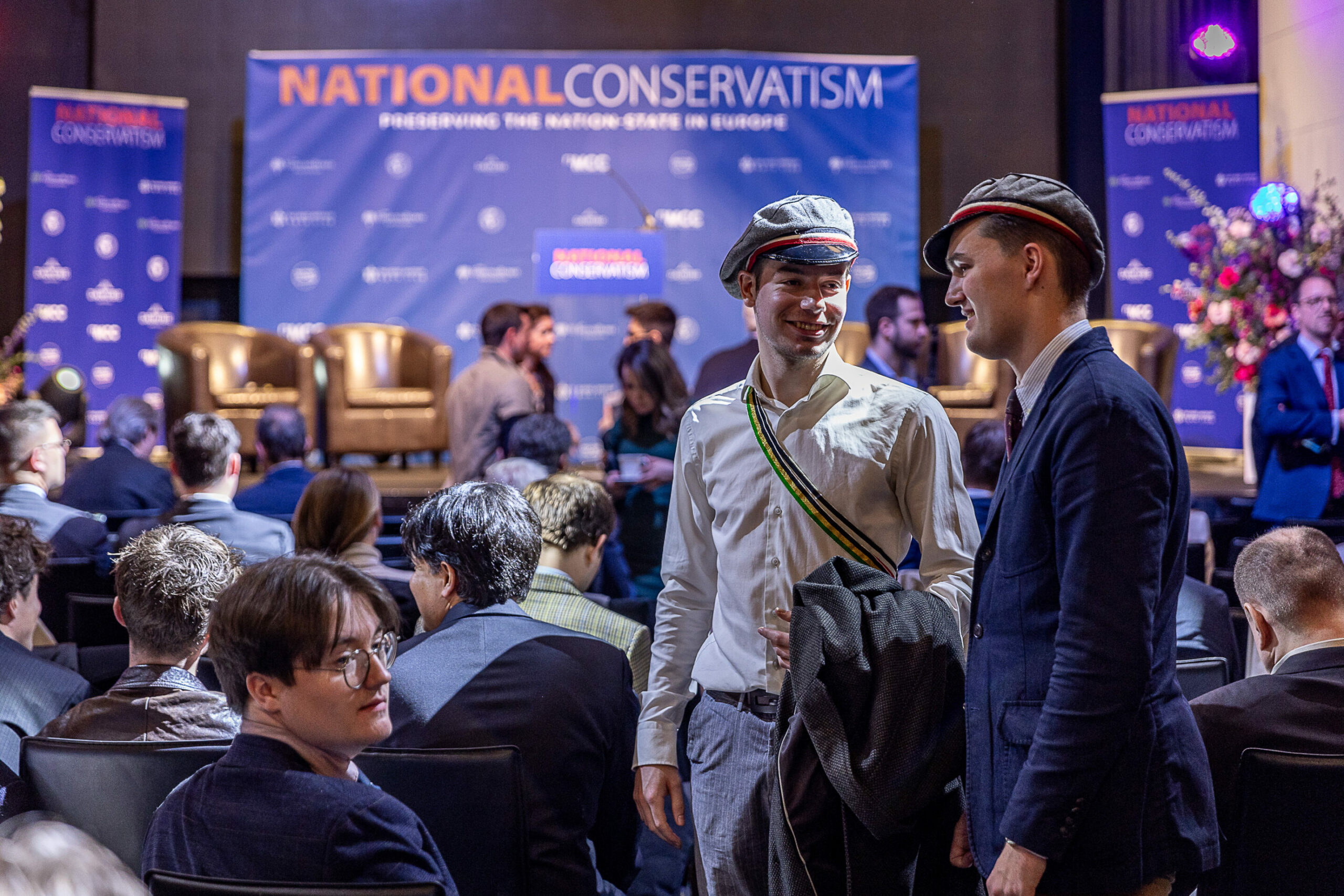
People attend the NatCon National Conservatism Conference, at the Claridge, in Sint-Joost-ten-Node/ Saint-Josse-ten-Noode, Brussels, Tuesday 16 April 2024. Credit: Belga/ James Arthur Gekiere
The National Conservatism espoused, in part, by parties such as Belgium’s Vlaams Belang, Orbán’s Fidesz party, and France’s National Rally, among others, is not so much a fixed ideology as a "shared understanding" among the hard right of European politics.
Orr doesn’t deny that his conferences draw such personalities, but he pushes back on the idea that the organisation’s conferences are a shadowy alliance. The group has vowed to return to the Belgian capital, despite its repeated obstruction by anti-fascist protestors. “This isn’t Davos for the Right. We don’t have a playbook. There’s no global manifesto. What unites us is the idea that each nation has a right to conserve its own traditions.”
According to Orr, homogenisation, both cultural and political, is dangerous. “The tragedy of liberalism is that it confuses equality with sameness,” Orr says. “We’re not fungible. You can’t just import 10 million people from a different civilizational background and expect everything to stay the same.”
That line of argument has led to Orr being accused of advancing an academicised version of populism. But he distances himself from slogans and waves. “When I hear the word ‘populist,’ I think, oh—you mean democratic.” He argues that National Conservatism’s rise is less about right-wing anger and more about alignment. “We’re making history by anticipating it. We’re not inventing a new ideology, we’re rediscovering old ones that still speak to people.”
Tradition to realpolitik
Yet for all his talk of tradition and roots, Orr is clear-eyed about the movement’s challenges. The European left still dominates cultural discourse, and conservatism can sometimes appear as a nostalgic longing for a bygone era. “We don’t fetishise tradition. But we trust it more than we trust now.”
On Ukraine, Orr treads cautiously. Many of the parties that circulate at the NatCon conferences are openly opposed to support for Ukraine against Russia's invasion. Others have been accused of receiving funds from Russian backers. “Putin is a malevolent, deceitful tyrant,” he says. “But is prolonging an unwinnable war the best way to conserve a nation like Ukraine? We need realism, something closer to Kissinger than crusade.”
That realism extends to his views on international alignment. “We didn’t leave Brussels just to become the 51st state of America,” he says. “The UK must reclaim its cultural sovereignty, not just its political one.”
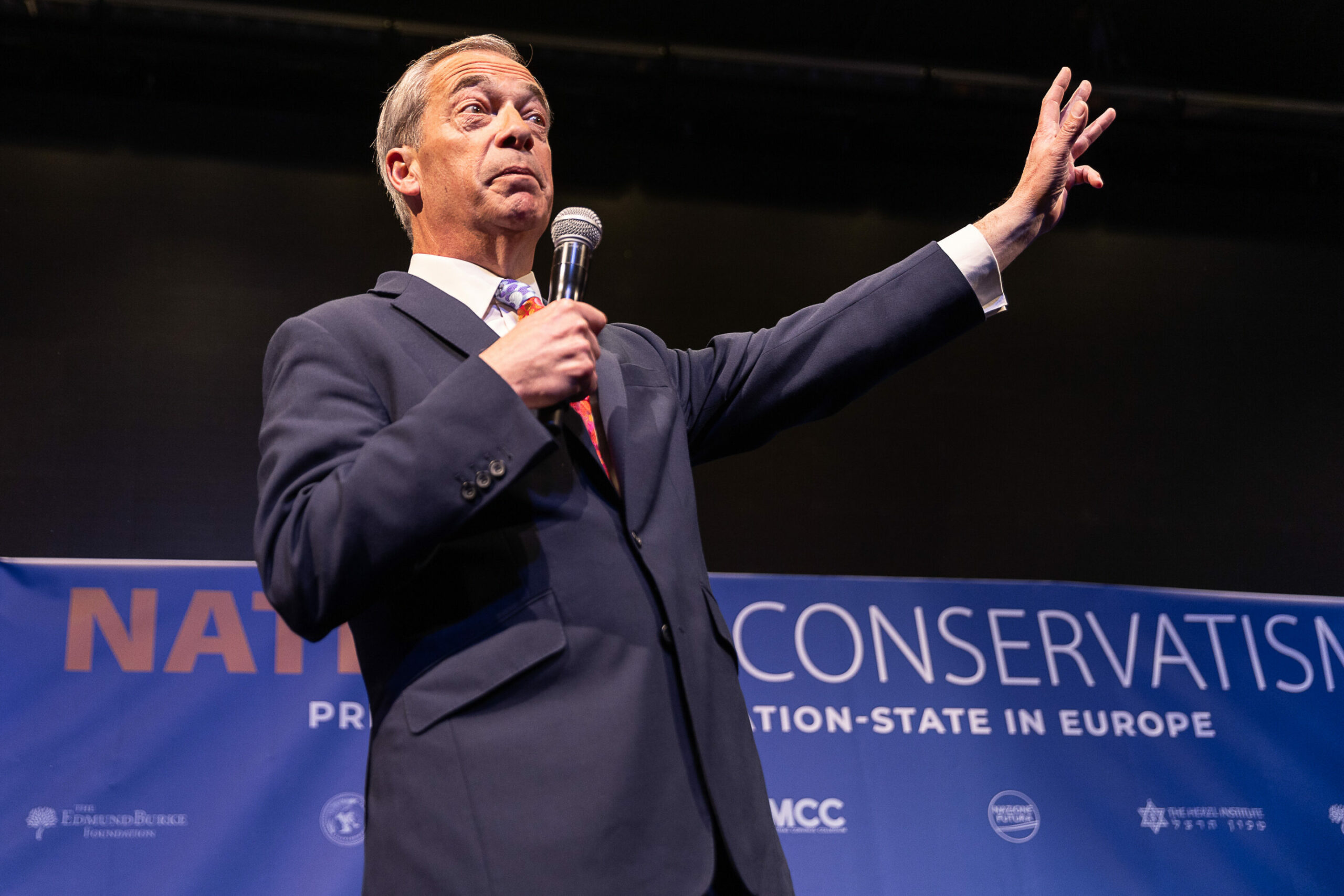
The Edmund Burke Foundation's events in Brussels bring a string of familiar faces from the European right to Brussels, including the UK's Eurosceptic Reform UK MP, Nigel Farage. The former UKIP leader campaigned for the UK's exit from the European Union. Credit: Belga/ James Arthur Gekiere
Most contentiously, while many cast the National Conservative movement as an Anglo-American ultraconservative export, Orr argues that it has the potential to be applied across Europe, especially with numerous far-right parties growing to become the second-largest party in many European democracies. “It’s a global movement only in the sense that it’s happening globally. But each nation must answer these questions in its own way. Britain is not Hungary. Hungary is not America.”
Asked whether the movement’s success poses a genuine challenge to the current European political landscape, Orr’s response is measured but firm. “The success of National Conservatism doesn’t mean liberalism is dead. But it does mean that its monopoly is over.”
Related News
- Far-right ‘NatCons’ fundraiser in Brussels cancelled for second time
- Brussels police ordered to shut down far-right 'NatCons,' talks still ongoing
He bristles slightly when asked if National Conservatism is helping elect the likes of Orbán, Le Pen, or Meloni. “It’s always part of the incentive structure of liberalism to find its critics and turn them into villains. We’re just saying: nations matter. Homes matter. And every human being needs one.”
That idea that nations are homes, not abstractions, is a key part of Orr’s, and much of the nascent right’s, new worldview. “A nation is a people, not a proposition,” he says. “And I believe deeply in the virtue of oikophilia, the love of home. The dominant ideology in our institutions today is oikophobia. And that’s a recipe for disaster.”
Still, he remains wary of hubris. “We’re not the saviours of the West. But we are reminding it of something it’s in danger of forgetting.”
And if Brussels, his childhood home, his ideological battleground, and now the scene of cancelled conferences and Antifa graffiti, seems an unlikely place for that reminder to emerge, Orr doesn’t mind. “I love Brussels,” he says, “But we’re not here to make everyone the same. We’re here to say it’s okay to be different, and to want to keep it that way.”
