
Russian President Vladimir Putin has signed a decree simplifying the process for residents in the two separatist Georgian regions of Abkhazia and South Ossetia to obtain Russian citizenship.
Under this decree, applicants are no longer required to live permanently in Russia, nor do they need to demonstrate knowledge of the Russian language or culture.
Abkhazia and South Ossetia are recognized by most of the international community as part of Georgian territory but have been under de facto Russian control since the brief war between Moscow and Tbilisi in 2008.
In Abkhazia, a new pro-Russian president was recently elected after the previous leader was ousted following protests against a law that would have eased Russian access to coastal properties.
Russia has resumed direct flights to Abkhazia for the first time in 30 years, a move following the conflicts in the region post-Soviet Union collapse. Georgia, a former Soviet republic in the Caucasus, has declared these air connections illegal.
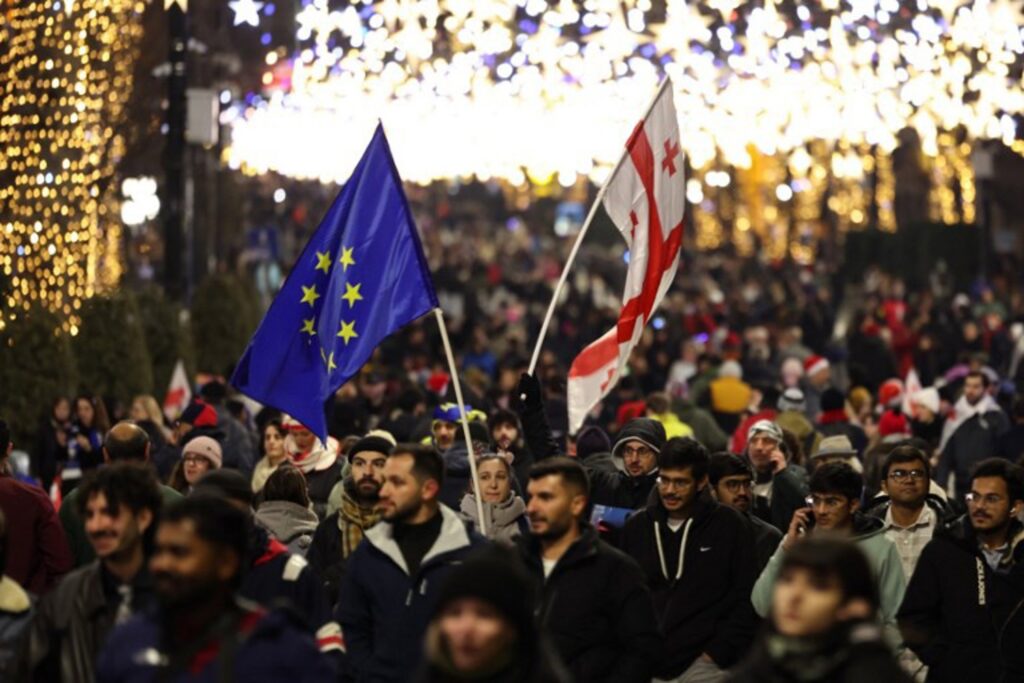
Georgia is a candidate for joining the European Union and has had no diplomatic relations with Russia since the 2008 war. However, there are accusations that the current ruling party in Georgia is pro-Russian and came to power through rigged elections.
Despite sharing a border with Russia, Georgia has refused to impose financial and economic sanctions on Moscow for its offensive in Ukraine and also refuses to provide military support to Kyiv, as well as mirroring some Russian legislature.
