
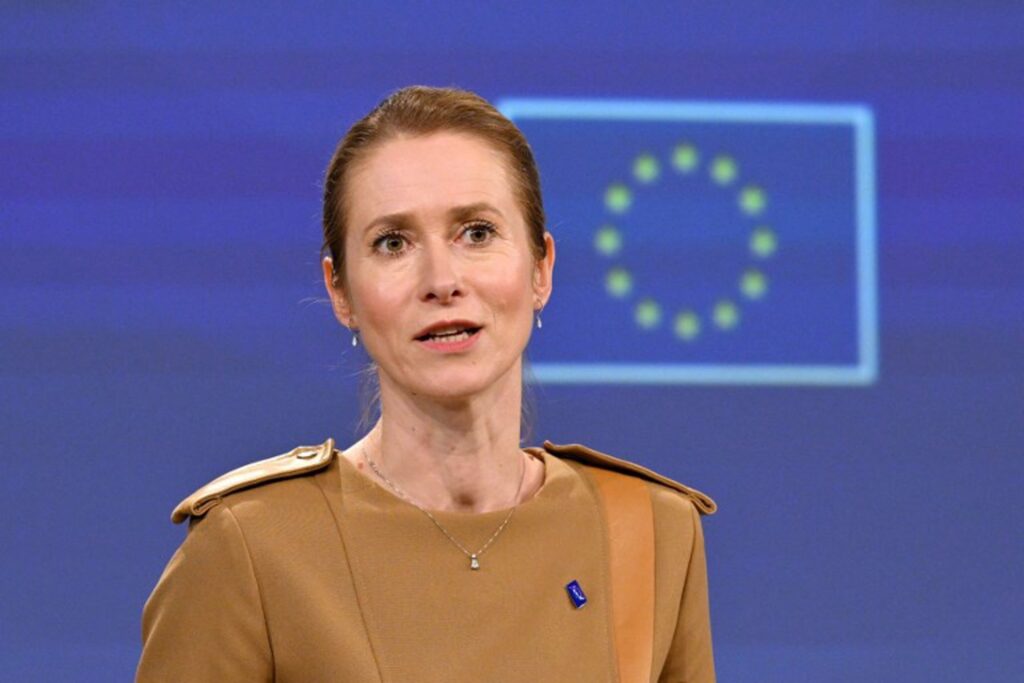
The European Commission plans to establish a maritime security hub in the Black Sea region, announced by EU foreign policy chief Kaja Kallas during the presentation of a new strategy for this strategically important area.
Kallas expressed concern that the Black Sea, a key junction for energy and trade routes linking Europe with Central Asia, is being transformed into a “weapon of war”. This is due to ongoing Russian violations of Ukrainian airspace, attacks on ports and shipping routes, and the deployment of naval mines, which undermine the region’s vast potential.
According to Kallas, the hub could help stabilise the Black Sea by providing a rapid warning system, strengthening local intelligence, assisting in mine clearance operations, and protecting undersea cables and offshore installations. It could also serve an observational role in the event of a ceasefire in Ukraine.
The specifics of what this European hub would entail remain unclear. Kallas noted that its location and operational model would need to be developed through consultation with EU Member States. The financial capacity would also depend on the appetite of national governments and EU budget negotiations, she added.
The EU also aims to enhance military mobility in and around the Black Sea. The strategy includes upgrades to roads, ports, and airports to accommodate heavier military equipment and expedite troop movements to necessary locations, which, according to Kallas, will "strengthen deterrence." She also advocated for better scrutiny of foreign owners of ports and other infrastructure.
Beyond security, the strategy includes cooperation on climate adaptation and a connectivity pillar. It plans investments in transport and energy corridors and digital networks to further open the "vital trade artery" between the EU and the Southern Caucasus and Central Asia, highlighted by Enlargement Commissioner Marta Kos, stressing the importance of reducing dependence on Russian energy.
The new strategy targets six countries: Ukraine, Moldova, Georgia, Turkey, Armenia, and Azerbaijan. Ukraine, Moldova, and Georgia are official EU accession candidates, while negotiations with Turkey have stalled for years, and Georgia is moving away from the accession path.
