
From the cost and the different contracts to solar panels and more, matters related to energy concern everyone. And oftentimes, they can be confusing. To shine a light on the complexities, consumer protection organisation Testachats dives into a topic affecting customers for The Brussels Times. This month, the focus is on heat pumps.
Understanding where your electricity comes from and how it is used is key to understanding how much you are paying for your energy usage. Previous explainers delved into energy bills, how (and when) to switch suppliers and how best to use solar energy. This month's one looks into heat pumps and whether they are worth the investment.
"In Belgium, most homes are still heated by natural gas or fuel oil. For the whole of Belgium, 66% of Belgian households heat themselves with gas and 21% with fuel oil (latest figures from 2021, from before the energy crisis)," Laura Clays, spokesperson for consumer protection organisation Testachats, told The Brussels Times.
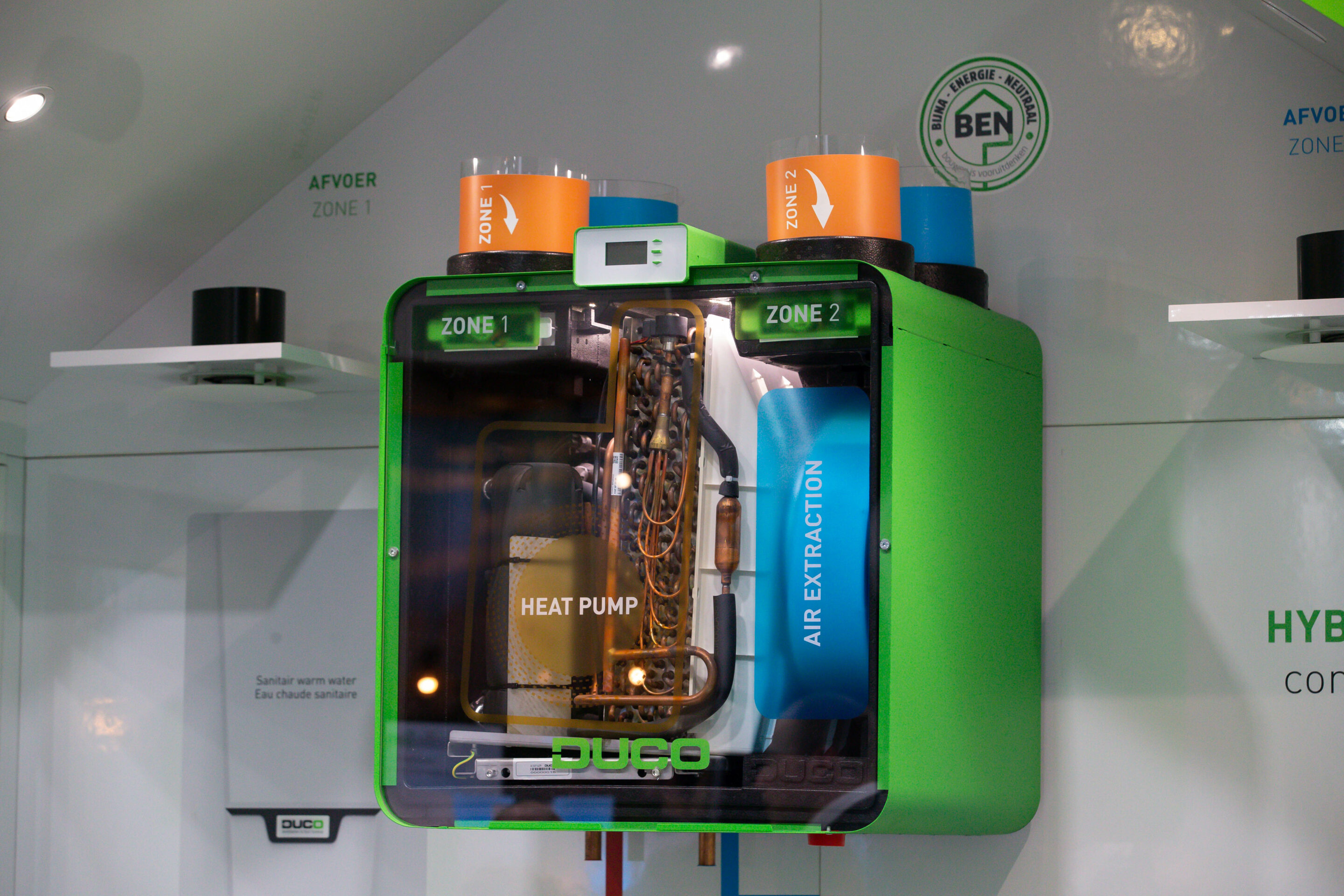
A demonstration heat pump at a fair booth under construction, at the yearly Batibouw construction fair, in Brussels. Credit: Belga/Dirk Waem
In the long term, the aim is to completely stop using fossil fuels for heating. Already, many places have implemented a ban on installing new fossil fuel boilers, she stressed.
In Flanders, people have not been allowed to install a new fuel oil boiler for some time now. "Since the beginning of 2021, newly built neighbourhoods can no longer have a gas connection. And since 2025, a gas boiler has no longer been allowed for all newly-constructed homes."
The Brussels-Capital Region, meanwhile, is prohibiting the installation of fuel oil boilers from June. There is no ban on gas boilers (yet).
In Wallonia, the installation of oil (and coal) heating boilers was supposed to be banned from 1 March 2025 for new buildings and from 1 January 2026 for existing buildings. "However, the legislation is not yet in place, so the ban is not yet in effect. For gas boilers, the envisioned date is 2035," the expert explained.
How do heat pumps come into this?
A heat pump is a heating system that runs on electricity, and works like a reverse refrigerator, or reverse air conditioning – a "major sustainable solution," stressed Clays.
There are different types, but the most commonly used ones are air-to-air and air-to-water heat pumps.
- The air-to-air heat pump works with an outdoor unit that extracts heat from the outside air, and one or more indoor units that blow the warm air out.
- The air-to-water heat pump also works with a unit that extracts heat from the outside air, but this system releases the heat through water to the central heating system, or often also to underfloor heating.
"Heat pumps have a very high efficiency: on average, they generate three times more energy than they consume. That is much better than 'normal' heating on electricity, because these systems generate as much heat energy as they consume electricity," Clays said.
Why are people not switching then?
Although heat pumps require maintenance, and switching from a boiler or electric heating to one can save lot of energy, many consumers still prefer not to install them. There are several reasons for this, explained Clays.
For starters: the installation cost is (much) higher than for a gas or fuel oil boiler, so consumers need to have a higher amount available to invest.
"Additionally, electricity is obviously not free – on the contrary, it costs about four times more than gas," she said. "This means that the higher efficiency of the heat pump compared to the gas boiler is completely negated by the higher consumption cost."
Uncertainty also plays a role: how will gas and electricity prices change in the coming years? "Will the government continue to provide premiums for heat pumps? Will the taxes that are currently included in the electricity bill be shifted to the gas bill?"
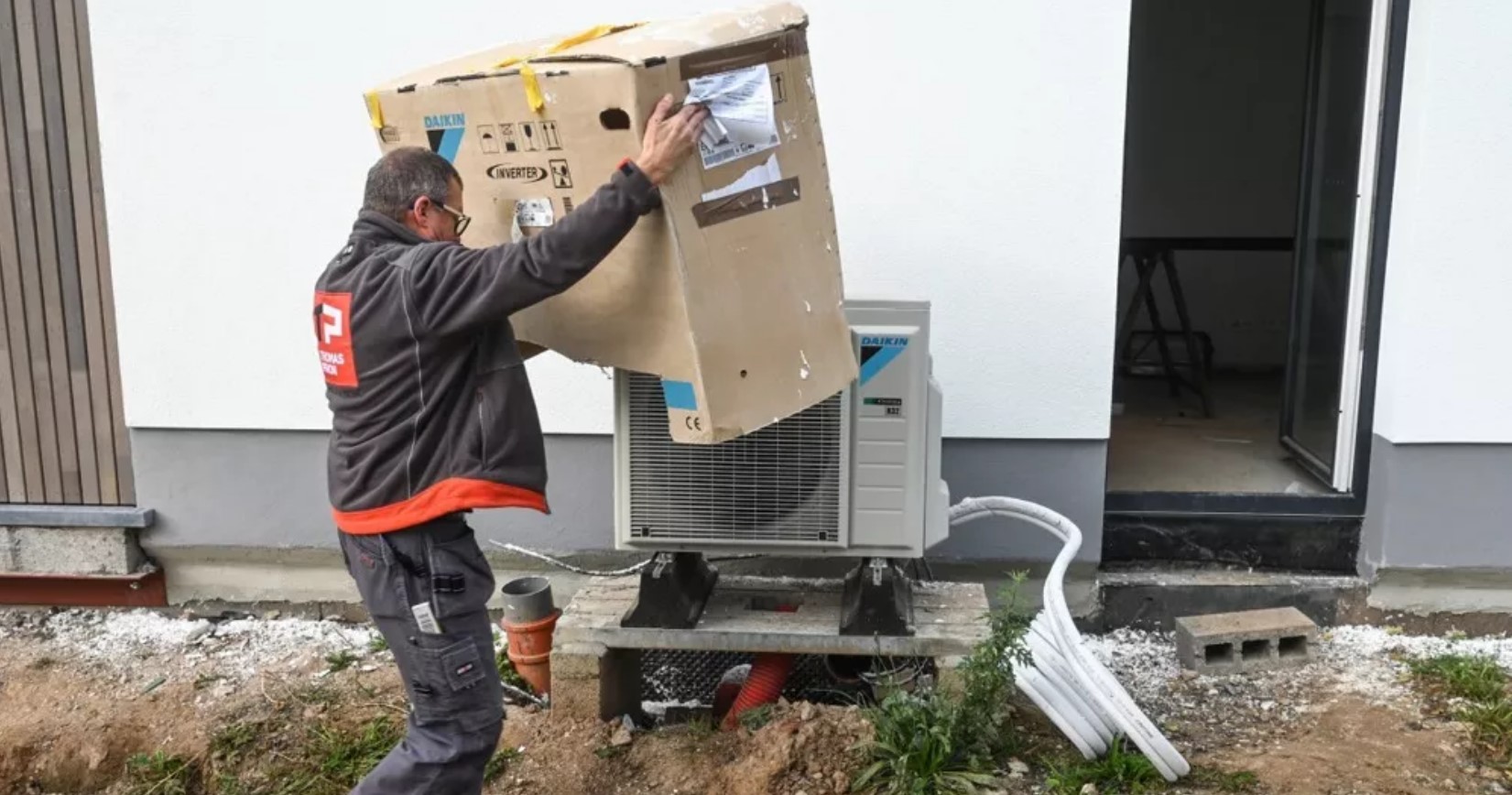
Heat pump. Credit: Belga
At the moment, Testachats concludes that heat pumps are not suitable in many situations, or cannot offer the stability that consumers are looking for in a heating system. "For homes that are not well-insulated, it is not economical, because then you need a heat pump with a high capacity. These cost a lot to purchase, and also consume a lot of electricity," Clays noted.
However, this does not mean that there are no other solutions – customers could consider a hybrid system, where the heat pump supports the traditional boiler. "This means that the boiler only needs to step in when it gets really cold."
The Testachats expert also pointed to systems with an air-to-water heat pump connected to a gas or fuel oil boiler, which heats the water in the existing circuit. "This means that you use less gas or fuel oil. If the heat pumps can also run on solar energy, the total energy bill will fall," Clays said.
A third option for a hybrid system is to opt for air-to-air heat pumps that provide heating in the off-season. Air-to-air heat pumps are slightly cheaper to purchase and install, and therefore offer a more accessible option to enjoy more sustainable heating.
Improving accessibility
That is why Testachats supports the European Clear-HP project, which aims to facilitate access to heat pumps for European consumers. The project consists of a number of workshops (which will continue in June) and a group purchase programme for air-to-air heat pumps.
To encourage the switch to heat pumps, there are also some government premiums, depending on where you live and which type you install.
Flanders is the only region handing out premiums for air-to-air heat pumps, and the amounts depend on various variables (check here). Premiums for air-to-water heat pumps are available across Belgium, but they differ per region: €4,500-€5,000 in Brussels, €1,500-€9,000 in Wallonia, and the amounts again depend on various variables in Flanders (check here).
"Additionally, you also only pay 6% VAT on heat pumps. This was initially a temporary measure that has now been set for the next five years," Clays concluded.
