
If global temperatures rise by 2.7°C, as projected on the basis of current climate policies, 76% of the existing glacier mass will disappear, according to a new international study involving researchers from the Vrije Universiteit Brussel (VUB).
Limiting global warming to 1.5°C, the target set by the Paris Agreement, could preserve up to 54% of glaciers.
A team of 21 scientists from 10 countries employed eight different glacier models to estimate potential ice loss from more than 200,000 glaciers outside Greenland and Antarctica under various warming scenarios. Each scenario assumed stable temperatures for thousands of years.
The findings are extremely alarming, the researchers reported in their study, published in the 'Science' journal. Even without further warming, if the temperature stabilises at the current 1.2°C of warming, around 39% of the global glacier mass would ultimately vanish, they warned, noting that this would result in a sea level rise of over 10 centimetres.
Crucially, every additional 0.1°C of warming could lead to an average loss of 2% more of the global glacier mass.
“This study painfully illustrates how every fraction of a degree matters,” co-lead author Dr Harry Zekollari from VUB and ETH Zurich stressed. “Choices we make today will have effects for centuries, determining how many glaciers we can still save.”
Beyond rising sea levels, glacier loss will have extensive repercussions on freshwater availability, increase risks of glacier-related natural disasters, and threaten glacier-dependent tourism.
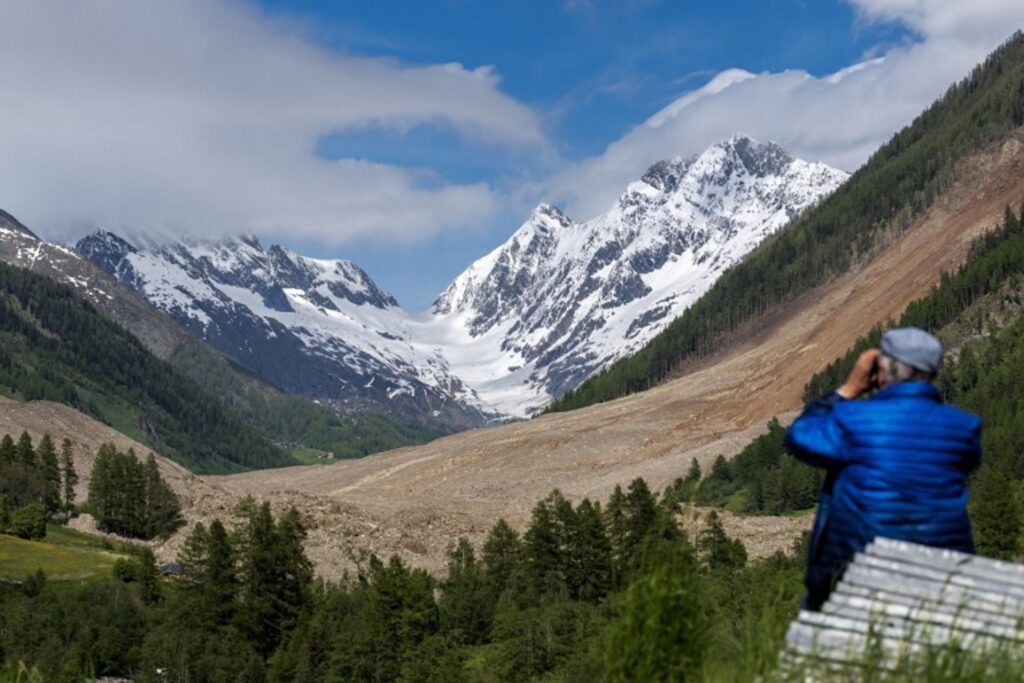
In Switzerland, the collapse of the Birch Glacier in the canton of Valais on Wednesday underscores the direct impact of climate change. The collapse engulfed an entire village, and the artificial lake formed as a result now raises fears of downstream flooding.
