
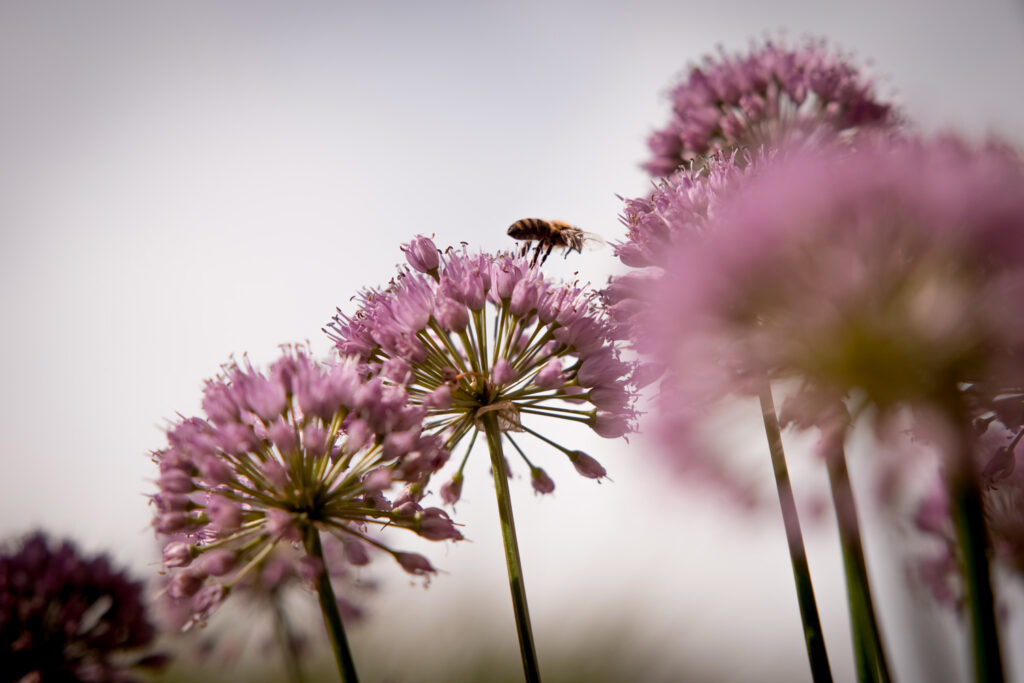
Belgium has seen an alarming decline of pollinator insect populations, with 45 species of wild bees now extinct and 113 of the remaining 336 species threatened.
According to Brussels Environment, the intensive use of pesticides and the destruction of natural habitats are contributing to the disappearance of butterflies.
The sharp decrease of pollinator insects has prompted the launch of an EU restoration project called PolliConnect.
“PolliConnect aims to improve the environment for wild pollinators, in particular by reconnecting natural areas that are currently fragmented,” Brussels Environment said in a press release.
The initiative brings together 14 partners from Belgium, the Netherlands, Germany, France, Ireland, and Switzerland. It focuses on sharing knowledge and utilising advanced technologies.
Open-air laboratories, known as “Living Labs,” will test various initiatives such as flower meadows, eco-friendly road verge management, and urban greening.
An example is the sinusoidal mowing technique experimented with at King Baudouin Park in Brussels, where grass is cut in wavy patterns, leaving some areas untouched to provide sanctuary and continual food sources for pollinators.
Households with gardens are also encouraged to support pollinators by transforming their gardens or terraces into hospitable environments.
Sustainable policy recommendations will be developed in Flanders, Brussels, and other participating regions based on the project’s outcomes.
PolliConnect will continue until mid-2029, with a total investment of €7.1 million.
