
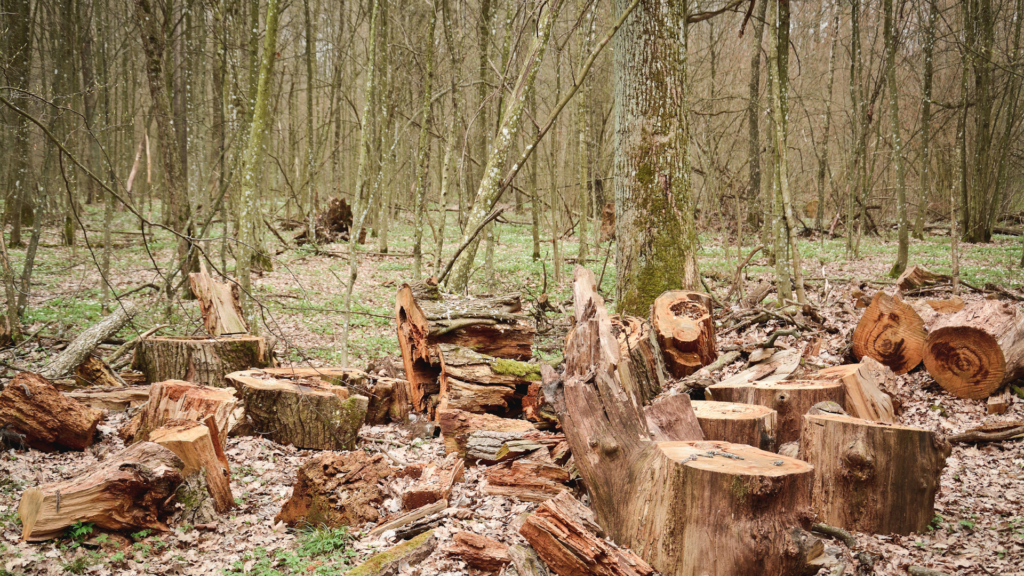
Last year, 140 hectares of forest were illegally cleared in Flanders, surpassing the 130 hectares recorded the previous year and tripling the 45 hectares in 2020.
The figures were shared by Flemish MP Mieke Schauvliege (Groen), after having obtained them from the Flemish Environment Minister Jo Brouns (CD&V).
The Brouns cabinet asserts that the increase reflects a higher number of enforcement actions rather than an actual rise in illegal deforestations.
In 2020, only 45 hectares were illegally deforested, while in 2023 and 2024, this number jumped to 130 and 140 hectares respectively. Limburg is particularly affected, with almost half of the illegal deforestations in 2024 occurring there.
Schauvliege describes the figures as "shocking" and demands stricter enforcement. She notes that ecological damage from illegal deforestation is significant and that replanting takes years to restore a forest’s original value.
Furthermore, perpetrators often bypass replanting obligations by opting for a regularisation process that only requires compensation planting elsewhere in Flanders. This rewards the culprits, allowing construction projects to proceed while only planting new forests elsewhere.
Schauvliege states that this stark rise in illegal deforestation contradicts Flemish ambitions to expand woodland. The government aimed to plant 10,000 extra hectares by 2030, but since 2019, only 2,244 hectares have been realised, far short of this goal.
The Brouns cabinet highlights intensified enforcement efforts as a priority, with every report investigated systematically on-site by the nature inspection team. Public reporting of illegal deforestations has also increased.
Additionally, the cabinet notes that post-investigation, an administrative enforcement, including fines, ensures restoration compliance. Legal outcomes and penalties are determined by the courts.
The Brouns cabinet concludes that the Flemish Government remains committed to creating forests in suitable locations with local support, using local forest opportunity maps to identify potential planting areas.
The focus is on increasing public access to nature and forests, requiring cooperation and support. There is also a commitment to reducing the need for permits to establish forests in the future.
