
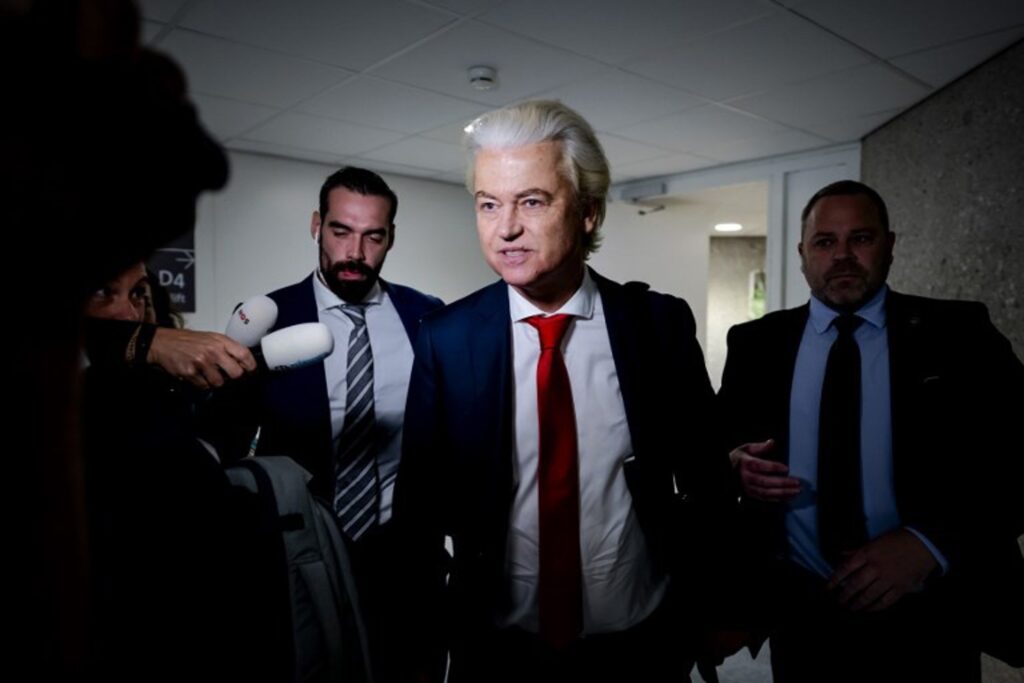
On Wednesday morning, the fall of the government was debated at the Dutch House of Representatives, with the leader of the far-right PVV Geert Wilders stating that he still wants his party's asylum laws to be passed.
Dutch Prime Minister Dick Schoof announced his government's resignation on Tuesday. The government's fall became inevitable after Wilders withdrew from the coalition with VVD, NSC, and BBB on Tuesday morning.
He sought new asylum measures and felt he lacked sufficient support for them. His coalition partners disagreed and expressed outrage over Wilders’ decision. The PVV was the largest of the four coalition parties.
In Wednesday’s debate, Wilders reiterated his desire for the asylum laws to move forward. "We will not declare these laws controversial. Of course, we want these laws to be handled by the House as soon as possible," the PVV leader stated. Throughout the Schoof cabinet’s nearly year-long tenure, Wilders frequently threatened to leave the coalition.
The radical right-wing politician emphasised multiple times during the debate that his party acted "sincerely" and governed to improve the Netherlands. "Yesterday was not a good day, not even for me," he remarked.
Defence and Ukraine
The outgoing government wants to continue working on issues related to security, defence, international economic relations, and recovery operations. This was stated on Wednesday by outgoing Prime Minister Dick Schoof in his speech during the debate on Wednesday.
According to Schoof, it is inevitable that some issues will have to be postponed. "Even though I regret it, the fact is that if one of the parties does not wish to continue, this will also mean the end of the coalition. Even if this happens at an extremely unfortunate moment such as this," said the outgoing Dutch Prime Minister.
Aid to Ukraine is a matter of security, Schoof added. He believes that decisions on the international debate on customs duties cannot wait until a new government is formed. "Because this can have a direct impact on the Dutch economy and our business community."
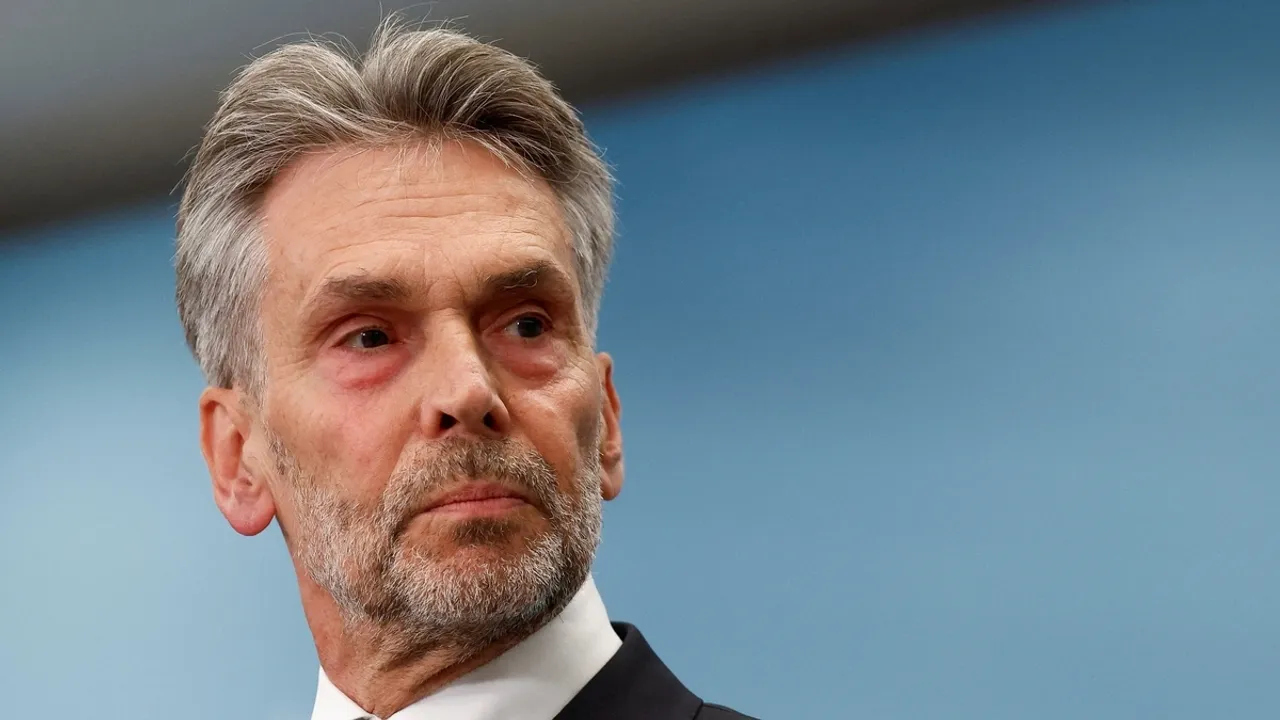
Dick Schoof. Credit: Belga
Schoof wants to also "continue the recovery efforts related to the surcharge case and gas extraction in Groningen." And of course, next year's budgets must be prepared, he added.
"That is what I am asking your House, but I am fully aware that this mandate is by no means a foregone conclusion. And that the government will always have to seek sufficient support within Parliament," Schoof said. The House of Representatives will soon decide which issues will have to wait until the next government takes office.
Frans Timmermans, leader of GroenLinks-PvdA, called on the VVD during the debate not to govern again with Geert Wilders' PVV. Timmermans wants VVD leader Dilan Yeşilgöz to "clearly state" that it is "not in the national interest to admit someone who does not act in the national interest."
According to the GroenLinks-PvdA leader, Yeşilgöz could have known that Wilders would leave the government. He had already done so in 2012 when he withdrew his support for the Rutte I government, and he is doing so again today, Timmermans said.
Related News
- Dutch government falls as Geert Wilders' far-right party quits coalition
- Dutch far-right politician Geert Wilders threatens to withdraw his party from government
- New elections to be held in the Netherlands after government collapse
- Dutch voters head to the polls in early election overshadowed by far right
