
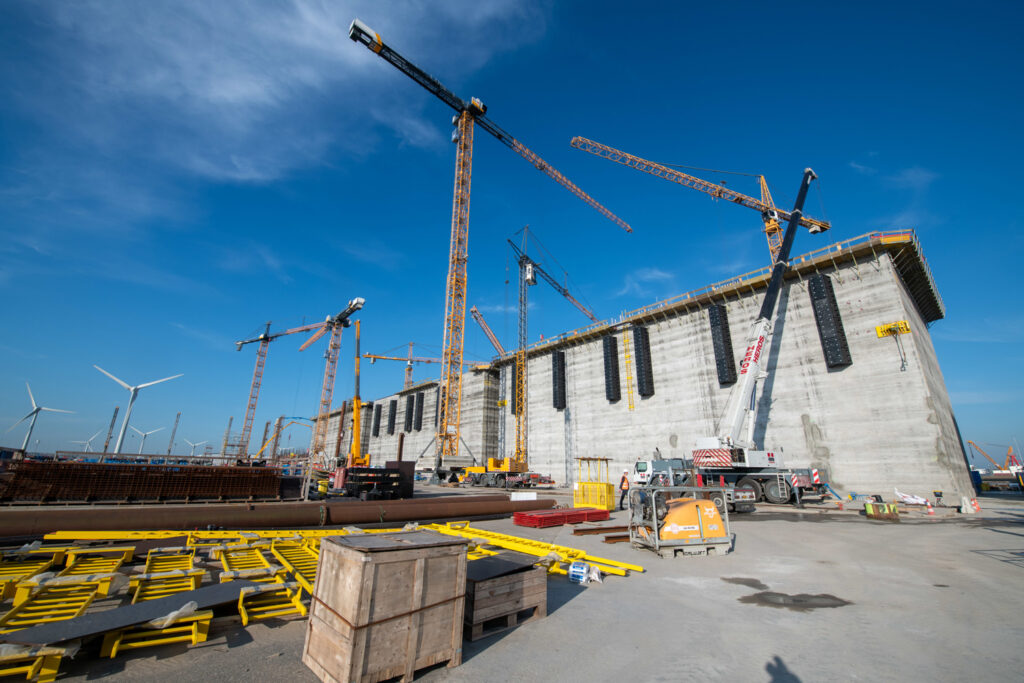
The Belgian Federal Government has decided to suspend the direct current (DC) component of the Princess Elisabeth energy island project. The move is set to save at least €3 billion.
The decision was announced by Energy Minister Mathieu Bihet (MR) on Friday following a restricted cabinet meeting.
The energy island project was intended to connect future offshore wind farms in the North Sea and establish an interconnection between Belgium and the United Kingdom.
Initially priced at €2.2 billion, the project’s cost has now escalated to nearly €8 billion, which would have directly affected consumer bills, according to the minister.
In recent months, Bihet convened the Electricity and Gas Regulation Commission (Creg), DG Energy, and Elia, the high voltage network operator, to rigorously reassess the project. This evaluation identified "technically viable, economically advantageous, and legally sound" alternatives.
As a result, the DC component of the original project was suspended. The construction of the artificial island and the necessary alternating current (AC) infrastructure for connecting future offshore wind farms, approved under the previous government, will continue, assured the minister.
Plans for a second DC interconnection with the United Kingdom remain under consideration with government partners.
"Rather than pursuing a costly path, we choose to reconsider a project that would directly impact household purchasing power and business competitiveness. Our goal is clear: maximise benefits and limit risks," said Bihet.
