
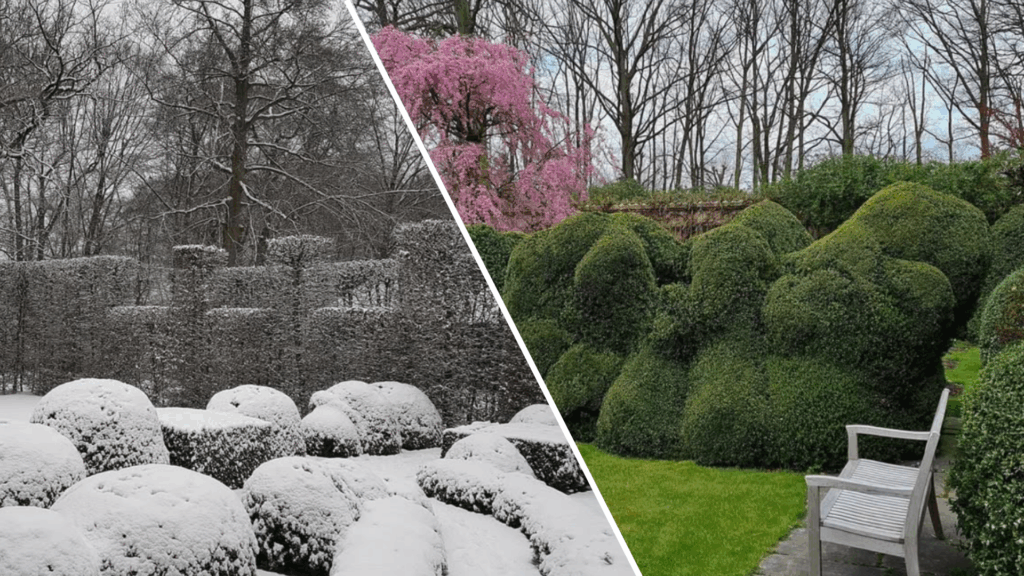
There are few better things in life than whiling away a sunny afternoon in a beautifully-tended garden. In Belgium, we are blessed with a number of stunning gardens which draw visitors from across the world.
For those in the know, one Belgian garden stands above the rest. Earlier this month, the private garden of Belgian landscape designer Jacques Wirtz in Schoten, north of Antwerp, was named as one of the world’s ‘must see’ gardens by T, the New York Times magazine.
The NYT asked six of the world’s leading horticulturalists to name 10 spectacular gardens worth travelling across the world to visit. They then whittled down the 60 gardens to a list of 25. Wirtz’s garden was placed fourth in the ranking.
Also making the list were the Sissinghurst Castle Garden in Cranbook, UK (1); Great Dixter House and Gardens, UK (2) and the Giardino di Ninfa in Cisterna di Laina, Italy (3).
‘The Quiet Belgian’
Wirtz gained a reputation as an innovative designer who reinvented the art of topiary using his ‘sculptor’s eye’. Born in Antwerp in 1925, he became a gardener in the 1940s but didn’t make a name for himself until he reached middle age, after winning a commission to design a garden at the Osaka World Expo for the Belgian pavilion.
He went on to design a number of iconic gardens, including the Louvre’s Carrousel garden in Paris, the Alnwick garden in Northumberland, and Jubilee Park in London.
In the 1970s, Wirtz moved to a cottage in Schoten and created a stunning private garden “partially by accident” after initially intending to use the outdoor space as a nursery.
According to the NYT, once the specimens were in place, Wirtz "began shaping them into cubes, domes, balls and lollipops. In the end, he opted to leave his creations in place, where they remain today, lined up in their neat grids.”
Louis Benech, one of France’s best-known landscape designers, was asked to help compile the NYT list. He said of Wirtz’s garden: “It was a question of how to coiffer an old lady — and the result is fabulous.”
