
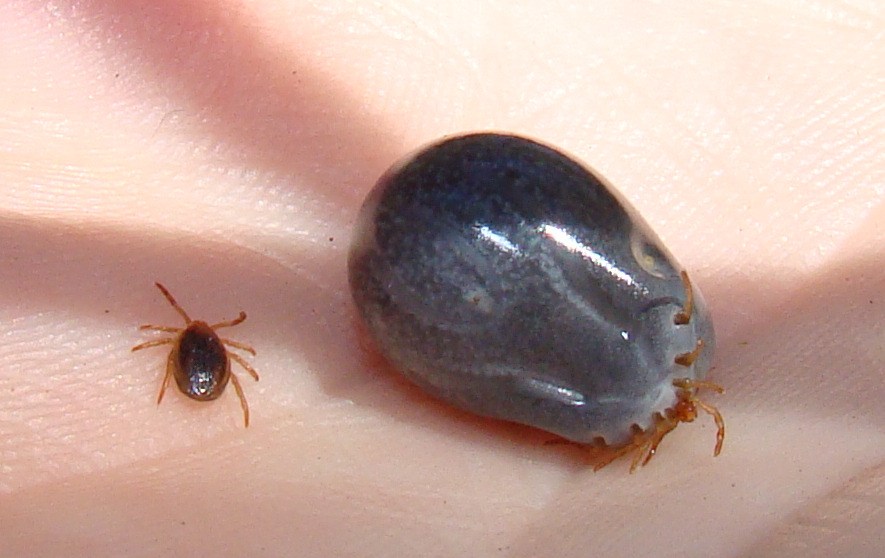
A citizen science study led by the University of Antwerp shows that nearly 20% of ticks collected from gardens in the north of Belgium carry the bacterium responsible for Lyme disease in humans.
Researchers tested 484 ticks sent to the university as part of the project, launched in March 2021, and found that 19.6% carried the Borrelia burgdorferi s.l. bacterium. Another, 34.1% of the ticks were found to carry at least one pathogen, either Borrelia or another type.
According to researcher Käthe Robert, the 19.6% rate is comparable to the rates observed in wooded areas both nationally and abroad. “The bacterium is statistically more present in gardens with natural hosts such as birds, and less so in gardens with dogs,” she was quoted as saying in a university press release on Tuesday.
As part of the 'Teek a Break' project, Flemish families were encouraged to hunt for ticks in their own gardens using a homemade “flag” to drag across their lawns. Participants were then asked to send the ticks they found to researchers.
A total of 1,162 ticks were collected from 185 gardens, mainly in rural areas, with 44% of the gardens reporting ticks. The majority, nearly 95%, were identified as sheep ticks (Ixodes ricinus). Project coordinators reported that participants primarily found ticks not in the grass, but in areas with fallen leaves, wild vegetation, or uncultivated ground.
At a national level, the Sciensano research institute monitors residents’ exposure to ticks annually through the online platform 'TiquesNet,' where anyone bitten by a tick can report the incident and submit the tick for analysis.
Inspired by the Antwerp 'Teek a Break' project, Sciensano has decided to launch a nationwide citizen science study across Belgium using tick flags. The aim is to better understand when and in which gardens ticks are more or less prevalent.
