
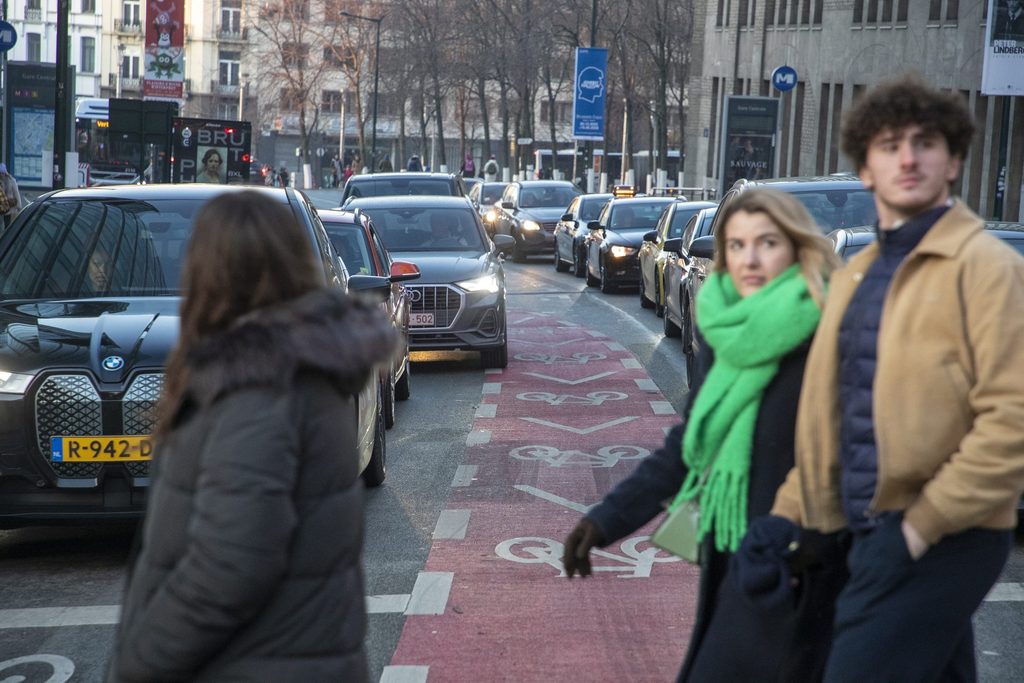
Car bonnets are getting increasingly higher, despite evidence showing high-fronted cars are more dangerous in crashes, a report has found.
According to researchers, in crashes involving high-bonneted sports utility vehicles (SUVs), road deaths go up due to the higher point of impact at which pedestrians, cyclists and other road users are struck.
However, car manufacturers continue to increase the height of car bonnets. The average bonnet height of new cars sold in Europe rose from 77cm in 2010 to 84cm in 2024. Neither EU nor national laws limit the ongoing rise in bonnet height.
A report by advocacy group Transport & Environment says the rise in the number of high-fronted SUVs on Europe’s roads poses a “clear and growing threat to public safety”.
Higher risk to children
According to T&E, high-fronted bonnets are a particular threat to the safety of children. The group commissioned tests to look at the risks to children from SUVs.
They found that drivers behind high bonnets can fail to see children in front of them when leaving a driveway or parking space. Children aged nine and under can be invisible to drivers of average height in the tallest cars. In crashes, high-bonneted SUVs and pick-up trucks typically strike children in the head.
Adults involved in high-bonnet crashes tend to be struck in the torso, hitting their vital organs. When people are struck in the torso, there is a greater likelihood they will be knocked down and run over. Low bonnets, meanwhile, tend to hit pedestrians’ legs, often making them land on the car itself.
In 2023, Belgian traffic institute Vias carried out an analysis of accidents between 2017 and 2021. It showed that a 10cm increase in bonnet height from 80cm to 90cm raised the risk of death for pedestrians by 27%.
According to the study, other drivers are also at greater risk from SUVs. When high-fronted SUVs crash into regular cars, there is a significantly greater risk (20 – 50%) of serious injury to the occupants of regular cars than if they had been hit by a lower-fronted vehicle.
T&E are calling for an 85cm height limit on bonnets to be introduced in the EU by 2035. They are also urging countries and cities to link taxes and parking charges to the weight and size of vehicles.
Calls for limits on SUVs in Brussels
There is a growing backlash against SUVs in some quarters, with critics describing the trend for bigger cars as 'carspreading'.
In Brussels, SUVs account for around half of new cars in the city. A survey published last year by the Group for Research and Action for Everyday Cyclists (GRACQ) indicated that half of respondents believe that vehicles in Brussels are too large and heavy. Two-thirds of residents think the regional government should take measures to limit this.
The study recommended imposing greater taxes on heavier and larger vehicles. This extra tax could take the form of a smart kilometre charge, which has been on the table for several years. Other suggestions include a ‘zone without heavy cars’ or higher parking fees for bigger vehicles.
In October 2024, Paris introduced higher parking charges for SUVs, with the largest vehicles paying 3 times more than small cars per hour. This reportedly led to a two-thirds drop in SUV use in the city in just 3 months.
