
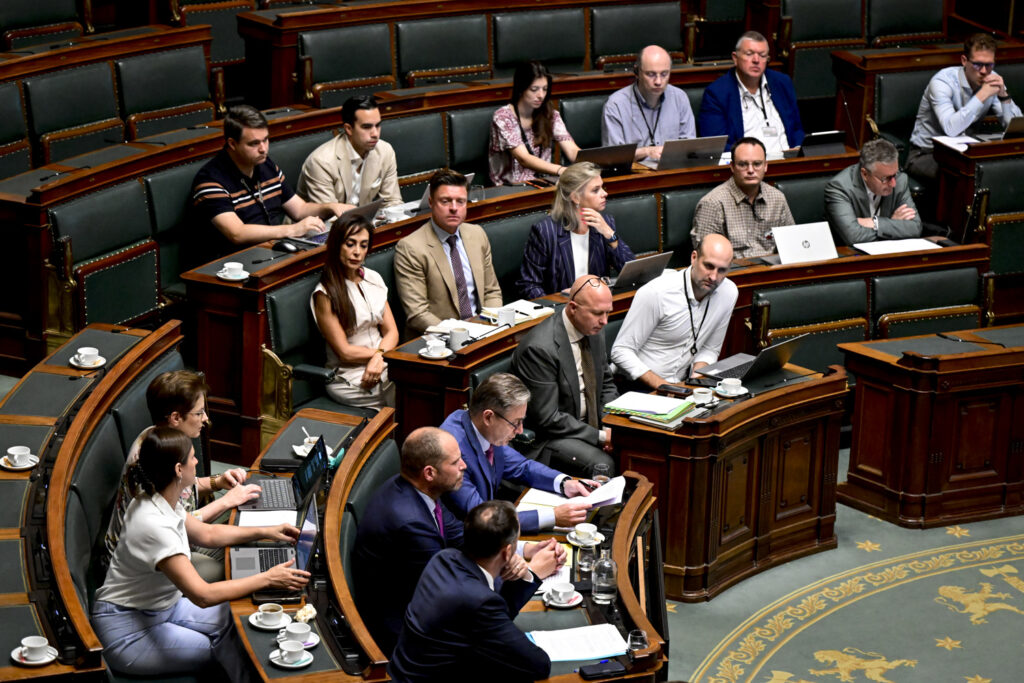
Belgian Prime Minister Bart De Wever addressed concerns on Tuesday about NATO’s upcoming spending standards, emphasising their origins in a longstanding and well-defined European defence strategy.
In 2014, NATO members were set a target to spend 2% of their GDP on defence. Successive governments failed to meet this threshold, and the target is set to rise to 5% at the upcoming summit in The Hague. This includes 3.5% for military spending and 1.5% for resilience measures, such as infrastructure and cybersecurity. De Wever compared this challenge to a “quantum leap” necessary to catch up, emphasising the need for intensified efforts to fulfil Belgium’s obligations within NATO.
A month ago, during a meeting of foreign ministers in Antalya, Belgium found itself isolated in advocating for spending moderation within NATO. The current debate focuses on how to meet these obligations. Foreign Minister Maxime Prévot stated, “Belgium will gain nothing by opposing this target head-on,” a sentiment agreed upon in a cabinet meeting on Friday.
However, both opposition and some coalition parties have challenged the increased spending. Over the weekend, parties including the MR, Vooruit, and CD&V voiced strong objections, with the leader of the French-speaking liberals describing the situation as “collective hysteria.” De Wever cautioned that such distractions threaten the achievement of these objectives.
Belgium aims to ensure that resilience spending is broadly defined and can be supported by its regions. It also seeks economic and defence industry benefits in return for its investments.
