
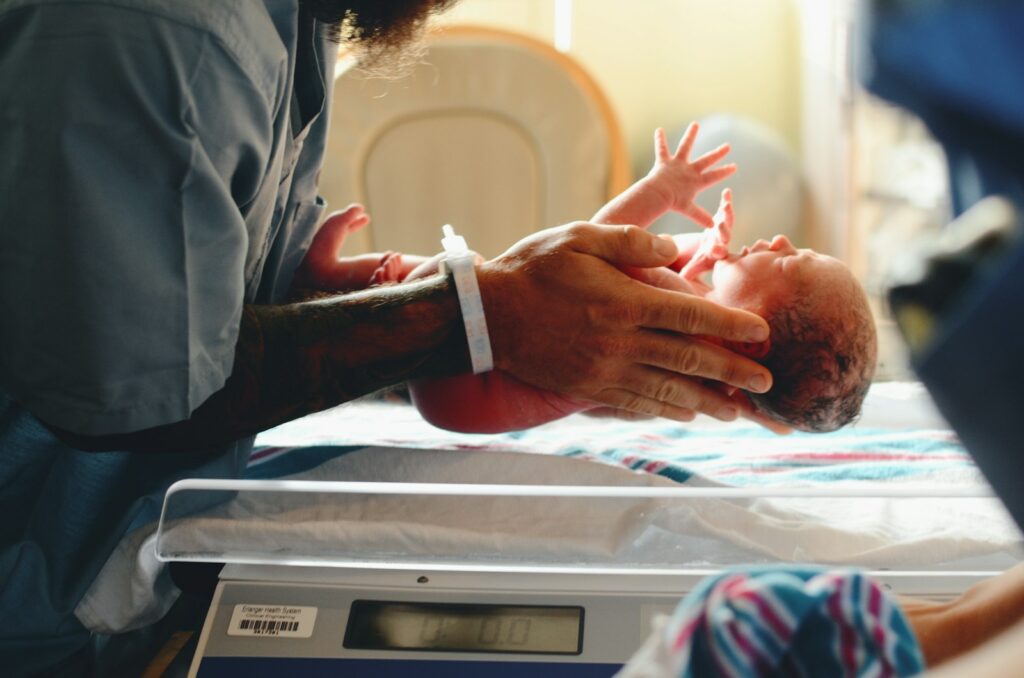
Last month, Belgium was rocked by a sperm donation scandal after it emerged that a Danish donor whose sperm was used to conceive 52 children in Belgium was found to be carrying a cancer-causing gene.
As well as raising concerns about the checks and balances in place in Belgium’s fertility clinics, the case highlighted an interesting and under-reported phenomenon.
Of the 37 women who had conceived children through the donor, 23 came from abroad, most of them from France. Belgium, it seems, has become a magnet for people seeking fertility treatment, drawn here by the country’s liberal legislation and its pioneering scientific techniques.
The ‘Baby Thalys’ – French fertility tourism
Guido Pennings, professor of bioethics at Ghent University, says it is “no surprise” that Belgium is attractive to people seeking fertility treatment.
Speaking to the The Brussels Times, Pennings said: “The main reason is that our country has liberal legislation on access to insemination and IVF treatments. We do not exclude large groups, such as lesbian couples or single people.
“France did so for a long time. It was not until 2021 that a law was passed giving lesbian couples and single people legal access to IVF treatment. Until then, many French people came to Belgium for fertility treatment. It is not very far for them and there is no language barrier.”
Belgians even coined a term for fertility tourism from France, dubbing it the ‘Baby Thalys’ after the now-defunct Paris-Brussels train service. According to Pennings, since French laws were relaxed in 2021, there has been a fall in the number of French people seeking treatment here. “We don’t have a clear total figure but we can guess that there will be far fewer French patients compared to a few years ago,” he said.
However, he still expects French people to continue coming here in future. “French people are still coming, because they have long waiting lists there,” he explained. “The number of requests for donor sperm in France has risen enormously and the country does not have enough donors. People who do not want to wait go abroad.”
Belgian doctors seen as ‘less strict about rules’
Belgium is also a popular choice for Dutch couples seeking fertility treatment. According to Pennings, their reasons tend to be slightly different to those typically cited by the French.
“For [the Dutch] Belgian fertility clinics are sometimes simply closer,” he said. “Dutch patients also feel that Belgian doctors are less strict about rules. They are willing to carry out treatment even if there is only a small chance of success.
“They are more focused on the patient and less on rules. This is not obvious: Dutch patients often come here after they have already undergone a series of treatments. These are not always the easiest cases.”
A surprising number of Brits are also making their way to Belgium for fertility treatment. While some state funding is available for IVF treatment in the UK, not everyone is eligible. Many people end up paying out of their own pocket for costly private treatment.
“For people in the United Kingdom, Belgium is cheap,” explained Pennings. “In principle, there is full reimbursement for them, but in reality this is not the case at all. Only a small proportion of patients are reimbursed for their IVF cycle. All others have to go to private centres in the UK.
“These are about three times more expensive than treatment in Belgium. So it is cheaper to do it here, even if they are not reimbursed by their health insurance.”
Belgium's reputation for innovation
Another important factor for many people seeking fertility treatment is the excellent reputation enjoyed by Belgian clinics. “Together with our liberal legislation, this is why many couples come here,” said Pennings.
Belgian clinics have become known for their innovative methods and pioneering scientific techniques. The introduction of the Intracytoplasmic Sperm Injection (ICSI) technique 20 years ago by scientists at VUB “brought about a huge change” in the treatment of infertile men and IVF.
“Because it originated here and because there are few legal restrictions, Belgium generally has a good reputation for more difficult cases,” Pennings explained. “It is no coincidence that the ICSI technique was introduced here: Flemish centres in particular emphasise scientific research and innovation.”
We do not know precisely how many foreign patients come to Belgium for fertility treatment each year, but we can get a broad idea of the numbers by looking at data from individual hospitals and from the Belgian national registration system.
At UZ Brussels university hospital, 12.6% of all fertility patients admitted last year came from abroad. At UZ Ghent, it was much higher at 29%.
Figures from the Belgian Register for Assisted Procreation released in 2022 show that 2,466 people came to Belgium from other EU countries for IVF treatment.
Belgium is likely to remain a popular destination for foreigners who want to have children, with other European countries unlikely to relax their legislation anytime soon. Pennings cites the example of Switzerland, where authorities have been considering whether to allow egg donations for around 30 years, but no movement is expected on the issue.
What is certain, says Pennings, is that more and more people in Europe are turning to fertility clinics.
“This is primarily due to the fact that more women are having children at a later age, which means they also have more difficulty getting pregnant. At the same time, there are also signs that the quality of male sperm is declining. The reason for this is not entirely clear,” he said.
The ethics of fertility treatment
Pennings argues that fertility tourism raises a number of ethical questions - particularly over who might be suitable to receive treatment. He is against excluding people on the grounds of their sexuality, but has concerns about offering treatment to women who are unlikely to become pregnant.
“If there is no good reason to exclude people, such as lesbian couples, I think it is a very good thing that they can come to Belgium. It would be strange to tell French women that they are not allowed to come because it is forbidden in their country,” he said.
“The question is whether it makes sense to treat people when the chances of success are very small. I understand that from a psychological point of view, but I wonder whether you should always go along with it. Doctors here are more flexible, but the rules are there for a reason.”
Pennings believes it would be “good if everyone could be treated in their own country”, but acknowledges this is not always practical.
“All countries have restrictions, including Belgium,” he said. “In our country, you are not allowed to become pregnant with medical supervision if you are over 48. Elsewhere, you can. As a result, there is a very small group of Belgians who go abroad for treatment. But apart from that, we do not exclude anyone.”
