
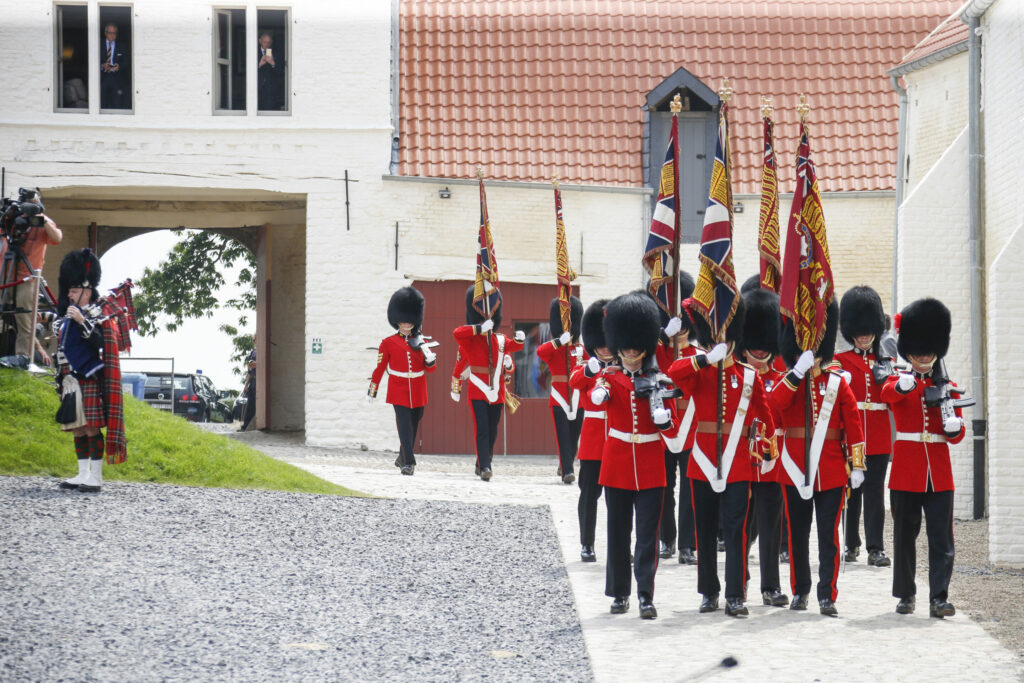
The UK's Duke of Edinburgh is backing a €1.5 million campaign to restore the gardens at Hougoumont, the chateau farm valiantly defended by the Coldstream and Scots Guards against overwhelming odds during the Battle of Waterloo.
British Prince Edward will visit the site on Friday – two days after the 210th anniversary of the epoch-defining clash, which saw the Duke of Wellington’s allied forces vanquish Napoleon’s Grande Armée on 18 June 1815.
The Prince will arrive at the farm via the North Gate, where the Foot Guards famously repelled a French incursion led by an axe-wielding lieutenant.
Wellington later declared: "The success of the battle turned upon the closing of the gates at Hougoumont." The farm and gardens were devastated during the battle, which left 50,000 dead and wounded.
While some of the buildings at Hougoumont, a strategically vital defensive bastion on the right of Wellington’s line, were restored for the bicentenary of the battle, the remains of the chateau were kept as a ruin and the gardens never replanted.
Multiplier
However, key figures involved in the ‘Project Hougoumont’ restoration in 2015 have now turned their attention to the surrounding landscape.
The ‘Friends of the Hougoumont Gardens’, as they are known, are leading a fundraising campaign to restore the gardens to how they looked in 1815.
“We’re extremely pleased that the Duke of Edinburgh is coming here to back the new initiative and hope his presence will act as a multiplier for support,” says the group’s Brussels-based Dutch chairman, Baron Alexander de Vos van Steenwijk.
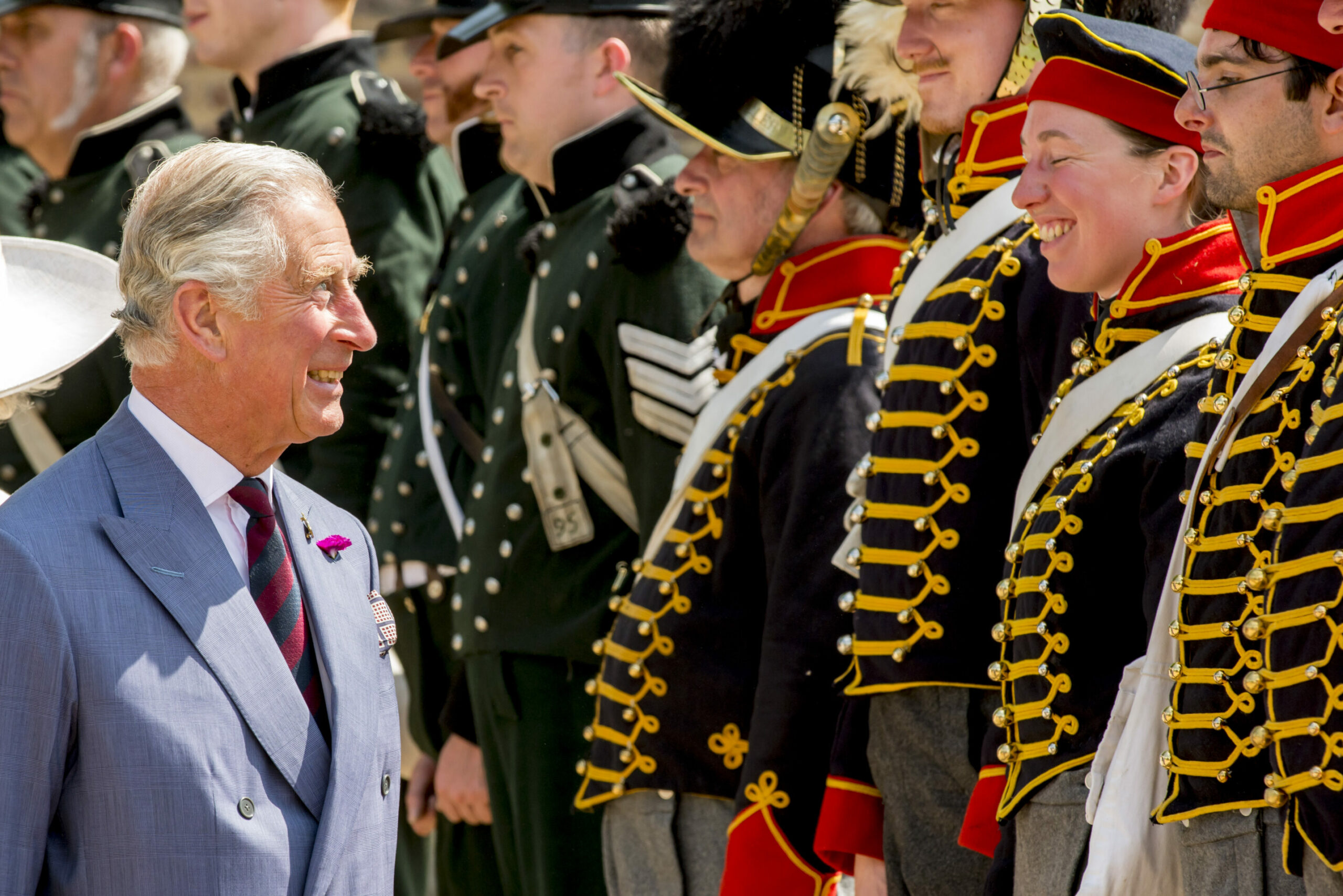
Britain's then Prince (now King) Charles, Prince of Wales pictured during the inauguration of the 'Ferme d'Hougoumont' memorial site on Wednesday 17 June 2015 in Waterloo. Credit: Belga
The replanting scheme, overseen by internationally renowned garden architect François Goffinet, has already received €1.1 million euro towards its €1.5 million target, mostly from the local Walloon regional government, which guarantees that restoration work can begin next year.
The project envisages four elements: reconstructing the French-style formal garden with its symmetrical patterns; restoring the kitchen vegetable garden on the west side of the farm; replanting the large orchard, scene of some of the fiercest fighting; and creating a new, fourth garden on wetland beyond the North Gate.
“We know how the gardens looked before the battle because there were many depictions of Hougoumont from the time. We’ve also worked with archaeologists who have carried out research which shows how and where the trees were planted in the orchard,” Baron de Vos continues.
“The new garden, which we’re calling a ‘biosphere’, will show off the wonders of the natural world. The idea is to experiment with new species of plants, to encourage insect life and create an educational space for schools and families to visit. A ‘tree of peace’, grown from the seeds of a sapling rescued after the bombing of Hiroshima in 1945, will also be planted during the Duke of Edinburgh’s visit.”
Baron de Vos concludes: “When we finished the restoration of the buildings, I always felt the gardens were missing. They are an essential element of Hougoumont. We will now have a place of commemoration, beauty, education and peace.”
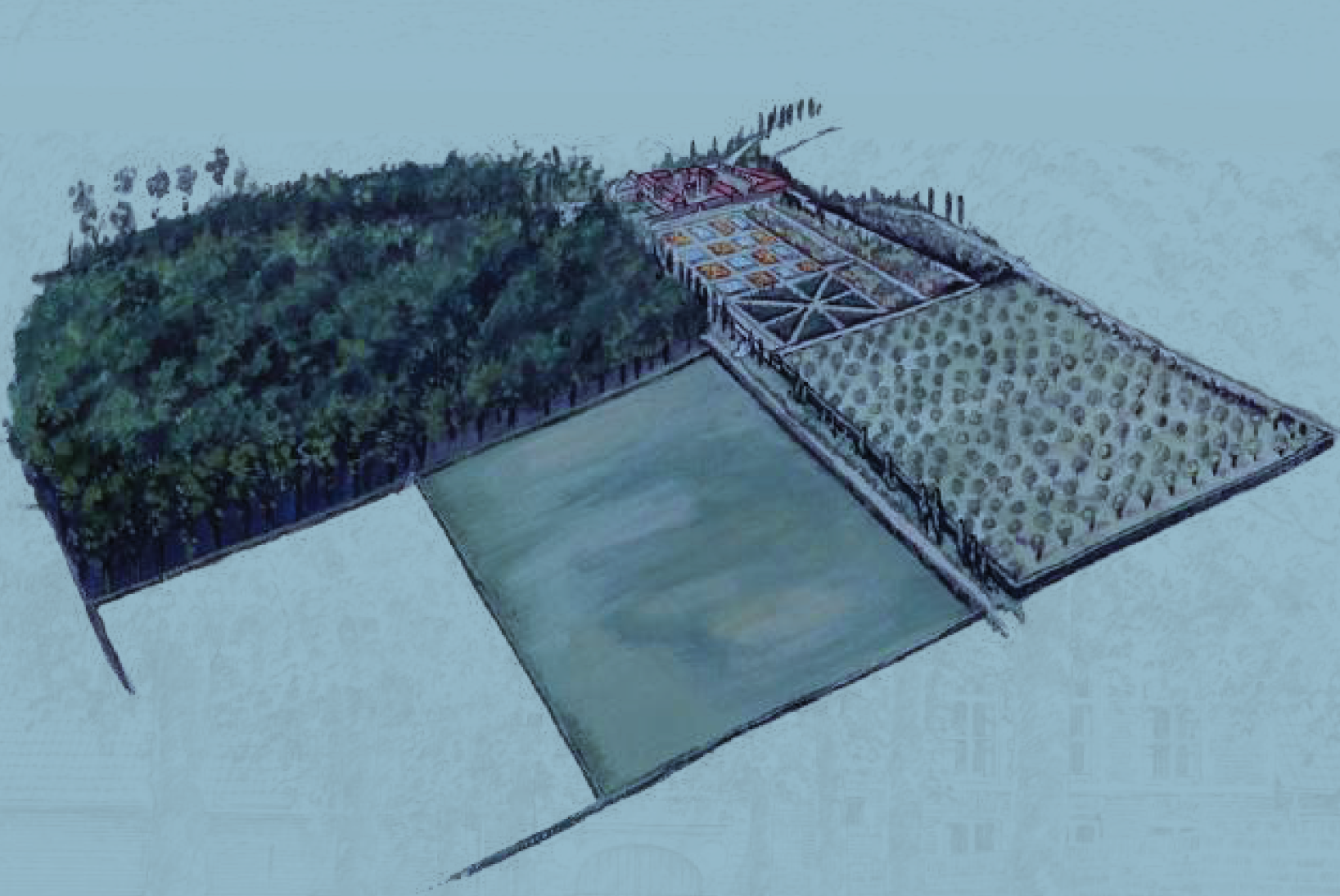
The plans for Hougouont Gardens. Credit: Francois Goffinet Garden Designs
Michael Mitchell, a retired British consultant who served in the Grenadier Guards and lives near the battlefield, is among those closely involved with the planned garden restoration, due to be completed in 2027.
“We have secured around 80% of the funding required and aim to raise the rest through individual donations. It’s a very sustainable project,” he says.
Kléber Rossillon, the French heritage company which manages the battlefield site including the Waterloo Memorial museum, Lion Mound and Panorama, has pledged to provide four gardeners to ensure the upkeep of the gardens in future.
‘Project Hougoumont’
Set up to restore and preserve the buiildings at the farm, 'Project Hougoumont' was backed by Bernard Cornwell , author of the Sharpe novels, Valerian Wellesley, the 8th Duke of Wellington, and the late historian Richard Holmes.
Of the €3.5 million raised, around a third of the sum came from the British government after the then Conservative Chancellor George Osborne visited the site and released over £1 million ahead of the bicentenary. However, the facelift was not without controversy.
Belgian aristocrat Guibert d'Oultremont, the last private owner of the farm who sold Hougoumont in 2003 to four local municipalities for €1.5 million, expressed reservations about using red instead of black tiles on the roof.
He has also criticised a more recent decision to create a pathway through the battlefield towards the South Gate, overlooking the so-called 'killing zone', scene of some of the fiercest fighting during the battle.
And while Belgians have enthusiastically backed both ‘Project Hougoumont’ and the new plan to replant the gardens, French support – other than the pledge by Kléber Rossillon – is distinctly lacking.
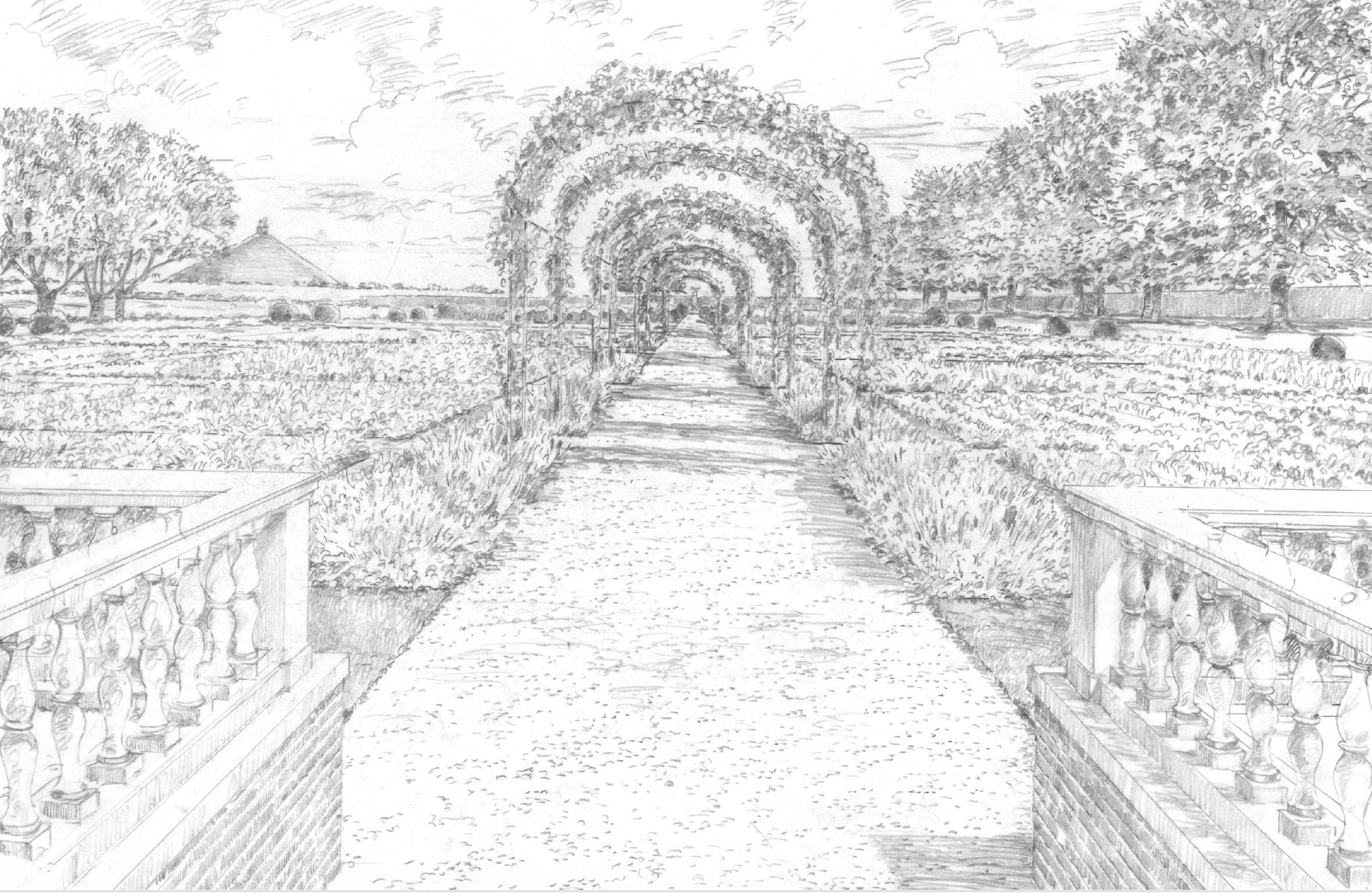
The plans for Hougouont Gardens. Credit: Francois Goffinet Garden Designs
Napoleon’s defeat has long been something of an open wound for our Gallic friends. Victor Hugo, who penned part of his masterpiece Les Misérables during a two-month stay at the battlefield in 1861, described the site as a "mournful plain" and could not conceal his disdain for Wellington, writing that Waterloo was "a battle of the first importance won by a commander of the second rank” and the “supreme triumph of mediocrity over genius".
He also claimed that the British dumped 300 French bodies in the well at Hougoumont. A dig in 1985 found the remains of a sheep, but no human remains.
Sensitivity around the subject of Waterloo has remained strong in France ever since. In 2015, Paris rejected the proposed design of a new 2-euro coin because it depicted the Lion Mound and date of the battle.
Bloodbath
In contrast, the defence of Hougoumont by the British Foot Guards, against waves of French attacks led by Napoleon’s younger brother Prince Jérôme Bonaparte, has gone down in the annals of British military history – even if early accounts of the battle overlooked that the Guards were supported by German Nassauer, Brunswick and Hanoverian troops.
Napoleon intended the attack on Hougoumont to be a diversion, forcing Wellington to send reinforcements and risk weakening his centre, but the ‘Iron Duke’ ensured the farm was heavily fortified and gave orders for it to be defended to “the last extremity”.
The result was a day-long attritional bloodbath.
At the height of the battle, a group of Coldstream Guards and Third Guards, as the Scots Guards were known at the time, joined forces to slam shut the North Gate, trapping around 40 French infantrymen inside the farmyard.
All the intruders were shot or bayoneted to death in hand-to-hand fighting, although some claim a drummer boy was spared. This is most likely a myth.
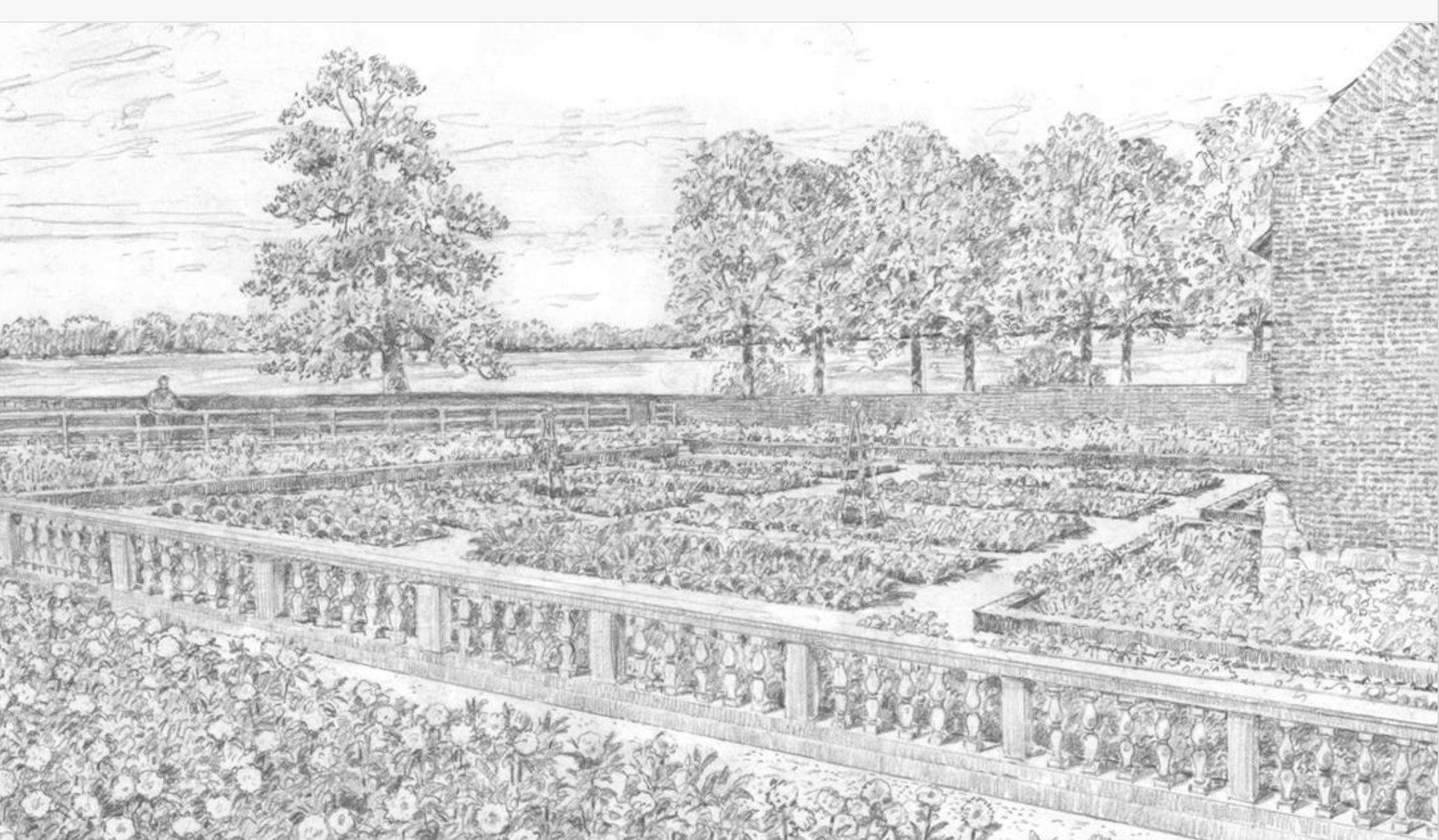
The plans for Hougouont Gardens. Credit: Francois Goffinet Garden Designs
In 2019, an excavation by TV archaeologist Phil Harding with military veteran care charity Waterloo Uncovered found tunic buttons from both regiments beside the gates.
The Duke of Edinburgh, who is Colonel of the Scots Guards, will lay a wreath at the Closing the Gates memorial, which was unveiled in 2015 by King Charles, the then Prince of Wales, in the presence of Charles Wellesley, 9th Duke of Wellington and Prince of Waterloo, together with Prince Charles Bonaparte, a descendant of Jérôme, and Prince Blücher von Wahlstatt, whose ancestor was Wellington’s redoubtable Prussian ally Marshal Gebhard von Blücher.
The Friends of the Hougoumont Gardens (Les Amis des Jardins d’Hougoumont) is administered by the Fondation Roi Baudouin, a royal charity in Belgium. People interested in making a donation can visit the website.
