Right-wing groups in the European Parliament have been accused of launching a witch hunt against civil society organisations, after setting up a new oversight body to monitor their funding – while rejecting broader oversight.
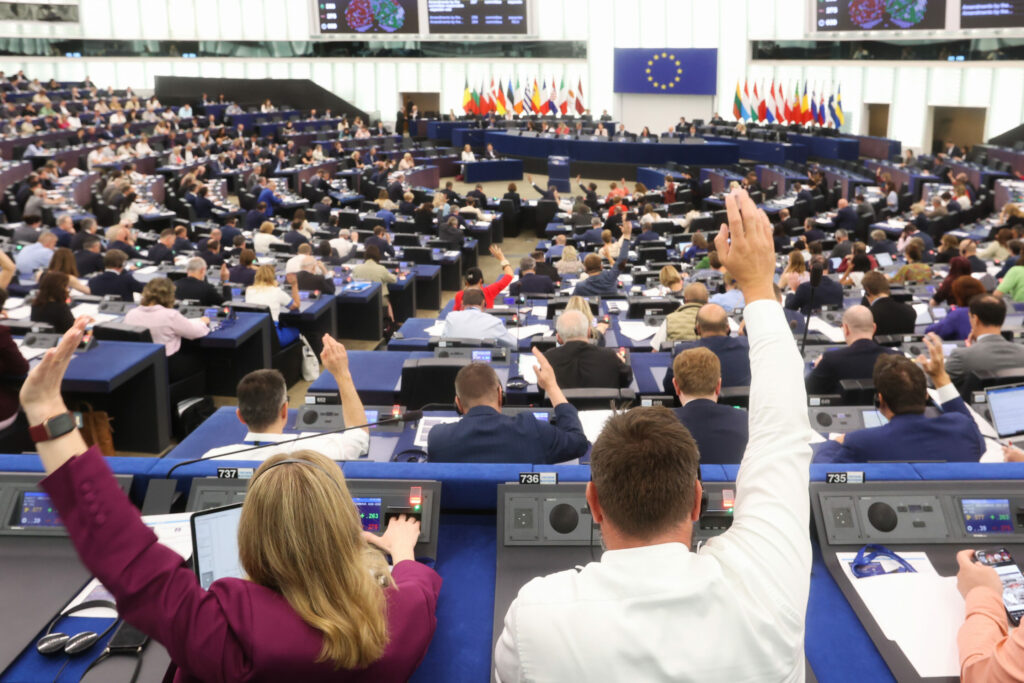
On Thursday, conservative MEPs were joined by the far-right to establish a new 'scrutiny working group' which will be focused exclusively on monitoring non-governmental organisations funding from the EU budget.
Left-wing groups and liberals Renew Europe voted against the initiative, which was led by the conservative European People’s Party (EPP), the largest group in Parliament, with support of far-right European Conservatives & Reformists (ECR) and Patriots for Europe (PfE).
"We've long warned transparency in NGO funding is lacking - and we stand by it," said the EPP’s lawmaker Tomáš Zdechovský, who sits in the budgetary control committee. He also singled out the liberal group Renew Europe, accusing them of not supporting more transparency.
At the same time, the EPP and the far-right also rejected the Socialists & Democrats (S&D)’s proposal for the body to also scrutinise private entities, multinational companies, lobbyists, national governments and EU institutions.
'Straight out of Orban playbook'
The S&D Group has accused the EPP of using NGOs as scapegoats to advance a narrow political agenda of securing alternative majorities between the conservatives and the far-right.
"We denounce the ongoing unjustified attack of the right wing in this Parliament against NGOs. We regret the EPP opposition to our proposal and their alignment with the far right." said Iratxe García Pérez, leader of the S&D Group.
“Transparency on the use of European funds cannot focus exclusively on non-governmental organisations. This shows that their only objective is to attack and silence civil society,” the Spanish MEP added.
Greens/EFA leader Terry Reintke also added to the chorus, stating that the campaign against NGOs "is straight out of the playbook of Orbán and Trump."
"Transparency must apply to all recipients of EU funds, including companies, not just NGOs that are politically inconvenient for the EPP and the far-right," Reintke added.
The EPP Group insists that not enough is being done to end secrecy around NGO financing, accusing the European Commission of secretly funding civil society organisation to "lobby the European Parliament on certain issues".
A European Court of Auditors report from April found no evidence of this. It did, however, call on the European Commission to improve collecting information on EU funding granted to NGOs. It underlined that weaknesses persisted in the way that information is disclosed.
Meanwhile in May, the EPP blocked a new independent ethics body for EU institutions, a measure designed in the aftermath of the Qatargate corruption scandal. There too, EU conservatives joined with the far-right to again reject amendments aimed at setting up a new body which would establish common ethical standards and increase transparency within EU institutions.
In their reasoning, the EPP insisted that supports strengthening ethical standards, but argued that such a body could violate the presumption of innocence and publicly stigmatise political officials.
