
New month, new rules in Belgium. While the hot weather makes many people feel quite lethargic, the heat did not seem to stop the authorities: a long series of new measures and decisions will be implemented across the country on 1 July.
The most important changes and how they will impact people can be found here.
Wegovy for sale at Belgian pharmacies
The obesity drug Wegovy will be available from Belgian pharmacies, on prescription, from now, confirmed a spokesperson for Novo Nordisk, the Danish manufacturer of the drug. Two other drugs that are used as obesity drugs were already available, Ozempic and Mounjaro.
Unlike Ozempic (also from Novo Nordisk), Wegovy is specifically intended for obesity. Ozempic is more aimed at type 2 diabetes patients. Mounjaro, a product from Eli Lilly, has been approved by the European Medicines Agency (EMA) for both type 2 diabetes and obesity.
Wegovy has the same active ingredient as Ozempic, semaglutide. This substance suppresses appetite. Because the demand for the injection pens for the treatment of type 2 diabetes has exploded since 2022 due to their use as a slimming agent, Health Minister Frank Vandenbroucke (Vooruit) introduced prescription restrictions at the end of 2023.
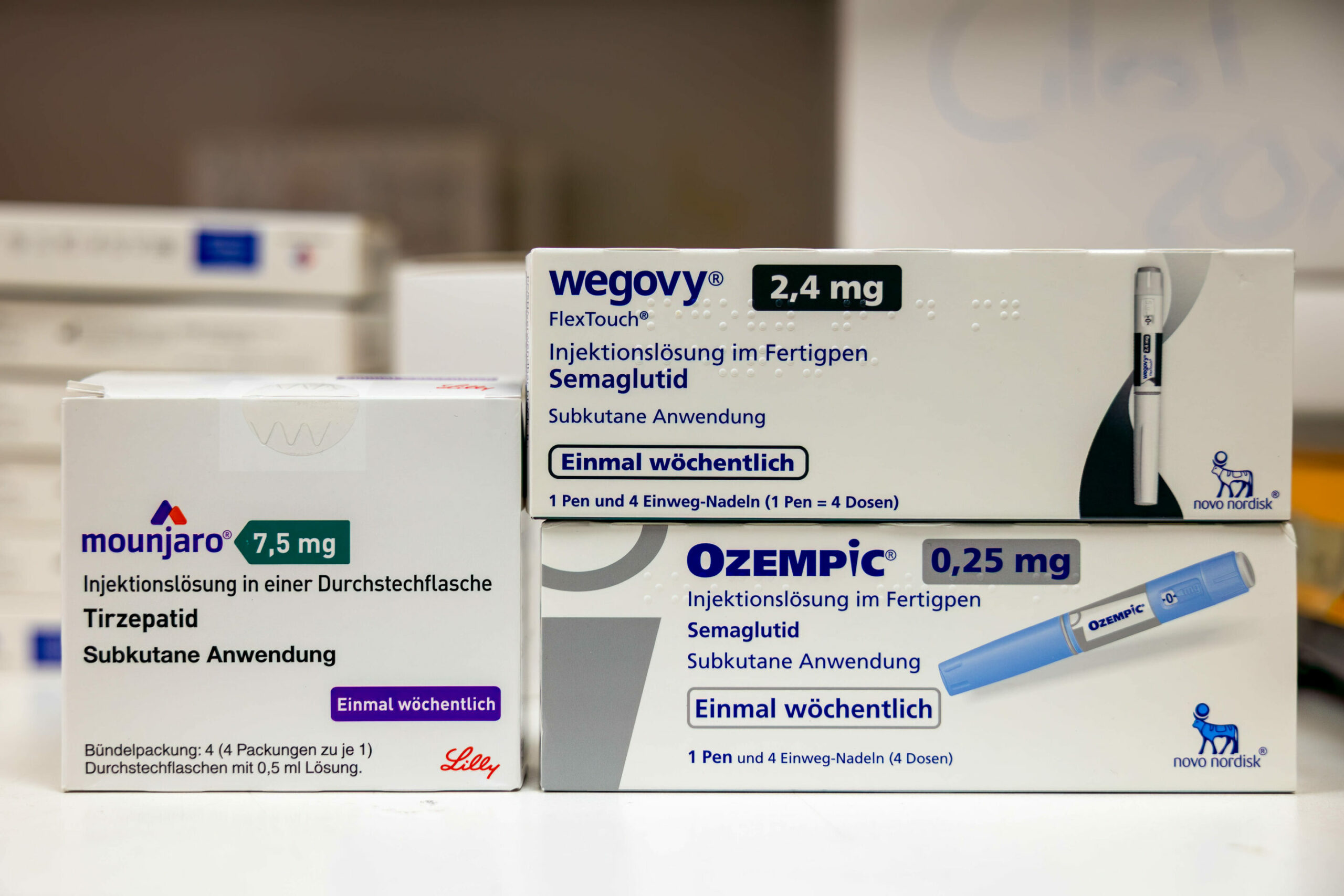
Ozempic, Mounjaro and Wegovy. Credit: Belga
Since then, Ozempic has been reserved for diabetes patients and people with severe obesity. There are no restrictions for Mounjaro.
Now, Novo Nordisk has submitted an application to the Riziv to have Wegovy reimbursed. A decision on this is not expected until early next year.
Army to secure nuclear infrastructure
From this month, the Belgian army will support the federal police in securing the country's nuclear infrastructure, aiming to free up police officers for other tasks.
The Defence Ministry will provide personnel, equipment and infrastructure, while the federal police will remain responsible for managing operations. The transfer will take place gradually: from 1 July, military personnel will first be responsible for securing the nuclear power plants in Doel and Tihange.
From 1 December, they will also be responsible for the nuclear infrastructure in Mol, Geel and Dessel. From April 2026, the National Institute for Radioelements in Fleurus will follow. This should free up around 200 officers to carry out fieldwork throughout the country.
Transport changes
Adjusted De Lijn offer
The Flemish public transport company De Lijn is adjusting its offer, with the aim of better aligning the offer with available capacity, changing train times and major diversions, among other things.
The changes range from lines that will cease to exist or that will only run on certain days or during peak hours, to buses that will run more often on certain lines and new lines.
"For the adjustments to the network, De Lijn is taking into account the principles of basic accessibility," said the company. "The first analyses show that there are still quite a few bus lines that have very low occupancy and other lines where there is clearly potential available for further investment."
An overview of the main changes can be found on the De Lijn website. New timetables and frequencies are also included in the route planner.
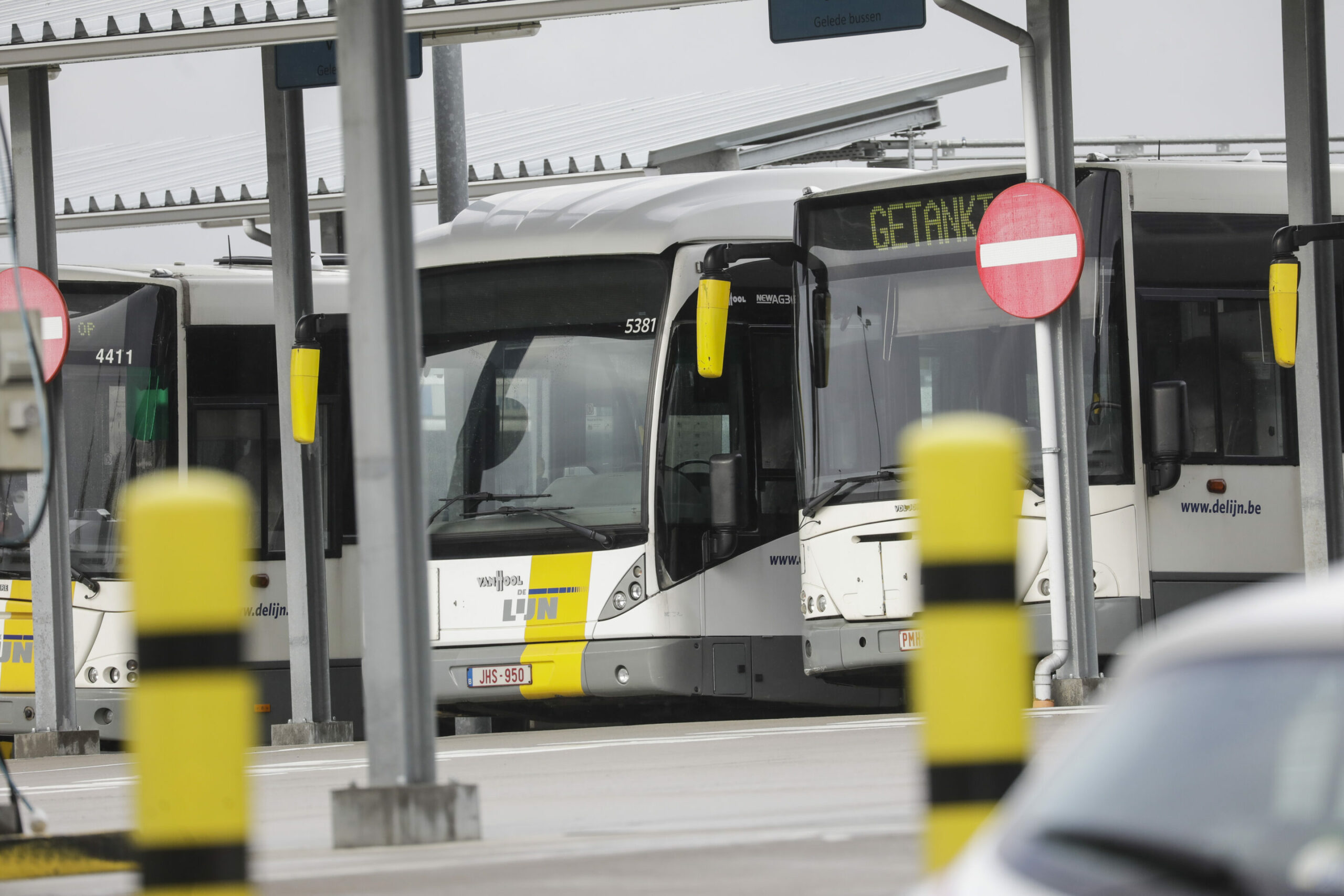
De Lijn buses. Credit: Thiery Roge
Increased kilometre charge rates for lorries in Flanders and Brussels
Kilometre charges for lorries will become more expensive in Flanders and Brussels, according to the government agency that coordinates and monitors kilometre charges in Belgium Viapass.
The rates in Flanders will increase by roughly 7-8%. In addition to indexation, there will be an additional increase that was made possible in a programme decree at the end of last year. In Brussels, there will only be indexation; the rates will increase by around 3%.
The software of the devices on board the lorries (OBUs) will automatically be updated with the new rates.
The kilometre charge applies to all domestic and foreign lorries with a maximum authorised mass (MTM) of more than 3.5 tonnes. The rate depends on the MTM and the Euro emission standard of the vehicle, and on the region. The rates in Wallonia were indexed on 1 January.
Vehicle tax reform in Wallonia
The reform of the vehicle registration tax in Wallonia will be implemented from July. This tax is payable once upon the purchase of a new or used vehicle.
The calculation will now be based on engine power, CO2 emissions, maximum authorised mass, and the energy/fuel used. This vehicle registration tax will therefore vary depending on the impact of the chosen vehicle on infrastructure (road damage and occupation of public spaces), the environment (impact on health and climate), and the risks in the event of an accident (heavier and more powerful vehicles are involved in more serious accidents).
A reduction in the tax rate will apply to used vehicles, and electric and hybrid vehicles will have an advantage over gasoline or diesel vehicles. The annual road tax remains unchanged.
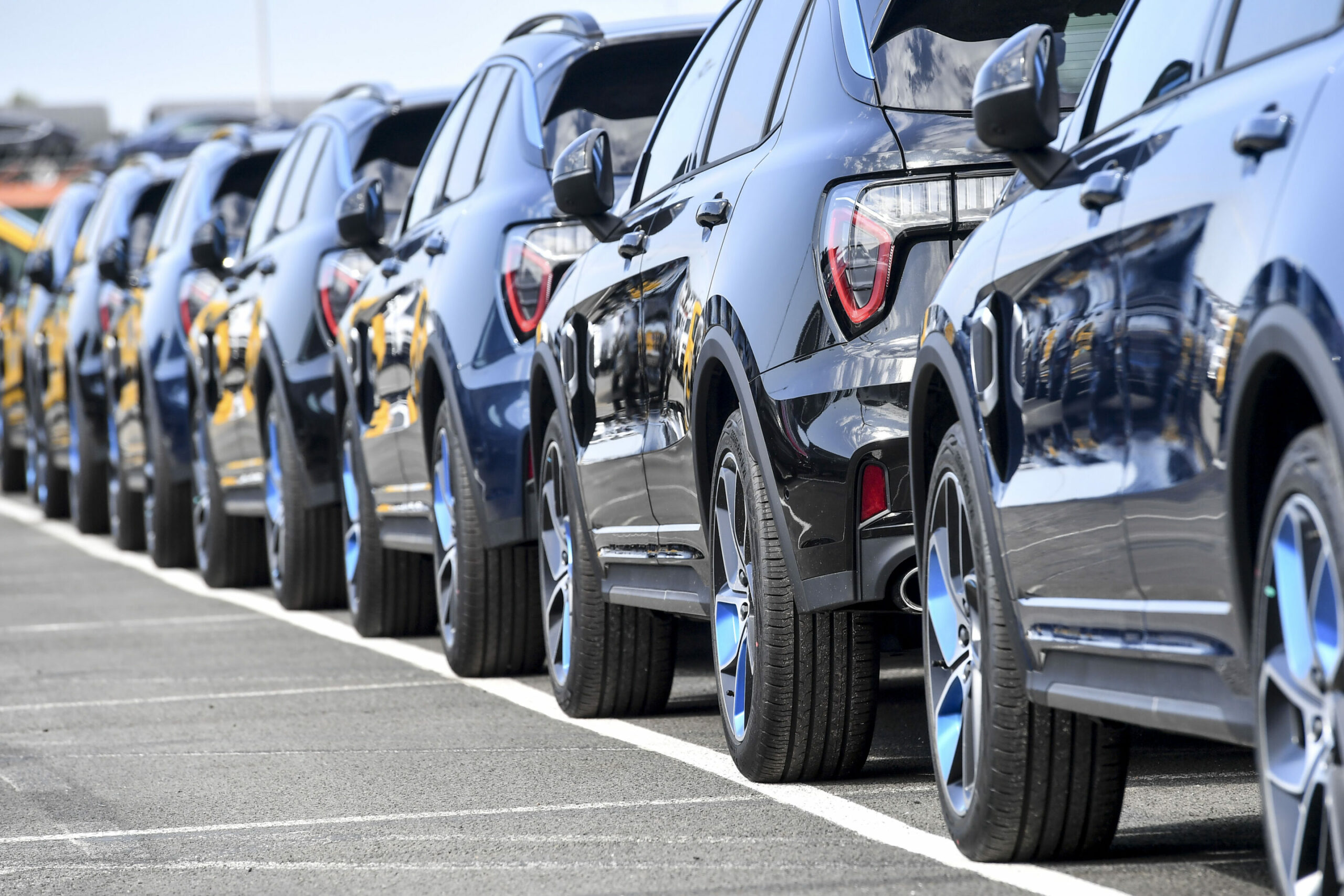
Credit: Belga/ Dirk Waem
Car inspection every two years
The mandatory biennial car inspection will be extended from 1 July to include passenger cars that are up to eight years old and have not yet covered 160,000 kilometres, confirmed the office of Flemish Mobility Minister Annick De Ridder (N-VA).
Passenger cars must be inspected for the first time four years after the date of first registration. For a long time, they had to undergo inspection every year from then on, but the previous Flemish Government decided to send some cars back for inspection only every two years to reduce the pressure on the inspection centres.
Since July last year, this biennial inspection has applied to cars up to six years old, and now it has been extended by another two years. The regulation only applies to vehicles that have not yet covered 160,000 kilometres.
In concrete terms, passenger cars, dual-use vehicles, hearses and minibuses up to eight years old will receive an inspection certificate from 1 July that is valid for two years (if they have an inspection deadline from September 2025 and if they have not yet driven 160,000 kilometres).
On 1 July 2026, the limit will be raised again, to passenger cars up to ten years old.
Dutch-speaking taxi drivers in Flanders
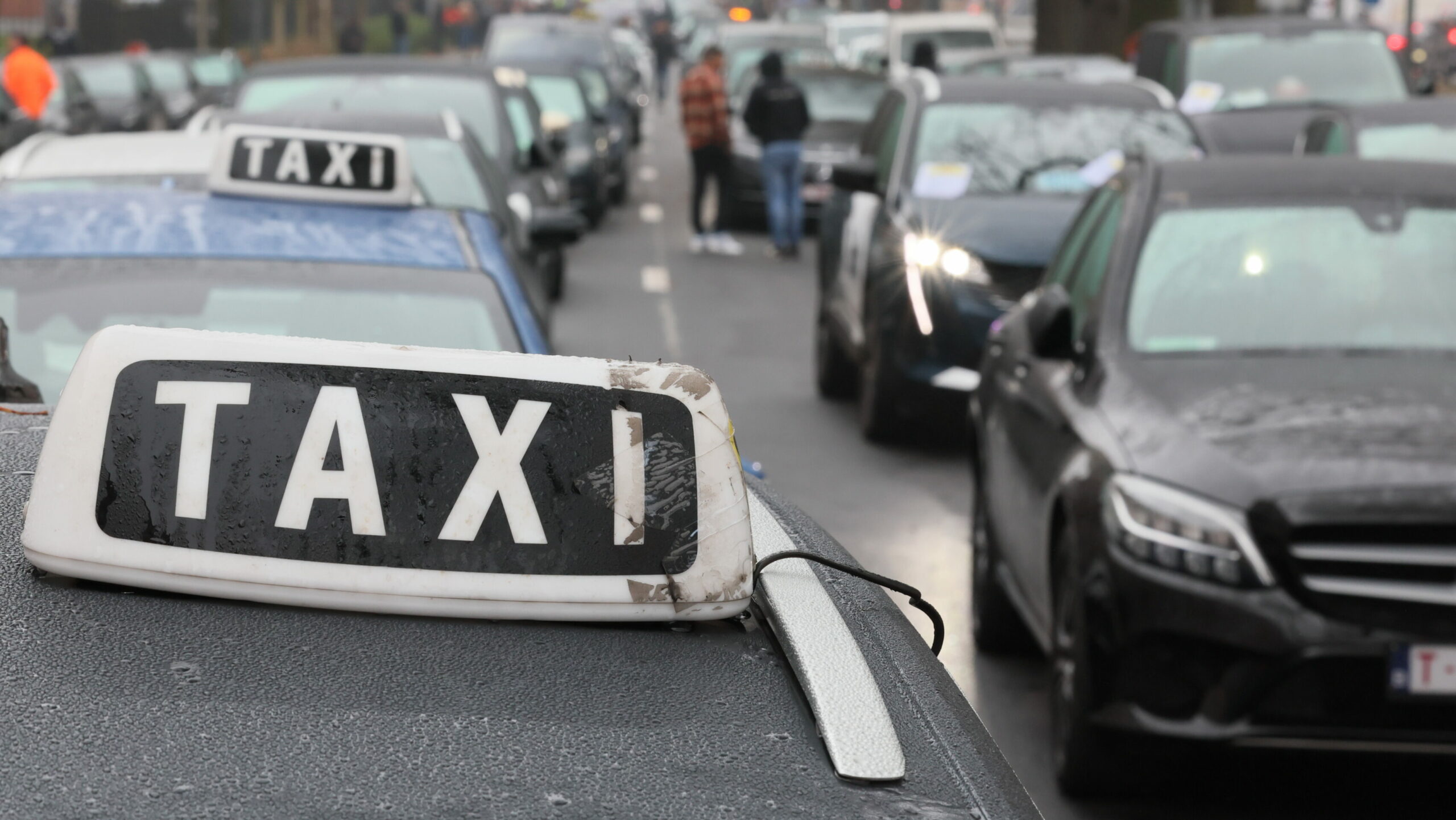
After the introduction of the measure was postponed twice, taxi drivers in Flanders will have to meet the Dutch language requirement from now on, announced the office of Flemish Mobility Minister Annick De Ridder (N-VA). The transitional period was already extended by two years in 2022, and a second extension followed last year, by one year.
In 2020, the new taxi decree came into effect in Flanders. This not only changed a series of rules regarding rates and other matters, it also introduced the obligation for drivers to master a certain level of Dutch (B1). The language requirement was also linked to the driver's pass, which has since been mandatory in Flanders.
Credit: Belga/Benoit Doppagne
At the time, taxi drivers were given two years to meet the imposed language requirement, but this period was extended twice. Last year, the previous Flemish Government decided to expand the group that can use the transitional measure to everyone who received the driver's pass before 1 July 2023.
These drivers had to be able to demonstrate by 30 June 2024 that they had registered for a language course that would enable them to achieve the necessary level.
Flexbus no-shows risk suspension
The Flemish public transport company De Lijn is taking measures against passengers who order a flexbus, but then do not show up. Anyone who does this several times without cancelling the trip risks being temporarily suspended. The flexbuses are the successors to the former dial-a-buses. Passengers can reserve them for routes that they cannot (fully) cover by regular public transport.
However, in more than one in 20 reserved flex rides (5.7%), the traveller does not show up, without the ride being cancelled. This means that the bus makes the trip for nothing and could actually have transported someone else.
The first two no-shows (within 30 days) will now each be followed by a warning. A third time (within 30 days after the second warning) will result in a two-week suspension from the flex system. All reservations will be cancelled. If there is another no-show within 30 days of the suspension, a suspension of 30 days will follow. An appeal is possible.
Travellers can cancel a reserved flex ride up to 30 minutes before departure.
Comparing energy contracts with QR-codes
Comparing energy contracts will become a lot easier. From now on, the Flemish Utilities Regulator (formerly called VREG) will require a unique code on every electricity or natural gas bill. "Customers can scan the QR code to see how their contract compares to other contracts," said spokesperson Barbara Janssens.
The utility regulator will be responsible for the comparison module, just as it is currently responsible for the so-called 'V-test,' which allows energy contracts to be compared. However, customers had to enter a number of details themselves, such as their consumption or the start date of the contract. Now, the QR code will make comparison easier.

Credit: Pixabay
The new module will use colour codes, from green (cheapest) to red (most expensive), for both electricity and natural gas. At a glance, customers can see where they stand in relation to other contracts.
The Flemish Utilities Regulator recommends comparing energy contracts in detail once a year. Last year, 1,214,872 simulations were carried out. Price remains the most important reason for choosing an energy supplier for almost three-quarters of households (73%).
New energy label for tumble dryers
Tumble dryers will have a new energy label from July. The old system with A+, A++ and A+++ will disappear, because almost every appliance was already in the highest class – making comparison difficult and misleading, said the Economy Ministry.
The new label has a scale from A (best score) to G, which makes a clearer distinction between appliances. It provides an indication of, among other things, consumption, cycle time and noise level.
Similar energy labels have already been introduced for washing machines, refrigerators and televisions. A few days ago, smartphones and tablets also received an energy label, which mainly estimates the battery life of the appliance.
Salary indexation for 360,000 workers
Some 360,000 workers in specific sectors will have their salaries indexed on 1 July due to the pivot index being exceeded in June, human resources service provider SD Worx announced on Friday.
The salary adjustment affects 175,000 workers (PC 111) and employees (PC 209) in the metalworking sector, for whom it amounts to 2.72%. In the cleaning sector, for which PC 121 provides for two indexations per year, 50,000 workers will see a 1.64% increase in their pay, following an initial 1.23% increase in January.
The construction sector, meanwhile, applies a more frequent indexation, every three months. This will be 0.87% on July 1 for 135,000 workers in CP 124. SD Worx is still counting on an indexation of 2.42% in January 2026 for the 500,000 employees in CP 200.

Credit: Belga
Service vouchers become more expensive in Wallonia
Service vouchers will become €0.20 more expensive in Wallonia, meaning that the first 175 vouchers will cost €10.40 each instead of €10.20 from now on.
Anyone who buys between 176 and 400 vouchers will pay €11.40 each. When buying more than 400 service vouchers, the rate will be €12.40 each. However, the tax deduction remains unchanged at 10% for the first 150 service vouchers per person per year.
In Flanders, the price for service vouchers has been €10 for the first 400 service vouchers since 1 January. The tax deduction (of €1.80 per voucher) has also been abolished.
Reform of My Renovation Premium is starting
The changes that the Flemish Government made in March to the renovation premium, called 'My Renovation Premium', will take effect from July. From now on, there will only be support for energy renovations, and the support will be focused on low and middle incomes. The lowest incomes will be able to receive a premium of up to 50% of the costs. The support will be reduced for the highest incomes.
Research has shown that now, the support often goes to people who would also renovate without it, and much less to the lowest incomes, singles, single parents and pensioners. The latter categories often live in poorly insulated homes with a high energy bill. The intention is to use the support "more efficiently and targeted."
In concrete terms, there will be four instead of the current three income groups from now on. For the highest income groups (1 and 2), the income limits will be maintained, but the premiums will be limited to 20-25%, while this often amounted to 35-40% before.
The current third income group will be divided into target groups 3 and 4. In target group 3, the support will be maintained as it is now, up to 35%. Those in target group 4 will be able to count on a premium of up to 50%.

A construction worker on the roof of the Palais de Justice. Credit: The Brussels Times
The reform also includes an ownership condition. Anyone who has a second home or building plot will only be eligible for the lowest premiums.
Another important change is that from now on, premiums will only be awarded for energy renovations. The premiums for heat pumps will also continue to exist in the new system, as will the premiums for heat pump boilers. The premiums for solar boilers will be discontinued.
In order to be able to implement the adjustments in My Renovation Desk (the online desk where you can apply for My Renovation Premium) smoothly, the desk for new premium applications for My Renovation Premium will close from 1 July 2025 to 31 August 2025.
Applications in the new system will be possible from 1 September 2025. An application must normally be submitted within two years, but due to the summer closure, this will temporarily be extended by another two months.
Pedigree for cats and dogs
Flemish pedigree associations may only issue pedigrees for dogs and cats that were bred via a recognised breeding programme: with genetic screening and well-considered parent selection. Flemish Minister for Animal Welfare Ben Weyts (N-VA) wants to put an end to the suffering of cats and dogs with genetic abnormalities.
The official Flemish pedigree for dog and cat breeders, launched at the beginning of June, is intended to be a quality mark that will eventually be used to breed genetic abnormalities from Flemish pedigree dogs and cats. "Today, a pedigree only says something about the animal's lineage, nothing about its health or animal welfare," said Weyts.
In Flanders, around 90,000 dogs and 60,000 cats are born each year, of which around 30,000 have a pedigree. Such a pedigree is often seen as a quality label, but many pedigree cats and dogs have developed painful hereditary abnormalities through years of breeding. For example, border collies often have eye diseases and Munchkin cats have congenital dwarfism.
Now, the pedigree will become a quality label that guarantees that the dog or cat has been bred by a responsible combination of parent animals according to an approved programme.
The new Walloon Tourism Code comes into force
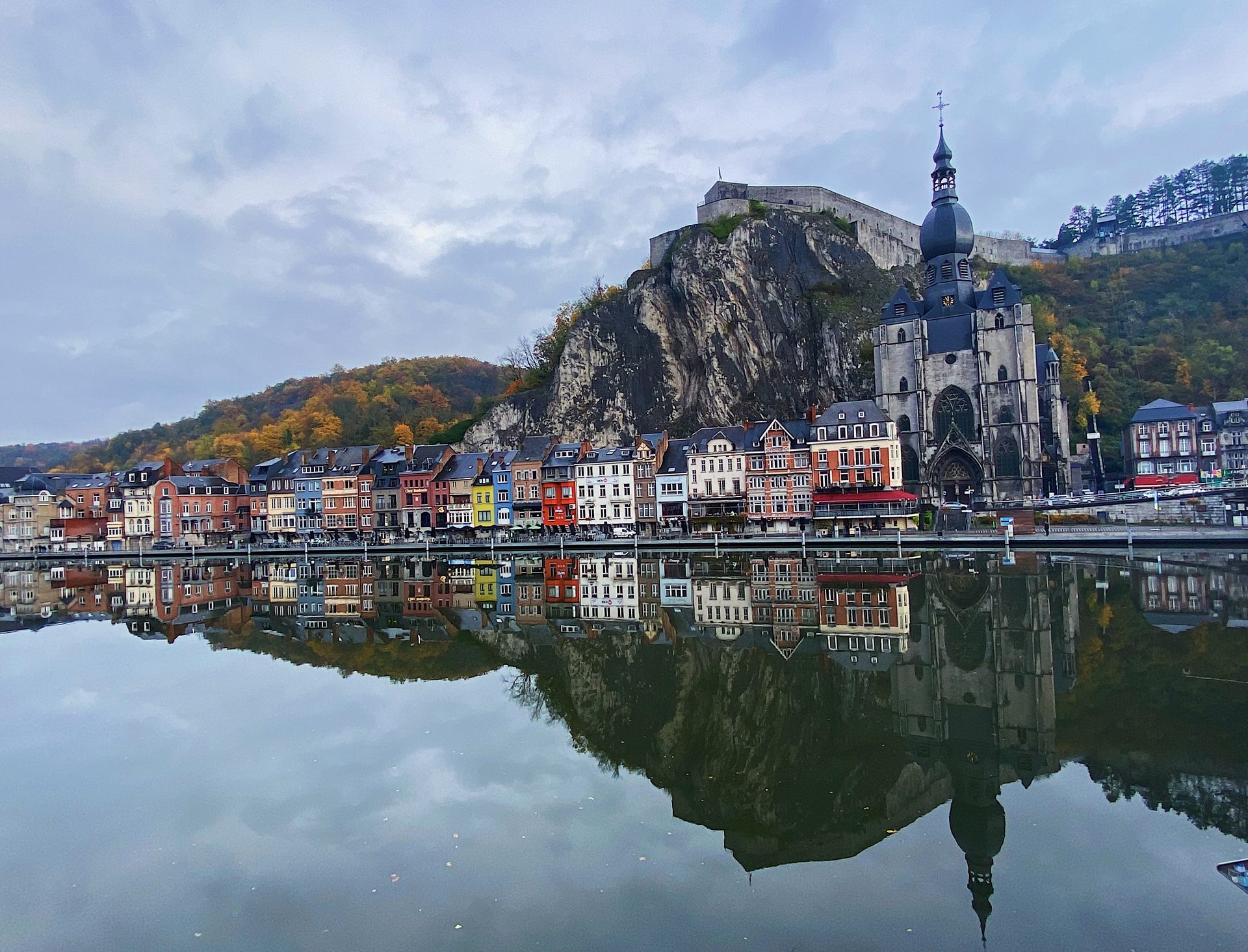
The new Walloon Tourism Code, which includes all regulations for the tourism sector in the south of the country, comes into force. Its objective is to professionalise the sector and review the subsidy system previously in place.
Specifically, the text – the last version of which dates back to 2017 –provides for the abandonment of the classification of accommodations and tourist attractions, to administratively simplify access to certification.
Dinant. Credit: Isabella Vivian / The Brussels Times
Tourist houses and tourism federations will no longer be recognised, but will also benefit from certification. This change also signifies a modification of the subsidy system, the conditions of which have been validated by the Walloon government.
Only one tourist office will be able to be certified per municipality, even if several such organisations are present in the same area. However, the Walloon Government will be allowed to grant an exemption.
While transitional measures are planned to allow for the "smoothest possible" transition from one code to the other, grant applications not granted before 1 July 2025, will have to be reapplied, according to the Walloon administration.
Code of conduct for loss adjusters
Experts who intervene in non-life insurance (such as fire insurance) will have to adhere to a code of conduct from now on. This code is an initiative of the professional association of insurers Assuralia, and the association of loss adjusters Gebcai. It stipulates that customers must be correctly informed, among other things.
"The expert will provide the necessary explanations so that the insured party understands how the amount of the claim is determined," it states, for example. There are also provisions on independence, integrity and transparency, as well as on training, remuneration and working methods.
The code of conduct is intended for all experts in non-life insurance, except for experts who are subject to specific legislation, such as car experts or those who have to assess physical damage.
"With this code of conduct, we are taking an important step towards strengthening confidence in the intervention of experts in non-life insurance," said Assuralia CEO Hein Lannoy.
