
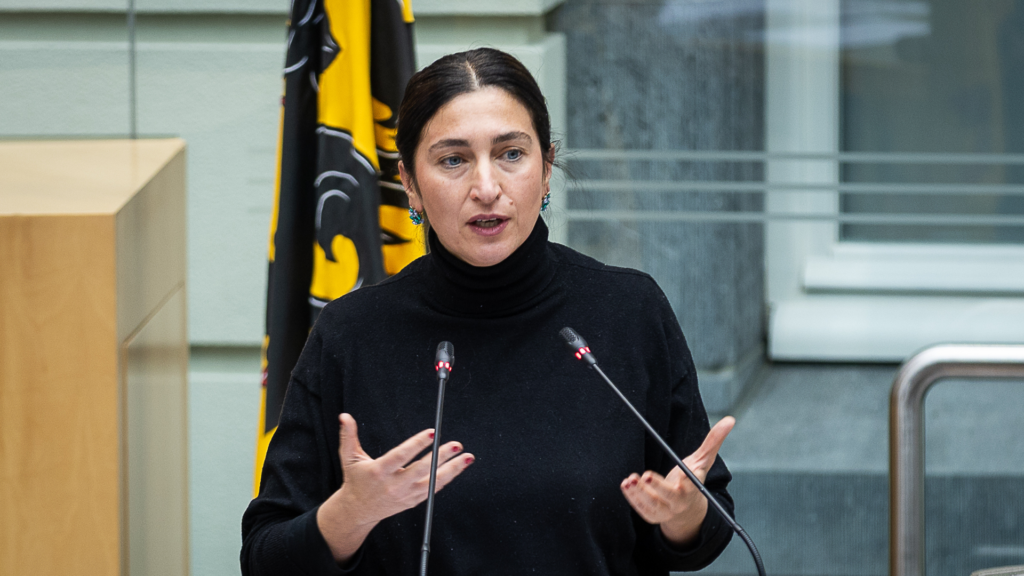
The Flemish government approved a package of measures aimed at strengthening children's knowledge of Dutch, Education Minister Zuhal Demir announced on Tuesday. Some education union representatives are sceptical about the feasibility of the plans.
The measures include additional language support in childcare, introductory classes for toddlers and language lessons in small groups at nursery.
Primary school pupils with a language deficit will be required to attend a separate language programme. Meanwhile, in secondary schools, reception classes will be converted into language courses.
The measures come after figures from the Department of Education revealed that the proportion of children who do not speak Dutch at home has risen from 18% to over 27% in ten years. According to Demir (N-VA), children with language deficits perform less well in other subjects.
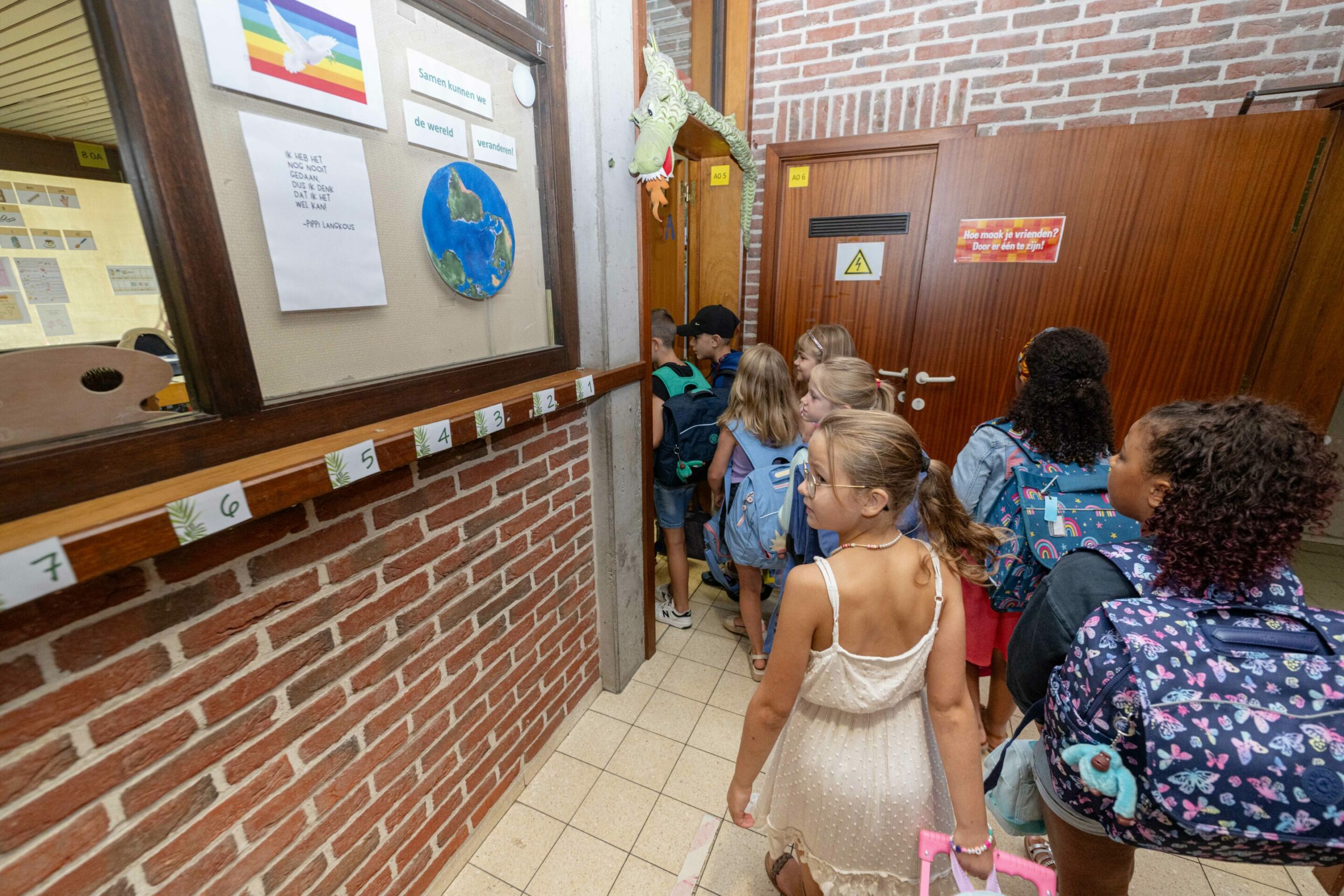
Pupils enter a classroom during a visit to an elementary school. Credit: Belga / Jonas Roosens
Starting in September, the minister will further present her plans for parental responsibility to the government. In short, parents who speak a foreign language will have to learn Dutch, otherwise the minister will cut their child's school allowance.
Moreover, later in the school year, catch-up courses will be offered in the form of summer courses during which children can catch up and improve their chances of success at school.
The Flemish government plans to provide advice and support to schools and teachers throughout the process. It will organise extensive free training for language experts, which will also be open to other teachers.
Teachers, speech therapists, linguists, retired teachers and external organisations will be called upon to provide the additional Dutch lessons. The idea is not to take teachers out of their usual roles to give extra Dutch lessons.
Additionally, the Welfare Minister Caroline Gennez (Vooruit) is investing €12 million in educational resources for extracurricular and childcare facilities.
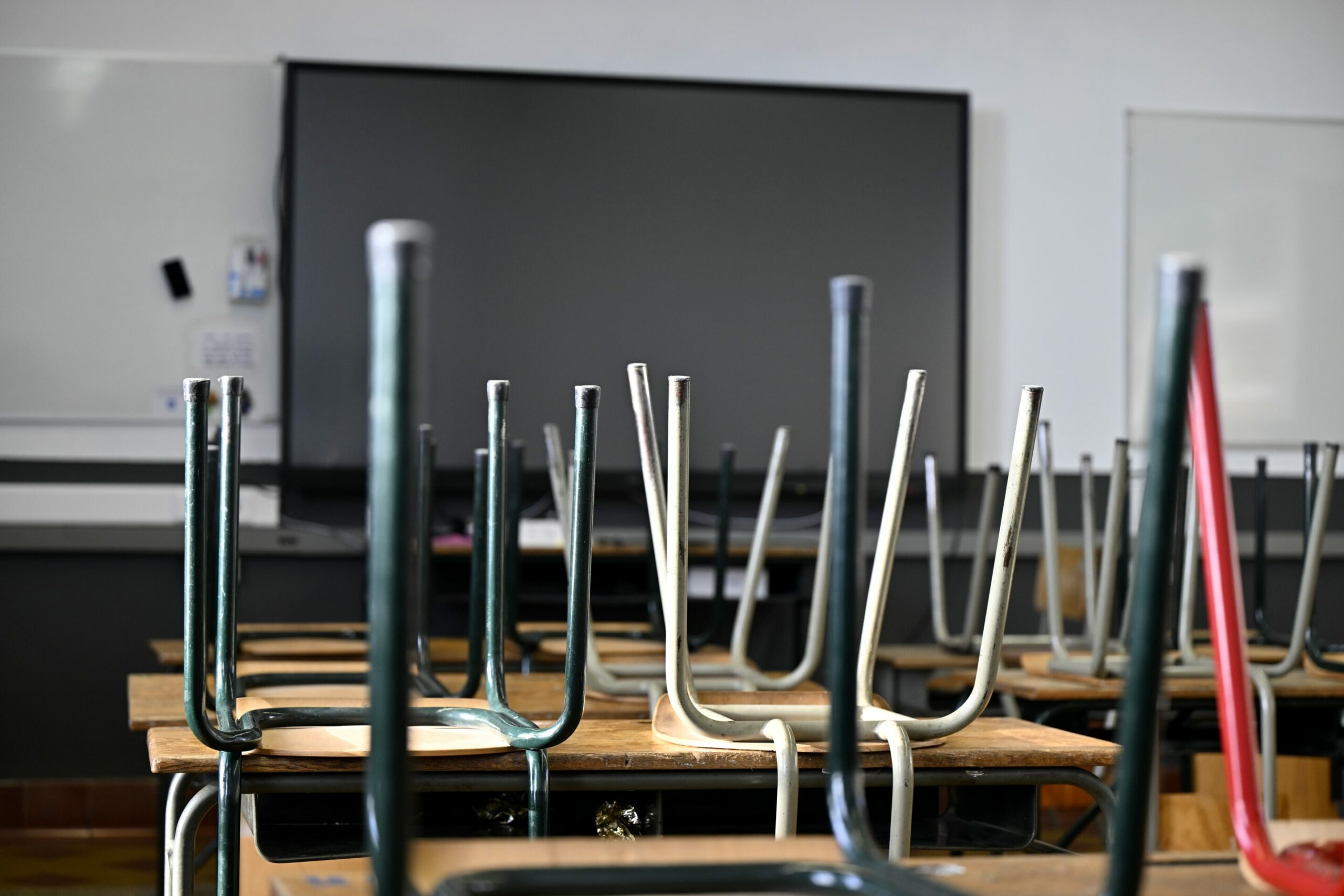
Empty classroom due to a strike of the teachers, in Athenee Royal of Hannut, Tuesday 28 January 2025. Credit: Belga/Eric Lalmand
Nonetheless, union representatives within the education sector, namely COV and ACOD Onderwijs, raised questions on Tuesday concerning the feasibility of the plan amid severe teacher shortages.
Demir has estimated that 1,000 to 2,000 additional teachers are needed in the education sector. The minister is counting on the support of speech therapists, linguists, retired teachers, translators, interpreters and even external organisations to implement the new measures.
However, the unions do not believe that these proposals are sufficient to prevent an increase in the workload. "How are we going to implement this with the current shortage of teachers?" said ACOD's Marc Borremans. "School administrators estimate that around 10% of full-time teaching positions are unfilled. This can rise to 15% or even 27% in cities such as Brussels and Ghent."
The unions are calling for urgent consultation. "Unfortunately, Minister Demir's office remains silent. If we want to carry out such a fundamental reform, we must first strengthen the foundations: the people who provide education," explained Borremans.
