
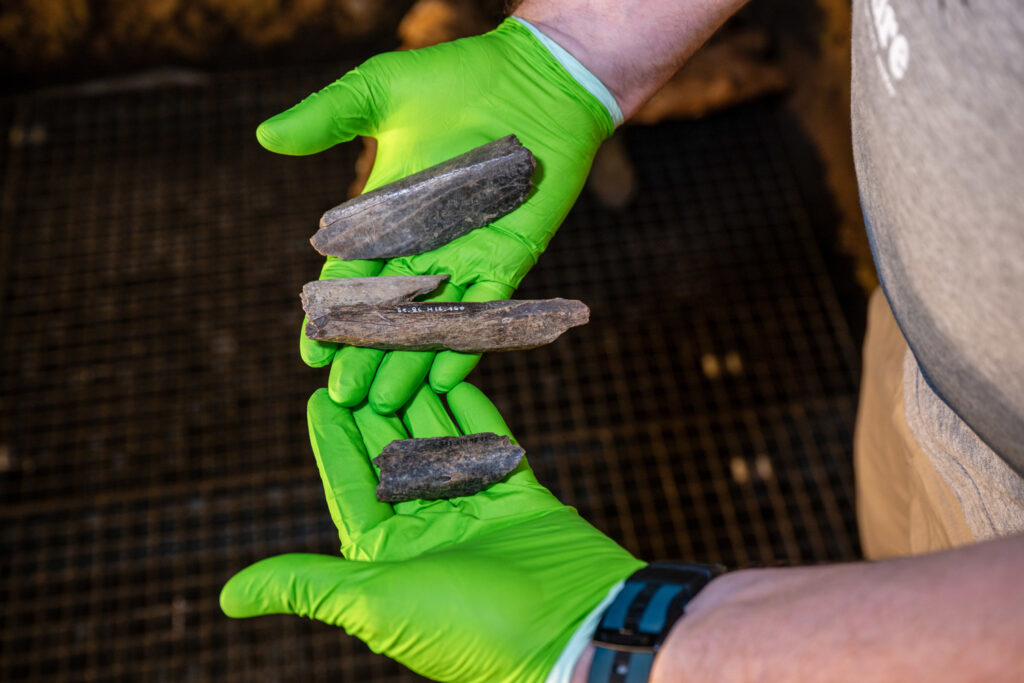
Tools discovered at the Scladina Cave in Andenne, Namur Province, were crafted from cave lion bones, making them a unique global find.
The tools, which date back to the Neanderthal Era, were initially discovered in the 1980s in the main archaeological layer of the Scladina Cave, which dates to 130,000 years ago.
Scientific advancements have now enabled researchers to link these tools to the cave lion.
Gregory Abrams, leading archaeologist at the Scladina Cave excavation, explained that the tools had been added to the Scladina Cave Archaeological Centre's collections without detailed study. He then revisited all the bone fragments to better identify them. Thanks to proteomic analyses, which study an organism’s proteins, their origins have finally been discovered.
Specifically, Neanderthals crafted cave-lion-tibia tools as they passed through Andenne. These were bone retouchers used to shape stone edges, Abrams said, explaining that this knowledge was based on surface striations that still contain residue from materials with which the tools came into contact.
This discovery is unprecedented worldwide. It was already known that Neanderthals made tools from animal bones, but it had never before been demonstrated that they used the carcass of the cave lion, the biggest predator of that era, Kévin Di Modica, deputy director of the Scladina Cave Archaeological Centre, explained.
“The intentional transformation of lion bones into functional tools highlights Neanderthals’ cognitive skills, adaptability, and capacity for resource utilization beyond their immediate survival needs,” the study's authors noted.
"The fact that Neanderthals chose such an unusual material—the bones of a powerful predator—further suggests a sophisticated understanding of how to repurpose materials to meet a variety of needs, from tool-making to possibly even protection," they added.
