
The federal budget deficit is projected to reach €26.2 billion, equivalent to 4.1% of GDP, by 2025, according to a new estimate from the Monitoring Committee released Thursday evening during a federal government meeting.
In its previous estimate in March, the Monitoring Committee, tasked with regular budgetary reports before each fiscal cycle, predicted a deficit of €23 billion, or 4% of GDP, for Entity I (federal level and Social Security).
Compared to the initial 2025 budget, Entity I’s financing balance is worsening by €576 million, or 0.1 percentage points of GDP. The federal government is experiencing a revenue drop of €1.678 billion, stemming from a €2.088 billion decline in tax revenue, slightly offset by a €311 million increase in non-tax revenue. Meanwhile, primary expenditures have decreased by €550 million, but social security expenses have risen by €647 million.
The deficit for Entity I is expected to remain stable at 4.1% of GDP (€26.6 billion) in 2026, before rising to 5.4% of GDP (€40.1 billion) by 2030. Last March, the Monitoring Committee projected the federal budget deficit could soar to €42.96 billion, or 6% of GDP, by 2029.
Across all levels of government, the outlook darkens. The deficit hits 5.8% of GDP (€37.2 billion) this year, rising to 6.2% (€44.4 billion) by 2029 and 6.5% (€48.2 billion) by 2030.
The total public sector debt ratio for 2024 is estimated at 104.7% of GDP. By 2025, it is expected to worsen to 108.2%. From 2025 onwards, this debt ratio is predicted to climb annually, surpassing 120% and reaching 122.1% of GDP by 2030.
A budget review scheduled for this month has been postponed until after the summer break. Before the recess, the government must address other issues, including capital gains tax, the Defence Strategic Vision, and compensations for Public Centres for Social Welfare (CPAS) affected by the time-limiting of unemployment benefits.
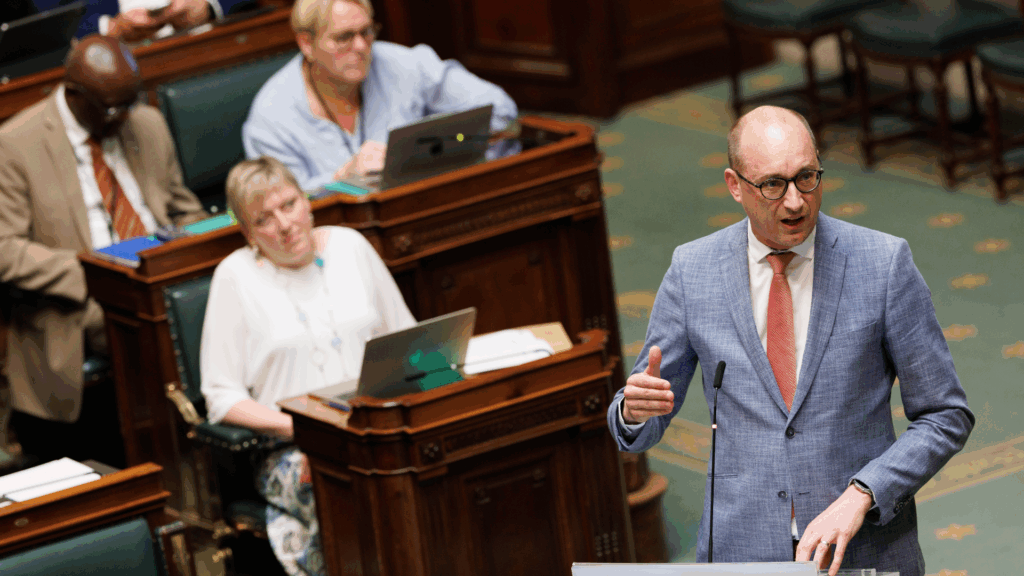
"We take these signals seriously," stated Budget Minister Vincent Van Peteghem (CD&V). "These figures underscore the necessity for a long-term approach and should motivate everyone to implement the agreed reforms as swiftly as possible."
The minister referred to the Commission’s report on ageing, released Thursday. It acknowledged that reforms in the labour market and pensions have lowered ageing-related costs by 1.9% of GDP compared to previous projections. "This is unprecedented in Belgium and shows that if we act responsibly and courageously, a gradual recovery is possible," the minister concluded.
