
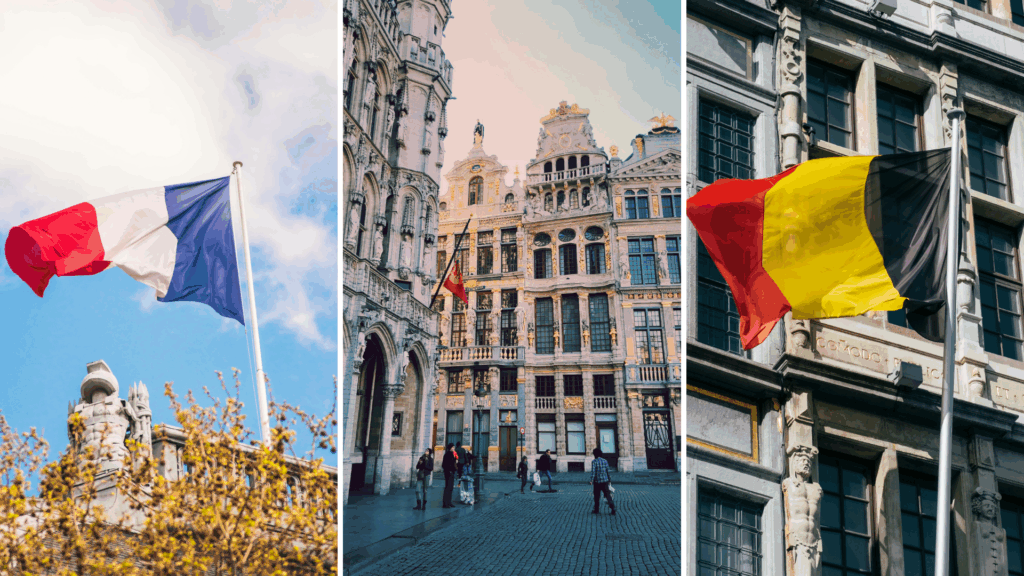
Belgium is famously complex - linguistically, politically and culturally. But for French-speaking Belgians, it’s not just what they say that matters, it’s how they say it.
And if you’ve ever found yourself puzzled at the supermarket by an “action” sign or wondered why everyone keeps calling their phone a “GSM,” you’re not alone.
But you live in Belgium now, it’s time to understand (and to speak) the local French.
Michel Francard, emeritus professor of linguistics at UCLouvain, and one of the country’s leading expert on “Belgicisms” - the unique words, phrases and quirks that make Belgian French its own rich linguistic universe.
His Dictionary of Belgicisms, now in its third edition, has become a key reference on the subject.
“What I love about this variety of French,” Francard tells The Brussels Times, “is that it speaks to me about the people I care about. The words themselves aren’t what matter - what matters is who uses them, and why.”
Francard has studied the French language across the Francophone world but also found inspiration just outside his front door. “Belgians are very interested in their language and they want to know more about it,” he says.
What is a Belgicism, anyway?
Simply put, a Belgicism is a word or expression used in Belgian French that doesn’t appear in standard reference dictionaries like Larousse. Some are completely unique to Belgium, such as “un brol” (a mess or random junk) or “un kot” (a student apartment).
Others, like “une action”, used here to mean a promotional sale in a store, are shared with nearby French-speaking regions like Switzerland, but remain unfamiliar in France.
Then there are more institutional examples, such as “un bourgmestre” (mayor), used in official documents and town halls, which can easily trip up a newcomer.
Belgicisms can also be grammatical. Professor Francart points to a Belgian-specific use of the verb “savoir” (to know): “Ma voiture ne sait pas démarrer” (My car doesn’t know how to start)—a phrase that sounds weird to French ears. In France, people would say “ne peut pas démarrer” (can’t start).
And then there are borrowings from Dutch, like the suffix –ken, as in Manneken Pis, the famous statue of a urinating boy at the heart of Brussels.
The English confusion
Some Belgicisms look like English but aren’t actually the real thing. There are a few examples of these false anglicisms, including “fancy-fair” (a school fundraising fair) and a “mini trip” (a short holiday).
Even functional English words are used differently here. A boiler means a water heater. And a GSM - short for Global System for Mobile Communications - is how every Belgian refers to their phone.
One really common Belgian expression? “Passer le torchon.” It literally translates to “pass the rag,” but in Belgium, it simply means to mop the floor. To an English speaker, it could sound like you’re handing someone a dirty cloth.
Quirky, useful, and essential
For expats in Brussels, understanding these words is more than a fun cultural quirk - it’s often necessary for daily life. Francard points out that Belgicisms aren’t just popular slang; they’re embedded in administrative and legal language.
“Take ‘index des prix’,” he says, referring to Belgium’s system of automatically adjusting wages to match inflation. “If you don’t know what it means, you might miss important information.”
The same goes for your local “friteriste” (fries vendor), or trying to find the best “baraque à frites” (fry shack) in town.
Oh, and don’t forget to ask for a “prix démocratique” - a charmingly Belgian way of saying something is affordable.
The linguist’s takeaway
Most Belgian people don’t even realise they are using Belgicisms until someone points them out.
“Belgian French is still French. But it tells the story of a specific community. And unless you’re paying attention to the words and how they live in society, you won’t even know you’re speaking something different,” says Francart.
So next time you clean your “kot” because there is a lot of “brol” with a “torchon” before heading to a “fancy fair” with your “GSM” - you’re not just learning the language, you’re becoming one of us.
Other Belgicisms and Belgian expressions that you might want to know about
- Américain: Literally means “American,” but in Belgium, it refers to raw ground beef, usually served cold as a sandwich filling or a dish - similar to steak tartare.
- Baraki: Originally referred to a fairground worker, but today it’s a slang term for someone considered vulgar or low-class.
- Braillette: A Belgian slang word for braguette (French for fly or zipper). For example: “Ferme ta braillette !” → “Zip up your fly!”
- Brusseleir: The traditional Brussels dialect, a mix of Flemish and French. You can still hear some Brusseleir spoken in neighborhoods like the Marolles or parts of Molenbeek.
- Ça va: Literally means “how are you,” but Belgians often use it simply to say “OK” or “sure”. Example: “Tu veux aller au cinéma ? – Oui, ça va. “ → “Wanna go to the movies? – Yeah, sure.”
- Carabistouilles: Always used in the plural; it means nonsense or tall tales. Example: “Arrête de dire des carabistouilles !” → “Stop your nonsense!”
- Chicon: Known as “endive” in French and “chicory” in English - but Belgians proudly use their own word: chicon.
- Couque au chocolat: While the French argue over “pain au chocolat” vs “chocolatine”, Belgians skip the debate and say “couque au chocolat,” a word of Flemish origin that refers to a chocolate-filled pastry.
- Dikke-nek: Literally “big neck” — a slang term for someone pretentious or full of themselves. Dikkenek is also the title of a cult Belgian film that only Belgians can even understand.
- Drache: Belgian word for a heavy rain or downpour - what the French call “averse” and English speakers call a rain shower.
- Ket: A local Brussels word meaning a kid, a boy, or a “little dude” - warm and affectionate.
- Mitraillette: Literally a submachine gun, but in Belgium it’s more commonly known as a famous fast-food sandwich stuffed with fries, meat, salad, and of course, lots of sauce.
- Non peut-être: Literally “no maybe,” but in true Belgian irony, it actually means “yes, of course!” Similar to the American “duh!”
- Stoemp: A traditional Belgian dish of mashed potatoes mixed with vegetables. Example: stoemp aux carottes = mashed potatoes with carrots.
- (À) tantôt: A Belgian way of saying “see you later”, similar to “à tout à l’heure” in standard French. Don’t try this one in France, they probably won’t understand what you mean!
Related News
- How Brussels has changed since I arrived here on a rainy November holiday in 1989
- 'Expats don’t receive a lot of love in Brussels - here's why we matter'
- What to do in Brussels this weekend: 11 - 13 July
- Exams in French see increased passing thresholds
- German-speaking Belgians want a voice, De Wever wants to give it to them
