
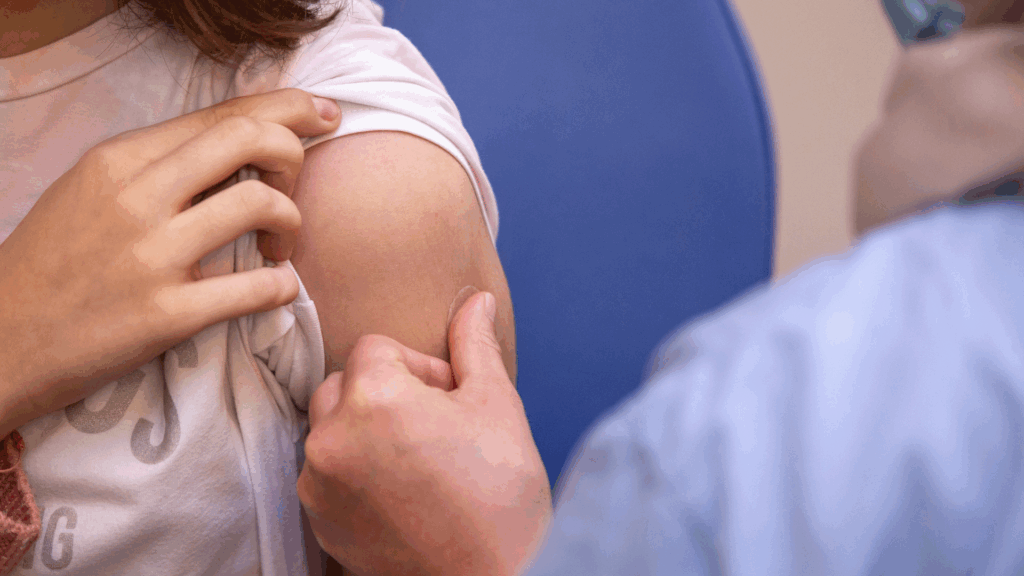
While Belgium continues to rank high in terms of children's immunisation rates, the risk of outbreaks of certain diseases persists amid a lack of confidence in vaccines and financial and logistical hurdles.
The World Health Organization (WHO) and UNICEF released their annual estimates on national child immunisation coverage on Tuesday. For Belgium, the estimates* are based on reports by the national health institute Sciensano.
Vaccination coverage for children under two years old has remained consistently high between 2012 and 2023, according to Sciensano. For most vaccines in Belgium's basic vaccination schedule, over 90% of children were vaccinated, meeting the recommended threshold set out by the WHO's Global Vaccine Action Plan.
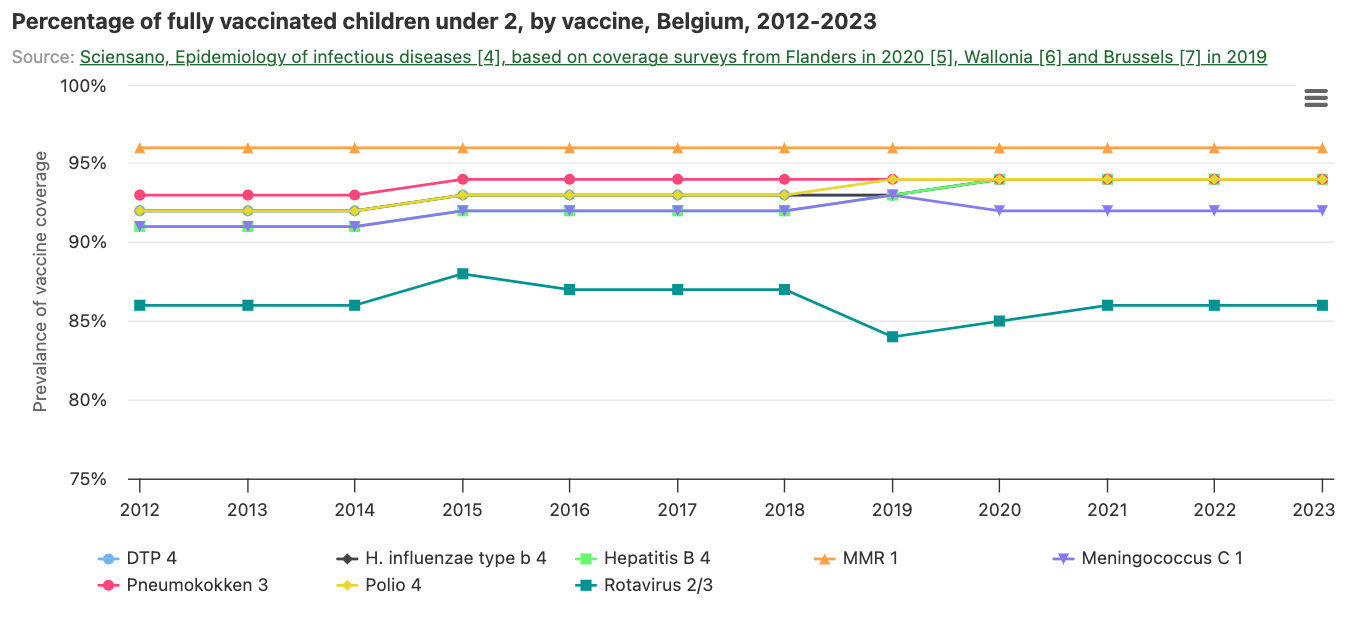
Vaccination coverage per vaccine for children under 2 years old in Belgium. Credit: Sciensano
Nonetheless, recent outbreaks of infectious diseases have caused concern over the impact of immunity gaps, where localised communities have a low vaccine uptake. In April, for example, hospitals in Antwerp rang the alarm over an "alarming" number of measles cases. Experts suspect that low vaccination coverage in parts of Antwerp was behind the outbreak.
Only one mandatory vaccine
In Belgium, the vaccination schedule for children recommended by the Belgian Superior Health Council includes vaccines against 13 infectious diseases. However, only the polio vaccine is legally mandatory in Belgium.
As vaccination campaigns are organised by the language communities, there are some variations in terms of the age of administration of vaccines. Additionally, within the French-speaking community, children must be vaccinated against certain diseases to have access to childcare facilities like nurseries. In the Dutch-speaking community, however, these rules are generally not applicable.
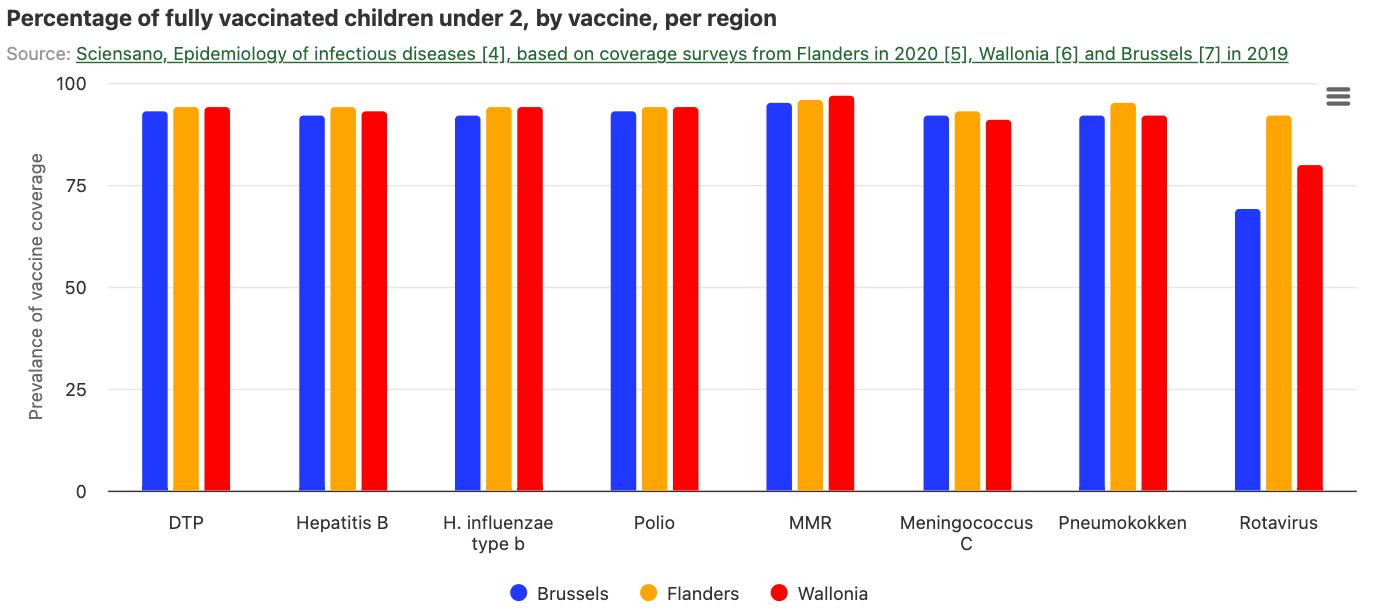
Vaccination coverage for children under 2 years old per region, based on latest data from 2019 and 2020. Credit: Sciensano
Nonetheless, the general childhood immunisation is relatively high for all regions in Belgium, with no significant variation noted by Sciensano.
Where variation is recorded is with the vaccine for the rotavirus, the only vaccine recommended for children which is not free of charge, and instead costs around €7-12 per dose. "Parents have to buy this in private pharmacies. While it is partially reimbursed, financial and logistical barriers could play a role in the lower coverage," said Sciensano's expert Cato Dambre.
Notably, the rotavirus vaccine was the only vaccine for which coverage remained below the recommended 90%, with the rate in 2023 estimated to be 86% for the whole country. In Flanders, the coverage was 92%, followed by 80% in Wallonia and 69% in Brussels.
Lack of confidence
Immunisation rates are still impacted globally by misinformation and a lack of trust in vaccines and health experts, according to UNICEF's Global chief of immunisation, Dr Ephrem T Lemango.
"It is important to continue to sound the voice that vaccination is quite safe," he said at a press conference, stressing that governments must strive to speak to concerned parents and find accepted role models or influencers to help educate vulnerable communities.
A similar sentiment is shared by the spokesperson for the Flemish Healthcare Department, Joris Moonens, who believes that maintaining high vaccination rates requires investments in information campaigns, partly to address "trust issues" with vaccines.
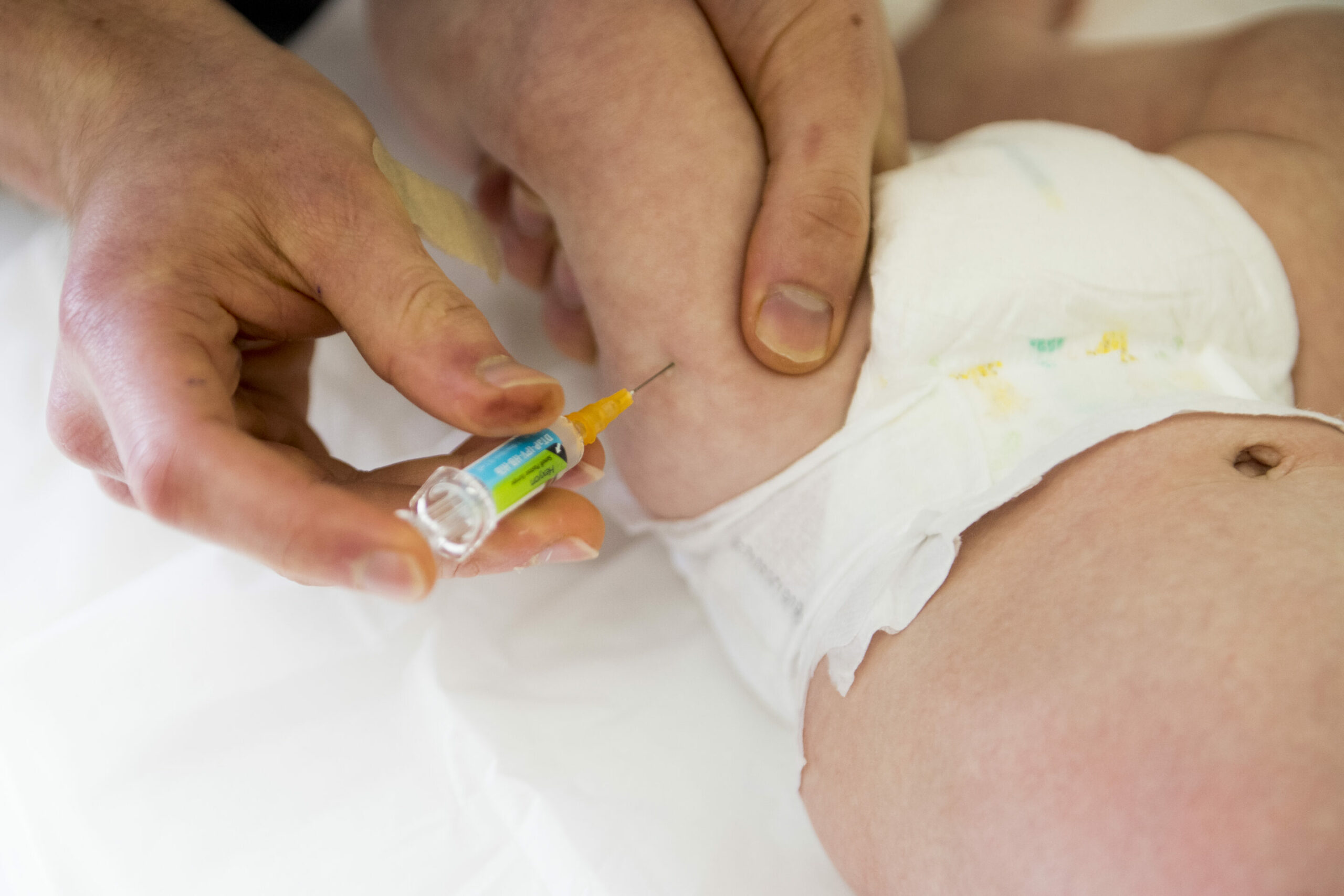
A child receiving a vaccine. Credit: Belga/Jasper Jacobs
In 2023, a study in Flanders showed that there is a lack of confidence in vaccines among some members of the general public. "In this study, the younger generations appeared to have less confidence than the older generations. So it seems more a difference in views between generations (possibly sharpened by the pandemic) than an effect of the pandemic," he added.
For Sciensano, improvements in vaccination rates in Belgium also require a focus on improving vaccination coverage for adolescents. This includes increasing the rates of the second measles vaccine as well as HPV vaccines, which remains below the 90% target set by the WHO.
New surveys for vaccination coverage rates for children are set to take place next year to provide greater insight into the national trends, Sciensano noted.
Related News
- Study suggests that vaccination reduced deaths by 60% globally
- Warning issued to travellers following upsurge in measles cases
- Tuberculosis outbreak at a primary school in Belgium
- Global first: WHO launches guidelines against meningitis
*Vaccination coverage in Belgium is monitored by coverage surveys which take place every four or five years. Estimated national vaccination coverage is calculated based on the most recent vaccine studies and weighted population size. This is done by Sciensano's Epidemiology of Infectious Diseases Department.
