
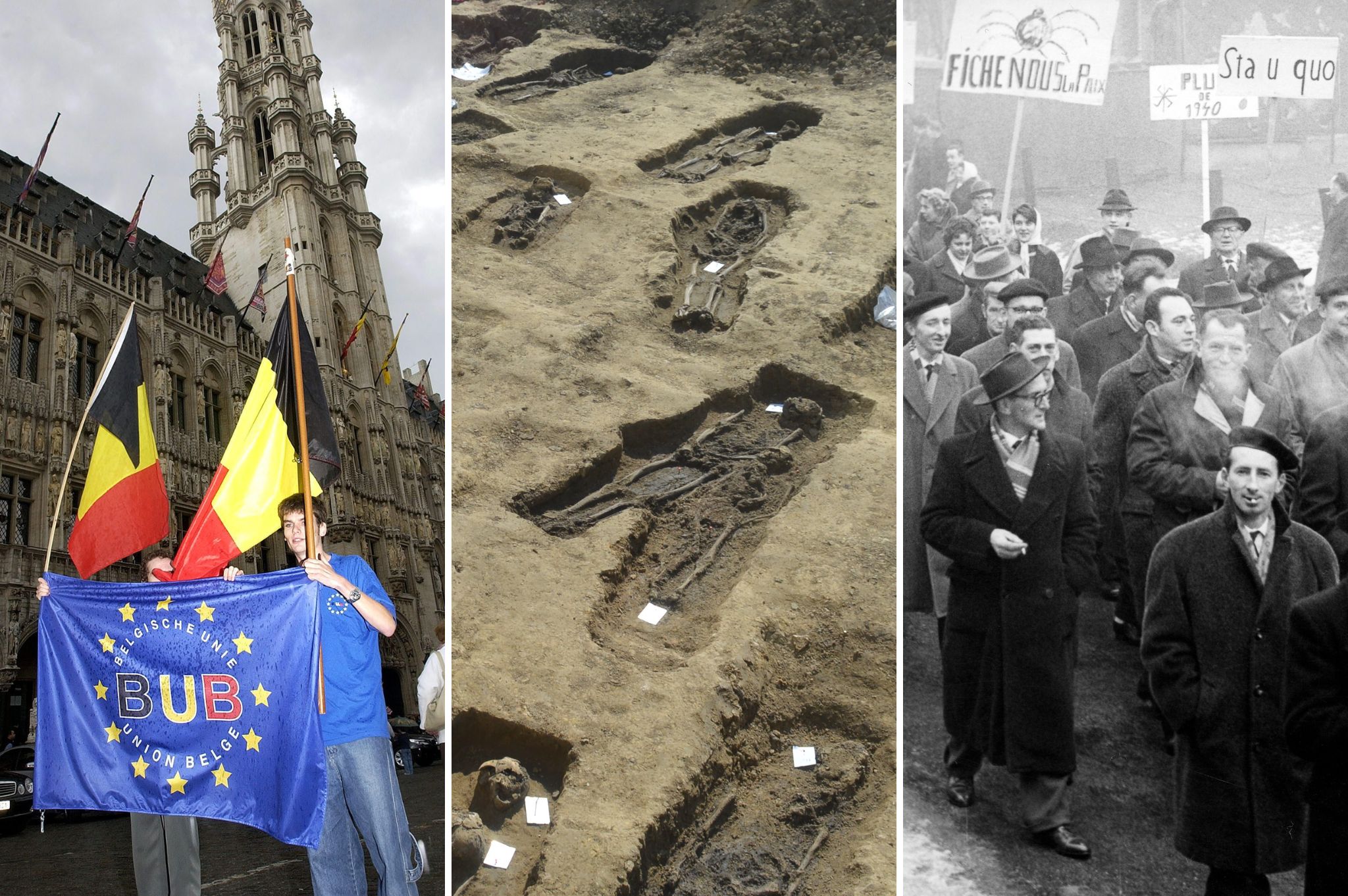
Belgians do not know why their country has a language border.
No single social, political or historical factor can explain it – but a team of Belgian researchers at KU Leuven are using new technologies, such as ancient DNA, to complement historical documents and archaeology.
Their task? Reconstruct past population structures that may have contributed to one of Europe's great mysteries.
Sitting at the crossroads between the Romance and Germanic languages, Belgium is often seen as the bridge between two divergent European cultures. Today, this is reflected between the French-speaking south in Wallonia, and the Dutch-speaking north in Flanders. Brussels sits as a de facto French-speaking city, despite its Flemish past.
The language border has been bitterly disputed for decades. In 1921, Belgium was officially divided into two unilingual entities, Flanders and Wallonia, with Brussels getting official bilingual status. This division reflected a broader linguistic reality, giving Dutch the same official administrative status as French.
For geneticists who study DNA, Belgium’s split identity can offer an insight into delicate questions around culture, migration, language and geography.
These questions are still important today: two anti-Belgian separatist parties are the most voted in Flanders, demonstrating how the language border still dominates politics in the country. But do Belgians know why it exists?
'Existential questions'
"We still don't know exactly what happened in the past, or which demographic and cultural events took place to shape the language border," says KU Leuven’s Professor Maarten Larmuseau, a leading geneticist and genealogist studying the DNA of skeletons found in Flanders, in an interview with The Brussels Times.
Through DNA research, his team studies past migrations, which can in turn, attempt to tackle unsolved historical questions, such as the origin of Belgium’s language border. This science cannot solve all questions alone, but in the process, does open important discussions on the country’s identity.
Illustration picture taken at the corner of the Wetstraat - Rue de la Loi and the Rue Ducale - Hertogstraat during a 'Kern' meeting gathering selected Ministers of the Federal Government, Friday 11 April 2025 in Brussels. Credit: Belga / Hatim Kaghat
"We always have, from the beginning of mankind, asked questions about who we are, where we are coming from, who our ancestors are, and why we speak a particular language," Larmuseau continues. "These are really existential questions."
Tracing migration patterns, relatedness, identity, physical characteristics and diseases can show how populations evolved while providing key information about ourselves and our societies today, the professor underlines.
Three great migrations
So who are the Belgians, really? In a global sense, like others in Western Europe, Belgium's DNA is the result of three main prehistoric migrations. "We have hunter-gatherers who were in the territory that is now Belgium between 40,000 years ago and 7,000 years ago," Larmuseau explains.
The second wave came with the proliferation of agriculture in the Neolithic period. Based on their DNA, researchers found a huge genetic difference between individuals, "which alludes to a great population migration, rather than only a cultural one."
The third was around 4,500 years ago in the early Bronze Age, with the arrival of groups with Yamnaya-related ancestry. This group came from the steppe area of Russia and Ukraine and moved West.
"This migration, again, had a major impact on the genetic landscape of Belgium and Western Europe. Depending on the models, a substantial proportion - often estimated around 50% of our DNA and 70% of our male Y-chromosomes – can be traced back to this steppe-related migration event," Larmuseau continues.
So, Belgians are the result of three pre-historical mass migrations. Afterwards, it changed locally, as shown by DNA studies – which can open some paths to Belgium’s language border.
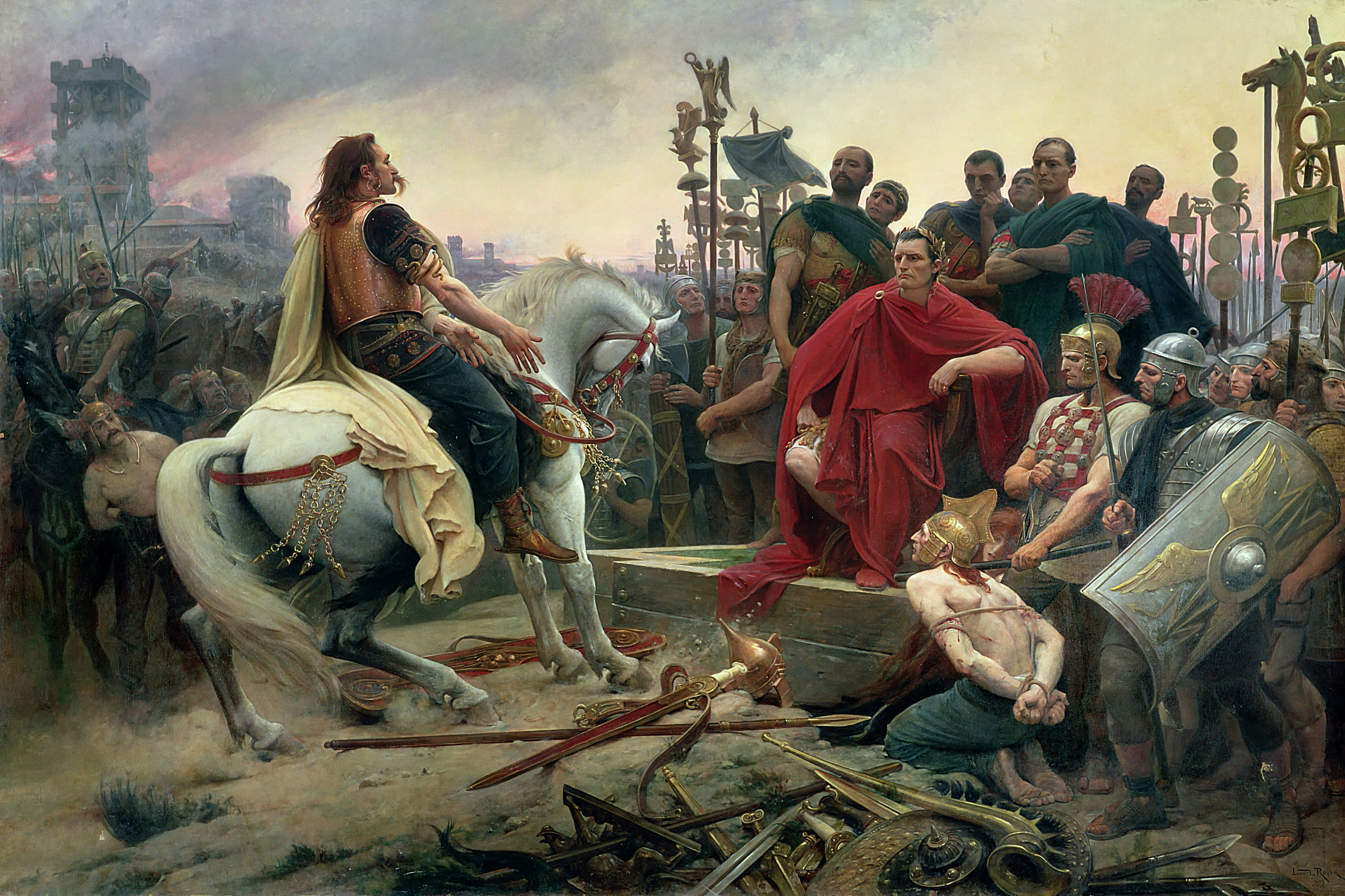
Painting by Lionel Royer (1899) depicts the surrender of the Gallic chieftain to the Romans after the Battle of Alesia (52 BC)
"You can zoom in on Flanders and Wallonia to see how Belgium changed. This is why it is important to look to the early Middle Ages because we see settlement and mobility from Germanic people," he states.
Indigenous Belgians were Gauls – until a significant settlement and population migration by Germanic tribes around the fall of the Roman Empire. In the written accounts of Roman Emperor Julius Caesar's Gallic Wars, between 58 and 50 BC, he wrote: "Of all the Gauls, the strongest are the Belgians.”
While this traces the name of Belgium back to Roman times, Caesar also opines how Belgians’ proximity to the Germanic people, with whom they were constantly at war, made them tougher. He saw Gauls located closer to Rome as "effeminate" due to contact with trade and its luxury goods.
Gallic & Germanic
"Historical records always reveal more information about the elites and higher society, but with DNA we can really see whole populations much better," Larmuseau says. "Was it not only the top layer of the population, or was this really a huge migration event?"
Based solely on archaeology or history, it is harder to tell. With DNA, researchers can figure out how much Gallic-Germanic intermixing occurred and when.
KU Leuven's first big study – led by Larmuseau – of ancient DNA in Belgium did exactly this. After having extracted DNA samples from a 7th-century cemetery in Belgian coastal town Koksijde, his team identified the exact period when mixing between Gallic and Germanic people (who had emigrated there) had first began.
"What we found was also those two groups – but that they were still separated genetically," the professor said. He points to a case of a mother-daughter relationship, where the mother belonged to the (North) Gallic group and her daughter's father belonged to the (North Sea) Germanic group.
"I really believe that we found the first genetic evidence in Belgium of a close connection between those groups, as they were all buried together." His team’s research showed that in Koksijde, they were not dealing with a small closed family as initially thought, but with a broad community in which a merger of two descent groups was underway.
This is still seen today, where most Belgians have a mix of Gallic and Germanic ancestries. In a study published earlier this year on a Sint-Truiden cemetery of people buried between the 8th and 18th centuries, KU Leuven’s team found that by the 8th century, these ancestries had already mixed.
Since then, geographical proximity has had a bigger impact. A decrease in genetic diversity was experienced in the centuries after the Koksijde cemetery, with individuals from around the years 400 and 650.
'No genetic border'
Today, Walloons and Flemings share close genetic similarities, which largely follow geographical proximity rather than language borders.
Unfortunately, comparisons with Walloon ancient and historical DNA are still limited due to, ironically, administrative and political divides between the regions – Walloons often work with French researchers over Flemish ones, and those results are still pending or unpublished.
However, KU Leuven researchers did collect some DNA samples from the 17th century in the Walloon city of Huy, (near Liege) and the results were in line with their predictions. "They are very similar to Flemish people. Genetically speaking, the difference is more subtle today. It was likely more visible in the early Middle Ages than today," Larmuseau underlines.
Walloons and Flemings are indeed genetically closer than many realise today, on both sides. "We don't see a clear-cut genetic border that is in the same place as a language border today," he continues, adding that geographical distance or proximity is more significant for genetic differences.
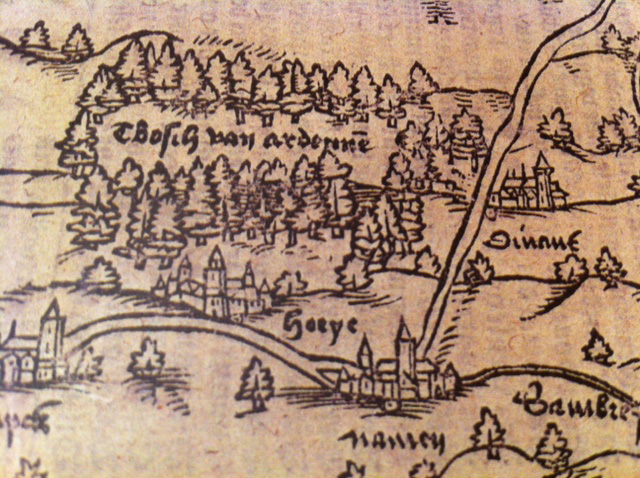
The oldest map of the Netherlands showing Walloon cities, dated 1557, found in Breda, Netherlands, Thursday 26 January 2012. Credit: Belga
For example, West Flemish people will be more genetically comparable with northern France and the region of Mons than with Belgians from Limburg, in the northeast. Moreover, Limburgers will be much more similar to people from southeastern Liège than from West Flanders. Even Belgium’s German-speaking community will have profiles closer to people from Liège and Limburg, than Berliners.
"So genetically speaking, the language border is now not so important. But of course, there has to be a historical reason why there is a language divide," Larmuseau says. For him, the key lies in the early Middle Ages, but he says that it's also a period where there aren’t many historical or material resources.
DNA, politics and language
Overall, Larmuseau believes that mass migration in the early Middle Ages likely played an important role in shaping the language border.
Yet by doing more research on Walloon and French DNA, researchers can gain a much clearer picture of the migrations in those early Middle Ages. From there, some more answers on the linguistic divergence could be provided by DNA evidence, in spite of the obnoxious fact that DNA does not collect data on language use.
However, studying migratory patterns can help. "So that's why DNA is coming into the picture – and it shows that in the modern population, genetic difference closely reflects geographical distance."
There are also common misconceptions about Belgium’s DNA. Despite the country having been ruled by Spain for centuries, one of the main ones is the fact that he has never found any evidence of Spanish genes. The same goes for the lack of Viking genes – something many Flemings will profess to feel a historical connection to.
While the presence of both armies in these lands is undisputed, Larmuseau explains that to really have an impact on the population, there needs to be a big group of people who stay there and have children.
Whereas the ruling Spanish armies were mainly composed of foreign soldiers, and the Vikings would mainly raid and trade but did not integrate in large numbers into the population, unlike in the UK. Historical and political propaganda contributed to both of these myths being propagated about Flanders' identity.
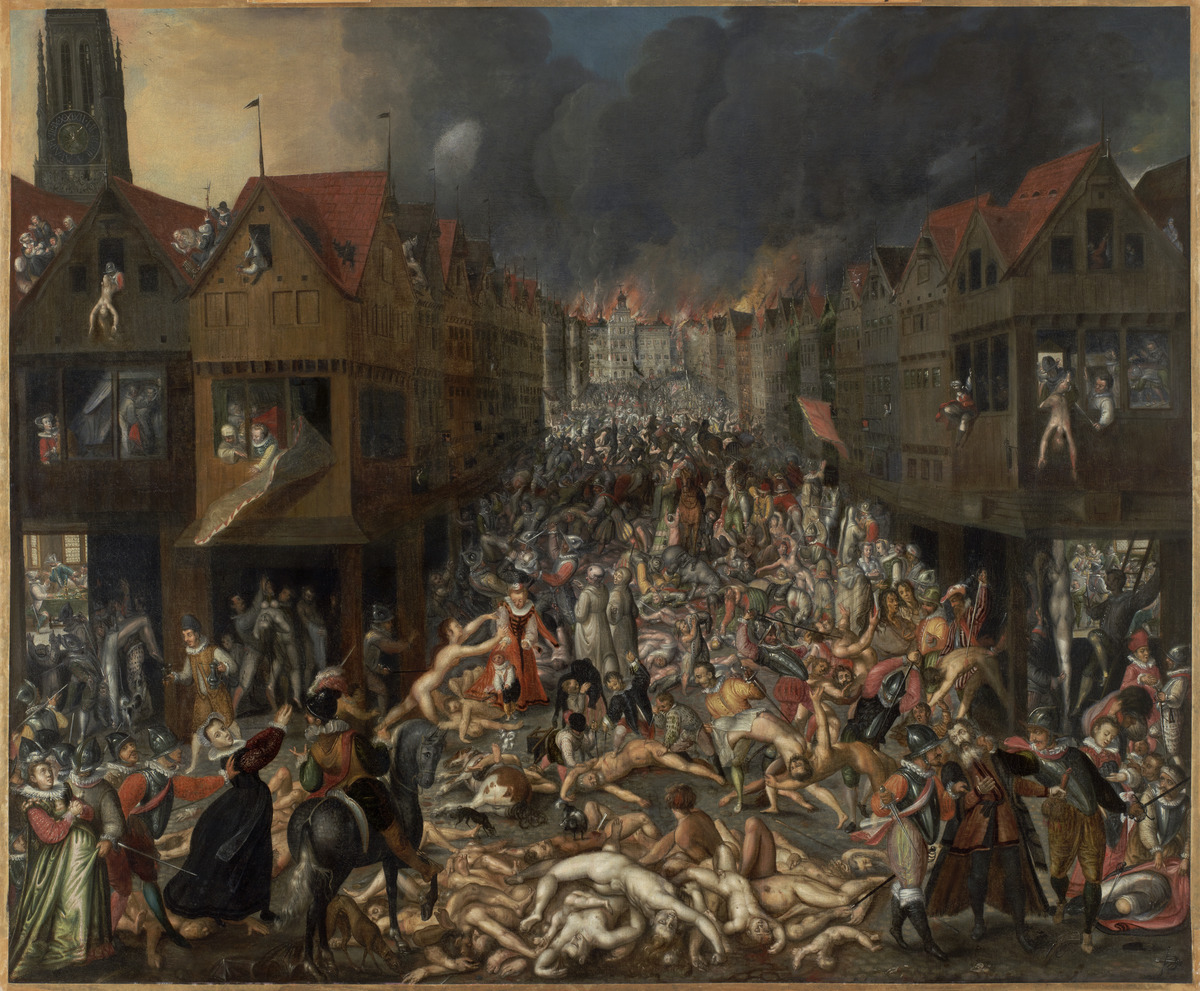
The Spanish Fury in Antwerp in 1585. Author unknown, date 16th century
This can be why it is so important not to misuse biological studies like DNA – particularly when politicians use them for their own ends. Biological and genetic identity can help change the way people look at the past, but it doesn't change our cultural identity and politics, he adds.
His team’s studies are designed to make people, notably Flemings, reflect on what it means to be a community, or what it means to be related to each other and part of a family.
"DNA is an archival document in our body, in all our cells. We have this information which we received from our ancestors. And moreover, we can also analyse DNA from skeletons and human material from the past," Larmuseau continues.
"Of course, administrative borders will always have an impact on culture and what kind of media you are watching and reading, but that doesn't mean it has a genetic background too," Larmuseau says. "But in this work, you have to make it clear that identity is a very complex thing."
