
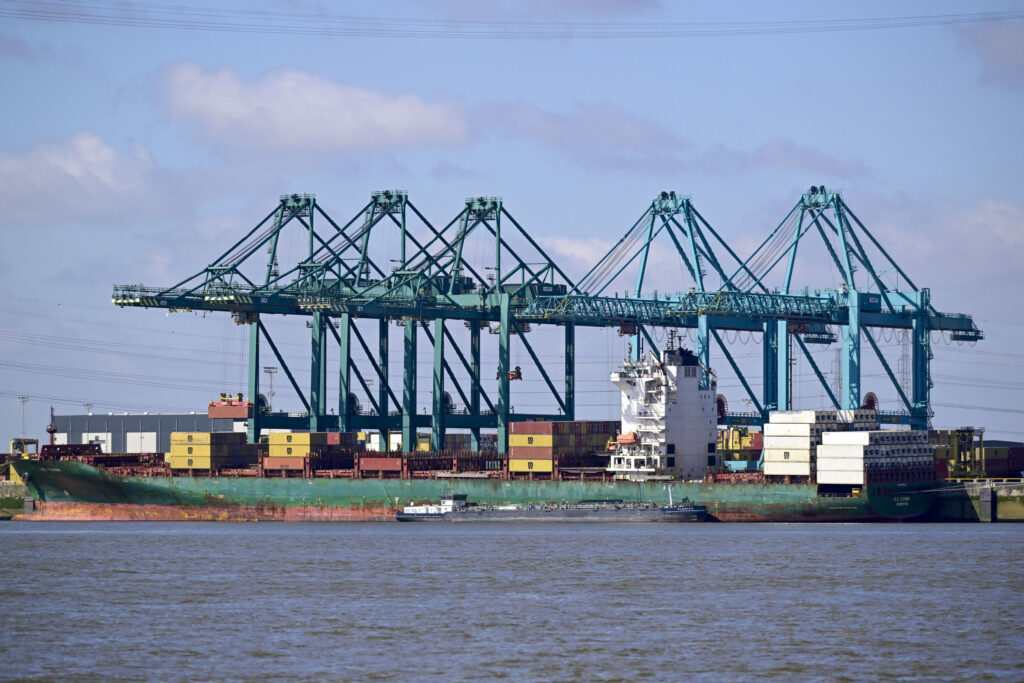
Thousands of vehicles bound for the US are reportedly "sitting idle" in the Port of Antwerp-Bruges following the introduction of Donald Trump’s trade tariffs on certain EU goods.
In March, the US president announced import tariffs of 25% on foreign cars and their parts entering the US – pushing up the price of a foreign-made car by thousands of dollars. The move came as part of Trump's push to promote US-made goods in the hope that the country can revive its once-dominant automotive sector.
Automotive tariffs came into effect in early April. According to the Belga News Agency, this coincided with a “sharp decline” in vehicle exports from Antwerp-Bruges to the US.
Figures released by the port show that since May, exports of passenger cars and vans to the US have declined by 14.3%, while exports of trucks have declined by 31.5%. The latter includes tractors and construction vehicles. Presumably, US buyers looking to buy these larger, more expensive vehicles are opting for cheaper domestic alternatives, rather than buying European.
Yesterday, the Guardian described the port as having "turned into a giant car park”, noting the thousands of vehicles “sitting idle” as manufacturers and exporters wait for a possible trade agreement to be reached between the EU and the US.
According to the port authority, much will depend on whether an agreement between the EU and the US is reached by 1 August, which it says would "bring more certainty and predictability to the supply chain".
'More of a shock than Brexit'
Justin Atkin, the UK and Ireland port representative of the Port of Antwerp-Bruges, told that Guardian that the tariff impact has been “more of an instant shock” than Brexit.
“With the pandemic, we had lockdown, then we were out of lockdown, then back into lockdown, and people got used to managing it after being unprepared. Whereas here…people have talked about tariffs in the build-up [to Trump] but I don’t think anyone expected the level and the severity of the instantaneous action.”
Despite these challenges, the port’s overall trade with the US is buoyant. According to half-yearly figures published on Tuesday by the port authority, trade with the US rose by 17.2% to 16.4 million tonnes in the first half of 2025. Cargo from the US increased thanks in part to an increase in the volumes of liquid natural gas the US exports.
Perfect storm leads to congestion
The tariff crisis isn't the only factor contributing to congestion at the Port of Antwerp-Bruges. A perfect storm of strikes, low water levels in the Rhine and the Panama Canal and instability in the Middle East have created bottlenecks, putting significant pressure on the port's terminals.
"Terminal congestion, caused by an interaction between logistical challenges and market developments, continues to be felt, as in the rest of North-West Europe," the port authority said.
According to recent estimates, the new quay planned for the Extra Container Capacity Antwerp (ECA) project will not be operational before 2032.
In practice, this means increasingly long waiting times for container ships and lorry drivers, with parking space for cars and containers severely limited.
