
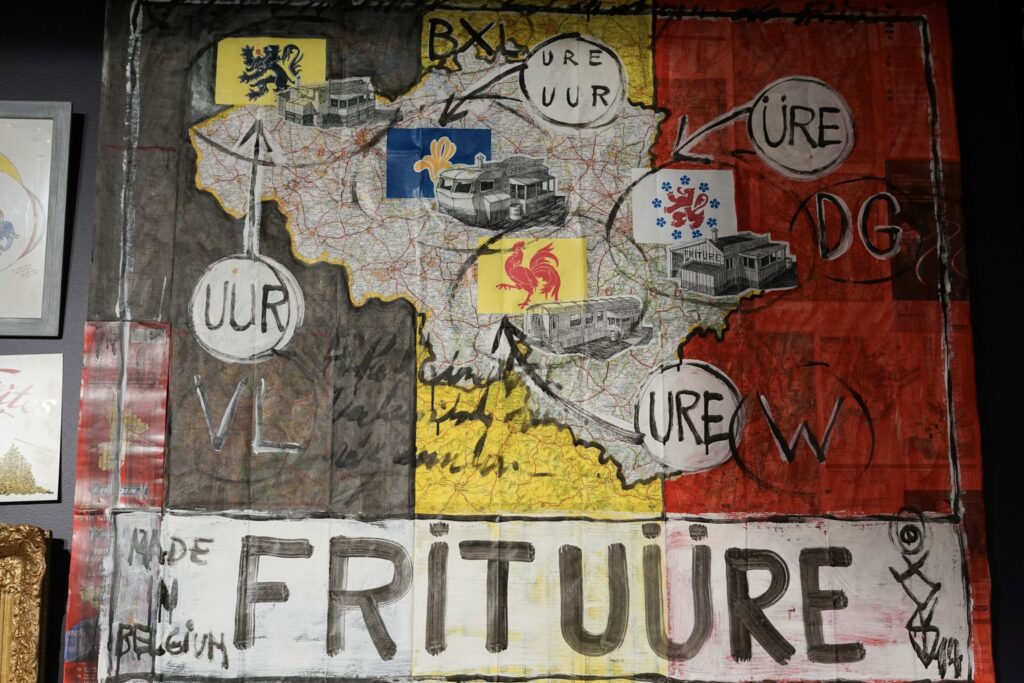
If there is something equally beloved by everyone in Belgium, it's fries.
It's no joke that fries are a staple of Belgian identity. According to the Flemish Heritage Registry, there are about 5,000 chip stands in Belgium, just a little less than the number of bakeries in the country. Most fritures stay open late and during weekends, and not only provide you with delicious, cheap food, but also serve as a kind of social hub, bringing together people from many different backgrounds and cultures.
Welcome to the Friture
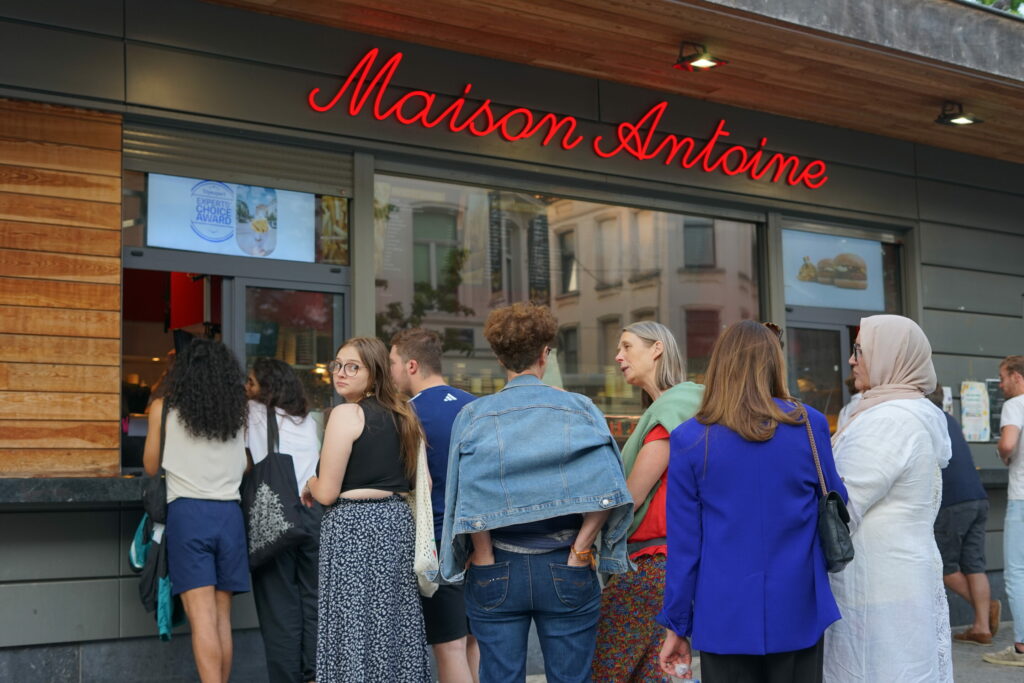
Maison Antoine in Etterbeek is one of the oldest frieteries in Brussels, originally opening in 1948. Credit: Tetiana Perstnova / The Brussels Times
What is called a chip stand in plain English has a lot of names here – frituur, friture, friterie, baraque à frites, frietkot, frietkraam and many others, depending on the language and region of the speaker.
Unlike large fast-food chains serving reheated food, chip stands remain, for the most part, individually owned and very traditional. They are beloved in their communities - in Flanders 95% of people visit a fry shop at least once a year.
So what makes a good Belgian frite? First and foremost, the potatoes must be sliced into thin sticks (julienne/frietjes cut). Traditionally, they should be double fried in beef fat, giving them a unique savoury taste (though some places now use vegetable oils). The fries should be served in paper cones with a generous amount of sauce on the top and a little wooden fork.
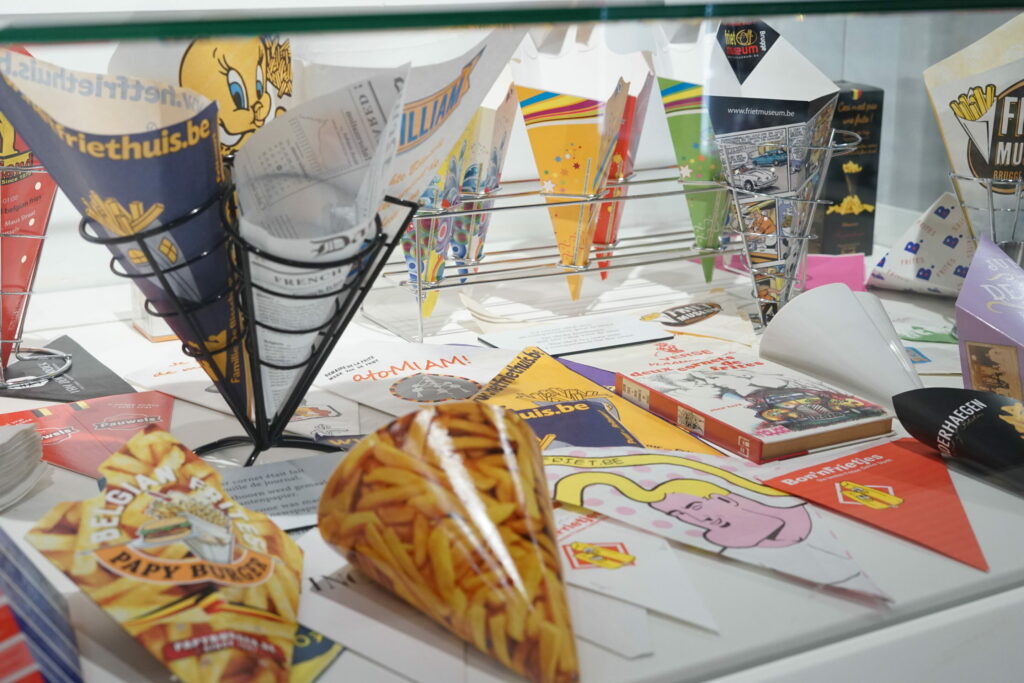
Exhibition of different fry cones in the Brussels fry museum. Credit: Tetiana Perstnova / The Brussels Times
The sauces are also of great importance. A respectable friture offers a wide selection of sauces: classic mayonnaise, ketchup for the tourists, curry ketchup, andalouse, joppie, garlic, brasil, tartar, speciaal, samurai…the list goes on.
Together with mayo, perhaps the most authentic way to go about eating your fries would be to add stoofvleessaus - also known as carbonade flamande or just beef stew.
Stoofvleessaus is a dish of its own prepared by simmering beef in Belgian beer until it becomes very tender. When it is paired with fries, the meat is removed - so it becomes a simple meal of chips and gravy.
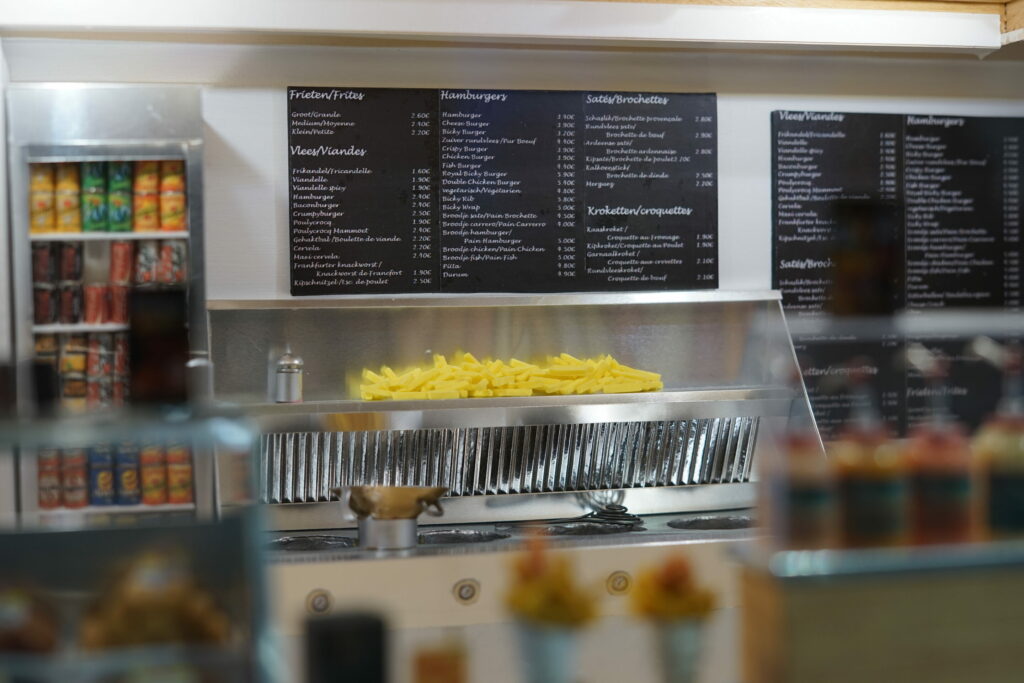
Miniature of a friture in the Brussels fry museum with its own small classic menu. Credit: Tetiana Perstnova / The Brussels Times
While fries are the star of the show at fritures, they are not the only food item on the menu. Notable mentions must go to currywurst (spiced sausage), boulette (fried meatball), saté (skewered meat with peanut sauce), cheese croquettes (crispy on the outside, creamy cheese inside), bitterballen (small ragout-filled meatballs), and kipcorn (breaded chicken stick).
And of course, any friture worth its salt would be incomplete without 'bicky burgers', which have a cult-like following among Belgians. The crucial components of a bicky burger are a smooth-textured patty made of processed meat with fake grill marks on it, and a blend of three sauces – bicky sauce with a pickled note, ketchup and mustard.
Old but gold
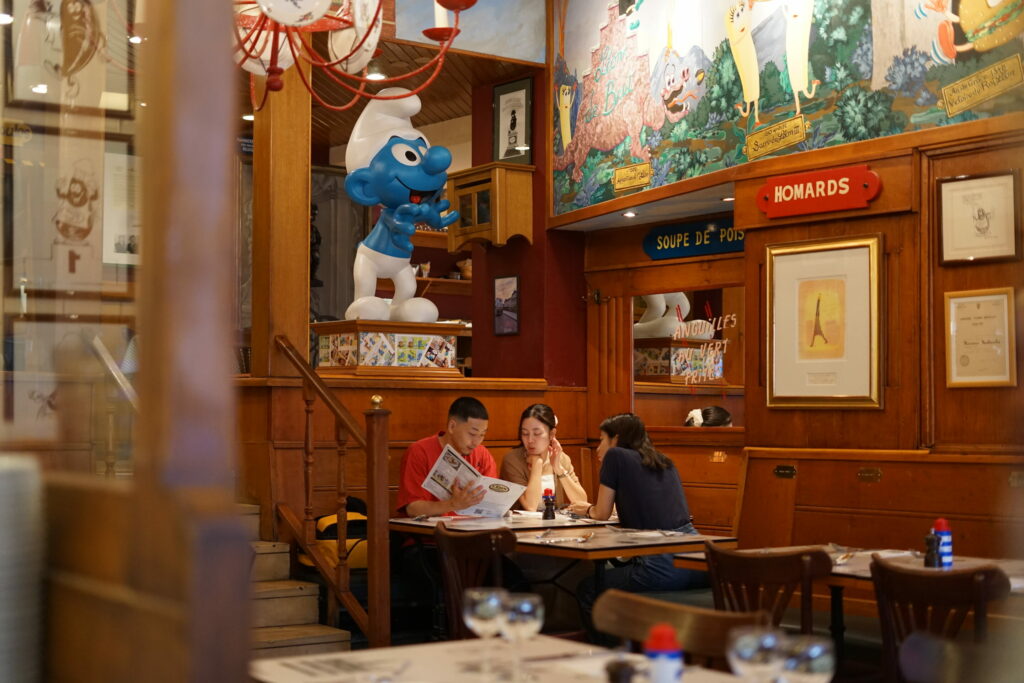
Chez Léon is one of the most iconic fritures in Brussels serving fries with mussels. Credit: Tetiana Perstnova / The Brussels Times
Both French and Dutch-speaking Belgian communities have declared 'frietkot/friterie culture' to be part of their intangible cultural heritage. Some online articles falsely claim that frietkot/friterie culture achieved UNESCO recognition, but sadly, this isn’t the case.
France also has its own historical beef with Belgium over the origins of fries. France is more likely to have got in first, even if these original French fries are different in form to the ones we are used to seeing today. In the 1780s, the street vendors around Pont Neuf bridge in Paris were already selling fried potatoes, as documented by writers like Louis-Sébastien Mercier.
But Belgians undeniably developed everything associated with modern fry culture - they created the concept of deep-fried stick-shaped potatoes, cooked in two stages, in beef fat, and sold through dedicated stands.
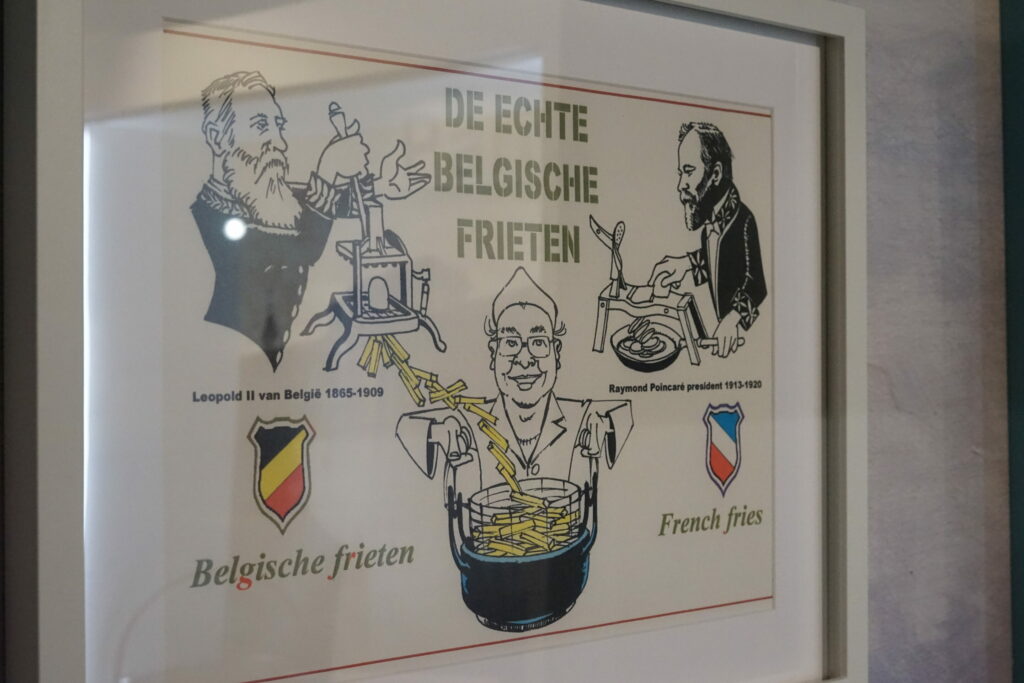
Poster from the Brussels fry museum mocking the French-Belgian conflict over fries. Credit: Tetiana Perstnova / The Brussels Times
The emergence of friteries is inextricably linked to the legendary persona of Belgian-Bavarian Jean Frédéric Krieger, also known as Monsieur Fritz, whose biography contains as much folklore as facts. After living and working in Paris for two years, he is believed to have opened the first friture in Belgium, in either Brussels or Antwerp. Shops owned by him were also present at most fairs throughout Belgian cities. This led to Fritz receiving the nickname “king of fries”.
Fries were developed in the context of working-class urban culture, but would later become popular among people of all classes. Throughout the 20th century, Belgians developed the modern techniques of preparing fries, influencing northern France and the Netherlands.
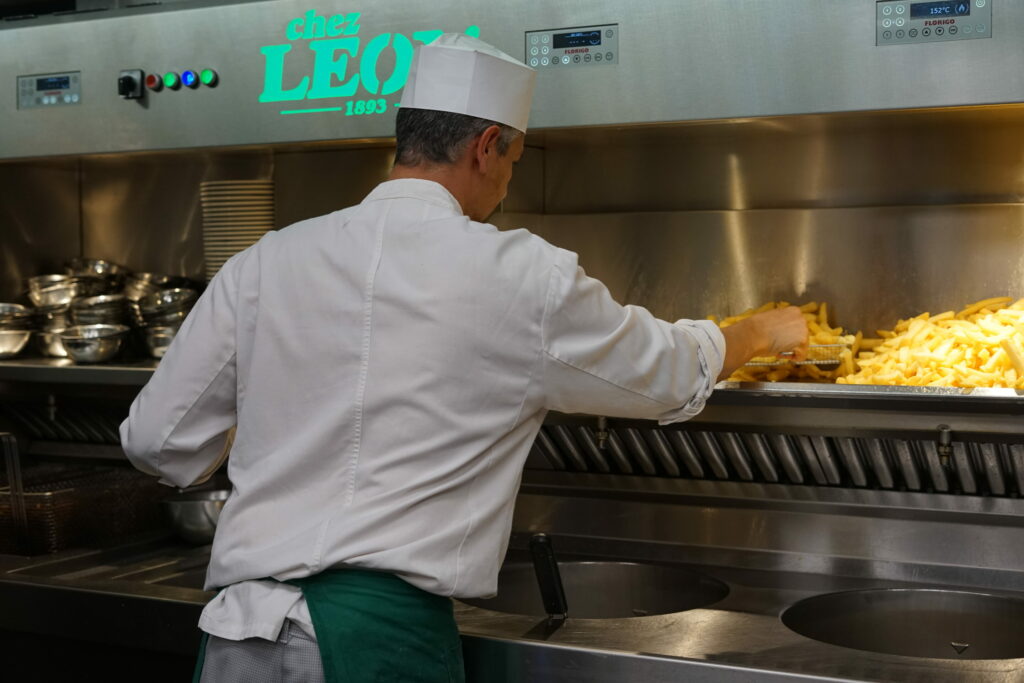
Fries being prepared at Chez Léon. Credit: Tetiana Perstnova / The Brussels Times
There is a famous myth about the First World War and fries. Popularised in the 2000s, it states that American GIs called fries French because they confused the nationality of French-speaking Belgians. In reality, the term French fries is much older term. According to Belgian historian Pierre Leclerq, it dates back to at least 1903 or even 1857 in the form of “French fried” potatoes.
After the Second World War, permanent friteries started popping up everywhere - even in small towns and villages. From the 1950s to the 1970s, other deep-fried snacks started joining fries on Belgian tables and fries culture became cemented in the country’s national identity, where it has remained until this very day.
For this national day of Belgium, skip the fancy stuff. Get together with your friends or family and celebrate with a cone of fries - and don't forget the sauce.
