
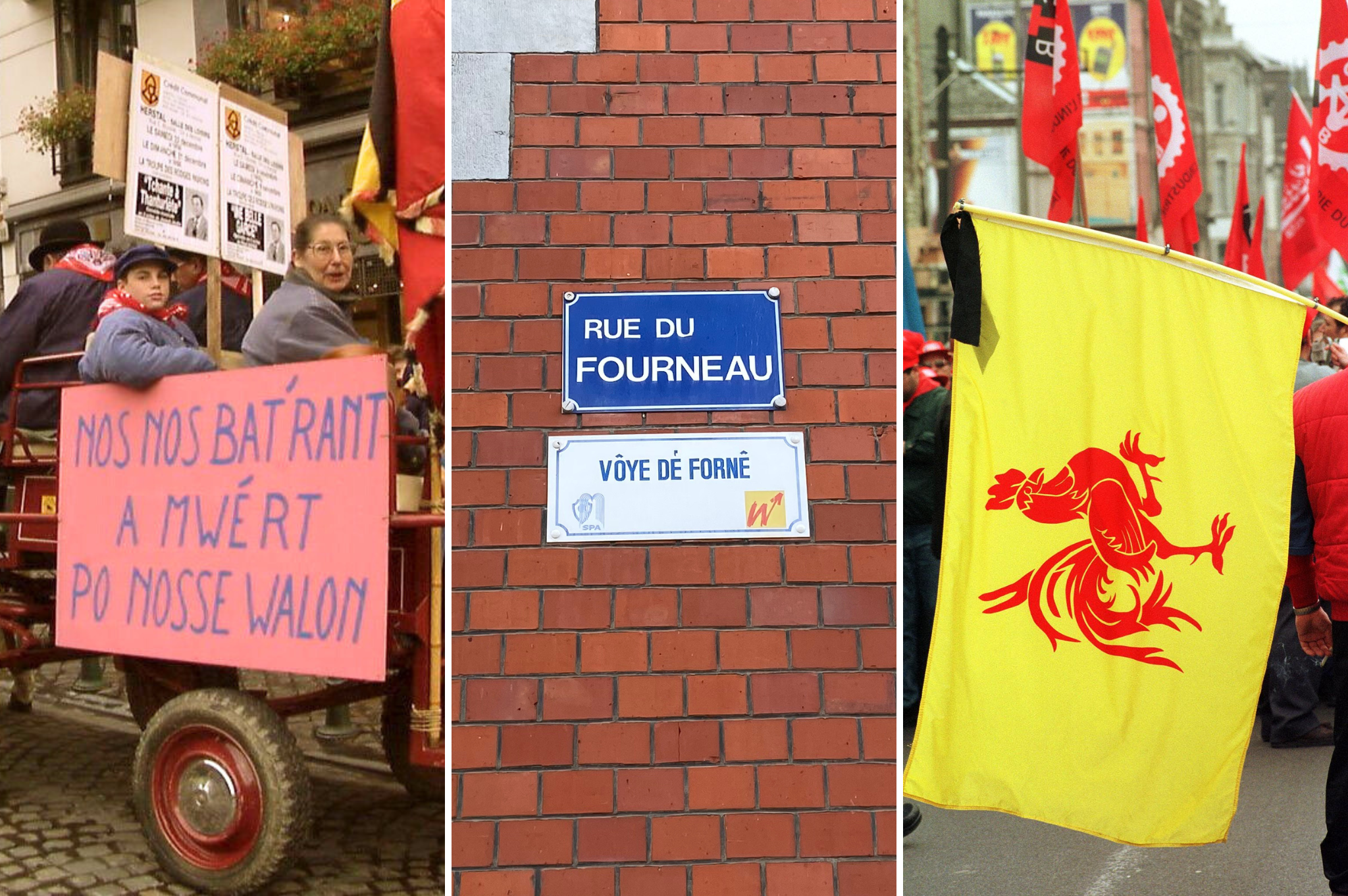
Flanders’ battle for linguistic rights in Belgium is well documented. Yet until the last century, Walloons spoke their own regional language – Walloon – which UNESCO labels "definitely endangered".
C’ èst todi lès ptits qu’ on spotche ! – so goes an old saying in Walloon, which translates to 'it’s always the small who get crushed'.
It is a symbolic expression for a language which has often not featured in Belgium’s national story, crowded out by bitter French v Dutch disputes. Today, it lies on the brink of extinction.
Walloon is romance language which evolved from Latin like French, Picard, Italian and Spanish, and became distinct from other forms of Latin around the year 1000. It faded out at the start of the 20th century – even if it was, until then, the lingua franca in southern Belgium.
The language is not derived from French, as is sometimes claimed. Rather, Walloon developed alongside French, which was initially only spoken in the Île-de-France region. Walloon is part of the langues d'oïl - a language family which also includes standard French.
Since the 19th century to its demise, Walloon was often demeaned for being a working class vernacular, even if it was used by both privileged and disadvantaged classes.
"It was a language associated with a lack of education, sometimes even with rudeness," emeritus linguistic professor at the Catholic University of Louvain (UCLouvain), Michel Francard, tells The Brussels Times. This association was also due to the language having always been comically associated with its people.
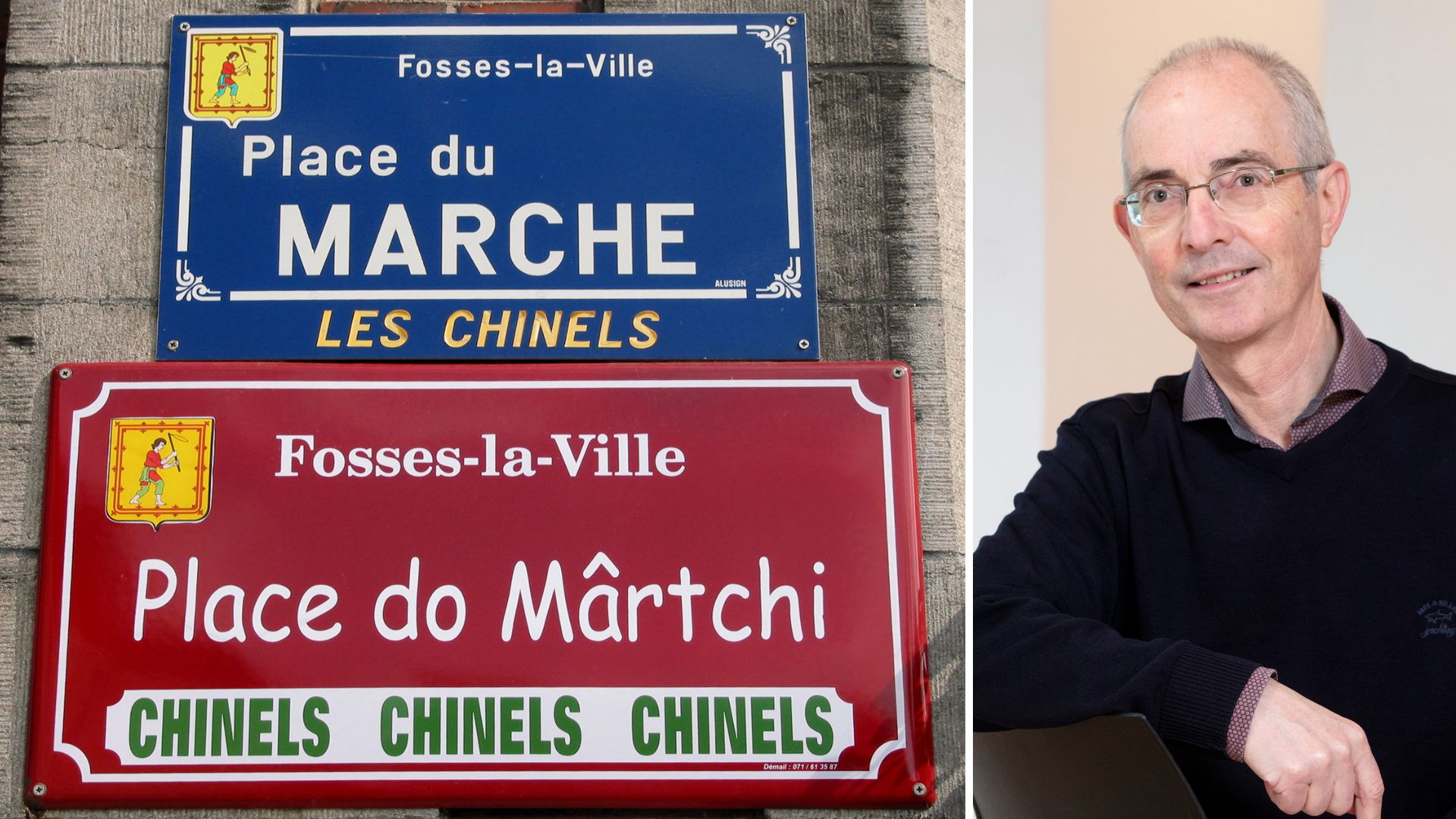
Left, a road sign in French and Walloon. Right, Professor Michel Francard of UCLouvain. Credit: Jean-Pierre Ruelle
When growing up, Francard’s own family did not speak Walloon at home up for this very reason – he only became a fluent Walloon speaker later on in his life while researching his doctoral thesis.
"In my family, as in many others in Wallonia after the Second World War, the use of Walloon varied from one generation to the next," Francard explains. "My grandparents were bilingual in Walloon and French; as was my father, unlike my mother, who only had a passive knowledge of Walloon."
'Threat of punishment'
Over centuries, the expansion of French drove down the use of the Walloon language. One significant event can be traced to the introduction of free and compulsory primary education in Belgium in 1919, which was based on the exclusive use of French.
"It was forbidden, under threat of humiliating punishment, to speak Walloon at school – including in the playground – and parents were explicitly asked by teachers not to speak the regional language at home," Francard explains.
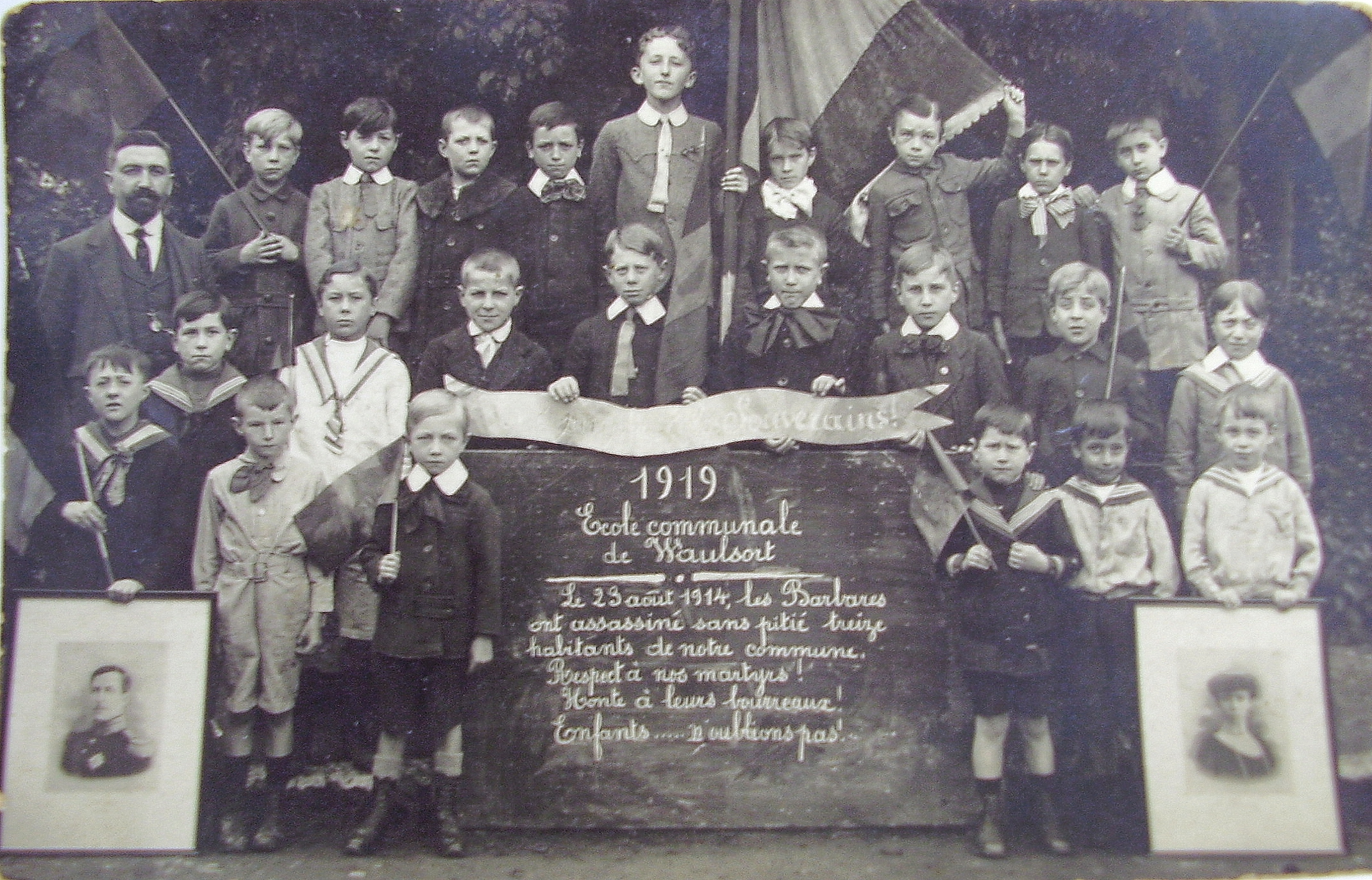
Walloon school children at Waulsort municipal school (Belgium) in 1919. They are holding up a WW1 memorial in French.
The arrival of radio and later television, as well as the increasing mobility after 1945, accelerated the decline of Wallonia's regional languages. Until then, they had been "somewhat protected" in communities with little contact with the outside world.
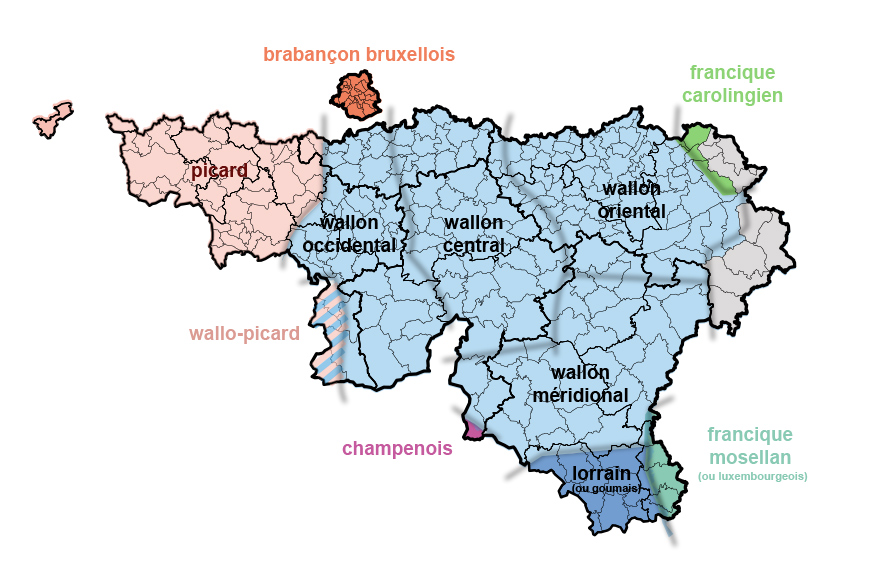
Other languages spoken around Wallonia and its surroundings have suffered the same fate: Picard, Lorraine, Luxembourgish and Champenois – all considered languages (and not dialects) by Belgium's francophone administration, Brussels-Wallonia Federation (FWB).
This is because within Walloon, there are many different dialects: central (spoken in Namur, Dinant,); eastern (Liège, Malmedy); the Picard-influenced western (Charleroi, Nivelles); and southern (Bastogne, Neufchâteau), which is also influenced by Lorraine.
Professor Francard learnt Walloon from the Bastogne region, sometimes called Wallo-Lorrain because it transitions between standard Walloon (from Liège, Namur) and Lorraine, called Gaumais in Belgium. "All other varieties of Walloon are intelligible to me," he admits.
Unfortunately, the exact number of Walloon speakers in Belgium today is not known. This is because since 1947, there have been no linguistic censuses in Belgium, so there are not any reliable figures on the use of regional languages.
"One hundred years ago, a survey conducted by Remouchamps showed that 80% of Walloons spoke a regional language," Francard says. Various surveys conducted in recent years estimate that approximately 10% of Walloons speak a regional language at least to a basic level.
Social & linguistic struggles
"The spread of French at the expense of Walloon was therefore a very rapid and irreversible phenomenon," Francard continues.
This position was also argued by Flemish Dutch-speakers in their fight for greater linguistic recognition. It culminated in the 1932 language law, which established a clear division of Belgium into language regions, with only Brussels opting for bilingual status.
"From the end of the 19th century, the Flemish people had understood that their cultural and linguistic identity was seriously threatened within a Belgian state dominated – in both the north and south of the country – by a French-speaking elite," the professor continues.
This gave rise to the Flemish Movement, which achieved the gradual ‘Dutchification’ of public life in Flanders, in areas like the justice system, administration and education.
Wallonia, on the other hand, chose a different route. The Walloon Movement, created in response to the Flemish Movement, relied very little on the Romance regional languages in its demands.
Moreover, the introduction of compulsory French came at a historical moment when Wallonia’s industrial base was driving the country’s domestic wealth.
It meant that many of the struggles of working class Walloons were centred on social and labour rights issues. For this, French was preferred given its associations with the Enlightenment and human rights.
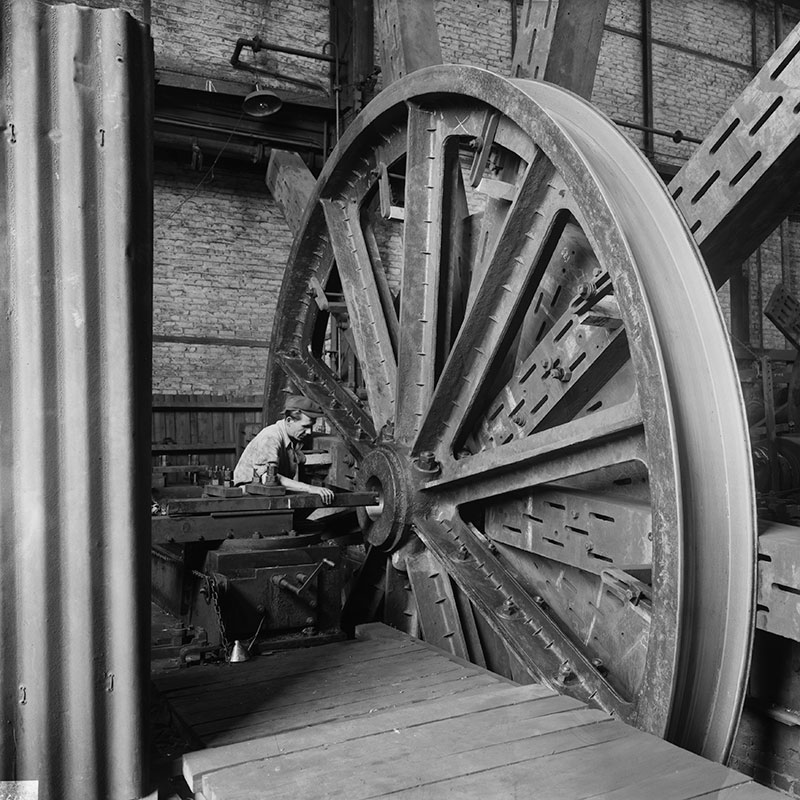
Walloon man working at a forge. c. late 19th century or early 20th century
"These regional languages were considered a cultural heritage to be preserved rather than languages of communication to be promoted," Francard explains. "Walloon, Picard and Gaumais have therefore not benefited from political support similar to that given to Dutch in Flanders, and their decline has not been halted by proactive political measures."
The term ‘Wallonia’ also dates back to the establishment of the Walloon Movement, as it began to increasingly take shape as a political identity in this period. It took its name from the eponymous publication by Albert Mocke, which was, however, published in French.
The origins of the actual word Walloon are disputed. The word comes from Walloon’s earliest written references, which date back to the 15th century. The word referred to Romance language speakers, as opposed to a Germanic language – particularly during the Spanish and Austrian Netherlands eras.
Another meaning is attested in the chronicles of the Dukes of Burgundy, who used the term Walloon to refer to the population of the Burgundian states who spoke a Romance language.
Can it be saved?
Out of all the regional languages, Walloon was the most widely spoken. It was formally recognised as an indigenous language of Wallonia in 1990 in a bid to better protect it with heritage status.
"The Walloon language can survive in the 21st century, but it will undoubtedly be in a very different form from today," Francard explains, adding that experts are observing a trend towards standardisation. This tends to eliminate the differences between the various varieties of Walloon.
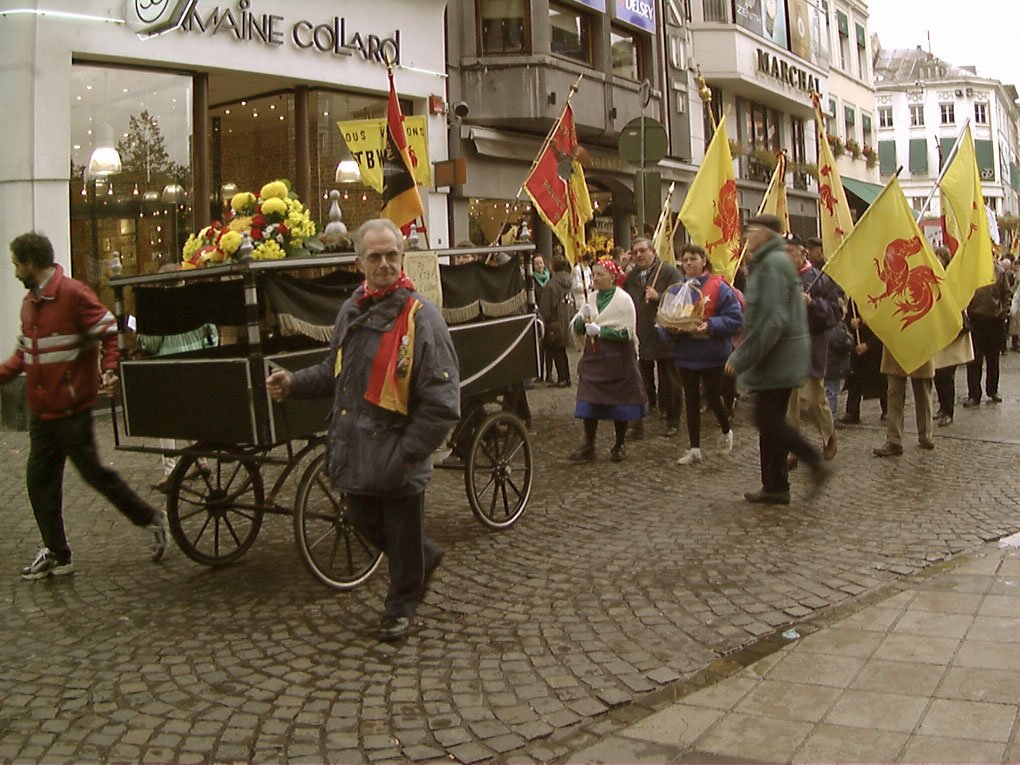
A demonstration in Liège in November 1997 calling the 'funeral' of the Walloon language and culture. Credit: Belga Archives
"We are therefore moving towards a form of Walloon that is less and less specific to the place where it is spoken. This marks a gradual break with the situation of the past, when Walloon varied from neighbourhood to neighbourhood and from village to village," he continues.
Yet standardisation of Walloon could facilitate its learning on a large scale, helped by the availability of learning tools and platforms now found online.
"There were fears that, when the internet was first developed, English would completely stifle other languages online. Today, we can see that this is not the case," Francard says. "The internet and social media gives visibility to languages that were previously ignored or marginalised."
The UCLouvain professor underlines that this offers potential for the revitalisation of Walloon. Online users can find online dictionaries, grammar books, literary texts and other resources for Walloon, which are reaching a wide audience on the web.
"That said, the decline of Wallonia's regional languages has now reached a point of no return," Francard says.
"Intergenerational transmission is no longer working," he sighs, explaining that experts generally interpret this as a sign of a language’s imminent demise, leaving no other option but to take proactive measures.
Teaching Walloon as a "second" language in specialised schools and also promoting its visibility in public spaces (e.g. square and street names in Walloon), are among the initiatives Francard is pushing for. He further believes the authorities should promote tourist routes or regional products with the help of Walloon language.
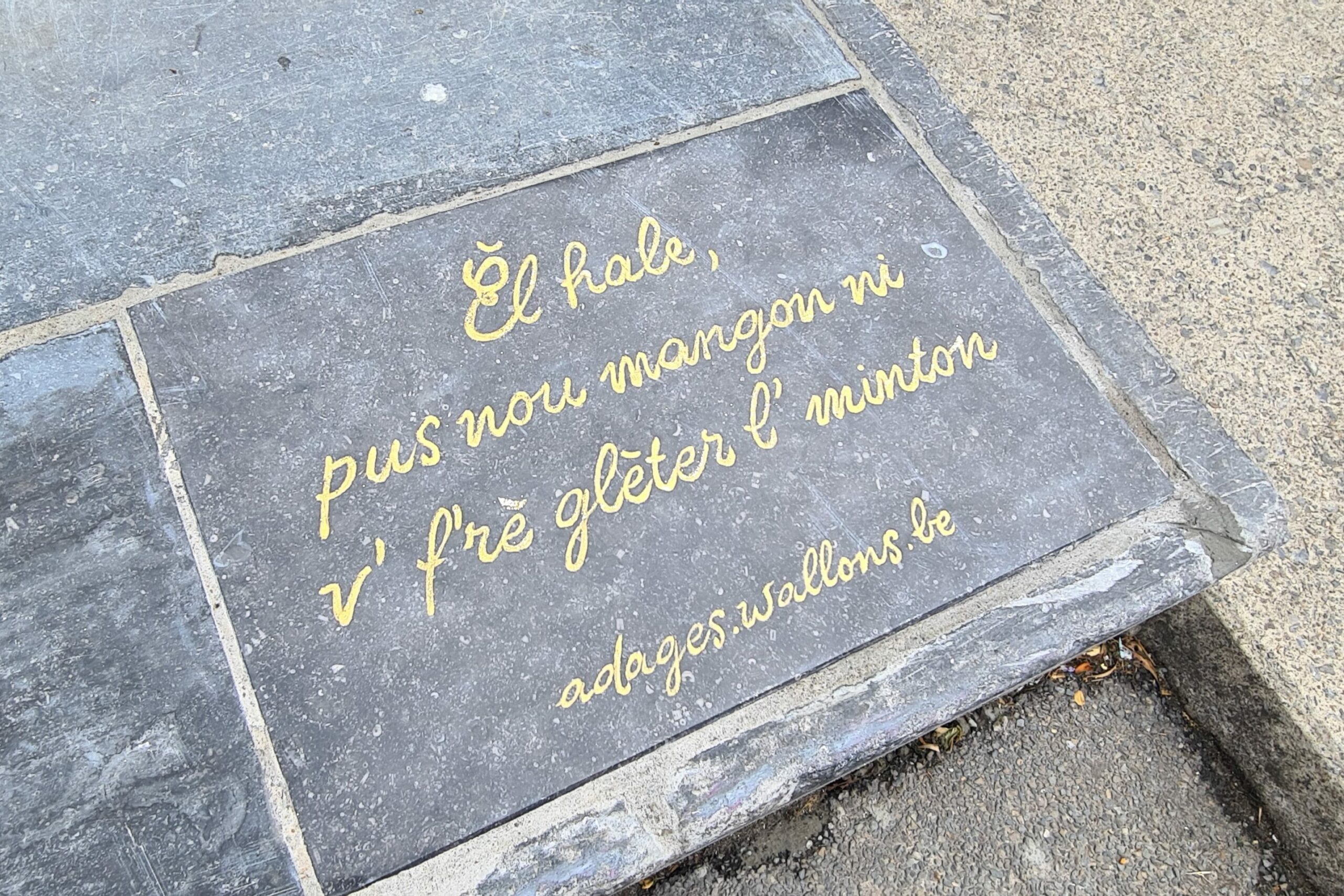
Inauguration of the first of 12 slabs in honour of the Walloon language, in Liège, on 26 June 2025. Credit: Belga / Jessica Defgnee
Over the years, there have been various attempts to preserve its use, including last year when 49 communes signed up to a Brussels-Wallonia Federation (FWB) initiative to promote the use of regional languages. In Liège, 12 blue stone slabs engraved with Walloon sayings will be placed in its historic centre, creating a genuine cultural and linguistic trail.
Yet Francard concedes that, while these measures can only be taken with the political support of the authorities, the fight to maintain Wallonia’s linguistic heritage rests with its people.
"The latter will only act if the Walloon population expresses its desire to save and promote the regional languages that have been part of its heritage for over a thousand years, Francard says: "Walloon can only be saved by Walloons themselves."
Professor Michel Francard is releasing a book (in French) with fellow author Jean-Jacques De Gheyndt, entitled '200 Walloon and Brussels expressions to savour'. It will be published by De Boeck by the end of the year.
Want to learn some Walloon before then? Check out this free online course.
