
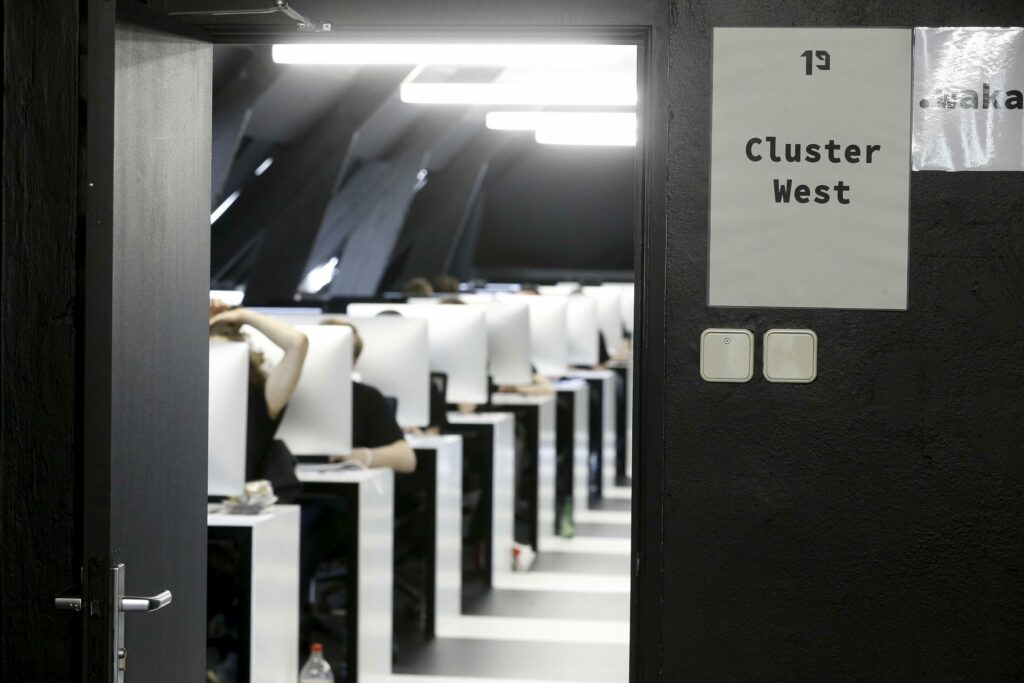
Brussels is struggling to retain its tech companies, with the current political stalemate prompting some companies to reconsider their presence in the city, according to the technology federation Agoria.
In 2025, approximately 1,400 information and communication technology (ICT) companies were based in Brussels. This has risen by roughly 30% since 2013. Despite this, the capital has experienced an elevated level of departures, with around 12% of all registered ICT companies in Brussels leaving the market in 2023. Experts from Agoria - an employers' organisation that connects over 1900 technology companies in Belgium - are raising the alarm, pointing the blame squarely at the political deadlock in the Belgian capital.
"The economic world fears uncertainty and this is exactly the climate of Brussels today," Brieuc Janssens, manager at Agoria, told Brussels Times in an interview. The federation recently posted a video on YouTube featuring six entrepreneurs from Brussels, calling on the regional government to “pick up the phone” and respond to calls from the tech industry to address several crucial issues for the sector.
ICT entrepreneurs are wondering about the future of Brussels and whether they will thrive in the region. Some projects are parked, while others are stopped because the associations leading them don’t receive additional subsidies. Their needs are more striking with the absence of government.
“I know a big ICT company looking for new office space which has second thoughts about staying in Brussels, since they have no guarantee on what there will be here for entrepreneurs,” said Janssens..
ICT companies on the move
According to the Belgian industry representative, the departure of ICT companies from the capital is now becoming a major issue for the sector. He notes that ICT companies are more ‘volatile’ than others because, as service companies, their physical assets are easier to move from one place to another.
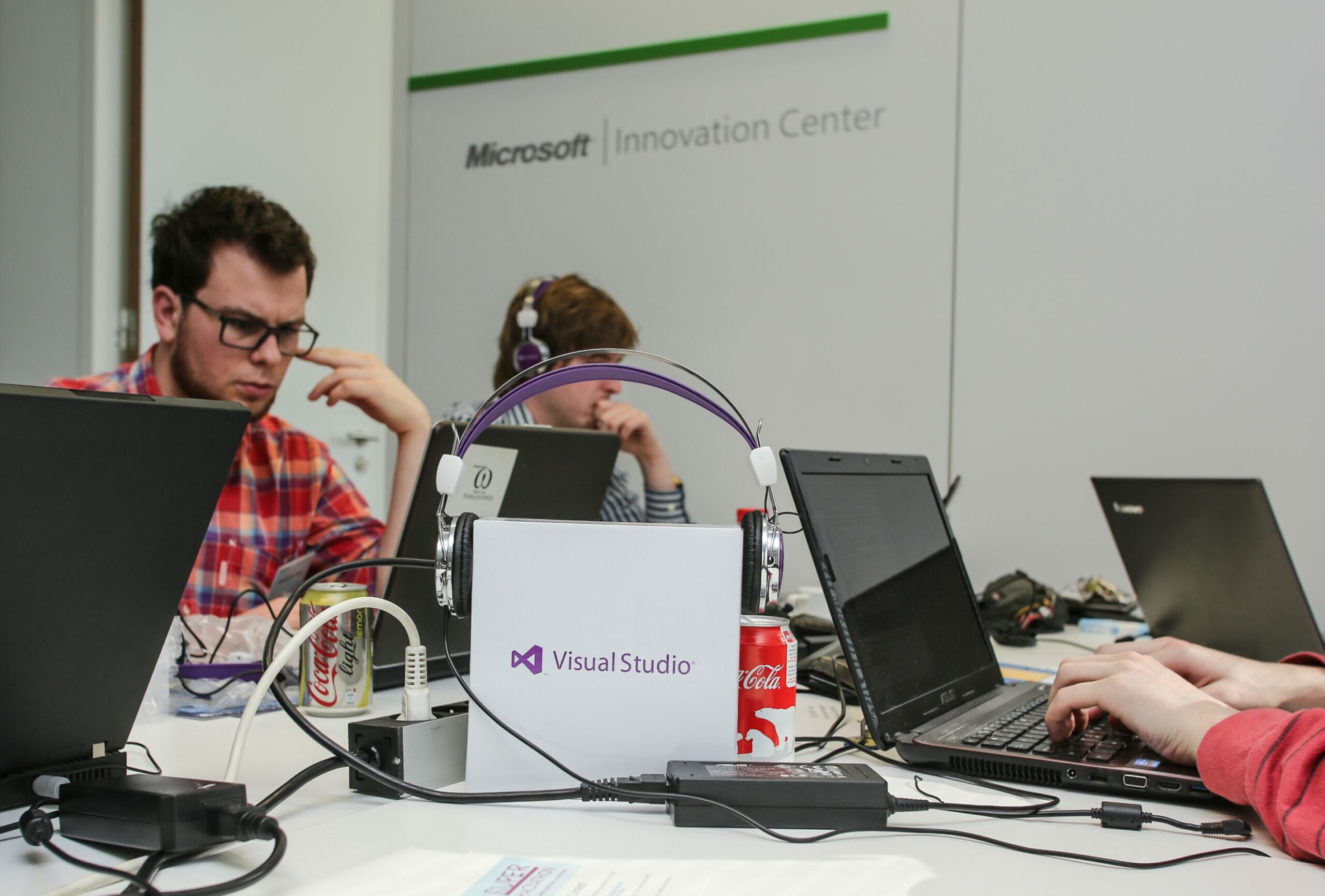
Illustration picture shows young coders coding apps during the 'Hack-a-thon' day at Microsoft offices in Brussels, a Microsoft event 'IT Intership' for developer students, Wednesday 27 March 2013, in Brussels. Credit: Belga/ Olivier Vin
Changing government policy is also proving a challenge for the sector. Under the former Brussels government’s economic strategy, the sector was strongly encouraged to innovate through its regional agency Innoviris:
“It works well, they are super reactive,” Janssens said. While the agency has helped in creating opportunities, the region struggles to keep them within the city limits.
“It feels like Brussels doesn’t like its companies,” the Agoria manager laments. According to the federation, companies regularly leave Brussels due to high taxation, a lack of skilled workers, security concerns, limited mobility opportunities, and a general lack of vision.
Cash-hungry communes
The number one reason that ICT companies move out of Brussels, he believes, is tax pressure from Brussels communes: « We don’t have a say, hence we are the communes’ cash cows,” Janssens says. He believes that the different municipalities of the Brussels region prefer to draw money from the companies’ pockets rather than their citizens’.
There is therefore tax competition between Brussels and less tax-hungry communes in Flanders or Wallonia. Companies don’t have far to relocate. One of the best examples is Diegem and its industry park, located near Evere and Haren, where taxation on offices is six times lower than in the Brussels region, just a few hundred metres away.
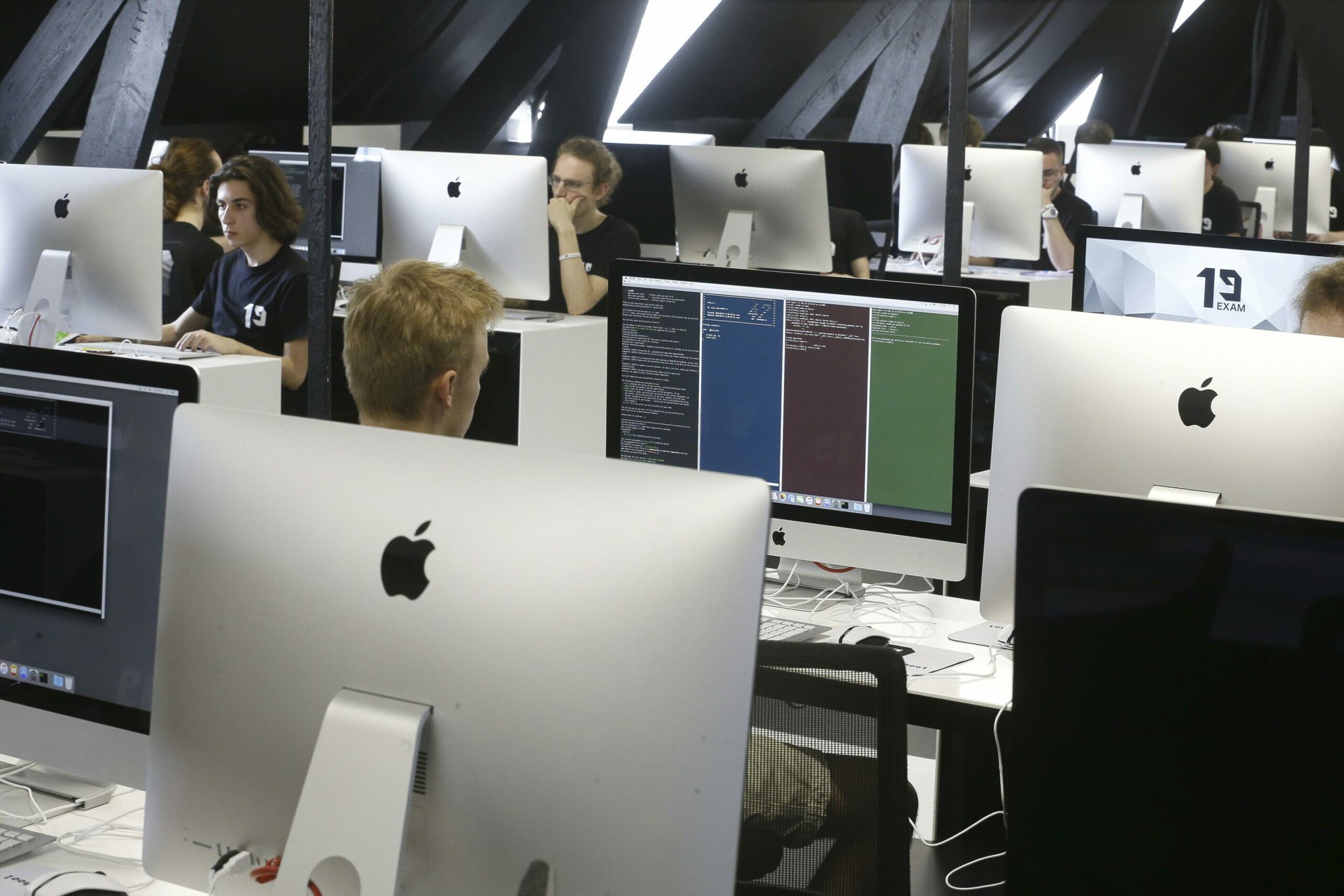
Credit: Belga/ Nicolas Maeterlinck
“Local taxes never stop growing,” says Janssens. He points to the office tax and the parking lot tax, which automatically increase when a company seeks to expand its operations. He even recalls an entrepreneur discussing a retroactive tax introduced in Anderlecht at the end of the year, a legal precedent that creates uncertainty for companies. “Communes can be very creative in this,” Janssens notes.
Unsuitable skills
One of the biggest challenges faced both by the ICT sector and Brussels is the mismatch between the skills companies need and the capacity of Brussels to meet this demand. A few years ago, tech companies began hiring people from diverse backgrounds after a few months of training. “It’s no longer the case. Such people represent merely 5% of new jobs in the ICT sector. Today, we need niche profiles and experienced people, namely in cybersecurity and AI, who are clearly difficult to find here in Brussels,” Janssens says.
The ICT industry is witnessing “a growing gap between the profiles of jobseekers and the vacancies available in the ICT sector.” Janseens believes that public programmes for workers in the sector need to “evolve to better align with the changing needs of companies.” In other words, the state should bridge labour shortages with specialist training.
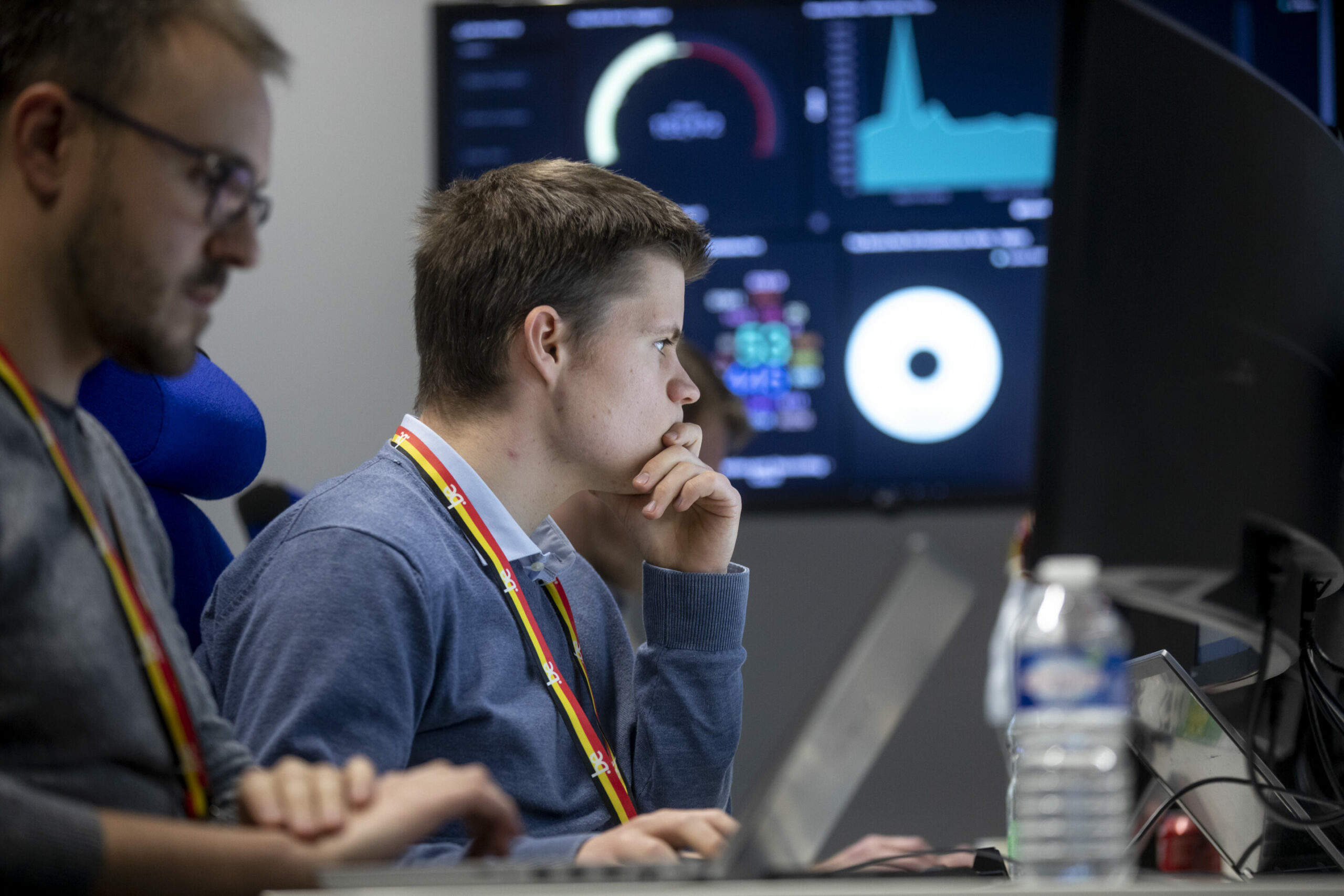
Credit: Belga/ Hatim Kaghat
Despite the gloomy picture, the industry official remains optimistic that the sector can attract better talent. Agoria is already working closely with both Actiris, the job agency, and Bruxelles Formation, the skills agency, to help facilitate this shift.
“There is a lot of potential and we believe that with the right partnerships and mindset, we can adapt and create new pathways for local talent to access the opportunities available in our sector,” he said. But this still requires a government to enact these policies.
Bad image
Recent press coverage of gun violence in Brussels is also contributing to a feeling of insecurity in Brussels, which is further driving companies away from the capital.
Brussels’ economy is largely services-oriented, hosting many offices that often require workers to stay behind longer at the office.
“Staff members raise the issue more and more. Last December, three Brussels bank CEOs wrote an op-ed, raising concerns about the lack of security in the Matonge area, pointing to, namely, drug users, flashers, prostitutes,” the Agoria manager explained.
Credit: Belga/ Nicolas Maeterlinck
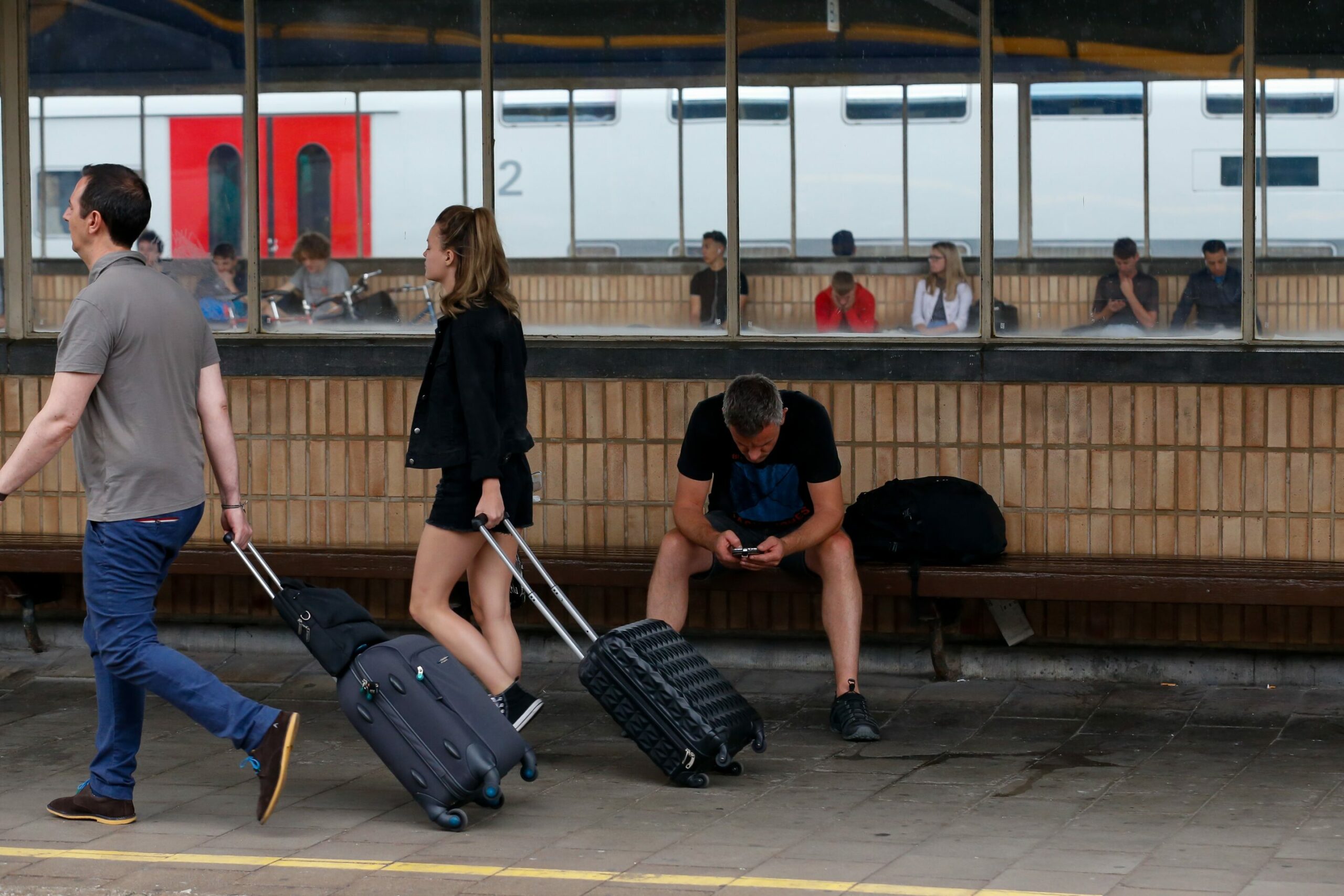
“The city’s main port of entry, Midi Station, is not really inviting,” Janssens says. The station, with its reputation for insalubrity and violence, is the first thing visitors to the European capital see, whether by train (from Paris or London) or by air (from Zaventem airport).
“Our companies need to attract talent and this image of Brussels doesn’t help,” Janssens says. He also points out the difficulties expats face in moving into and out of Brussels:
“If getting a job involves having to shuttle to Brussels, a lot of people are discouraged,” he said. He also decried a lack of cooperation between regional authorities before major works are undertaken, making traffic a nightmare, and even referred to Leonard Junction as “a nightmare.” Delays to improvements in Brussels’ rail, bus, and tram services also contribute to this negative image.
Lack of vision
Finally, Janssens deplores a “lack of strategic vision for Brussels, unlike in Flanders, Wallonia and even the whole of Belgium,” pointing to “personality competitions ” among politicians.
He challenges the dedication of Brussels politicians to their electorate, who, he says, have failed to vote for an end to the political stalemate in Brussels for 14 months, a failing he calls a “denial of democracy.” Janssens notes that the different parties are hotly debating topics which were not pressing.
Related News
- 'I used to adore Brussels': French researcher laments the state of Brussels
- Belgium's cybersecurity sector grapples with severe talent shortage
- Record investments for Belgian technology companies in 2024
The Brussels government needs to do more to encourage startups to stay in Brussels, the Agoria representative affirmed. Many companies that have expanded in the capital have realised that the climate in Brussels is not as entrepreneur-friendly as they initially thought.
He points to the example of a subsidy intended to boost exports, which has been scrapped by the authorities. This, he says, is due to a “lack of vision.” The subsidy helped small companies to participate abroad at fairs and exhibitions.
“We need Ministers to attend economic missions to foreign countries and help open doors for us, but there’s no minister for the moment,” Janssens laments. “To those who are responsible: Brussels is calling. Will you pick up?”, Agoria’s video plea concludes. “If they pick up, Agoria is ready to work with them.”
